Cheese & Dairy Cuts
Crumbling Technique for Aged & Blue Cheeses
Also: hand-crumble, blue cheese crumble, feta crumble, cheese crumbling
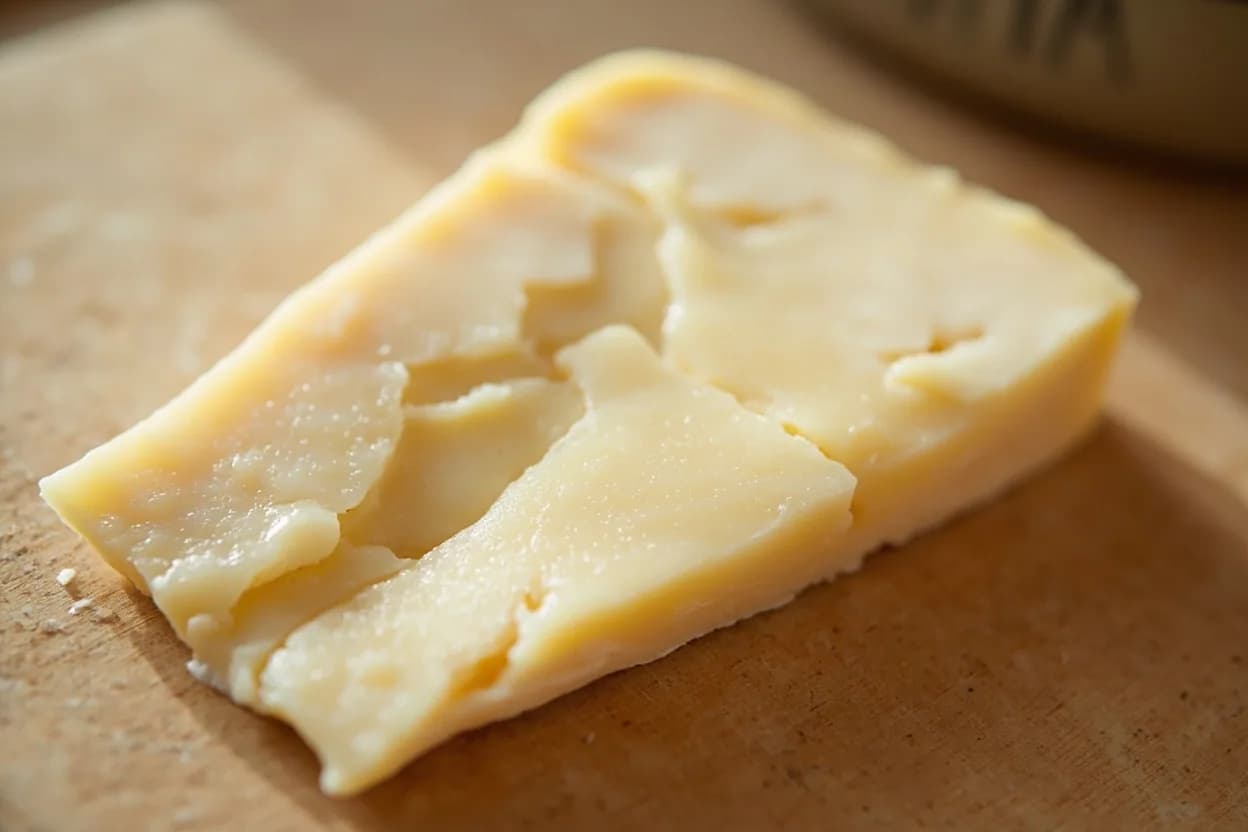
Fracturing feta, Roquefort, aged chèvre, and similar cheeses along their natural fault lines by hand or with a fork to produce irregular, textured pieces whose broken surfaces carry maximum flavour-releasing surface area.
Crumbling is the controlled fracturing of structurally friable or visually veined cheeses — principally feta, blue-veined cheeses (Roquefort, Gorgonzola Piccante, Maytag Blue, Stilton), and aged fresh chèvre — into irregular pieces ranging from coarse chunks (1–2 cm) for composed salads and braises to fine rubble (3–5 mm) for dressings and pastry fillings. Unlike cutting, which severs the paste with a blade, crumbling exploits the natural fracture planes that develop as the cheese ages and loses moisture: protein networks loosen, moisture migrates out, and the paste becomes porous enough to cleave cleanly under light manual pressure. The resulting broken surfaces are microscopically rough, exposing far greater paste area than a knife-cut face, which accelerates flavour diffusion into dressings, batters, and finished dishes.
In photos


Where it comes from
Not an animal cut. Applied to: (1) brined acid-set curd cheeses — feta (sheep/goat milk, DOP Greek), Bulgarian white brine, Sirene; (2) Penicillium roqueforti-inoculated blue cheeses — Roquefort AOP (sheep), Gorgonzola DOP Piccante (cow), Stilton PDO, Danish Blue, Maytag Blue; (3) aged fresh goat cheeses dried past the 'crumble threshold' (typically 8+ weeks).
Best for
How to cook it
- 1Remove the cheese from its packaging and let it sit at room temperature for 10–15 minutes — cold paste from the refrigerator is too brittle and will shatter to dust rather than fracture into chunks
- 2For hand-crumbling: hold a roughly 100–150 g piece in both hands and apply inward thumb pressure at the centre; the paste will split along its natural fracture plane into two irregular halves
- 3Continue splitting each half by progressively applying thumb pressure, rotating the piece to find the next natural fault line — the paste will guide you
- 4For coarse chunks (1–2 cm, salad use): stop at the 3rd or 4th split; pieces should be irregular and uneven
- 5For medium crumble (8–12 mm, pastry filling, pizza): continue splitting until pieces are roughly thumbnail-sized; transfer to a bowl and break with a fork for any remaining large pieces
- 6For fine crumble (3–5 mm, dressings, butter): use a fork, pressing down and dragging across the paste surface; do not use a food processor, which compresses and pasteurises the texture
- 7For blue cheeses: work quickly — the Penicillium-rich interior is at peak flavour potency when freshly crumbled; oxidation dulls the sharpness within 30 minutes at room temperature
Prep & butchery
- Pat dry feta or brine-packed blue cheese before crumbling — surface moisture causes pieces to stick to each other and to the bowl
- For Roquefort and Gorgonzola Piccante, use nitrile gloves: the Penicillium stains fingers and its volatile esters can irritate skin with prolonged contact
- If the rind of an aged blue is intact and thick (Stilton), remove it before crumbling — rind compresses rather than crumbles and creates hard inclusions in the finished dish
- Crumble directly over the dish at the moment of service for maximum aroma impact; do not crumble hours ahead and refrigerate uncovered
Substitutes
- Knife-cut cubes
For applications where consistent size matters more than surface area (e.g. baked saganaki, fried cheese bites); loses the textural variability of crumble
- Grated aged cheese
For ultra-fine incorporation into sauces; Parmesan or dry Manchego can substitute in some feta-baked applications but the flavour profile diverges sharply
- Ricotta salata, sliced thin
For salads where feta is unavailable; less briny, less crumbly, but similar salty-acid dairy note
Related cuts
Rind removal is a prerequisite for clean crumbling of thick-rinded blue wheels like Stilton
Board service of blues and aged chèvre typically involves pre-cut wedges that guests then crumble themselves
The opposite technique — reserved for pliable semi-hard cheeses; never applicable to crumble-category cheeses
Appears in
References
- 1.The Oxford Companion to Cheese — ed. Catherine Donnelly (Oxford University Press, 2016)
- 2.Mastering Cheese — Max McCalman & David Gibbons (Clarkson Potter, 2009)
- 3.Roquefort AOP Cahier des Charges — Confédération Générale des Producteurs de Lait de Brebis et des Industriels de Roquefort
- 4.On Food and Cooking — Harold McGee (Scribner, 2004)
Confidence: high
Notes
Why broken beats cut
A knife severs protein networks cleanly, leaving a smooth, relatively sealed surface. A hand-crumble exploits the pre-existing micro-fractures in a porous, aged paste and opens them — the resulting irregular surface area is 3–5× greater per gram than a sliced face. For dressings, this means the cheese dissolves and disperses faster into the vinaigrette oil phase, creating a richer, more integrated flavour. For salads, it means the larger pieces hold visual identity while fine particles coat every leaf.
Feta vs Roquefort crumble mechanics
Feta is an acid-set, brine-preserved paste — its fracture is moist, yielding, and consistent in all directions (isotropic). Roquefort is a rennet-set paste pierced with stainless-steel needles during ageing to allow oxygen ingress for Penicillium roqueforti to colonise the air channels; the resulting blue veins are actually weaker planes in the paste, and the cheese fractures preferentially along them. A skilled hand-crumble of Roquefort produces shards with a blue-green vein on every face — aesthetically striking and flavour-maximising. Forcing it to crack across the veins (perpendicular to the natural fault) requires more pressure and produces duller, less visually interesting pieces.