Cheese & Dairy Cuts
Cheese Planing — Scandinavian Høvl Cut
Also: ostehøvel slice, cheese plane cut, høvl cut, Norwegian cheese planing, sveitserost planing
Drawing a flat-bladed ostehøvel (cheese plane) across the surface of a semi-hard block to shave uniform translucent or near-translucent slices 1–3 mm thick for open-faced sandwiches and smørrebrød.
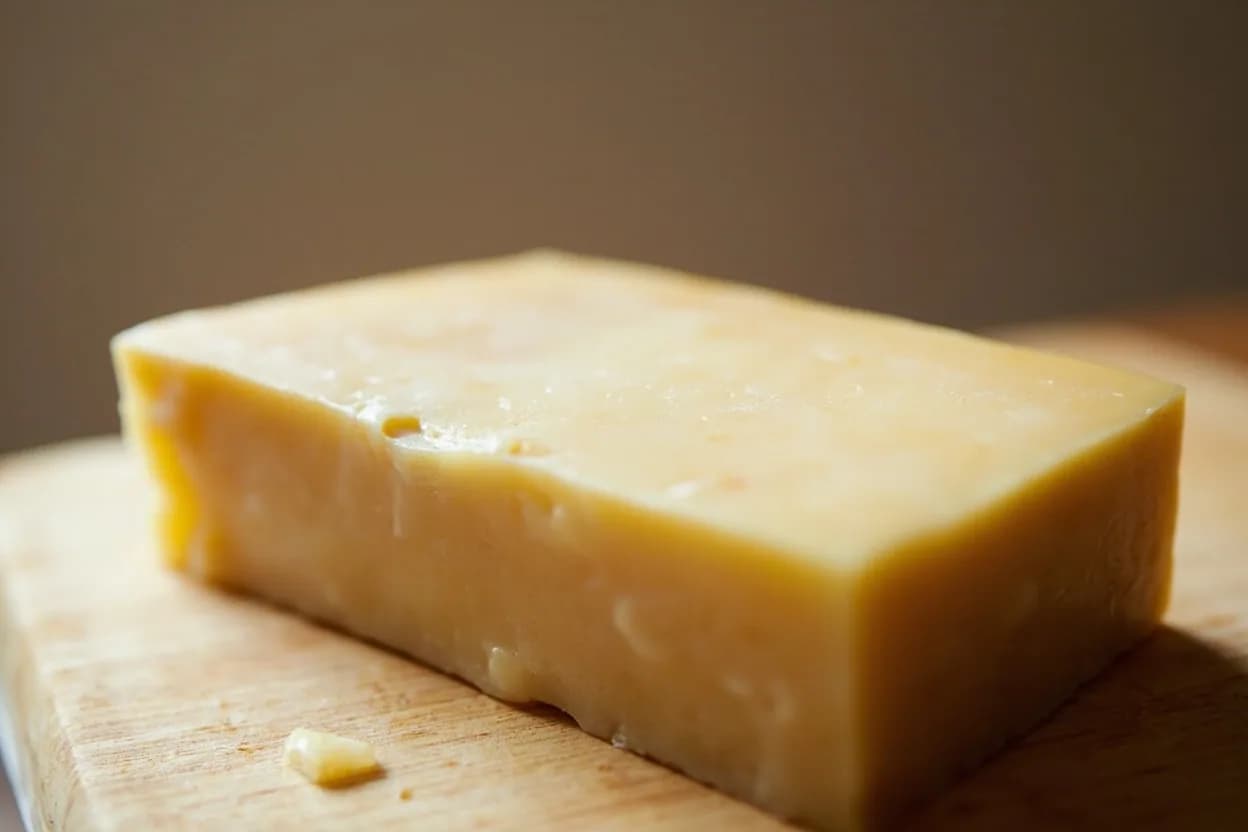
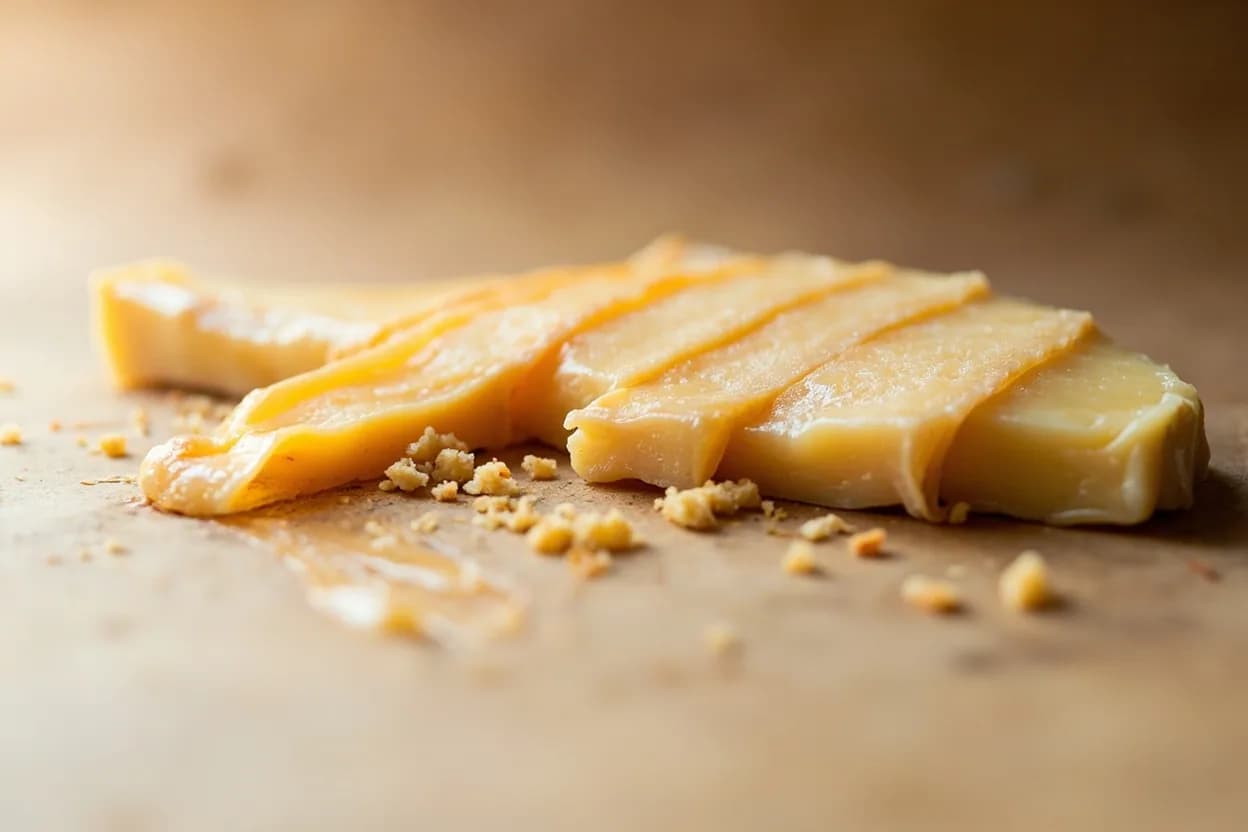
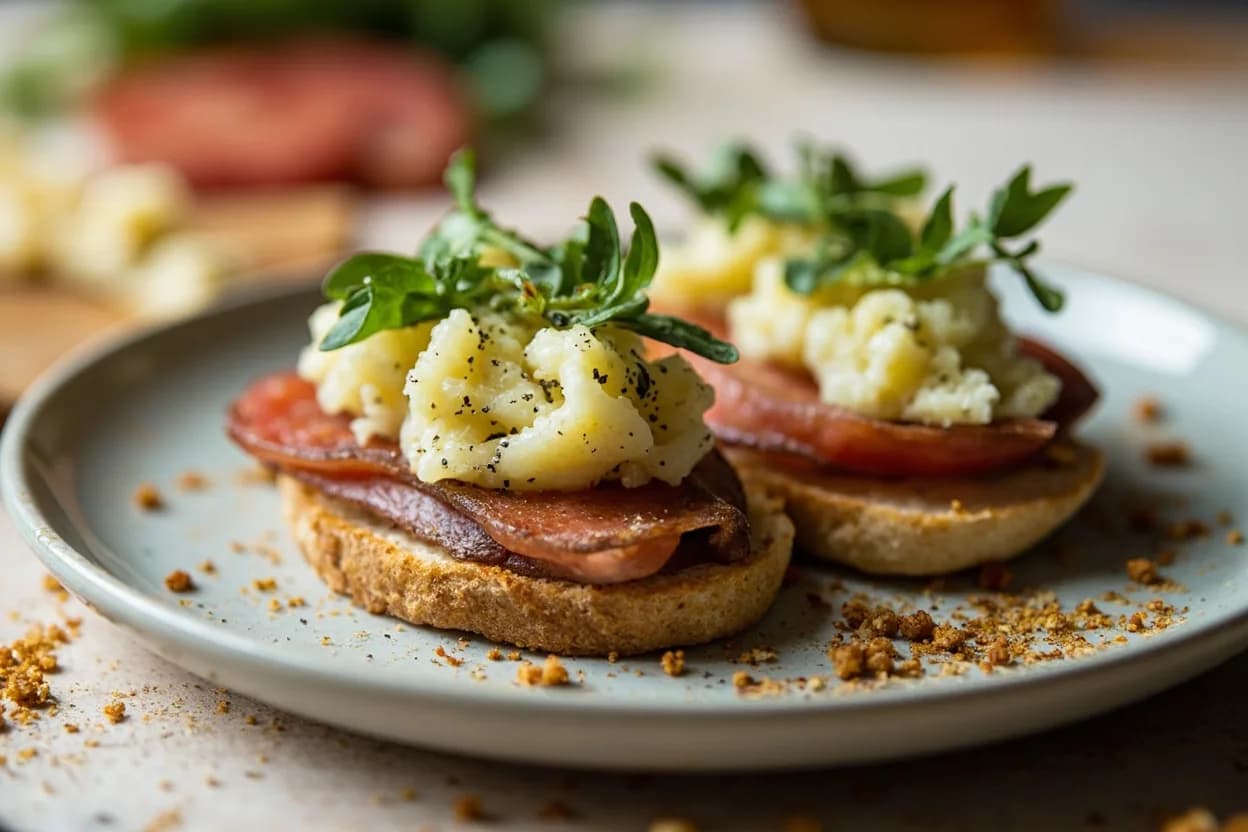
The høvl cut is the technique of using an ostehøvel — the Norwegian cheese plane invented by Thor Bjørklund in 1925 — to produce even, wide, continuous ribbons of semi-hard cheese by dragging the flat slotted blade across the face of a block at a controlled, shallow angle. The plane's slot acts as a cutter while the flat body rides on the cheese surface, automatically regulating slice thickness. The result is a slice wider than the blade, typically 6–10 cm across, that is flexible enough to drape and fold without cracking. This technique is the standard breakfast and lunch preparation for Norwegian, Swedish, and Danish smørrebrød (open-faced rye-bread sandwiches), where two to three overlapping slices of Jarlsberg, Norvegia, Gudbrandsdalsost, or Gouda constitute the topping.
In photos
Where it comes from
Not an animal cut. Applied to the flat face or the 'side' of a rectangular or block-format semi-hard cheese; the plane shaves from the top face progressively downward until the block is fully consumed.
Best for
How to cook it
- 1Remove the cheese from the refrigerator 10–15 minutes before planing — paste at 10–12 °C planes cleanly without shattering or smearing
- 2Hold the block firmly on a wooden board with the non-dominant hand, pressing slightly downward on the side to prevent rocking
- 3Place the flat body of the ostehøvel on the top face of the cheese block at the far edge, with the slot blade facing forward
- 4Draw the plane toward you in one smooth, continuous stroke with even downward pressure — approximately 200 g of pressure produces a 2 mm slice; lighter pressure yields 1 mm
- 5Lift the completed slice off the blade surface; it will emerge through and behind the slot as a single ribbon
- 6For uniform width, keep the plane square to the long axis of the block; angling produces tapered slices that are thicker at one edge
- 7Stack completed slices on a plate with a sheet of wax paper between them if preparing ahead to prevent fusion
Prep & butchery
- Wipe the plane blade clean before use — dried paste from a previous session will drag and tear rather than cut
- If the rind is intact, remove it from the planing face with a paring knife before starting; the blade will skip and shatter over a hard rind
- For Gudbrandsdalsost (brunost) — a whey caramel cheese — use a dedicated brunost høvl with a curved concave blade that scores the surface before lifting; standard flat planes tend to smear this variety
Substitutes
- Mandoline with cheese insert
Produces similar thickness but lacks the traditional wide-ribbon character and requires more setup
- Deli slicer
Yields comparable slice at high volume but is a machine, not a table tool; over-compresses soft semi-hard varieties
- Vegetable peeler (Y-peeler)
A serviceable substitute for single-use shaving of Parmesan or aged Gouda, but produces narrower, less even ribbons than the ostehøvel
Related cuts
The opposite approach — for cheeses too brittle or irregular for the plane to engage
Pre-board geometry; høvl slices are typically fanned or folded on the board for visual presentation
Upstream breakdown that yields the rectangular blocks and wedges the ostehøvel can then plane
Appears in
References
- 1.The New Nordic — Magnus Nilsson (Phaidon, 2014)
- 2.Smørrebrød: The Art of Open Sandwiches — Trine Hahnemann (Quadrille, 2020)
- 3.Thor Bjørklund original patent documentation, 1925 (Norwegian Patent Office)
- 4.The Oxford Companion to Cheese — ed. Catherine Donnelly (Oxford University Press, 2016)
Confidence: high
Notes
Temperature is everything
The ostehøvel is ruthlessly sensitive to paste temperature. At 4 °C a Jarlsberg block will shatter into uneven shards at the slot; at 18 °C the paste smears ahead of the blade and the slice arrives thick, ragged, and uneven. The target window — 10–12 °C, about 15 minutes out of a domestic refrigerator — is where the blade can engage and release a clean ribbon. Norwegian households keep their cheese in a side compartment of the refrigerator door, where temperatures naturally run 2–4 °C warmer than the main cavity.
Brunost: a special case
Brunost (brown whey cheese, sold as Gudbrandsdalsost or Ski Queen internationally) is a caramel-sugar matrix, not a protein curd, and it behaves differently under the plane: it smears rather than releasing cleanly from a flat blade. Dedicated brunost høvls have a concave, slightly serrated blade that scores-then-lifts. Never use a standard flat ostehøvel on brunost — the slice will curl, smear, and tear.