Cheese & Dairy Cuts
Cheese Wheel to Wedge Breakdown
Also: wheel portioning, cheese wedge cutting, wheel breakdown, fromage en quartiers
The geometry and sequence for portioning whole cheese wheels — flat cylinders, drums, and tall cylinders — into equal wedges with consistent rind-to-interior ratios and predictable portion weights.
The systematic breakdown of a whole cheese wheel into retail or service portions using radial cuts from the center point to the perimeter. The technique must account for wheel geometry (diameter, height, and shape) to ensure each wedge carries equal rind coverage and an equivalent ratio of interior paste to exterior rind — critical for both fair portioning and consistent flavor delivery, since the rind and the interior often have dramatically different tastes and textures.
In photos
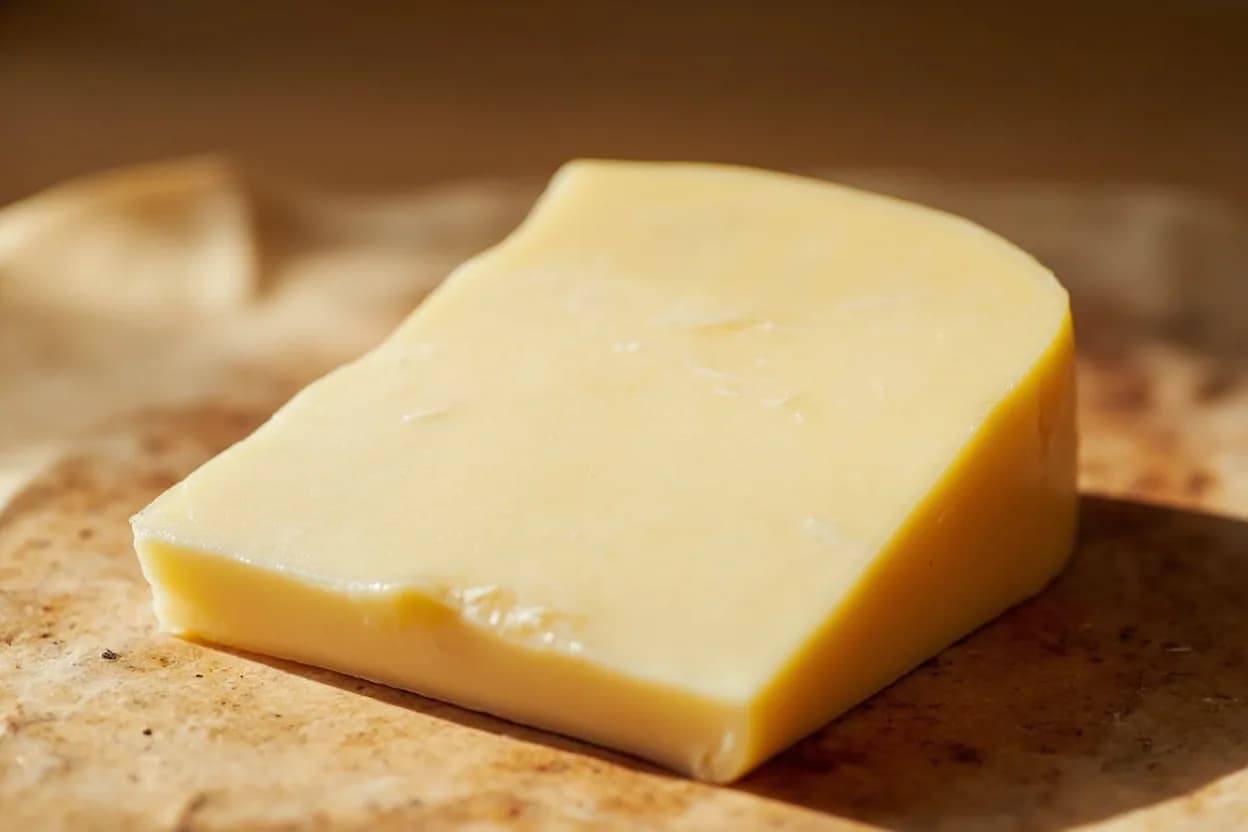
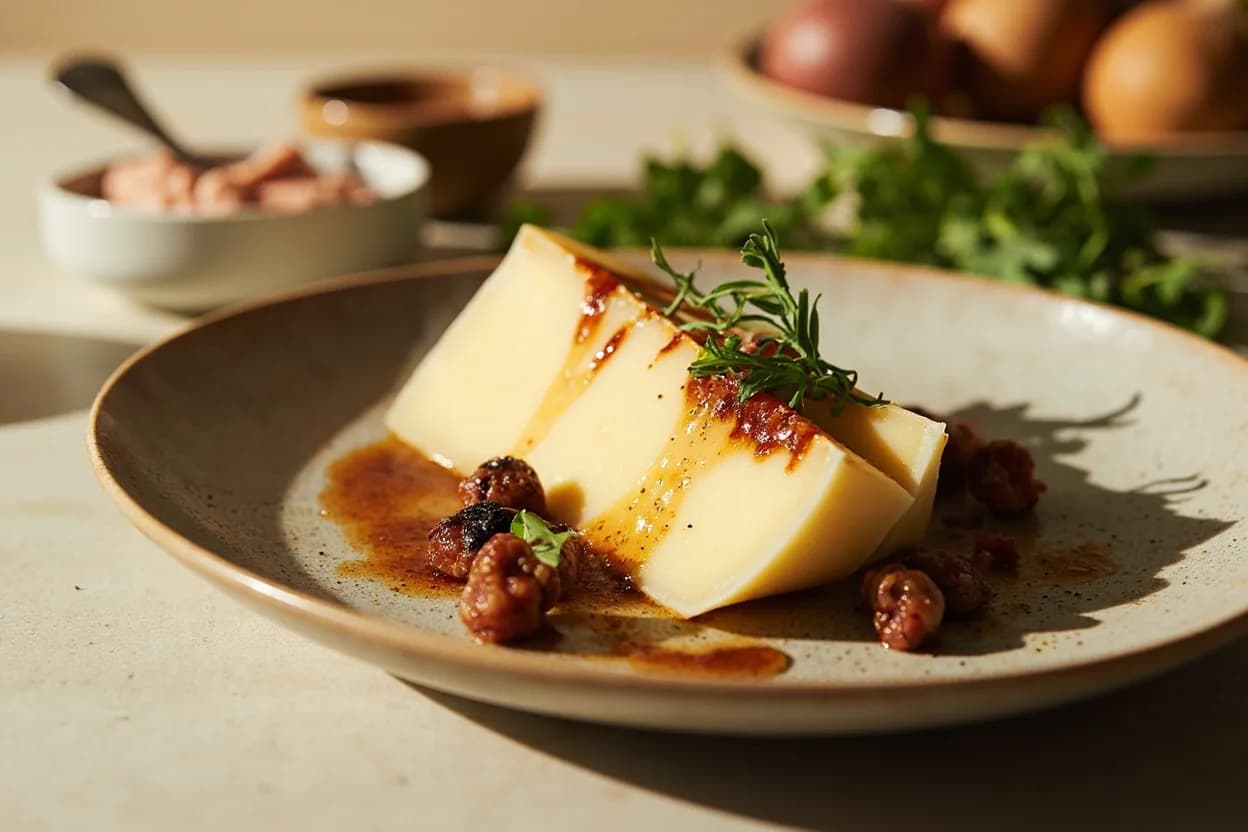
Where it comes from
Applied at the point of sale (affineur, fromagerie, retail counter) or in a restaurant kitchen when breaking down whole wheels of Parmigiano-Reggiano, Pecorino Romano, Comté, Gruyère, Manchego, aged Gouda, or similar hard and semi-hard cheeses purchased in wheel form.
Best for
How to cook it
- 1Flat cylinder (e.g., Manchego, young Gouda, Comté): place the wheel flat; locate the center point by eye or by measuring the diameter. Score a cross through the center to establish north–south and east–west reference lines. Cut along these lines first to produce quarters, then halve each quarter radially to produce eighths (or finer divisions for larger wheels).
- 2Drum (tall cylinder with height close to diameter, e.g., aged Gouda, Edam): stand the drum upright; make a single vertical cut through the center axis to produce two halves. Lay each half flat (cut-side down) and make radial cuts to produce wedges of desired weight.
- 3Tall cylinder (e.g., Parmigiano-Reggiano, Grana Padano): use an almond-shaped knife or cheese chisel to score a horizontal line around the full equator. Drive the chisel at intervals around the equator and pry apart to split the wheel at the mid-height into two halves — do not saw, as sawing smears and wastes expensive paste. Each half is then stood upright and portioned vertically into wedges, or laid flat and portioned radially.
- 4For any geometry, calculate target portion weight before cutting: number of portions = wheel weight ÷ target gram weight. Round to a workable number of radial cuts (e.g., 32 cuts for a 6.4 kg wheel at 200 g portions).
- 5Wrap cut faces immediately in cheese paper or breathable wax paper; plastic wrap is acceptable for short-term retail display but accelerates ammonia buildup in aged cheeses.
Prep & butchery
- A long, thin-bladed knife (at least 30 cm) reaches the center of most wheels without the heel dragging across the rind.
- For Parmigiano and other granular cheeses, use the traditional almond-shaped chisel set rather than a knife — sawing cuts smear the crystalline paste and reduce grating yield.
- Mark the center of the wheel with a small score before making the first radial cut; even a 1 cm offset at center compounds to significant weight variation by the outer edge on large wheels.
- Weigh the whole wheel before starting and set a target portion count to avoid ending up with one undersized remnant at the last cut.
- Clean the blade between cuts when working with washed-rind or high-moisture cheeses to prevent rind bacteria from being dragged into the paste of subsequent portions.
Substitutes
- Pre-portioned cryo-vac wedges
Commercially available and consistent, but lack the presentation value and flavor of freshly cut wheel portions; rind moisture is often compromised by vacuum packaging.
- Block breakdown
Rectangular block portioning is used for cheeses pressed into non-wheel molds (cheddar, American brick); the rind-to-interior geometry differs fundamentally.
Related cuts
- Blue cheese wire cut
Wire rather than blade used for crumbly blues to prevent smearing veins — contrasting technique for similar wheel shapes
- Half-wheel breakdown
Many retailers purchase half-wheels; the same radial geometry applies from the flat cut face as the new reference plane
- Cheese cube / dice
Secondary cut from wedge portions for fondue, salads, or charcuterie boards
Appears in
References
- 1.Cheese and Culture: A History of Cheese and Its Place in Western Civilization — Paul Kindstedt
- 2.The Oxford Companion to Cheese — Catherine Donnelly (ed.)
- 3.Mastering Cheese — Max McCalman & David Gibbons
- 4.The Professional Charcuterie Series — Marcel Cottenceau & Bernard Sorin
Confidence: high
Notes
Rind-to-interior ratio
The value of a properly cut wedge lies partly in its rind-to-paste ratio being equal across all portions. A cheese like Comté or Gruyère has a rind that is inedible but imparts flavor through proximity; a portion that is entirely interior paste will taste and age differently on a cheese board than one with a rind face. Ensuring each wedge has the same rind arc (the outer curved face) maintains consistent flavor and presentation across a wheel.
The Parmigiano chisel tradition
Parmigiano-Reggiano is never sawn — the traditional opening uses five specialized chisels of different shapes driven into score lines around the equator and vertical seams. The wheel fractures along its natural crystal planes, exposing the characteristic rocky, granular interior that a smooth knife cut would obscure. This is not ceremony for its own sake: the fractured surface has significantly higher surface area than a smooth cut, which improves both visual appeal and grating yield.