Poultry — Breakdown & Cuts
Chicken Suprême
Also: airline breast, statler breast, supreme de volaille, chicken airline
The most refined of the classical chicken butchery cuts — a skin-on breast with the first wing joint attached, built to present beautifully on a plate.
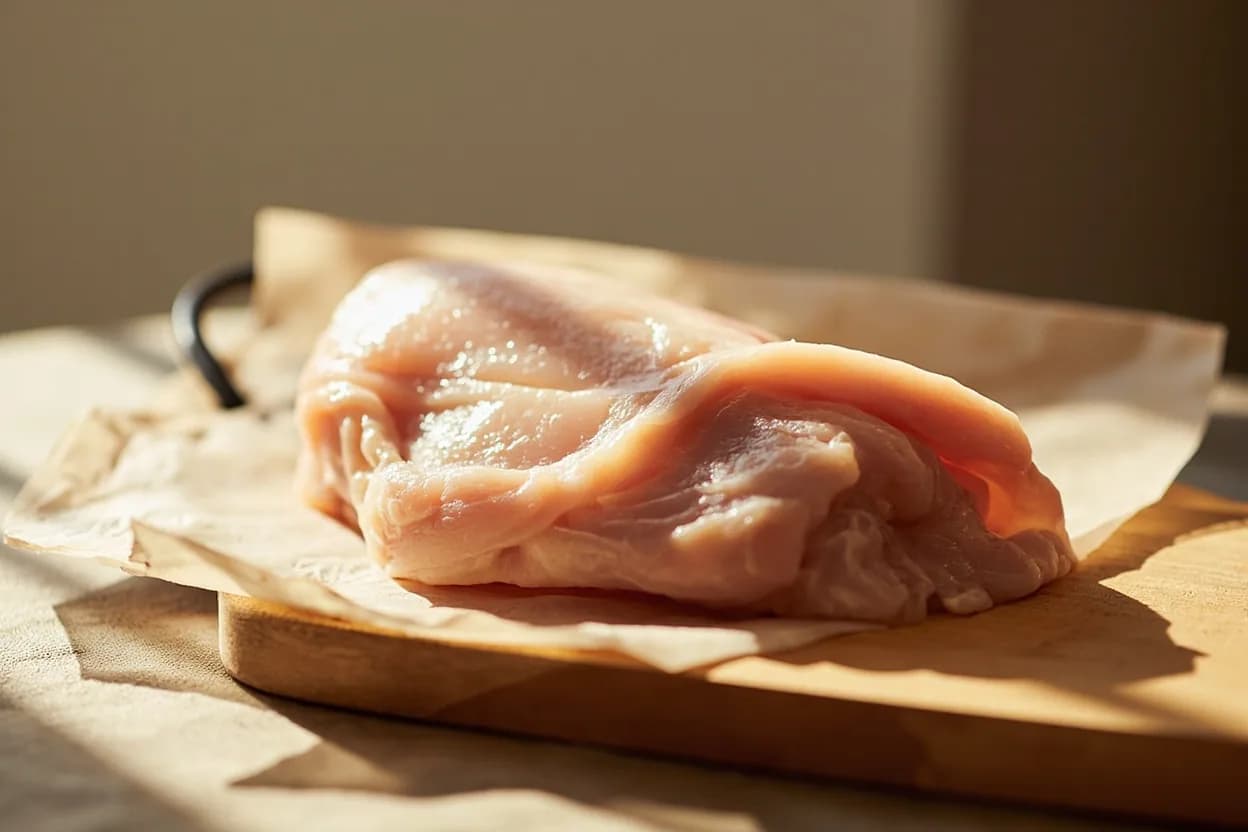
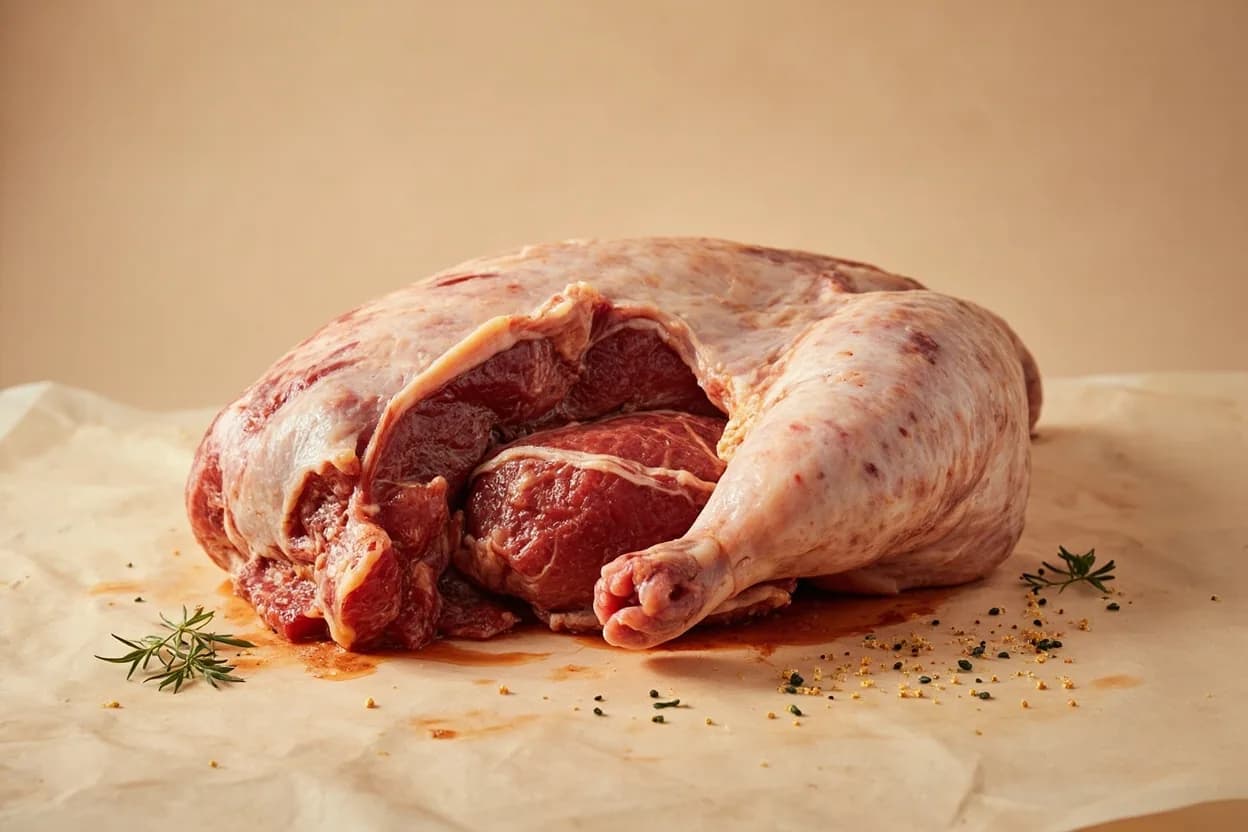
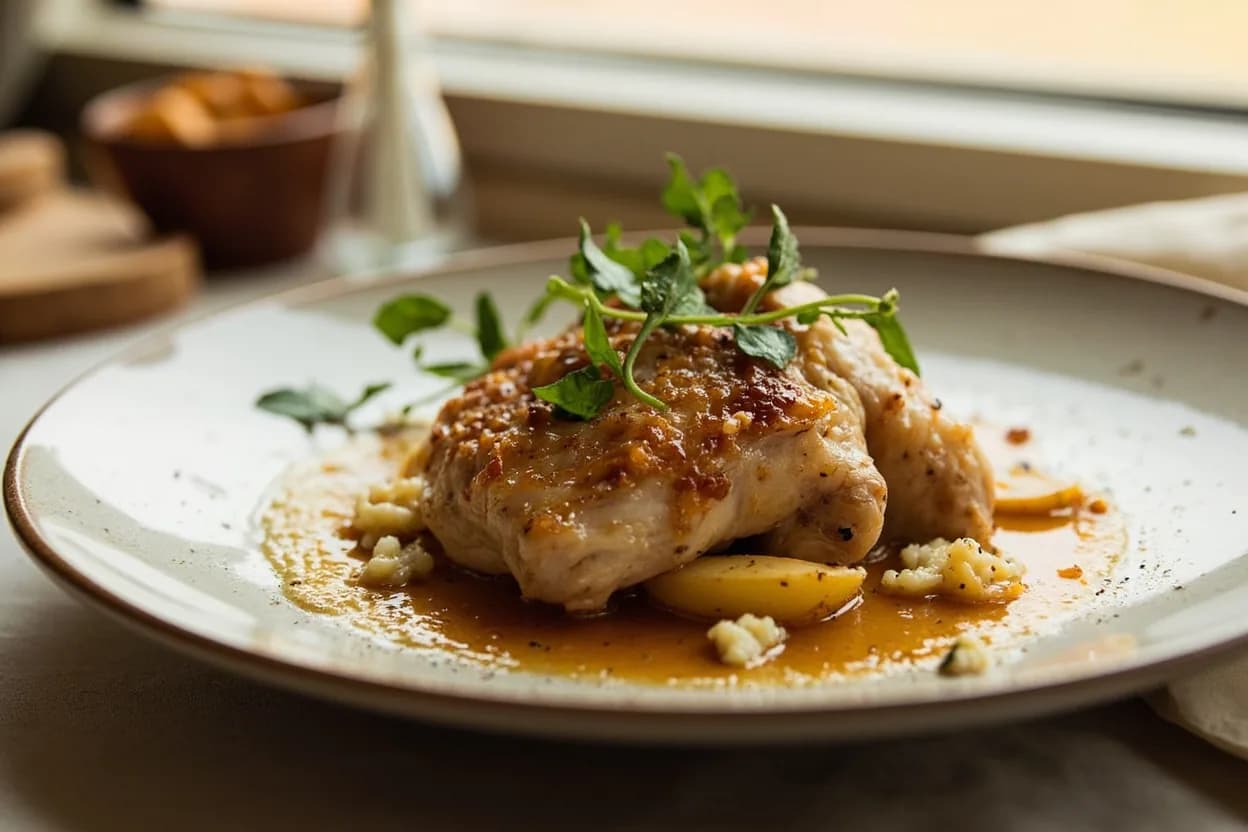
A chicken suprême is a skin-on, boneless (or semi-boneless) chicken breast with the first wing joint — the humerus (drumette) — left attached and frenched. The meat is removed cleanly from the carcass keeping the breast skin fully intact, and the wing joint is trimmed to expose a short length of clean bone as a handle. In French classical service, the term 'suprême' implies the finest, most distinguished portion of the bird.
In photos
Where it comes from
Removed from the whole bird carcass as an unseparated breast-and-wing unit. The breast is cut away from the sternum and keel bone, the wishbone is removed first for cleaner separation, and the wing is kept connected at the shoulder joint while the outer two wing segments are discarded. The resulting piece includes the entire pectoralis major muscle with skin draped over it and a short frenched bone protruding from the thickest end.
Best for
How to cook it
- 1STEP 1 — Remove wishbone: locate the wishbone (furcula) at the neck end of the breast; score along both arms with a paring knife, hook with a finger, and pull free. This allows the breast to separate cleanly.
- 2STEP 2 — Cut from carcass: lay bird breast-side up, cut down one side of the sternum with a boning knife, following the keel bone closely. When the wing joint is reached, dislocate the shoulder socket and cut through the joint to keep the humerus attached.
- 3STEP 3 — Remove the two outer wing segments: find the elbow joint (between humerus and radius/ulna), dislocate and cut through it cleanly. Discard or reserve the wing tip for stock.
- 4STEP 4 — French the bone: use a small paring knife to scrape the humerus clean from the elbow end toward the shoulder, pushing meat and skin back toward the breast. Expose 3–4 cm of clean bone.
- 5STEP 5 — Trim: remove any stray cartilage, pull the skin to cover the breast evenly, and tuck the tapered tenderloin underneath the breast for a more uniform thickness.
- 6COOK: season generously under the skin. Sear skin-side down in a hot oven-safe pan with clarified butter or oil for 4–5 minutes until deeply golden; turn, add whole butter and aromatics, baste, and finish in a 180°C (350°F) oven for 10–14 minutes to 65–68°C (149–155°F) internal temperature. Rest 5 minutes before plating.
Prep & butchery
- Remove the wishbone before all other butchery — this single step makes the entire suprême easier to cut free and carve later
- Keep the skin fully attached and smooth over the breast before cooking — tears or detached edges allow steam to escape and the skin to shrink unevenly
- Pat completely dry 30 minutes before cooking — moisture on the skin prevents crisping
- If making Chicken Kiev, butterfly the breast by cutting a deep horizontal pocket before stuffing and breading
Substitutes
- Skin-on boneless chicken breast
Lacks the frenched bone presentation but is functionally identical in cooking behavior
- Guinea fowl suprême
Direct classical substitute in French haute cuisine; slightly gamier and more prized
- Duck breast (magret)
Similar pan-sear-to-oven technique; far higher fat cap; not a straight swap in composition
Related cuts
- Chicken Breast (boneless, skinless)
Same muscle without the skin or bone — lower luxury tier, different cooking behavior
Suprême is the premium alternative to standard breast halving in the cut-up
- Duck Breast (Magret)
Analogous prestige cut from duck; same pan-sear-to-oven cooking logic
Appears in
References
- 1.Auguste Escoffier — Le Guide Culinaire (translated by H.L. Cracknell & R.J. Kaufmann)
- 2.Jacques Pépin — La Technique
- 3.The Culinary Institute of America — The Professional Chef (9th ed.)
- 4.Michel Roux Jr. — The French Kitchen
Confidence: high
Notes
Etymology and classical usage
The word 'suprême' in French classical cooking denotes the finest portion of any ingredient — the breast of a bird, the fillet of a sole, the cap of a côte de bœuf. Applied to poultry, it has meant the skin-on breast since Escoffier codified brigade-era French cooking. The American alias 'airline breast' or 'statler breast' (after the Statler Hotels chain, which popularized it in mid-20th-century banquet service) has the same anatomical specification. In modern culinary competition, the frenched bone is the visual signature of the cut.
Under-skin seasoning
For the most evenly seasoned suprême, loosen the skin from the breast by sliding fingers beneath it from the neck end, and rub softened herb butter, salt, or aromatics directly onto the meat. The skin then acts as a self-basting membrane rather than a barrier. This is the technique behind the classic 'poulet en crapaudine' variant and most restaurant preparations.