Poultry — Breakdown & Cuts
Chicken Thigh — Bone-In vs. Boneless
Also: boneless thigh, bone-in thigh, skin-on thigh, momo no niku, cuisse de poulet désossée, ran tori
The most versatile poultry cut — the thigh's dark, fatty, collagen-rich muscle performs brilliantly bone-in for braises and high-heat roasts, and transforms into a flat, skin-on canvas for Japanese teriyaki, Persian khoresh, and Western pan-sears.
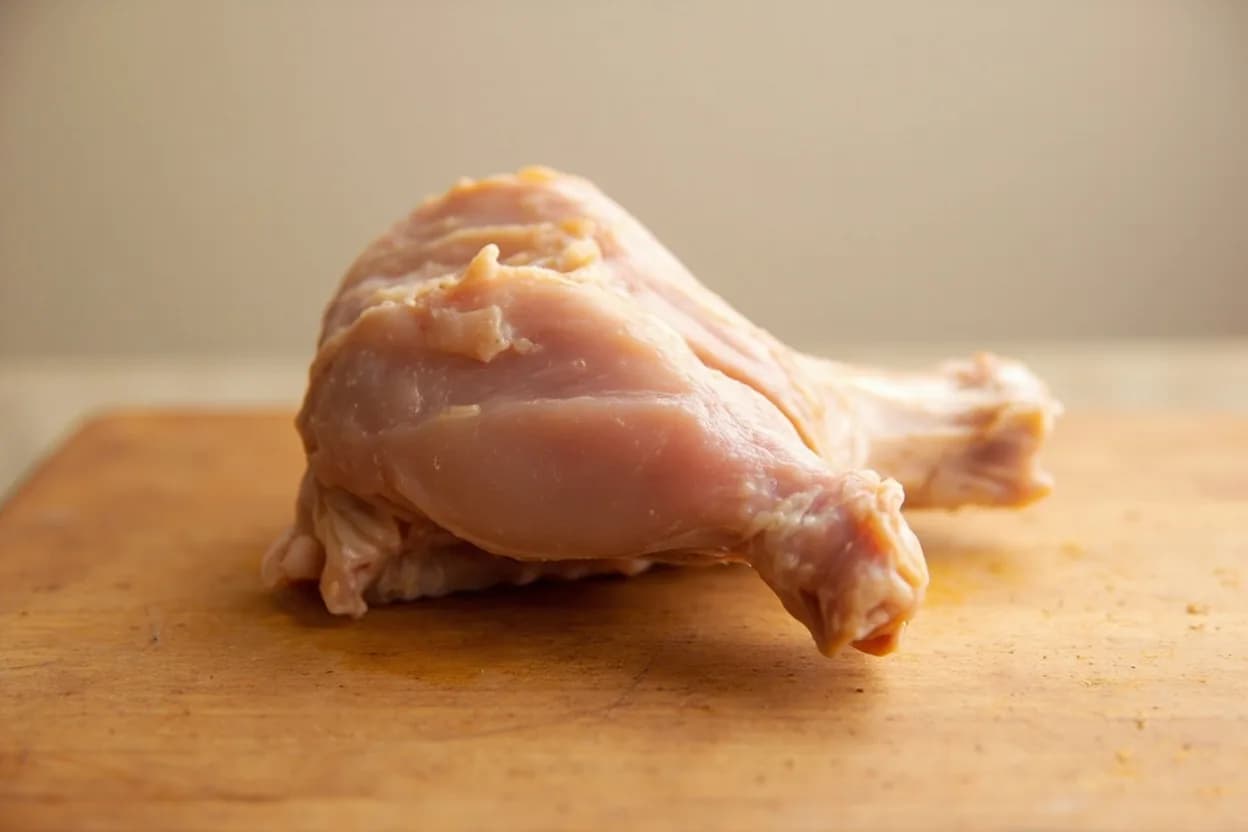
The chicken thigh is the femoral section of the leg — the segment from hip socket to knee joint — and is composed primarily of the biceps femoris and related dark-meat muscles that are well-exercised and therefore rich in myoglobin, collagen, and intramuscular fat. It is sold and cooked in two primary states: bone-in (femur intact, skin-on) and boneless (femur removed, typically skin-on or skinless). The boning process is a straightforward tunneling cut along the femur, but the choice between bone-in and boneless determines the appropriate cooking method, cook time, and cuisine application. Bone-in thighs cook more slowly and retain more moisture as the bone acts as a heat buffer; boneless thighs cook faster, lay flat for even skin contact, and accept marinades more readily.
In photos
Where it comes from
The hip-to-knee leg segment of the chicken: biceps femoris (primary muscle), semimembranosus, and semitendinosus surrounding the femur (thigh bone). The skin covers the dorsal surface; the oyster — a small, prized pocket of muscle at the hip — is typically retained with the thigh during butchery.
Best for
How to cook it
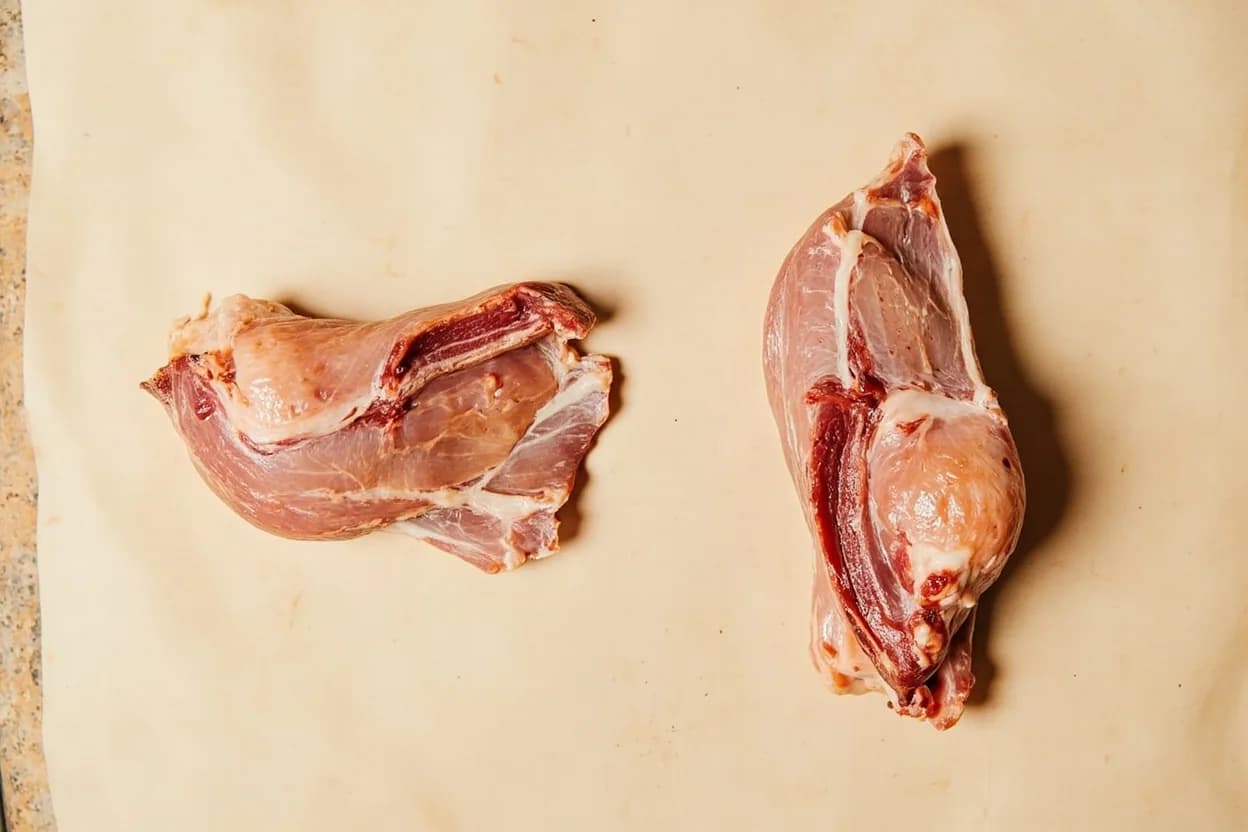
- 1BONING THE THIGH (if starting bone-in): Lay thigh skin-side down; run a boning knife along the femur from hip end to knee end, scraping the bone clean on both sides; sever the tendons at each end and remove the bone in one piece. The oyster and skin remain attached.
- 2Butterfly technique for even thickness: after boning, make a shallow cut into the thickest part of the muscle and fold it open like a book — the thigh now cooks uniformly.
- 3BONE-IN SEAR AND ROAST: Season liberally; place skin-side down in a cold, dry oven-safe skillet; heat gradually over medium until skin renders and crisps (12–15 min); flip and transfer to 200 °C oven until internal temp reaches 74–78 °C (8–12 min more).
- 4BONELESS PAN-SEAR (TERIYAKI STYLE): Place cold skin-side down in a dry cold pan; heat to medium; press flat with a weight or another pan to maintain contact; cook until skin is deep mahogany (8–10 min); flip and cook meat-side 3–4 min; glaze with tare in the final 2 minutes.
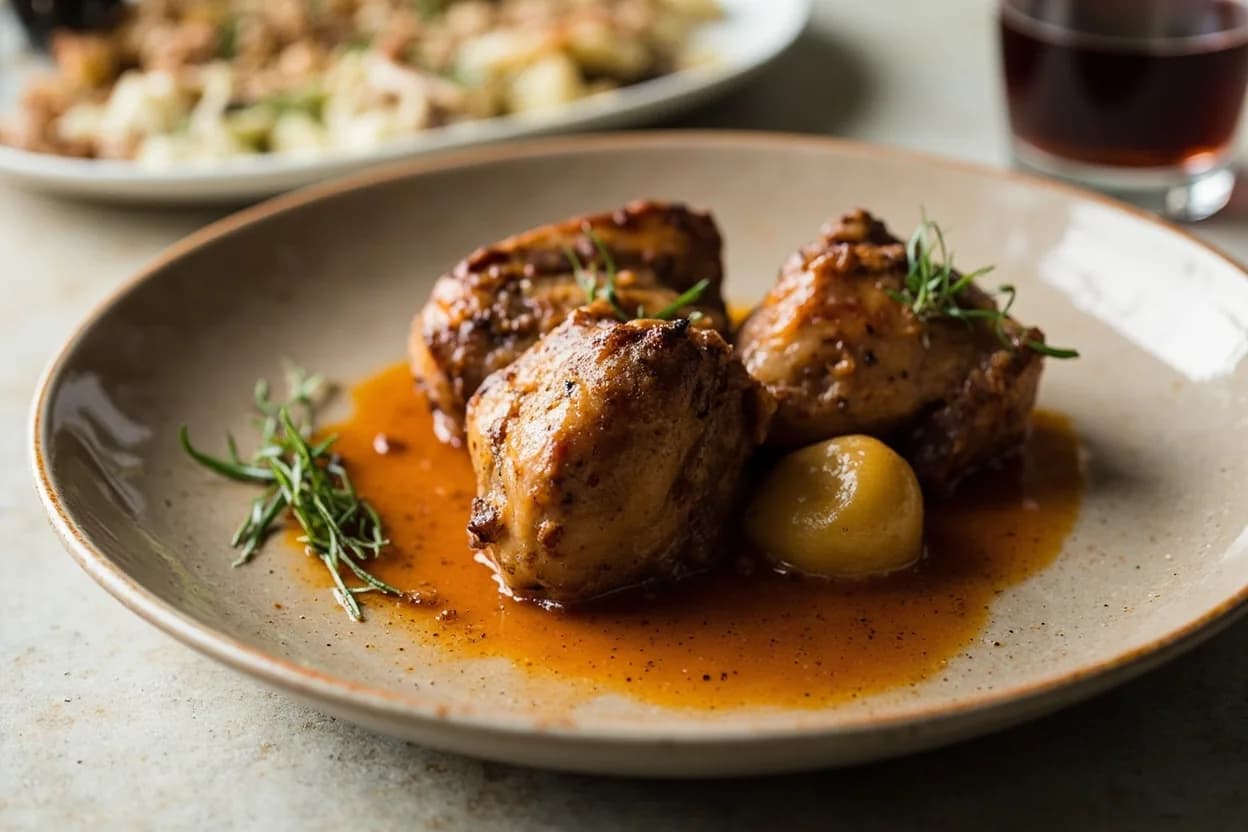
- 5BRAISE: Brown bone-in thighs skin-side down; remove; sweat aromatics; deglaze; return thighs skin-up in liquid reaching halfway up the meat; cover and cook at 160–170 °C oven for 45–60 min until fork-tender.
- 6SOUS VIDE: Seal seasoned thighs (bone-in or boneless); cook at 65 °C × 90 min (boneless) or 68 °C × 2 h (bone-in); sear skin-side down in cast iron 3–4 min to crisp.
Prep & butchery
- For bone-in: trim excess fat hanging from edges but do not remove skin — the skin is the self-basting mechanism.
- For boneless: the femur runs from a rounded ball end (hip) to a flatter hinge end (knee) — the knife should stay in contact with the bone throughout, not the meat.
- The oyster pocket (a concave dimple of intensely flavored muscle at the hip socket) sits under a thin membrane — ensure it stays with the thigh, not the carcass.
- Butterfly the boneless thigh by cutting into the thickest muscle belly and folding open; this doubles the surface area for marinade contact and ensures cooking to a uniform thickness.
- Score the skin (2–3 shallow diagonal cuts) if cooking bone-in under very high heat — this prevents the skin from buckling and trapping unrendered fat.
- Pat dry before searing; surface moisture creates steam that prevents Maillard browning and keeps the skin from crisping.
Substitutes
- Chicken Drumstick
Similar dark meat character; more collagen in the drumstick; shorter overall meat cross-section makes even cooking easier; no flat-sear possibility.
- Turkey Thigh (Bone-In)
Identical prep and cooking logic at larger scale; adjust braising time to 90–120 min; excellent for coq au vin-style dishes.
- Duck Leg (Confit-style)
Richer, more fat; extended low-temperature cooking required; not a quick swap but analogous in dark-meat braising applications.
Related cuts
The knee-joint separation used in tandoor prep is the same cut that divides the leg quarter into thigh and drumstick.
A ballotine begins with the full leg: thigh boning is step one of that more complex preparation.
Duck confit leg follows the same dark-meat low-slow logic as bone-in chicken thigh braising, at a higher fat and collagen density.
Appears in
References
- 1.The Food Lab: Better Home Cooking Through Science — J. Kenji López-Alt
- 2.Samin Nosrat: Salt Fat Acid Heat — Samin Nosrat
- 3.The Professional Chef, 9th Ed. — The Culinary Institute of America
- 4.Japanese Farm Food — Nancy Singleton Hachisu
- 5.Zaitoun: Recipes from the Palestinian Kitchen — Yasmin Khan
Confidence: high
Notes
The Cold-Pan Start for Crisp Skin
The single most important technique for boneless skin-on thighs is placing them skin-side down in a cold, dry, ungreased skillet and then turning on the heat. Starting cold allows the subcutaneous fat to render slowly and completely before the protein in the skin sets, producing an evenly golden, fully rendered, crackle-crisp skin with no raw fat pockets. Starting in a hot pan sets the skin before the fat has rendered — the result is a beautifully browned but soft-underneath skin that turns rubbery as it cools.
Bone-In = Better Stock, Better Flavor
The femur of a chicken thigh contains bone marrow and is surrounded by periosteum rich in collagen and flavor compounds. During braising, these leach into the cooking liquid, enriching sauces and gravies. Dishes cooked bone-in (coq au vin, chicken cacciatore, adobo) have measurably richer, more gelatinous sauces than the same dish made with boneless thighs. If using boneless, add a split chicken wing or neck to the braise to compensate.
Persian and Japanese Applications of the Boneless Thigh
In Japanese cuisine, the butterflied boneless thigh is the canonical cut for tori no teriyaki and yakitori momo — the flat, uniform piece makes contact with a blazing hot grill or flat iron from edge to edge, producing even caramelization of the tare glaze. In Persian cooking (khoresh-e-morgh), bone-in thighs are preferred because the gelatin released from the bone thickens and enriches the fruit-and-walnut braises that define the tradition.