Poultry — Breakdown & Cuts
Drumstick & Thigh Separation (Tandoor Prep)
Also: leg quarter breakdown, chicken leg separation, tandoori leg prep, scoring for tandoor, tikka leg prep
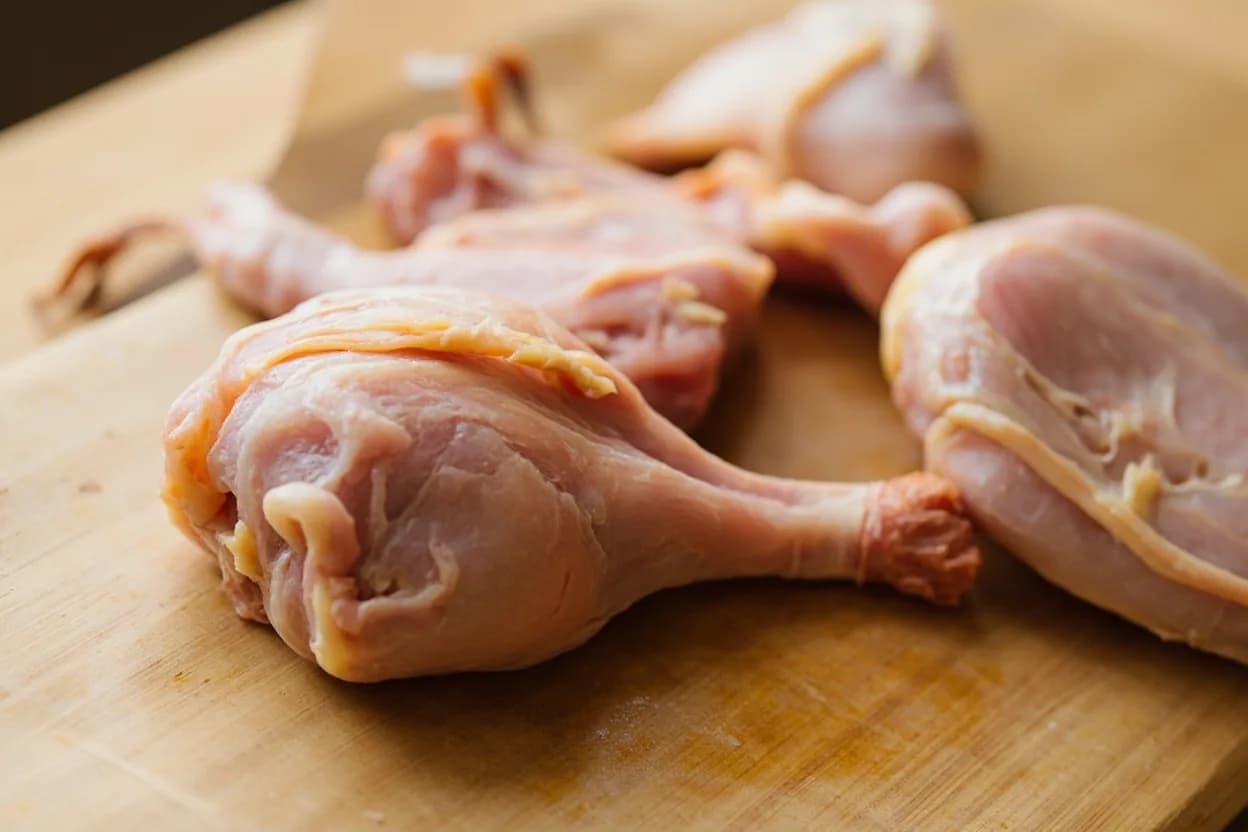
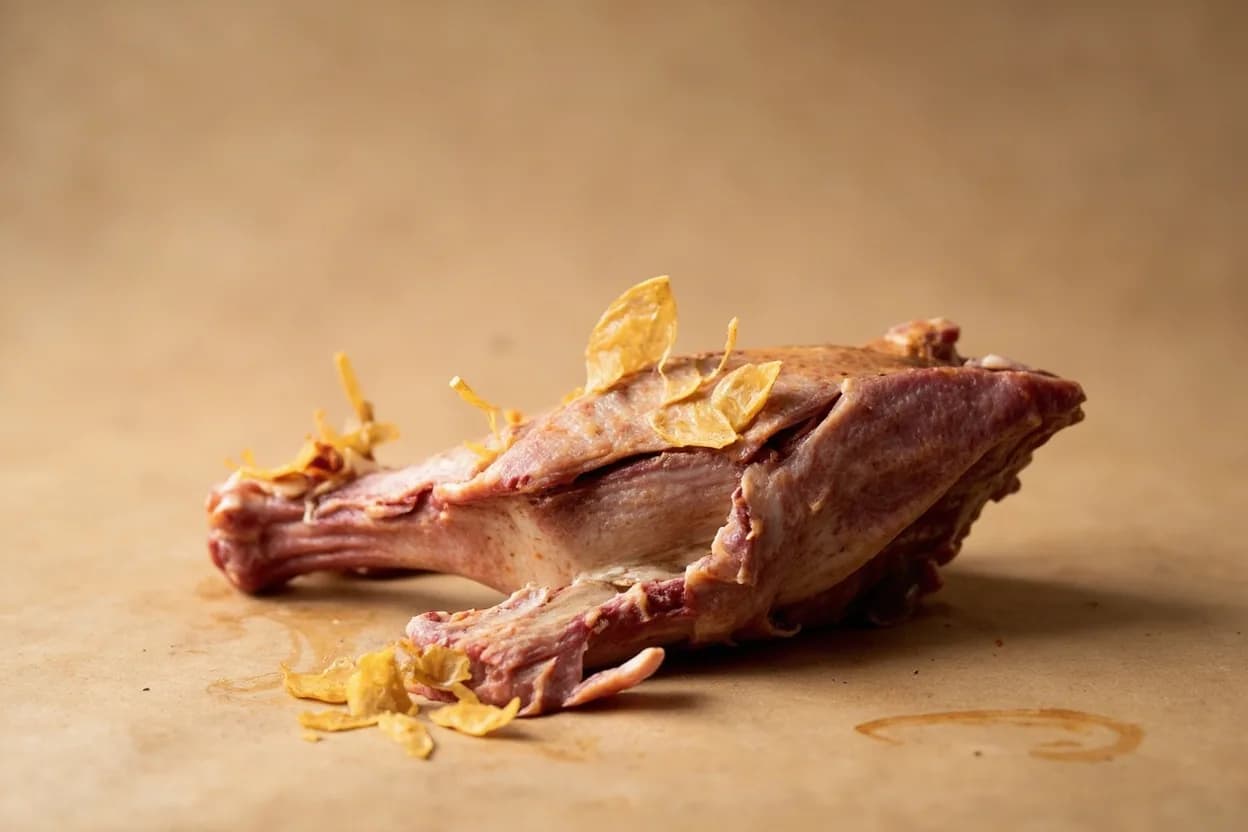
Separating the leg quarter at the knee joint and scoring the meat to the bone — the foundational prep cut that allows tandoor heat and yogurt marinade to penetrate a thick, bone-in chicken leg fully in under 20 minutes.
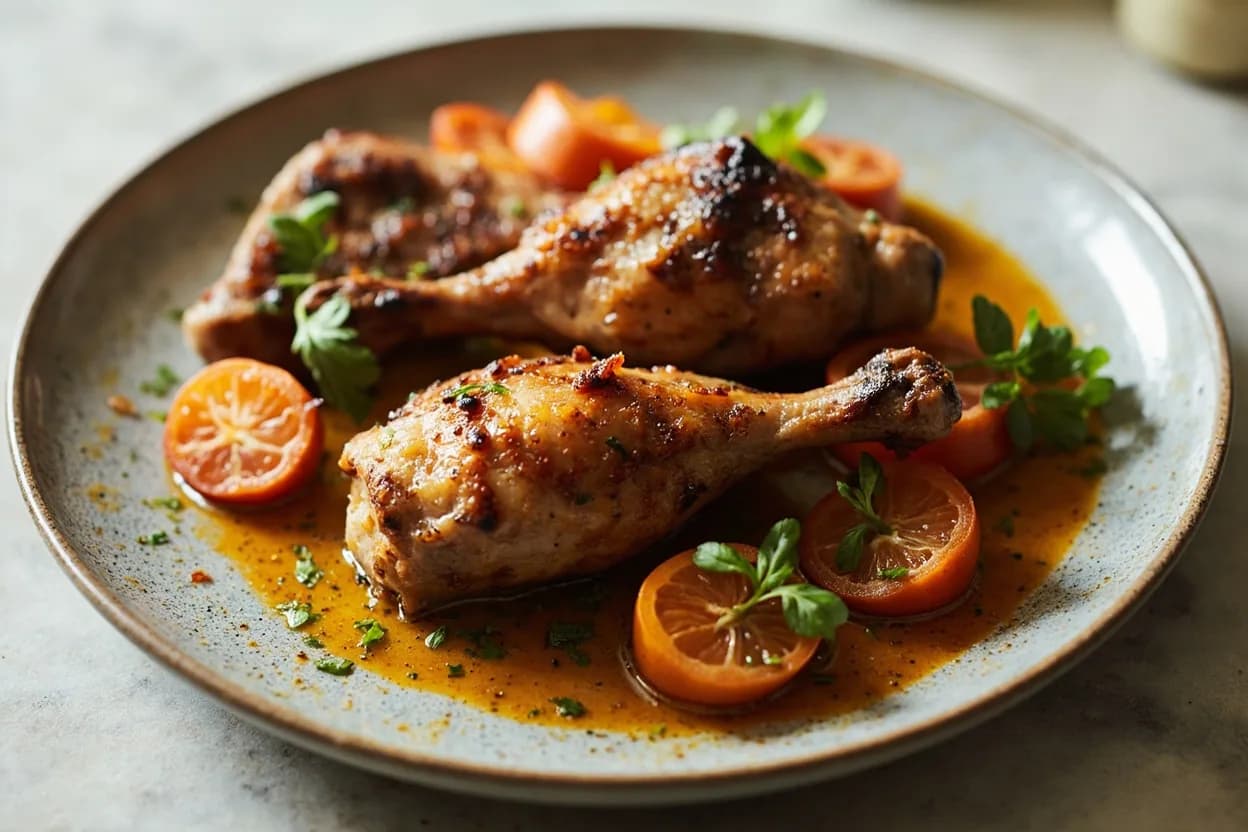
Tandoor chicken preparation requires the leg quarter to be separated into its two natural pieces — the thigh (femur section) and the drumstick (tibiotarsus section) — at the knee (stifle) joint, and then deeply scored with parallel cuts that expose the meat down to the bone surface. The scoring is not decorative: a tandoor reaches 400–480 °C at its inner wall, and the violent radiant heat would burn the exterior of an unscored leg long before the meat near the bone reached a safe temperature. The deep cuts allow the spiced yogurt marinade to penetrate, and the slashes open into dramatic charred ridges that are one of the defining aesthetic signatures of the dish.
In photos
Where it comes from
The chicken leg quarter — a single attached unit of thigh (femur + surrounding dark meat) and drumstick (tibia/fibula + calf muscle) separated at the knee joint by locating and cutting through the cartilage. The hip remains attached to the thigh (the oyster comes with it), and the knuckle end of the drumstick is either left intact or trimmed for presentation.
Best for
How to cook it
- 1Separate leg quarter at the knee: bend the joint back to reveal the cartilage, cut firmly through the joint — no sawing; the blade follows the natural gap between tibia and femur.
- 2Score the thigh: make 3–4 deep parallel cuts through the skin and meat all the way to the femur, angling slightly to maximize surface area; space cuts 1–1.5 cm apart.
- 3Score the drumstick: 2–3 parallel cuts along each 'side' of the drum, again reaching the bone.
- 4Apply the first marinade (raw papaya paste or lemon juice + salt); work it into the cuts with your fingers and rest 30 minutes — the proteolytic enzymes begin tenderizing.
- 5Apply the second marinade (yogurt, ginger-garlic paste, red chili, garam masala, kashmiri chili for color, oil, and salt); press firmly into every scored channel; marinate refrigerated 4–12 hours.
- 6Thread thighs on flat metal skewers through the bone; thread drumsticks separately. Hang vertically in the tandoor near the top (cooler zone) for 10 minutes, then lower toward the heat for 5–8 minutes — total 15–18 minutes.
- 7Brush with melted ghee or butter at mid-cook; apply a second coat 2 minutes before removal.
- 8Rest 3 minutes; serve with chaat masala, lemon wedges, and raw sliced onions.
Prep & butchery
- A heavy, sharp chef's knife or a heavy cleaver is preferred for the knee-joint separation — thin knives can bind in cartilage.
- The knee joint yields cleanly to a decisive downward cut through the cartilage; if you hit bone, you are off-center — reposition toward the natural gap.
- Score with a thin, sharp boning knife or chef's knife; the cuts should reach the periosteum (bone surface) but not chip the bone.
- Wipe excess skin from around the knuckle of the drumstick (or remove knuckle skin entirely) to prevent burning at the tip while thicker sections cook.
- Pat the chicken dry before scoring — wet skin resists the marinade and steams rather than chars in the tandoor.
- For large batches, use a sharp-edged metal scraper (bench knife) to speed up scoring in a production kitchen setting.
Substitutes
- Bone-In Chicken Thigh Only
If drumstick sizes are uneven, thighs alone are preferred for consistent cook times; add 3–4 min to total cook.
- Chicken Leg Quarter (Unseparated)
Can be cooked whole in a home oven or grill with extended time (25–30 min at 220 °C) but the uneven thickness makes even charring difficult.
- Bone-In Chicken Breast (Tikka style)
Higher heat tolerance is required given lean white meat; overcooks easily — keep the broil shorter (10–12 min max) and score shallower.
Related cuts
Both begin with leg-quarter separation; Cantonese chop continues cross-cutting through bone while tandoor prep preserves the larger piece.
Tandoor thigh is always bone-in; the scoring technique here overlaps with the boneless thigh butterfly technique.
Bone removal is the conceptual opposite — ballotine extracts the bones; tandoor prep retains them for radiant heat conduction.
Appears in
References
- 1.660 Curries — Raghavan Iyer
- 2.Indian-ish — Priya Krishna
- 3.The Complete Tandoor Cookbook — Suneeta Vaswani
- 4.Madhur Jaffrey's Indian Cooking — Madhur Jaffrey
- 5.The Professional Chef, 9th Ed. — The Culinary Institute of America
Confidence: high
Notes
Two-Stage Marinade Logic
Traditional tandoori prep uses two sequentially applied marinades. The first is acidic (raw green papaya paste, which contains papain, or lemon juice) and acts over 20–30 minutes to break down the outermost muscle fibers, creating micro-channels for deeper penetration. The second stage is the spiced yogurt marinade, applied after the acid treatment and left for 4–12 hours. Applying both simultaneously would over-tenderize the surface and produce a mushy exterior — the sequence is deliberate.
The Tandoor Environment
A traditional clay tandoor operates at 400–480 °C at the inner wall with active coal or wood fire at the bottom. Chicken is cooked by a combination of intense radiant heat from the walls, convective hot air, and direct infrared from the glowing interior. The moisture from the yogurt marinade creates brief surface steam that prevents the exterior from charring before the interior cooks. This three-mode heat transfer is impossible to fully replicate with a standard oven, but a very hot broiler (or baking steel placed near the broiler element) produces the closest home approximation.