Knife Cuts — Regional & Global
Drumstick (Moringa) Finger Cut
Also: murungakkai cut, sahjan finger, moringa pod finger cut, drumstick segment cut
Cutting Moringa oleifera pods into 5–8 cm fingers and scoring the skin so diners can scrape the tender flesh and seeds directly from the fibrous shell.
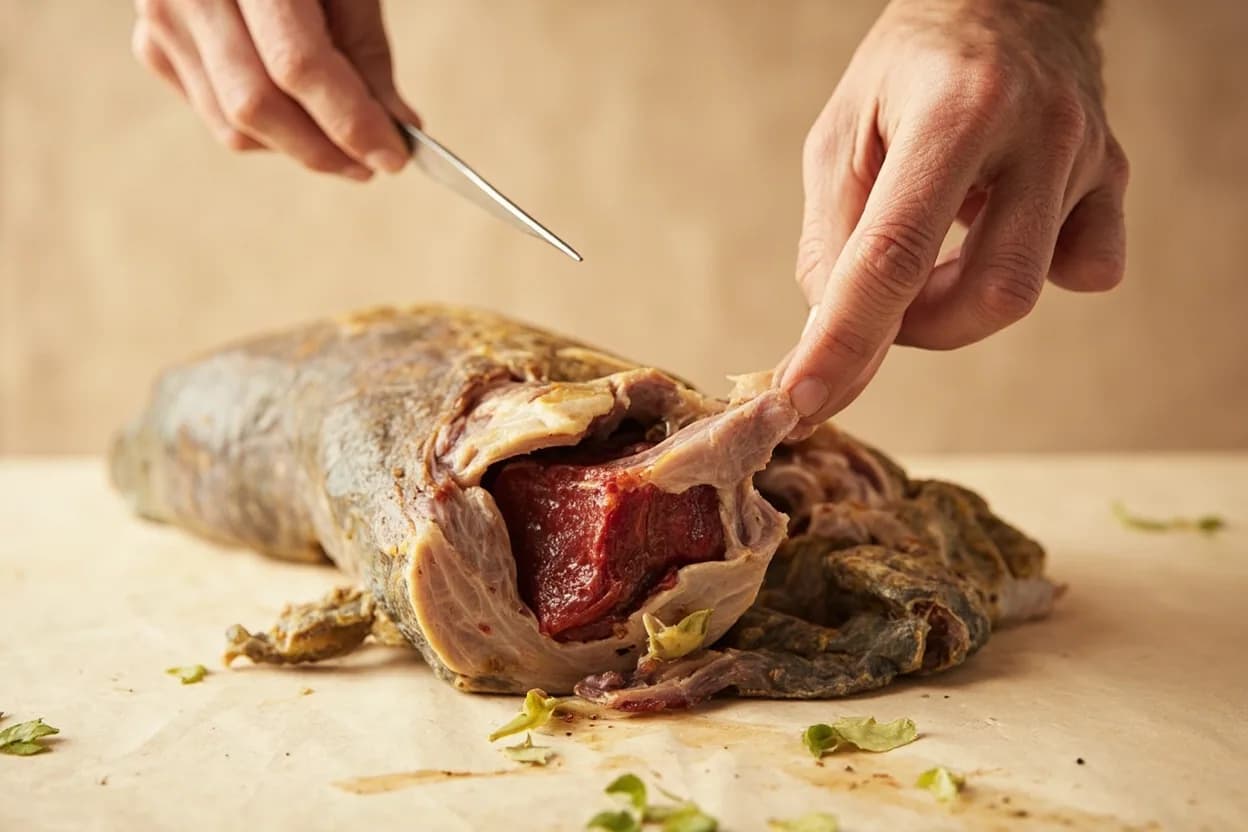
A technique applied to the long, ridged pods of Moringa oleifera (called drumsticks for their resemblance to percussion mallets) in which the pod is cut crosswise into finger-length segments of 5–8 cm and the skin of each segment is scored with two or three shallow lengthwise cuts. The scoring is functional: the outer skin of the drumstick pod is tough, fibrous, and inedible; only the inner pulp, seeds, and seed skins are consumed. Scoring allows the pod to split slightly during cooking, making it easier for diners to hold the segment and scrape the soft interior with their teeth — the traditional South Indian eating method.
In photos
Where it comes from
The pod (fruit) of Moringa oleifera, a fast-growing tropical tree native to the foothills of the Himalayas, now widely cultivated across South India, Sri Lanka, West Africa, and Southeast Asia. Pods are harvested immature (15–30 cm long, deep green, with visible ridges) when the interior is still soft.
Best for
How to cook it
- 1Rinse pods and trim off both ends (the very tip and the stem end with the cap).
- 2Cut the pods crosswise into 5–8 cm segments using a heavy chef's knife or cleaver — the ridge lines are tough and a dull knife will crush rather than cut.
- 3Score each segment with 2–3 shallow lengthwise cuts through the skin only; do not cut deeply into the pulp, just break the surface tension of the outer wall.
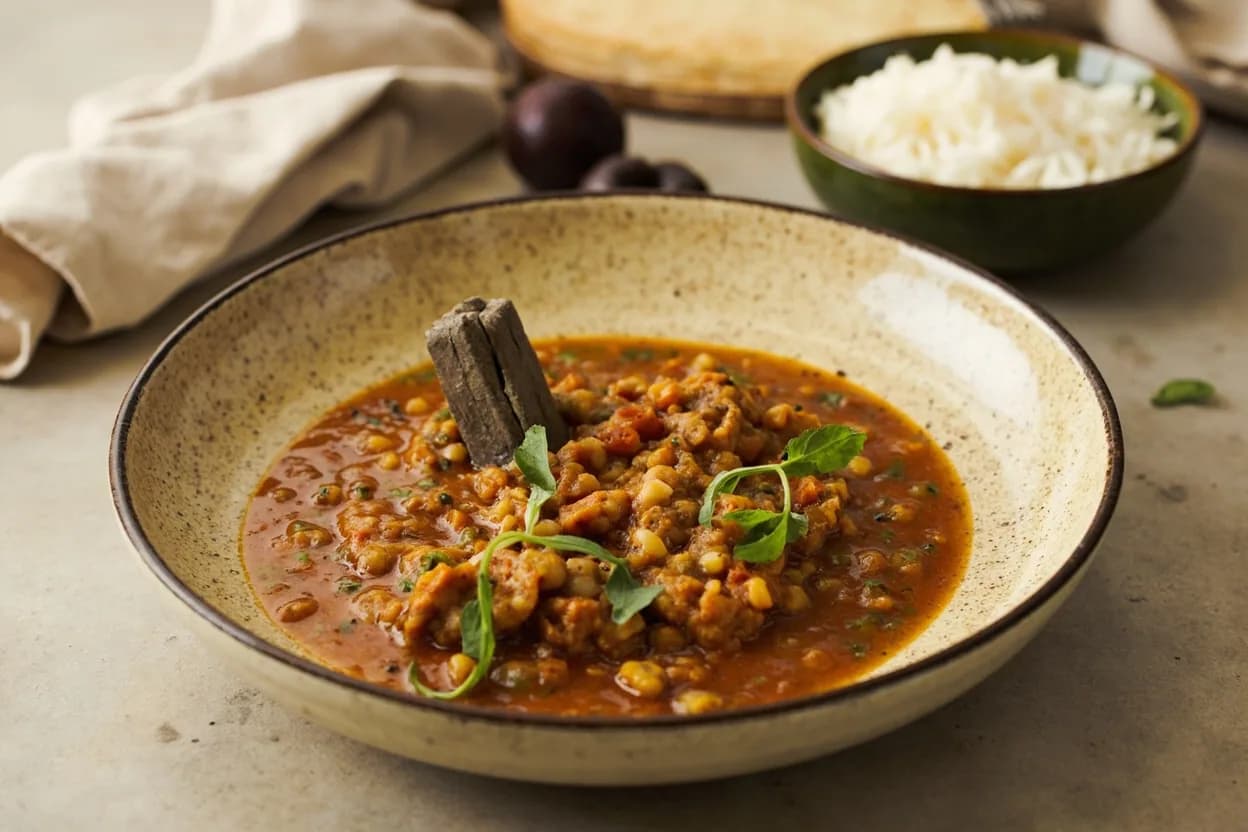
- 4Add the scored fingers to sambar or curry broth at a point where they will simmer for 15–20 minutes — they need substantial cooking time to soften the inner pulp.
- 5Test doneness by trying to open one segment with light pressure; it should yield and reveal soft, pale green flesh and soft white seeds.
- 6Serve whole; diners hold each finger between thumb and forefinger and drag the pod between the teeth to scrape out the interior, discarding the shell.
Prep & butchery
- Use a sharp, heavy knife — the multiple ridges on the pod exterior cause a lighter blade to skip or deflect.
- Do not peel the skin before cooking; the skin holds the segment together and gives diners something to grip. It is discarded at the table.
- Pods should be cut no more than 2 hours before cooking; cut surfaces can dry out and the interior can become stringy if left too long.
- Frozen pre-cut drumstick fingers (widely available in South Asian grocers) can be used directly from frozen in sambar without thawing.
Substitutes
- Immature okra
Similar mucilaginous texture in the dish; flavor is milder and no scraping technique needed — okra is fully edible.
- Asparagus tips
In Western cooking, sometimes suggested as a rough texture substitute; lacks the drumstick's flavor entirely.
- Young ridge gourd (turai)
Works in sambar as a fully edible substitute with similar cooking time.
Related cuts
- Okra — trimmed whole or half
Another mucilaginous pod vegetable; fully edible, so no scoring or scraping technique.
- Lemongrass — thick finger segment
Similar thick stalk cut into fingers for infusion; also largely inedible, bruised for aroma.
- Sugarcane — finger chew piece
Same scrape-and-discard eating technique; cut to similar finger lengths.
Appears in
References
- 1.The Vegetarian Table: India — Yamuna Devi
- 2.Dakshin: Vegetarian Cuisine from South India — Chandra Padmanabhan
- 3.The Moringa Tree: A Local Solution to Malnutrition — Church World Service
- 4.660 Curries — Raghavan Iyer
Confidence: high
Notes
Nutrition and the pod wall
Moringa is one of the most nutritionally dense plants known — the leaves especially, but the pod pulp and seeds also provide protein, calcium, and iron at levels uncommon in vegetables. The tough, cellulose-rich pod wall has no culinary value and is not digestible; the scoring and finger-length cut is a refined accommodation of this botanic reality, letting the cook include the whole pod for flavor while making extraction of the edible interior intuitive at the table.
Scoring vs. no scoring
Some cooks skip scoring when the drumstick will cook in a broth for a long time (over 30 minutes), arguing that the wall softens enough to split on its own. This is debated — in practice, unscored pods often remain fully sealed and require awkward pressure to open at the table, particularly when the diner is eating with their hands as is typical in South Indian thali service.