Regional Meat Cuts
Deungsim (Korean Sirloin Primal)
Also: 등심, deungsim, Korean striploin, Korean sirloin
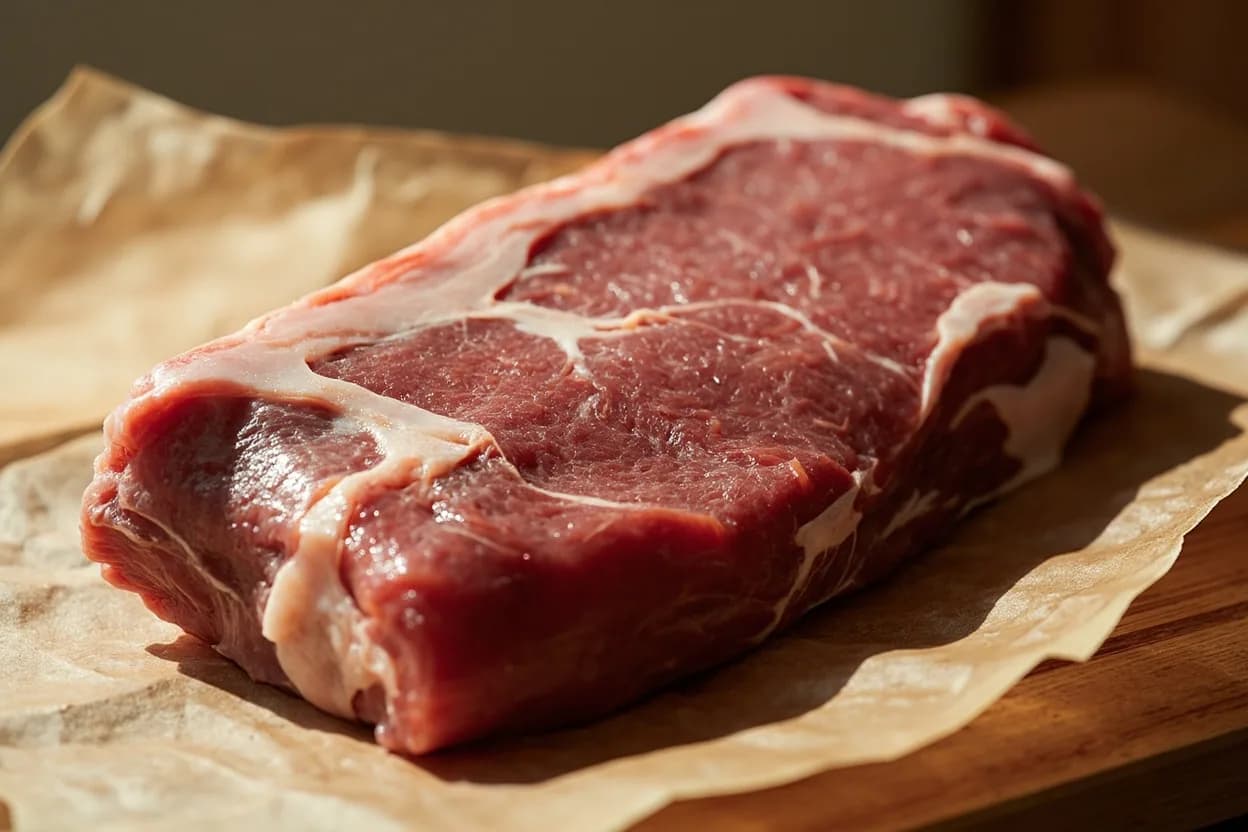
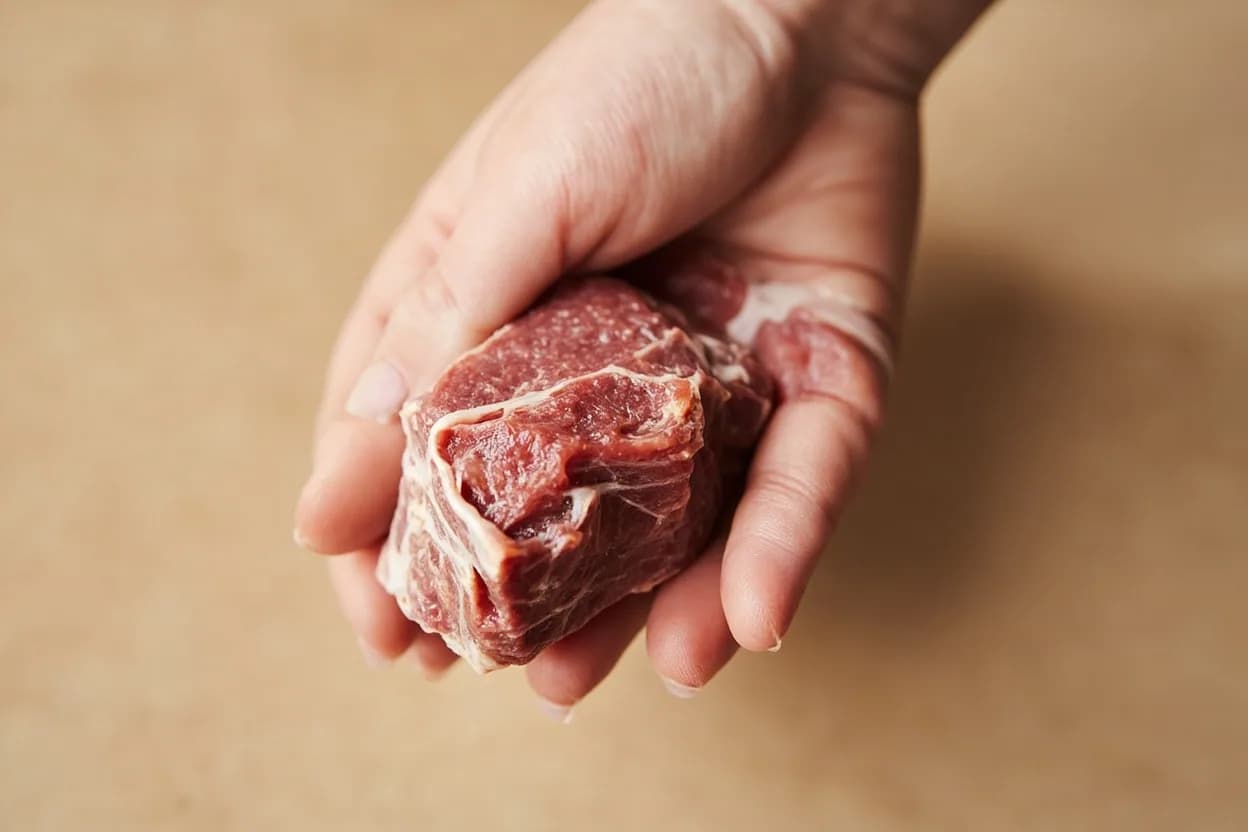
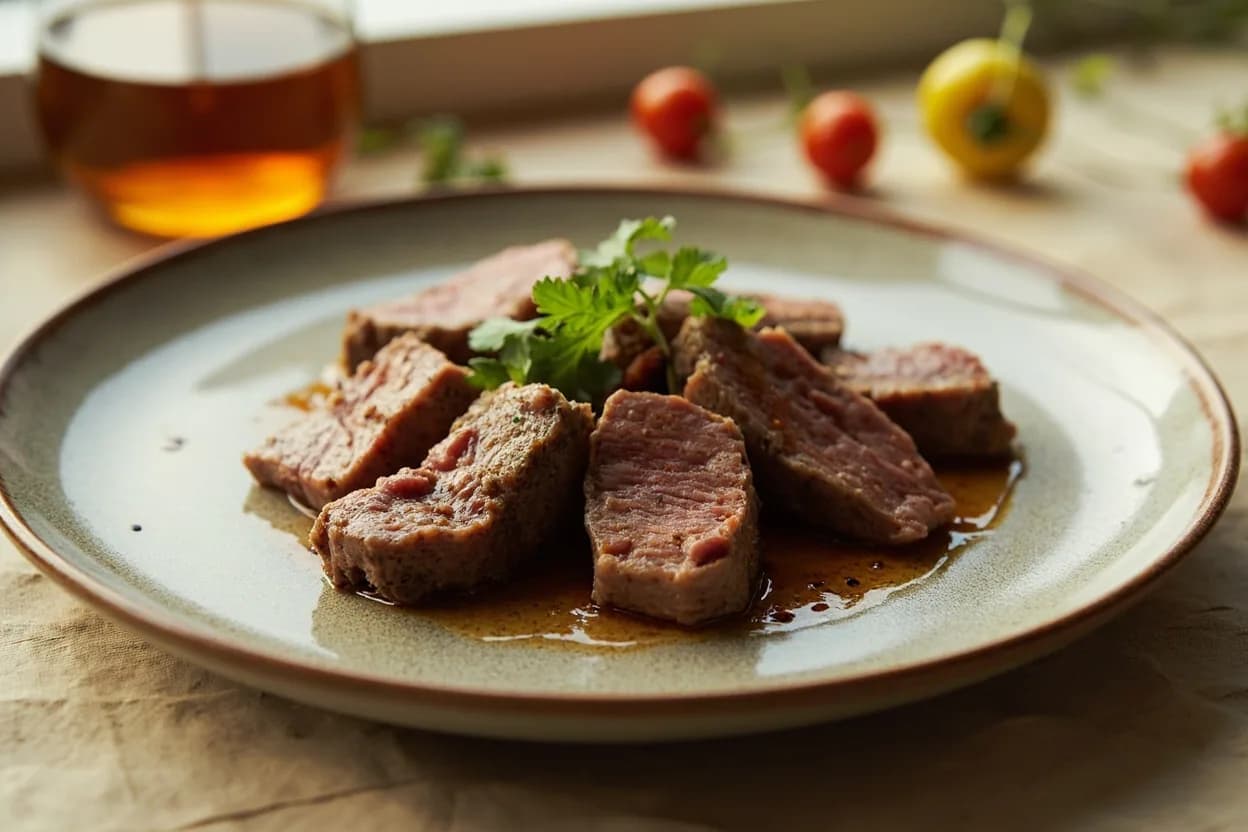
The Korean sirloin primal—spanning both the Western striploin and a portion of the ribeye—prized for gui (table-grill) at thicknesses of 1–2 cm, with a substantial external fat cap managed to taste.
Deungsim (등심, literally 'back-heart' or 'dorsal center') is Korea's canonical loin primal covering the longissimus dorsi from roughly the fifth rib through the sirloin, encompassing what Western butchery divides into rib eye, striploin, and upper sirloin. In Korean retail, deungsim is sold both as the whole primal and as individual steaks (1–1.5 cm thick) or paper-thin gui slices. The unified treatment of this region—rather than subdividing into 'ribeye' and 'strip'—is a meaningful structural difference from Western butchery that affects how the fat cap, intercostal fat, and cap muscle (spinalis) are handled.
In photos
Where it comes from
Longissimus dorsi and adjacent muscles along the dorsal spine, from rib 5–6 through the lumbar region. Includes the rib section (analogous to Western ribeye/rib cap) and the loin section (analogous to striploin/NY strip). Korean butchers often keep this as a unified block rather than separating at the rib-loin break.
Best for
How to cook it
- 1For gui steaks (1–1.5 cm thick): bring to room temperature 30 minutes before grilling; cook on a very hot charcoal grill 2–3 minutes per side for medium-rare.
- 2Fat cap management: Korean diners debate 'fat on' vs. 'fat trimmed.' Leaving the fat cap on creates self-basting; trimming it and cooking the fat strip separately as a grill lubricant is equally traditional.
- 3Score the external fat cap at 1 cm intervals before grilling to prevent the steak from curling as the fat contracts.
- 4For bulgogi slices: semi-freeze the block, slice 2–3 mm across the grain, marinate in soy-pear-sesame mixture 30–60 minutes, grill on high heat.
- 5Hanwoo deungsim (1++ grade) needs no marinade—salt and sesame oil only, like yakiniku preparation.
- 6Rest steaks 3–5 minutes before slicing; serve with perilla leaves, doenjang, and sliced garlic.
Prep & butchery
- The external fat cap is typically trimmed to 5–8 mm for gui; Korean butchers leave more than Western steakhouses to protect the meat over high direct heat.
- Score the fat cap shallowly every 1 cm to allow rendering without causing the steak to buckle.
- For gui presentation: cut across the grain into 1–1.5 cm slabs; for bulgogi, semi-freeze and slice 2–3 mm.
- Trim silver skin from the cap muscle (spinalis) end if present—it does not render and will tighten during cooking.
Substitutes
- Striploin (NY strip)
The closest Western equivalent to the loin-end of deungsim; slightly less marbled than the rib-end.
- Ribeye
Equivalent to the rib-end of deungsim; both share the spinalis cap muscle and intramuscular fat distribution.
- Wagyu striploin
Best substitute for hanwoo deungsim when Korean cattle are unavailable; similar BMS marbling level.
Related cuts
- Ribeye
Western equivalent of the rib-end deungsim; identical muscle (longissimus dorsi + spinalis) with different butchery conventions.
- Striploin (NY Strip)
Western equivalent of the loin-end deungsim.
- Bulgogi Slice
The 2–3 mm sliced retail product most often derived from deungsim.
- Chaekeut (Tenderloin Sirloin)
Adjacent primal—leaner, more tender, less marbled; sometimes confused with deungsim by non-specialists.
Appears in
References
- 1.Korean Beef — National Agricultural Products Quality Management Service (NAQS), Korea
- 2.The Korean Cookbook — Judith Ridner & Taekyung Chung, Phaidon
- 3.Meat Buyer's Guide — NAMP / North American Meat Institute (for cross-reference to Western primal mapping)
Confidence: high
Notes
Korean vs. Western primal boundary
Western butchery separates the beef rib primal (ribs 6–12) from the short loin (ribs 13+), yielding distinct 'ribeye' and 'striploin' products. Korean deungsim straddles this boundary, treating the longissimus dorsi as one contiguous block from approximately rib 5 through the lumbar loin. This means a single deungsim block contains what a Western butcher would sell as both ribeye and striploin—and the rib-end portion, with its spinalis cap intact, is the most prized section.
Hanwoo grading and deungsim
Hanwoo (한우), Korea's native cattle breed, achieves exceptionally high marbling in deungsim due to selective breeding and feed finishing. The Korean grading system scores deungsim marbling on a scale of 1 (lean) to 9 (ultra-high), with grades 1++ (scores 8–9) commanding premium prices comparable to A5 wagyu. Imported Australian or US beef is used for budget bulgogi slices; hanwoo deungsim is reserved for premium gui.