Poultry — Breakdown & Cuts
Duck Butchery — Magret vs. Confit Leg
Also: magret de canard, duck breast separation, duck leg prep, confit leg preparation
The fundamental split of a fattened duck: the magret breast scored for pan-searing, the leg separated for slow confit — two radically different cuts demanding opposite cooking philosophies.
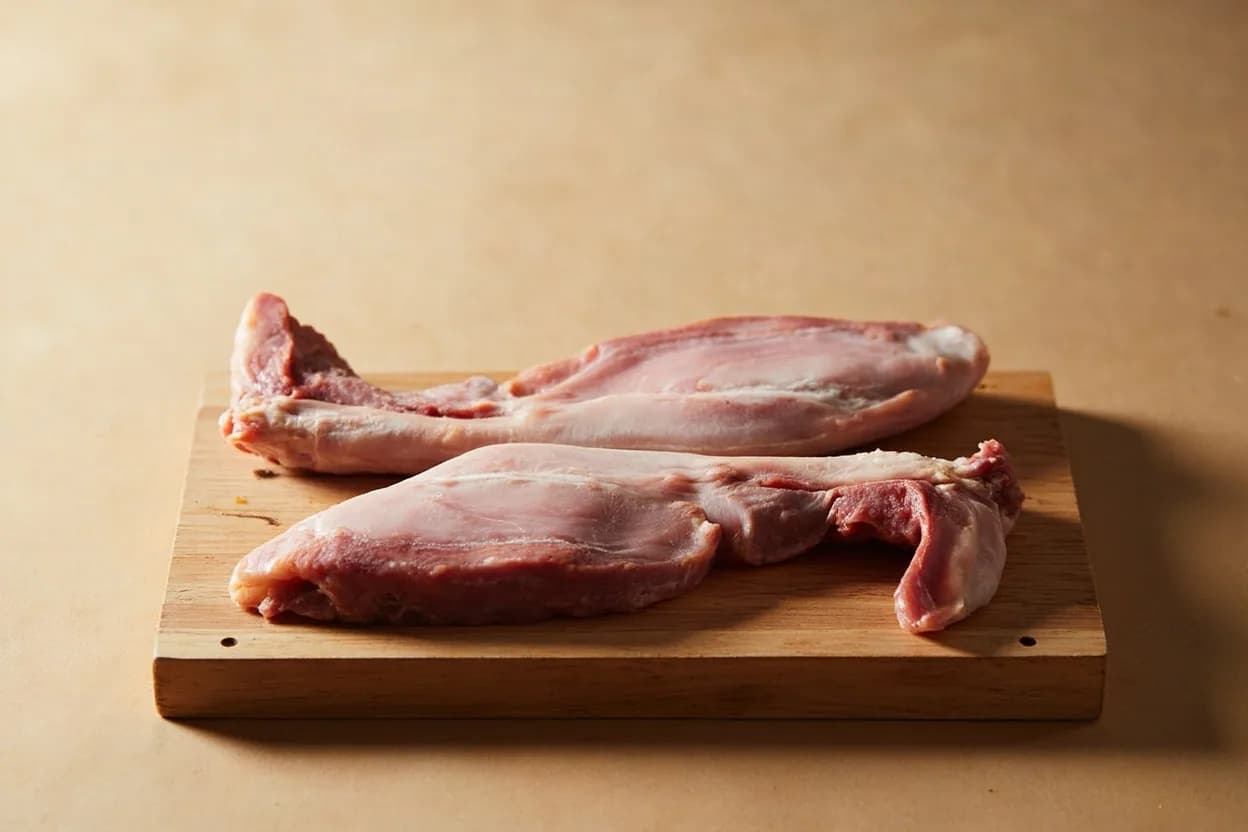
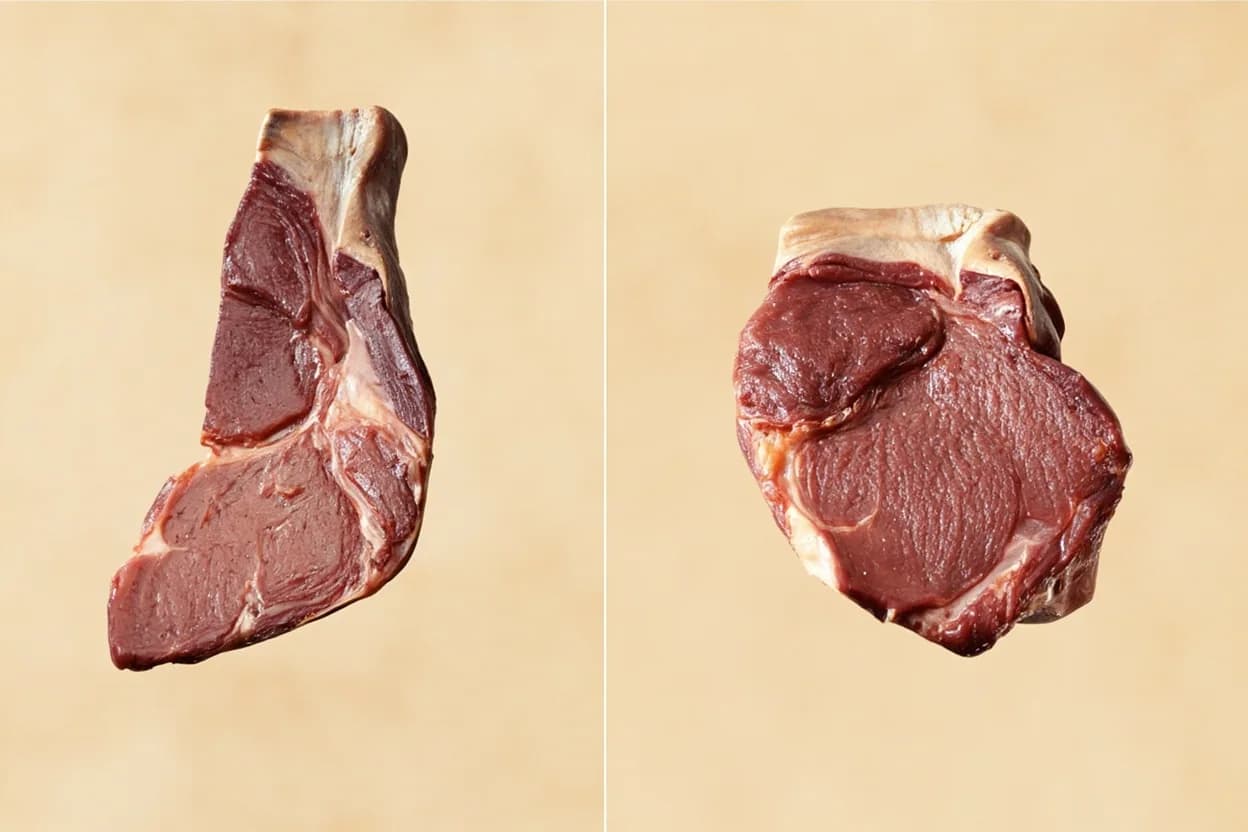
Duck butchery at the professional level revolves around one critical distinction: the magret and the confit leg come from different ends of the bird and require opposite treatment. The magret (from the Gascon 'maigre,' meaning lean) is the breast of a mulard or Moulard duck that has been engraissé (fattened for foie gras production). It carries a thick slab of subcutaneous fat that must be scored and rendered without overcooking the lean, dense muscle beneath. The confit leg is the drumstick-and-thigh section, scored to expose the muscle to curing salt and aromatic fat, then cooked low and slow, wholly submerged in duck fat, until the collagen-rich meat becomes unctuous and pulls cleanly from the bone.
In photos
Where it comes from
Magret: pectoralis major of the mulard or Moulard duck, harvested after forced feeding (gavage). The breast sits on either side of the keel bone and is removed in two lobes. Confit leg: the whole hindquarter — thigh (femur) and drumstick (tibiotarsus) — separated from the carcass at the hip socket and knee joint.
Best for
How to cook it
- 1MAGRET — Score the fat cap in a crosshatch pattern at 5 mm intervals, cutting just to (not into) the meat layer; season with fleur de sel and black pepper.
- 2Place magret fat-side down in a cold, dry (ungreased) heavy skillet; turn heat to medium. Cook undisturbed 8–12 minutes, draining rendered fat periodically, until skin is deep mahogany and fat has rendered by 75%.
- 3Flip and cook meat-side 2–3 minutes for medium-rare (58–62 °C). Rest breast 5 minutes before slicing against the grain on the bias.
- 4CONFIT LEG — Rub legs with coarse salt (2% of weight), fresh thyme, bay, garlic, and black pepper. Cure refrigerated 12–24 hours.
- 5Rinse, pat dry, and submerge legs in melted duck fat in a deep sauté pan or Dutch oven; add any remaining aromatics.
- 6Cook at 82–88 °C (barely trembling, never boiling) for 6–8 hours until the meat slides from the thigh bone with gentle pressure.
- 7Cool legs in their fat; store refrigerated, submerged in fat, for up to 3 weeks.
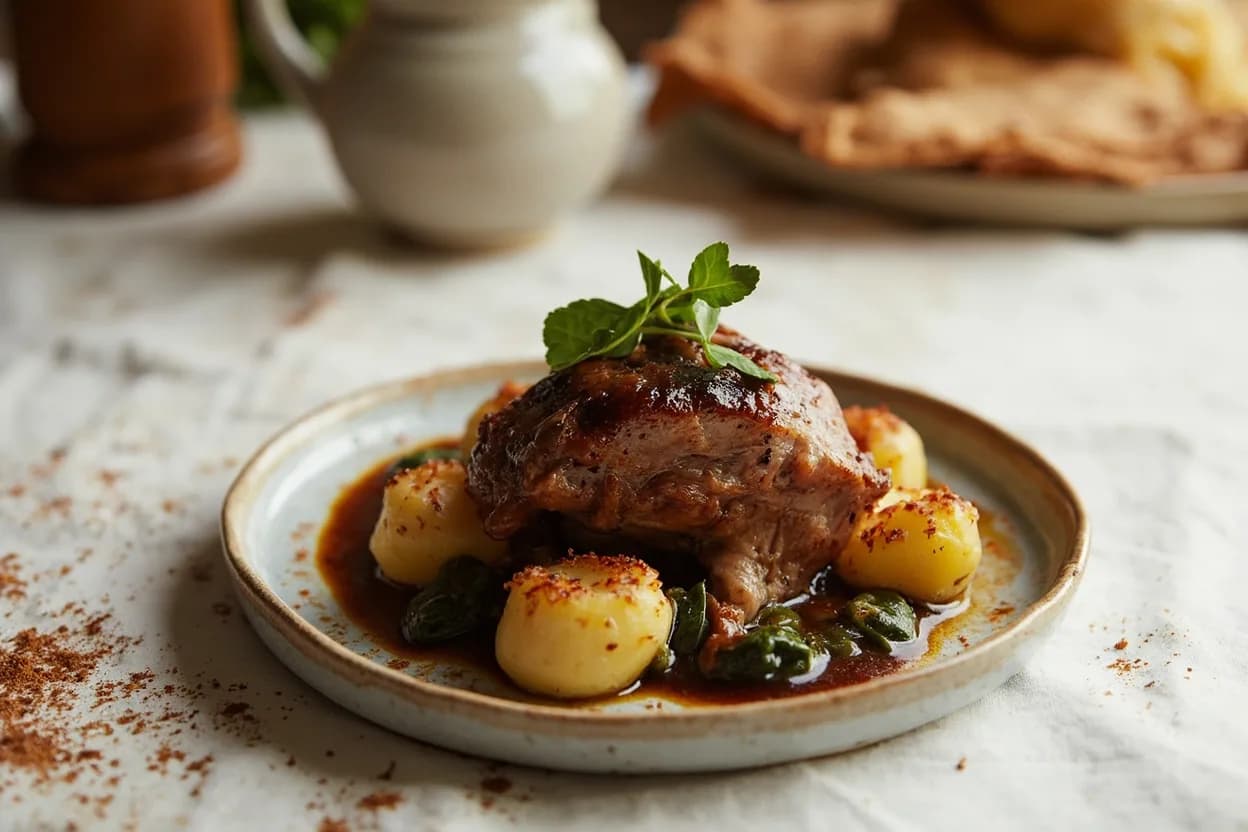
- 8To serve confit: remove from fat, scrape off excess, and sear skin-side down in a hot cast-iron pan or under a broiler until skin is crackle-crisp.
Prep & butchery
- To remove magret: find the keel bone centerline, slice along it and peel each breast lobe away from the ribcage in one piece, skin intact.
- Trim the fat cap to a uniform 1 cm thickness — too thick causes burning before rendering; too thin means no self-basting.
- To separate the leg: bend it outward to locate the hip socket, sever the skin and oyster (sot-l'y-laisse), then disarticulate the joint cleanly — the oyster goes with the leg.
- Score the drumstick and thigh meat down to the bone (3–4 parallel cuts per side) to allow the cure and fat to penetrate deeply.
- Reserve all rendered magret fat in a jar; it is equal-quality cooking fat for pommes sarladaises, roast vegetables, and the confit itself.
Substitutes
- Moulard Duck Breast (non-fattened)
Leaner and smaller than foie-gras magret; cook time shorter, lower fat renders less dramatically — still far superior to Pekin breast for this technique.
- Pekin (Long Island) Duck Breast
Smaller, less fat, milder flavor; acceptable magret substitute but lacks the depth and thick fat cap of a fattened mulard.
- Goose Leg Confit
Nearly identical process; longer cook time (8–10 h) given larger size and denser collagen; rendered goose fat substitutes for duck fat.
Related cuts
Duck leg may be boned and stuffed into a ballotine using the same disarticulation technique.
Similar hip-socket separation; duck leg carries more fat and collagen, warranting longer cook times.
- Magret Slicing
Sliced thinly against the grain on the bias; related to the carving discipline for beef striploin.
Appears in
References
- 1.The Fat Duck Cookbook — Heston Blumenthal
- 2.Larousse Gastronomique — Éditions Larousse
- 3.Charcuterie: The Craft of Salting, Smoking, and Curing — Michael Ruhlman & Brian Polcyn
- 4.Soul of a Chef — Michael Ruhlman
- 5.The Professional Chef, 9th Ed. — The Culinary Institute of America
Confidence: high
Notes
Why 'Magret' Is Not Just Duck Breast
The word magret specifically designates the breast of a duck or goose that has been fattened for foie gras production. A Pekin duck breast is simply called poitrine de canard. The fattening program produces a massively enlarged breast with a thick subcutaneous fat cap and deep red, intensely flavored muscle — more comparable to a beef bavette than to chicken. Serving it beyond medium renders it unpleasantly dry and tough.
The Zero-Waste Duck
Professional Gascon kitchens yield no waste from a whole fattened duck: the foie gras is the primary product, the magret goes to the hot line, the legs go into confit, the carcass makes stock, the gizzards into gésiers confits, and every drop of rendered fat is captured for cooking. This tradition of total utilization (from the farms around Gascony and Périgord) is a masterclass in whole-animal philosophy.