Offal & Variety Meats
Duck Tongue Prep
Also: ya she, 鸭舌, marinated duck tongue, Sichuan duck tongue
Blanching duck tongues and removing the hard cartilage rod to yield a gelatinous, sauce-gripping base for Sichuan-style cold marinades and braises.
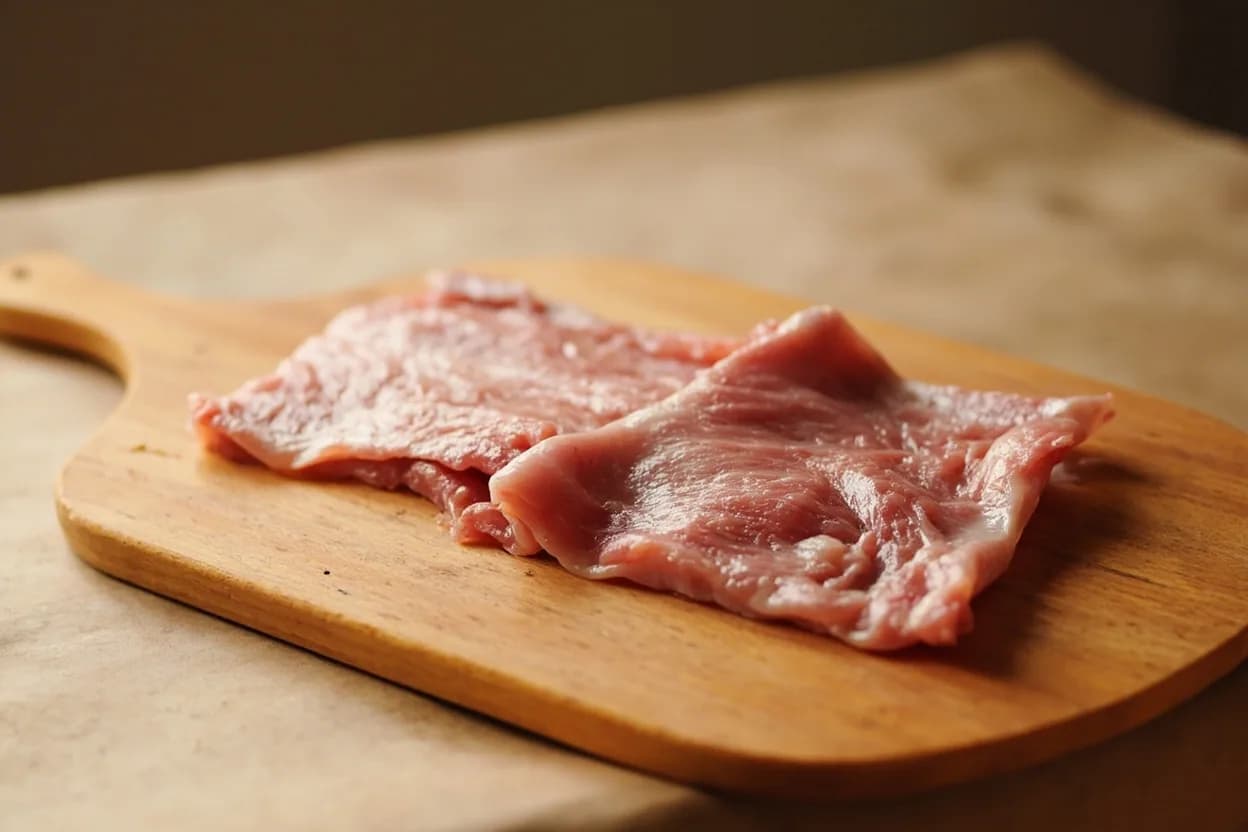
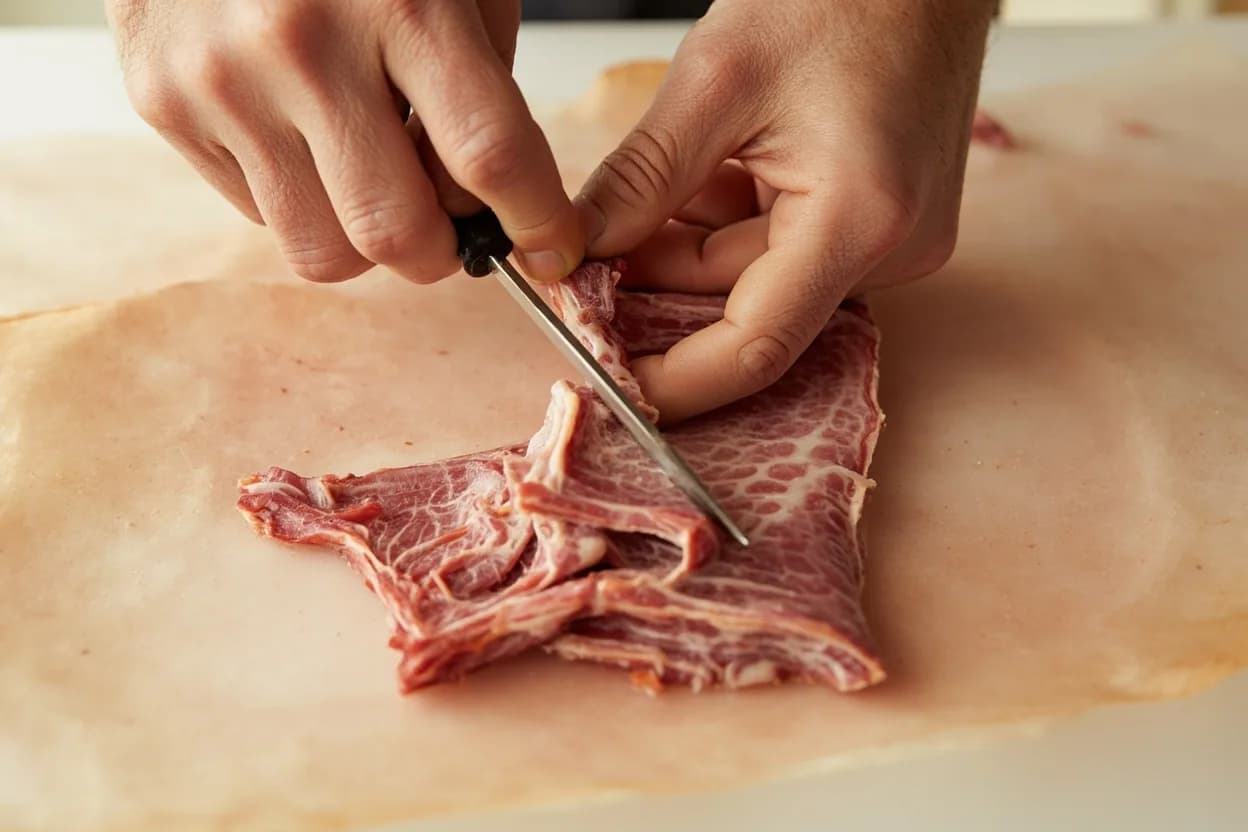
Duck tongue preparation is a two-stage offal technique: first, brief blanching to set the outer skin and loosen any feather follicles; second, the removal of the central hyoid bone-cartilage rod that runs the length of each tongue. The remaining tissue is a narrow, gelatinous strip of muscle and connective tissue approximately 6–8 cm long, prized in Sichuan and Cantonese cooking for its unique mouthfeel — yielding yet slightly chewy — and its ability to absorb complex braising liquids or cold marinades.
In photos
Where it comes from
The duck tongue is the actual lingual organ, comprising the entoglossal process (a partially calcified cartilage rod), the surrounding tongue muscle, and the lingual epithelium. Most commercial duck tongues are sold with the hyoid apparatus partially intact. Each duck yields exactly one tongue; tongues are sold by the bag (500 g, roughly 40–50 tongues) from Chinese butchers and Asian food suppliers.
Best for
How to cook it
- 1Rinse tongues under cold water; trim any residual trachea or connective tissue attached at the base.
- 2Blanch in boiling water with a splash of rice wine and 2–3 slices of ginger for 3–5 minutes — just long enough to firm the skin and loosen impurities; do not fully cook.
- 3Drain and cool immediately in iced water to halt cooking and make the cartilage removal easier.
- 4Grip the thick base of each tongue firmly; locate the cartilage rod by feel (it runs from the tip toward the base). Pinch the tip of the tongue and squeeze toward the base — the cartilage rod will pop free. Alternatively, use kitchen scissors to make a shallow slit along the underside and pull the rod out.
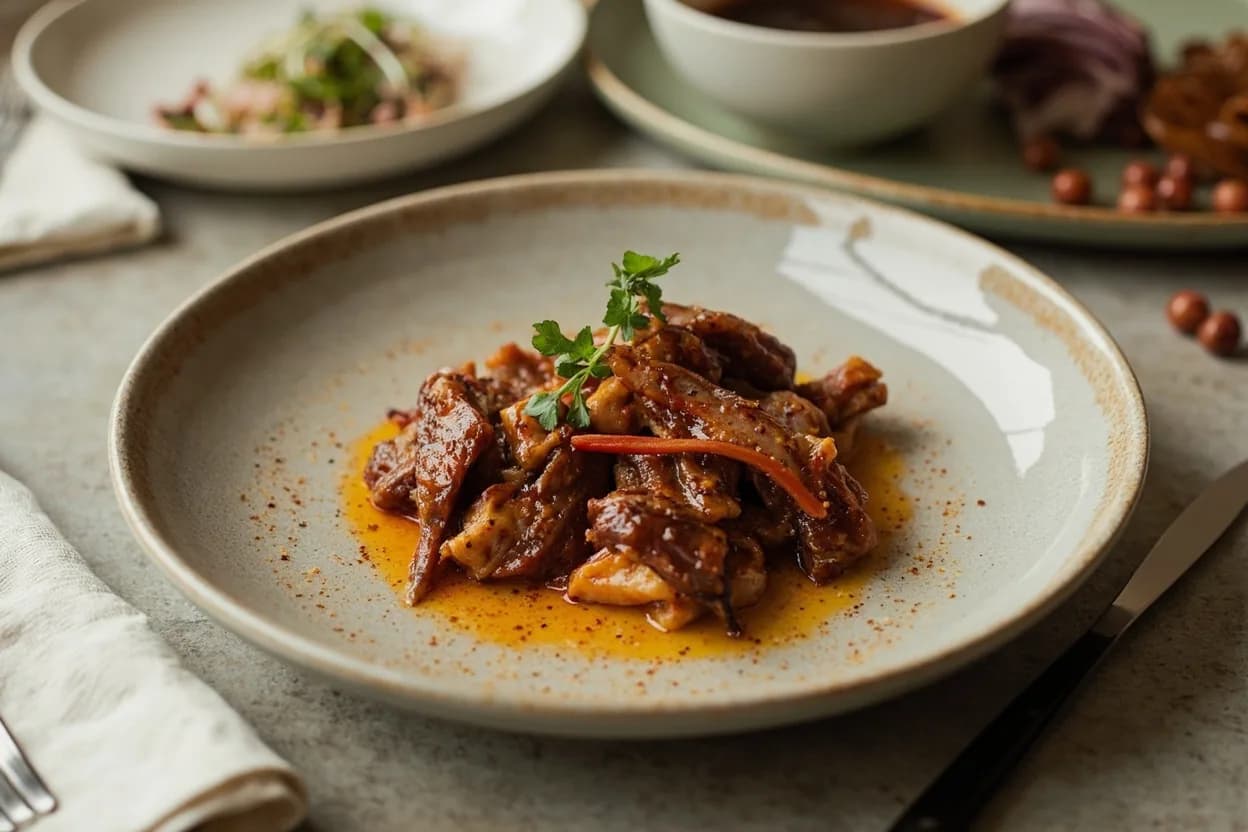
- 5For Sichuan cold marinade: simmer a spiced brine of Sichuan peppercorns, dried chilies, star anise, cassia bark, light soy, dark soy, Shaoxing wine, and sugar; submerge cleaned tongues and cook at a bare simmer 20–25 minutes until tender; cool in the brine overnight in the refrigerator.
- 6Serve chilled, sliced lengthwise if desired, drizzled with chili oil and sesame oil; garnish with toasted sesame seeds and sliced spring onion.
Prep & butchery
- Buy tongues fresh or defrosted fully — frozen tongues must be completely thawed before blanching to avoid a grey, waterlogged texture.
- The cartilage-removal squeeze technique works on warm tongues; if they cool fully before processing, a 30-second re-dip in hot water softens the joint enough to pop the rod free.
- Score the skin surface lightly with a knife in a crosshatch pattern before marinating to maximise penetration.
- Tongues shrink approximately 20% in length during cooking — buy by weight, not count, to ensure portion adequacy.
Substitutes
- Pork tongue (sliced)
Much larger; needs slicing to serve; absorbs the same flavours but lacks the gelatinous skin character of duck
- Chicken feet
Similar gelatinous, cartilage-dominant texture — a structural analogue in the cold-marinade context
- Beef tendon (thin sliced)
Shares the yielding-yet-chewy character; takes longer to braise to the same tenderness
Related cuts
- Pork Tongue
Larger analogue; same blanch-and-braise approach but no cartilage rod to remove
- Duck Neck
Another Sichuan cold-marinade favourite sold alongside tongues in Chinese BBQ shops
- Duck Feet
Similar gelatinous character; prepared by the same master-stock braise method
Appears in
References
- 1.Land of Fish and Rice: Recipes from the Culinary Heart of China — Fuchsia Dunlop (2016)
- 2.The Food of Sichuan — Fuchsia Dunlop (2019)
- 3.Chinese Cooking Demystified (culinary reference, widely cited in professional Cantonese training)
- 4.Every Grain of Rice — Fuchsia Dunlop (2012)
Confidence: high
Notes
The Cartilage Rod
The entoglossal process is a partially calcified cartilage structure — part of the avian hyoid apparatus — that stiffens the tongue during feeding. Unlike mammalian tongues, which have no comparable structure, bird tongues are supported by this internal rod. When cooked without removal, it remains hard and unpleasant in the mouth. Removing it converts the tongue from an awkward bite into a smooth, homogeneous piece of gelatinous tissue.
Cold-Dish Status
In Sichuan and Cantonese cuisine, duck tongue is categorised as a leng cai (冷菜) — cold appetiser dish — typically served as part of a selection of braised and marinated meats at the start of a banquet meal or as a drinking snack alongside beer or baijiu. The cold service temperature firms the gelatin slightly, enhancing the distinctive mouthfeel and allowing the spice flavours to be experienced cleanly before the palate is distracted by heat from hot dishes.