Poultry — Breakdown & Cuts
Poultry Ballotine Preparation
Also: ballotine, galantine, stuffed leg roulade, boned and stuffed leg
A whole leg or bird boned out, stuffed, and rolled into a self-contained cylinder — the French technique that transforms humble poultry into elegant form.
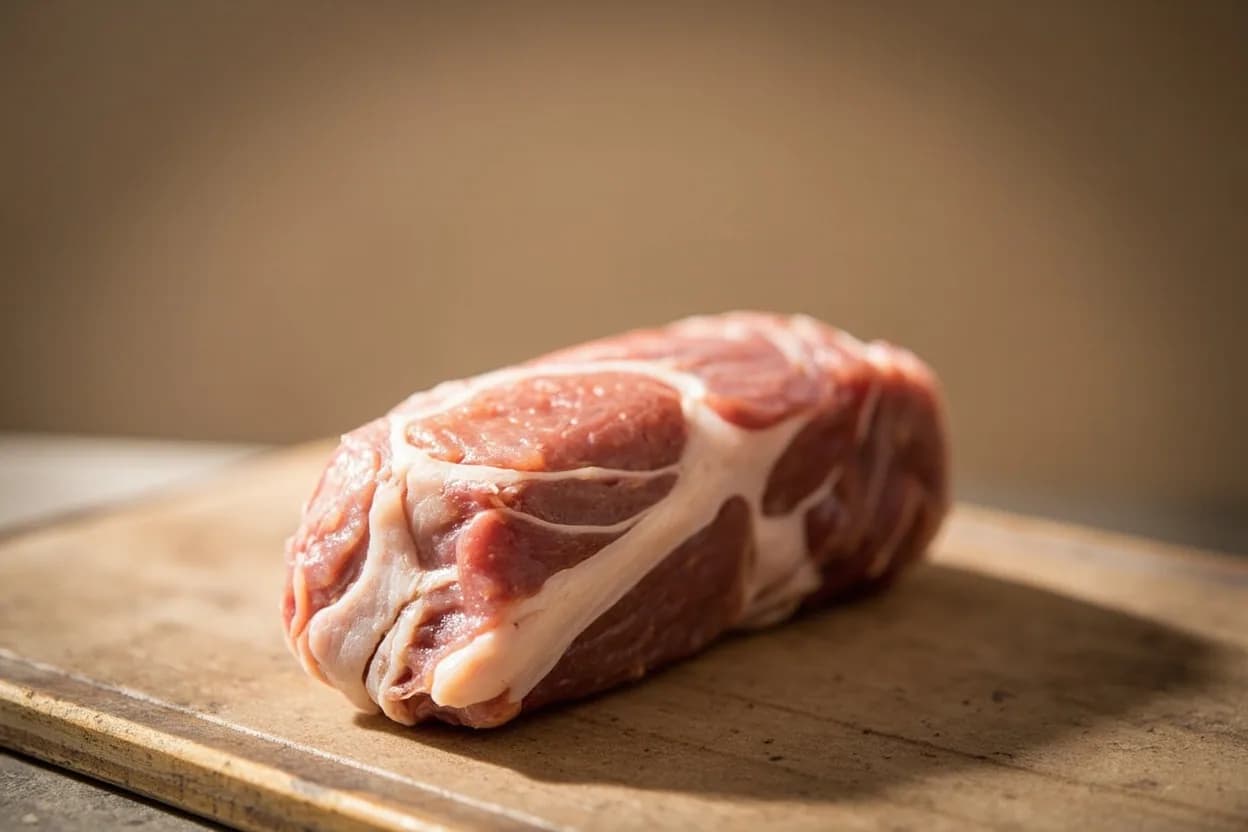
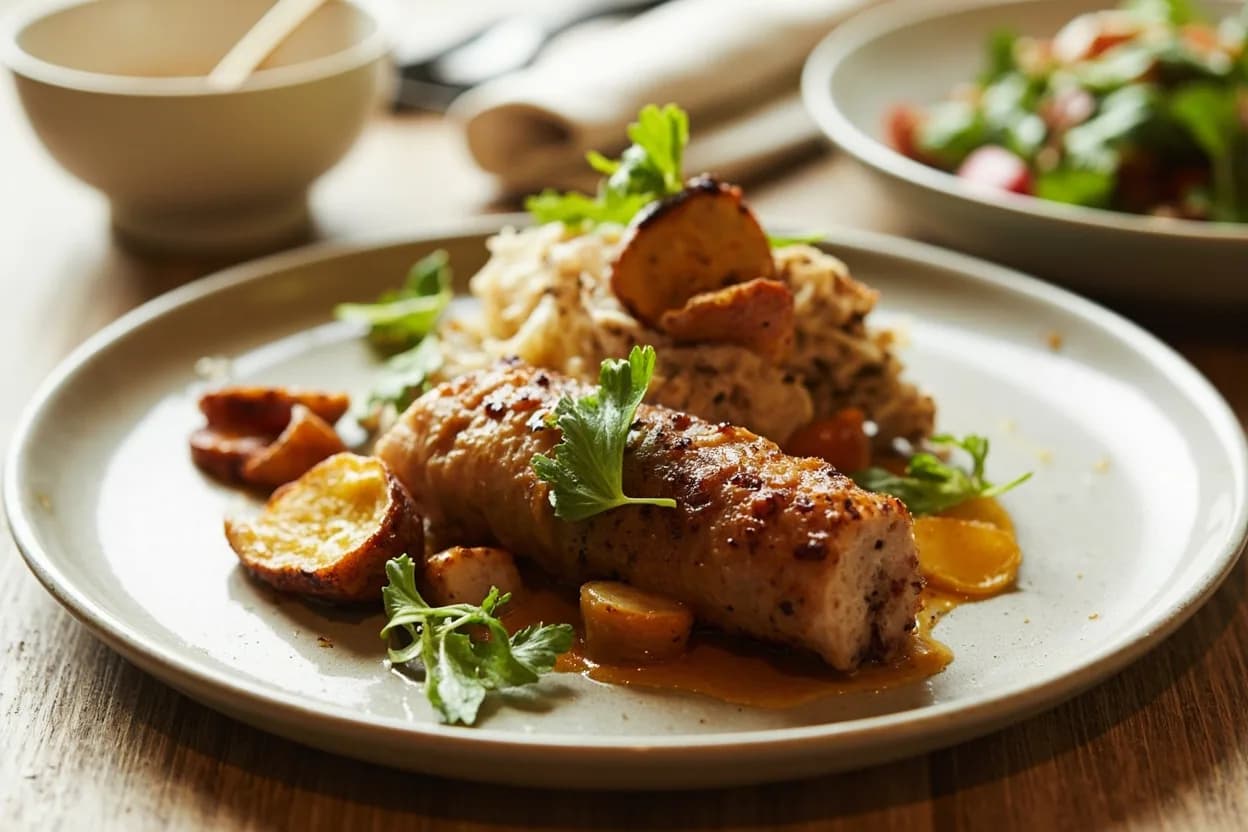
A ballotine is a whole poultry leg (or occasionally a whole bird) from which all bones have been removed while leaving the skin and meat intact as a single sheet. That sheet is seasoned, spread with a forcemeat or garnish stuffing, rolled tight, and tied or wrapped so it cooks as a neat cylinder that slices cleanly into rounds. The word derives from the French 'balle' (ball or bundle). Unlike a galantine — which is poached cold — a ballotine is typically braised, roasted, or pan-seared and served hot.
In photos
Where it comes from
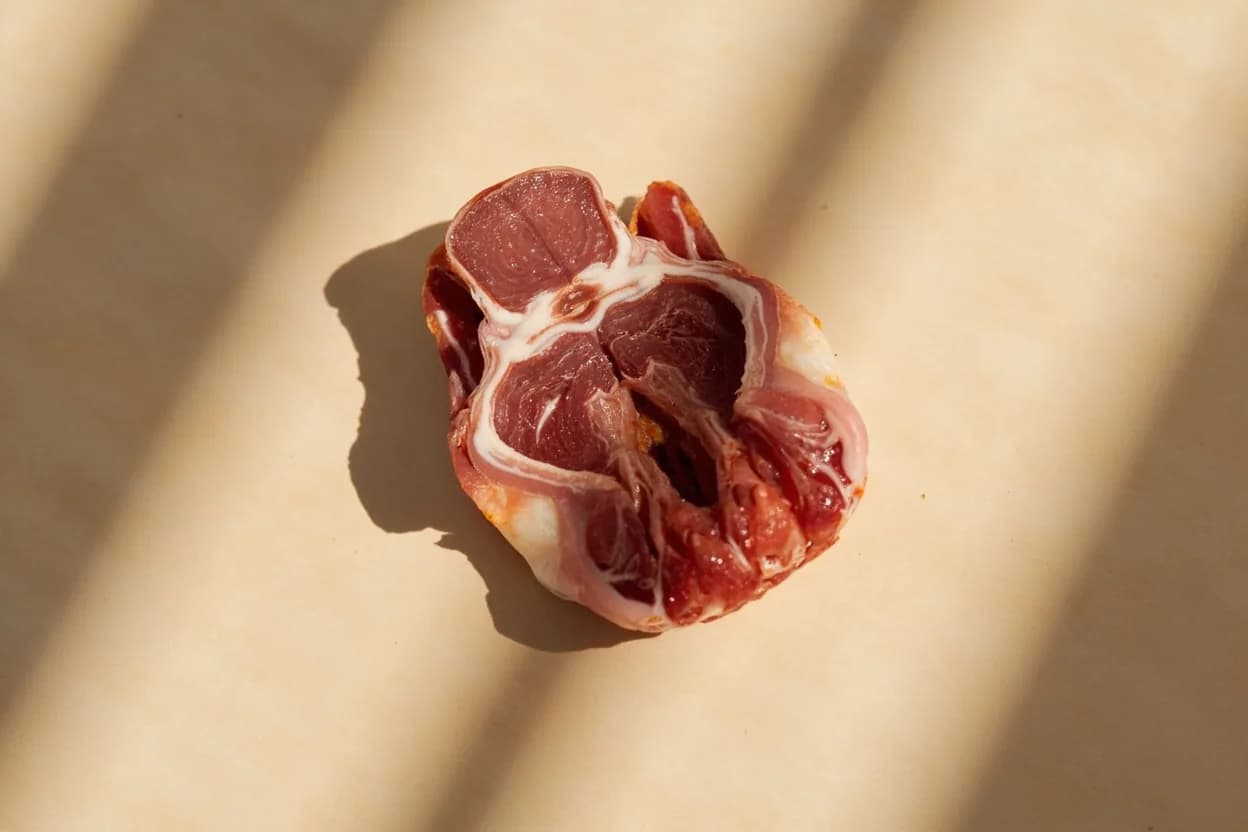
Whole poultry leg (drumstick + thigh as one piece), or entire bird. The skin remains attached throughout; the bones are extracted through careful tunneling and scraping along the bone with a boning knife without puncturing the skin.
Best for
How to cook it
- 1Lay the boned leg skin-side down on a board; pound any thick spots gently to even thickness.
- 2Season the meat surface generously with salt, pepper, and aromatics (thyme, garlic, shallot).
- 3Spread stuffing (e.g., herbed ricotta, mushroom duxelles, or sausage forcemeat) leaving a 2 cm border on all sides.
- 4Roll tightly from the narrower end, keeping skin on the outside, and tie with butcher's twine at 2 cm intervals — or wrap tightly in caul fat or cling film for sous vide.
- 5Sear in an oven-safe skillet over high heat until golden on all sides, 5–7 minutes total.
- 6Roast at 190 °C to an internal temperature of 74 °C (165 °F) for chicken; rest 10 minutes before slicing.
- 7For duck, finish with a flash under the broiler to render and crisp the scored fat cap.
- 8Remove twine, slice into 2–3 cm rounds, and serve with pan juices reduced into a jus.
Prep & butchery
- Use a sharp, narrow boning knife (flexible preferred for working around the ball joint).
- For a leg ballotine: sever the skin connection at the knuckle end, then scrape the thigh bone clean toward the hip joint and pop the ball joint; repeat down the drumstick.
- Lay flat skin-side down; trim any large fat pockets but leave the skin fully attached.
- Chill the boned-out leg 20 minutes before stuffing — cold meat holds shape better during rolling.
- Do not overfill — a stuffing depth of 1.5–2 cm leaves enough margin to roll without bursting.
- Tie snugly but not so tight you squeeze out the filling; a loop every 2 cm gives the cylinder stability.
Substitutes
- Chicken Roulade (Breast)
Breast rolled without boning a whole leg; leaner, shorter cook time, lower fat — less forgiving of overcooking.
- Turkey Thigh Ballotine
Identical technique; larger format — add 15–20 min roasting time and verify internal temp carefully.
- Galantine
Same boning and rolling process but the bird is poached cold in stock; better for buffet or charcuterie service.
Related cuts
The thigh is the central component of a leg ballotine; boning-out technique is directly shared.
- Whole Chicken Butchery
A whole-bird ballotine (galantine) begins with the same spine-to-breast boning technique.
Duck leg ballotines follow the same boning process; fat-cap scoring is critical for crisp skin.
Appears in
References
- 1.Larousse Gastronomique — Éditions Larousse
- 2.The Professional Chef, 9th Ed. — The Culinary Institute of America
- 3.Charcuterie: The Craft of Salting, Smoking, and Curing — Michael Ruhlman & Brian Polcyn
- 4.Jacques Pépin: New Complete Techniques — Jacques Pépin
Confidence: high
Notes
Ballotine vs. Galantine
French culinary tradition distinguishes the two by temperature: a ballotine is served hot, a galantine cold. Structurally they are identical — boned bird, stuffed, rolled — but the galantine is poached in a rich aspic-forming stock, then chilled, unmolded, and glazed. In modern bistro cooking the distinction is often blurred, and 'ballotine' is used for both.
Caul Fat Wrapping
When butcher's twine feels fussy, a sheet of caul fat (crépine) can wrap the roll instead. It melts into the skin during roasting, basting the ballotine continuously and eliminating tie marks on the finished slice.