Cheese & Dairy Cuts
Affinage Rind Trimming
Also: rind removal, croûte trimming, cheese rind trimming, dekortéring
The precise removal of some or all of the outer rind from an aged cheese before portioning, melting, or service — balancing edibility, bitterness, and paste-waste considerations dictated by the rind type and application.
Rind trimming in cheese work is the act of paring away the exterior protective layer of an aged cheese with a rigid knife before sale, service, or cooking. The decision of whether to trim, how much to remove, and which tool to use depends entirely on rind type: natural brushed rinds (Comté, Manchego, aged Gouda), washed rinds (Époisses, Munster, Taleggio), bloomy rinds (Brie, Camembert), and artificial rinds (wax-coated Edam, cloth-bound Cheddar) each have distinct edibility profiles, structural properties, and behavioural differences when heated. An affinage rind trim is not rough scraping — it is a calibrated cut that removes the minimum rind mass necessary for the application while preserving maximum paste yield, executed with a stiff, wide-bladed knife held parallel to the rind surface.
In photos
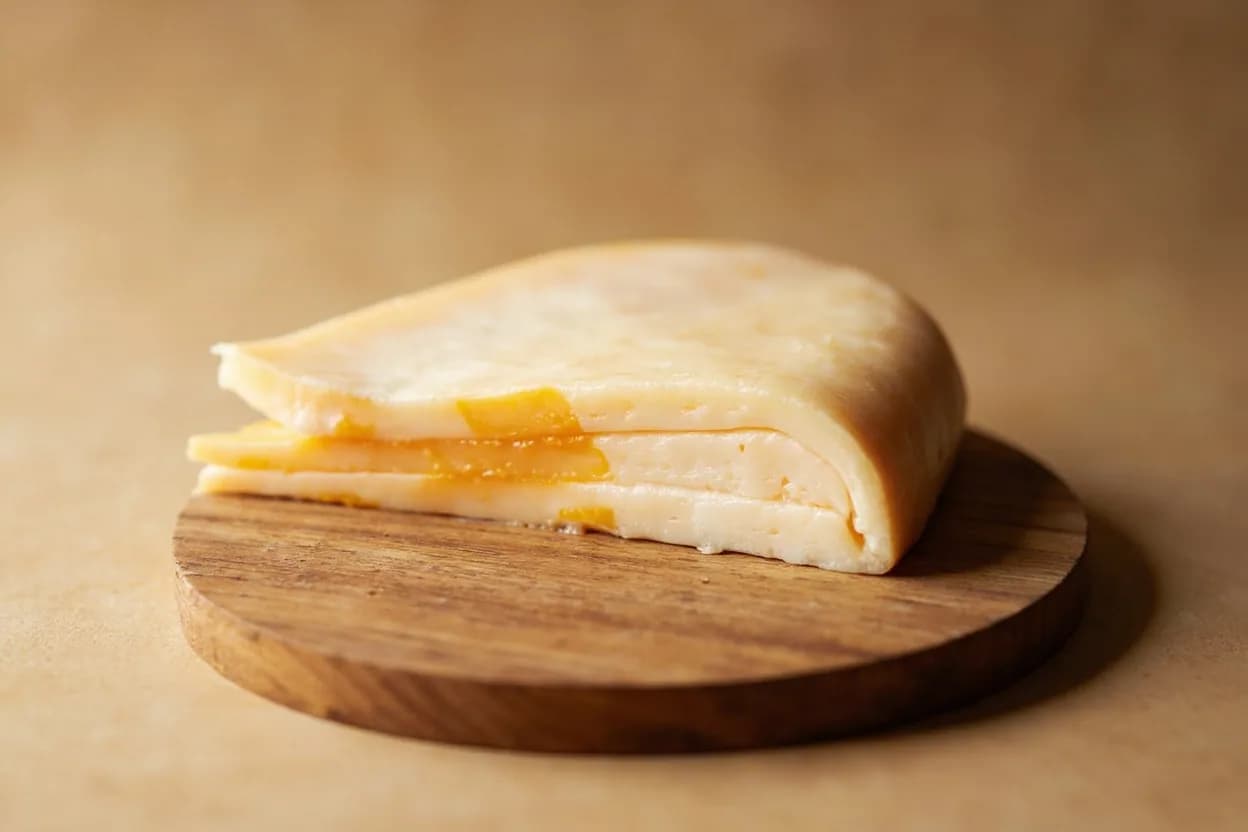
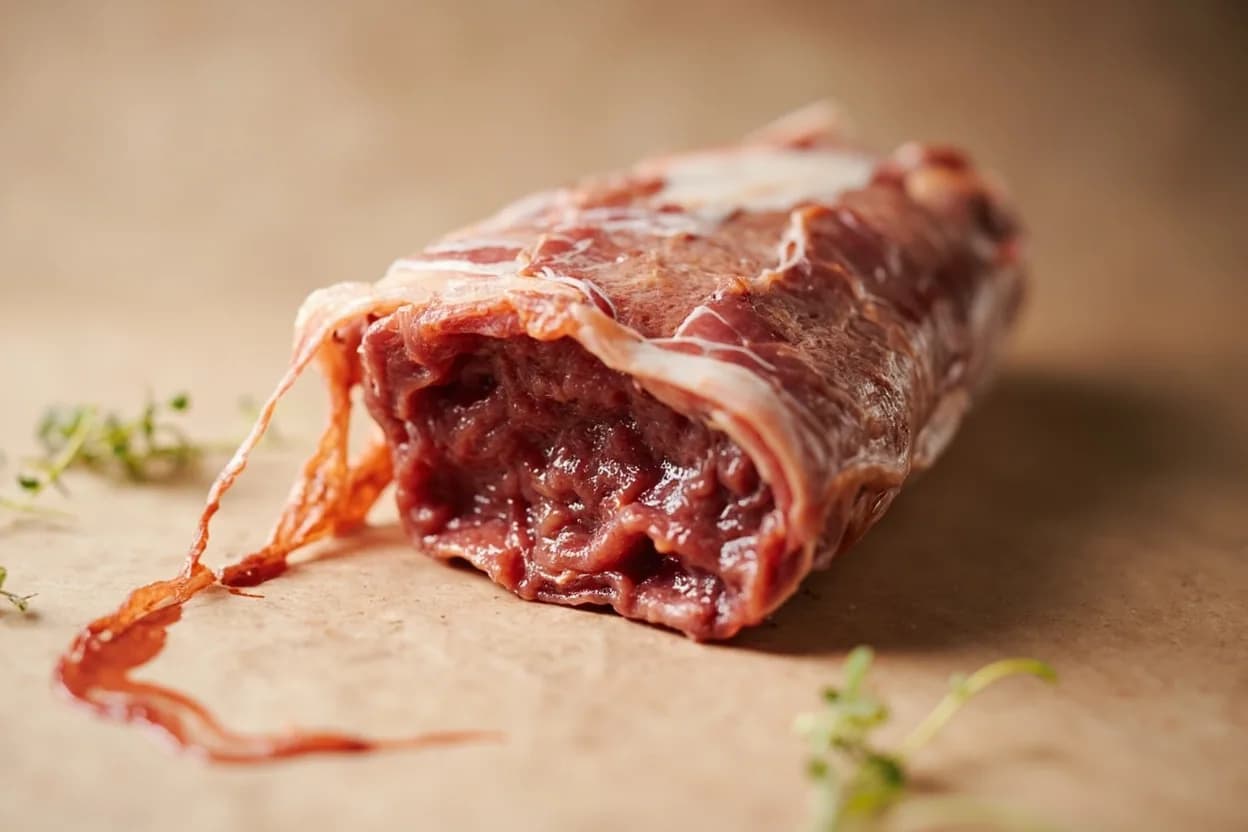
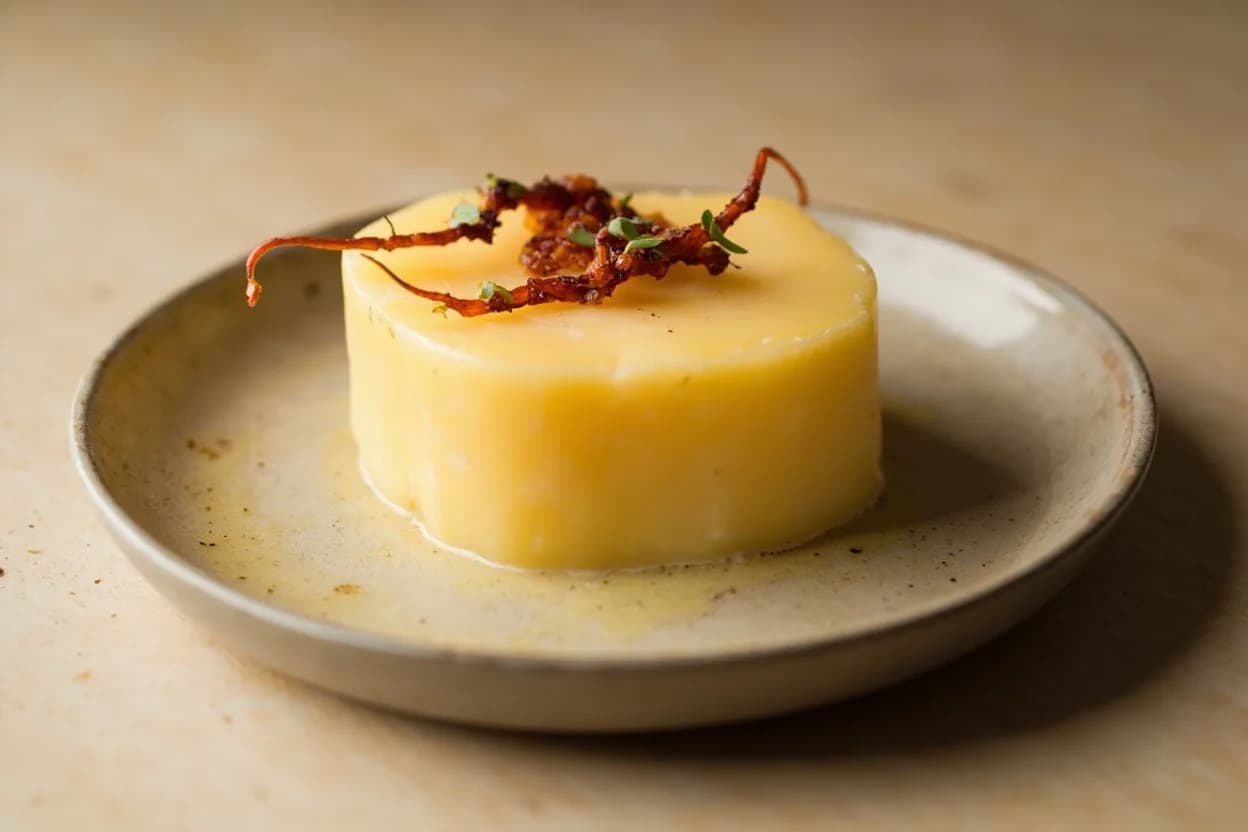
Where it comes from
Not an animal cut. The rind is the outer surface of a cheese wheel or block — formed by: natural mould and bacterial colonisation during cave ageing (natural rind), intentional weekly washing with brine, beer, wine, or marc (washed rind), Penicillium camemberti bloom (bloomy rind), bandage linen (cloth-bound), or applied wax (sealed rind).
Best for
How to cook it
- 1Identify the rind type before cutting: tap with a fingernail — a hard knock indicates a natural or washed-hard rind; a soft give indicates bloomy or wax
- 2For natural hard rinds (Comté, Manchego, aged Gouda): hold the cheese block on the board, place the flat of a stiff-bladed knife against the rind surface, and push with steady inward pressure — do not saw; the blade should ride the rind-paste boundary
- 3Work in one direction around the block, removing 3–5 mm of the outer grey layer; stop when the paste transitions from chalky-grey to golden-ivory — this is the sous-croûte, which is edible and flavourful
- 4For washed-rind cheeses (Taleggio, Époisses): use a small paring knife and shave only the outermost tacky layer if desired; many applications retain the full rind as its pungency and aroma are intentional
- 5For cloth-bound Cheddar: the cloth is embedded in the mould-crusted rind — use a stiff knife to pare the entire rind including any embedded cloth fibres; minimum 5–8 mm removal
- 6For wax rinds (Edam, young Gouda): score along the seam of the wax capsule with a paring knife and peel — wax lifts cleanly when scored
- 7Save Parmesan and aged Comté rinds in a sealed bag in the freezer; add them directly to stock pots, soups, and braises for extended background umami
Prep & butchery
- Warm the cheese slightly (10–12 °C) before trimming a natural hard rind — cold paste is more likely to fracture at the rind-paste boundary and take chunks of paste with the rind
- Use a stiff, wide blade rather than a flexible fillet knife — flexibility causes the blade to follow surface contours and waste paste
- For round formats (wheel wedges), curve the trim cut along the arc of the rind; a straight cut on a curved piece wastes a triangular wedge of sous-croûte paste
- Weigh trim waste as a percentage of the original piece — professional cheesemangers target less than 7% trim loss on natural rind, less than 3% on wax and bloomy rinds
Substitutes
- Leaving rind intact for service
Appropriate for bloomy, washed, and vacuum-pack cheeses; inappropriate for cooking applications where rind would dissolve unevenly
- Parmesan rind-in cooking
The exception to remove-for-cooking: Parmigiano-Reggiano and Grana Padano rinds are intentionally added to simmering liquids as flavour donors, then discarded at service
Related cuts
Wheel-to-wedge breakdown precedes rind trimming; the sous-croûte zone exposed by the lyre cut is the starting reference for the trim line
Stilton and Gorgonzola rinds must be fully removed before crumbling — rind creates hard, inedible shards in the finished crumble
Board service typically leaves rinds intact for visual identity; guests are informed of edibility
Appears in
References
- 1.Mastering Cheese — Max McCalman & David Gibbons (Clarkson Potter, 2009)
- 2.The Oxford Companion to Cheese — ed. Catherine Donnelly (Oxford University Press, 2016)
- 3.Cheese and Culture: A History of Cheese and Its Place in Western Civilization — Paul Kindstedt (Chelsea Green, 2012)
- 4.Affineur field protocols — Fromageries Berthaut (producers of Époisses AOP), public trade guidance
Confidence: high
Notes
The edibility question
No cheese rind is toxic. The real question is palatability and application-fitness. Natural grey-brown rinds on alpine wheels (Comté, Beaufort, Gruyère) are edible and consumed by affineurs daily, but their flavour — intensely mineral, astringent, slightly earthy — is jarring against the sweet, nutty paste and most diners reject them. Bloomy rinds (Brie, Camembert, Coulommiers) are part of the intended flavour experience: the white Penicillium camemberti crust is a live culture with a mild, ammonia-edged, mushroomy character that complements the oozing paste. Washed rinds occupy the middle ground — the pungent, salt-cured, bacteria-rich exterior of an Époisses is entirely edible and strongly flavoured; many diners eat it enthusiastically. Context is everything.
Parmesan rinds: the cooking exception
Parmigiano-Reggiano and Grana Padano rinds are among the few rinds deliberately added to cooking liquids. The densely compressed outer paste of these granular hard cheeses is rich in glutamates and soluble proteins; simmered in minestrone, ragu, or risotto broth for 45–60 minutes, the rind leaches slow-release umami and body without dissolving. The softened rind is discarded before service, though some cooks cut it into cubes and eat it — texture is dense and chewy, flavour is concentrated. This practice is widespread in Emilian and Lombard home cooking.