Knife Cuts — Regional & Global
Thin-Slice for Koji Cure (Shio Koji Contact Surface)
Also: koji contact slice, shio koji thin cut, koji surface slice
Slicing proteins to 1–2 cm thickness — or butterflying thicker cuts — to maximize surface area for koji enzyme penetration during a shio koji marinade.
A deliberate portioning technique in which meat, fish, or poultry is cut to 1–2 cm uniform thickness so that Aspergillus oryzae enzymes in shio koji (salt-fermented rice koji) can reach the protein interior within a practical marinating window of 30 minutes to 24 hours. Thicker cuts are butterflied open in a continuous hinge cut to achieve an equivalent thin profile without separating the muscle entirely.
In photos
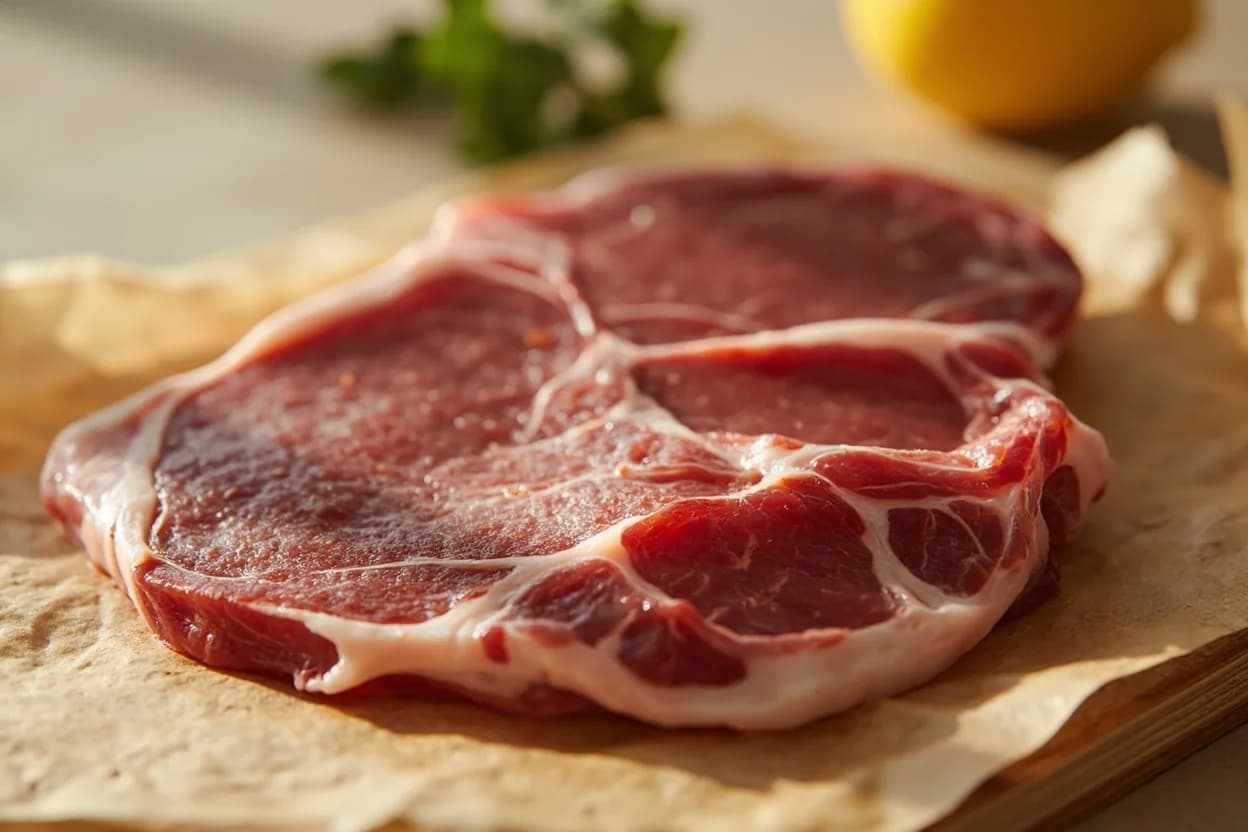
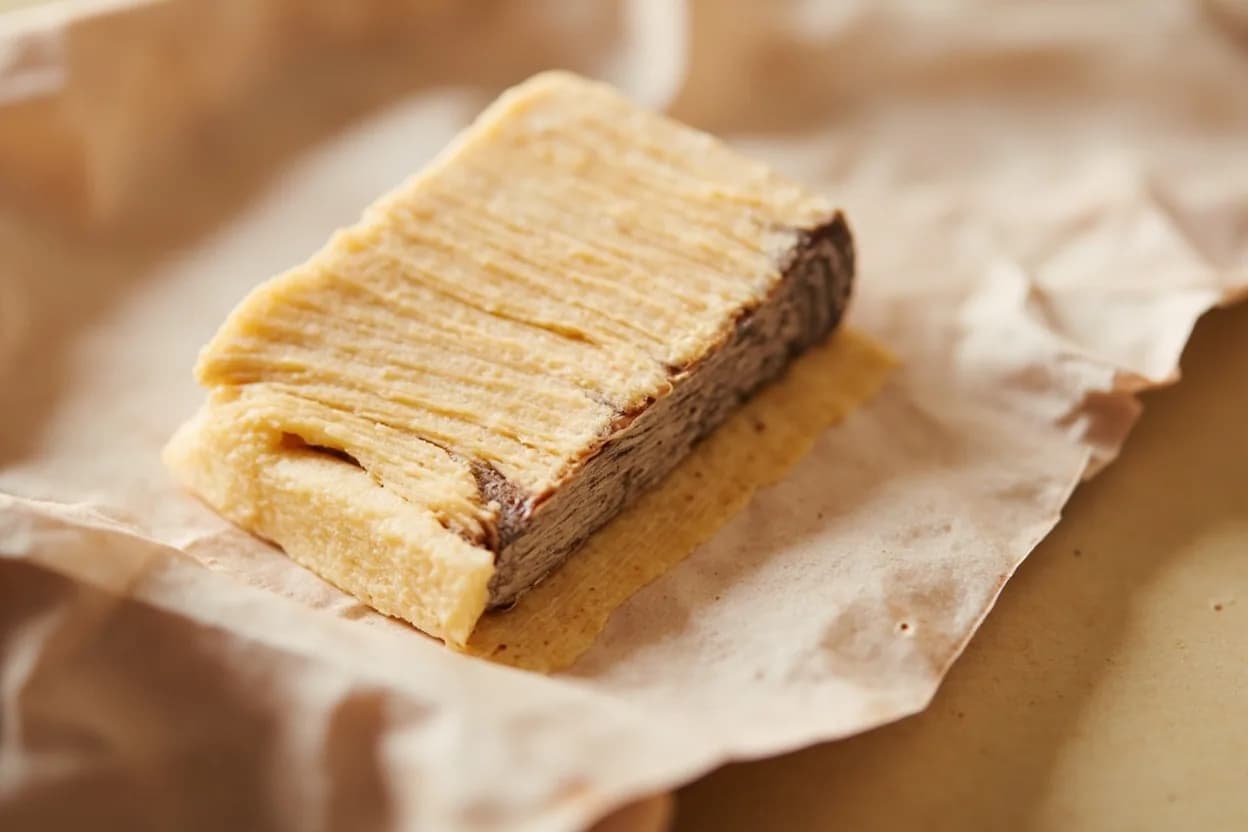
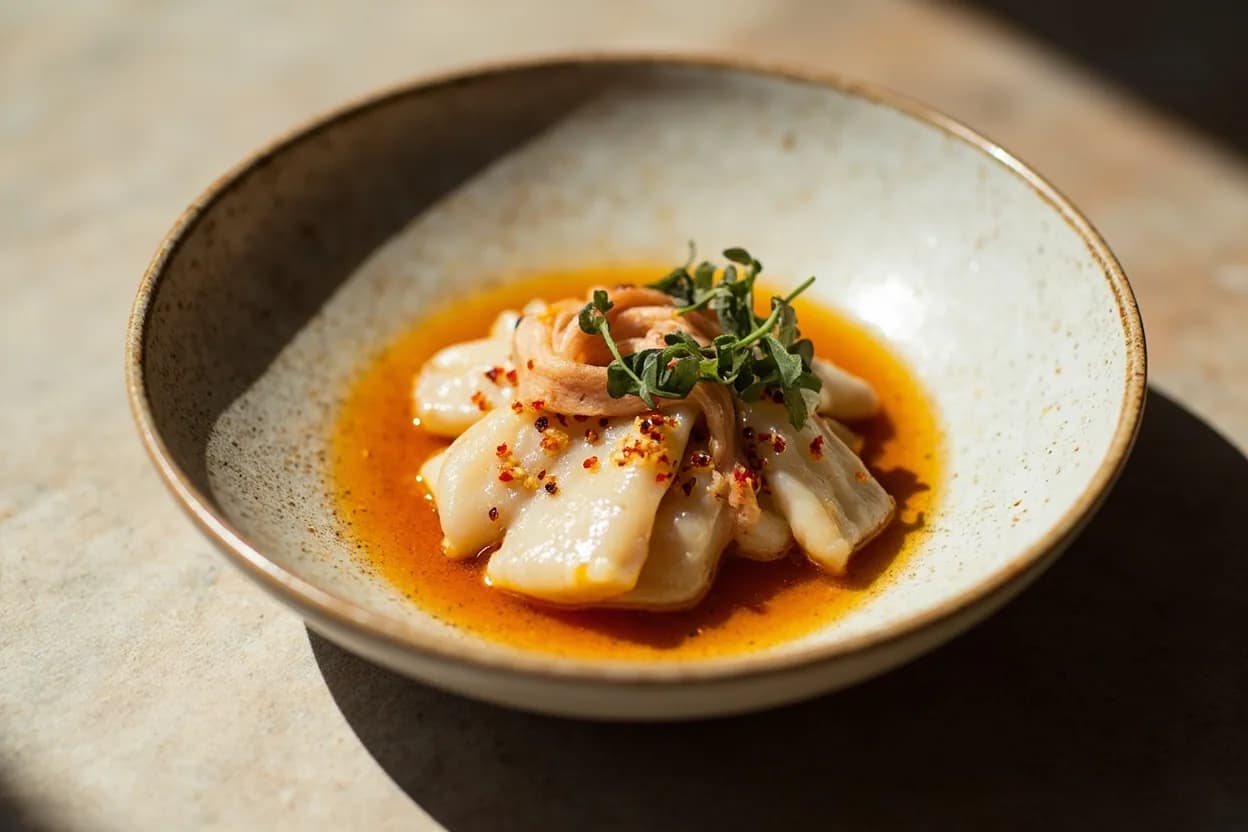
Where it comes from
Applied to any protein — chicken thighs, pork loin, salmon fillets, beef sirloin — after primary butchery is complete. The cut is a secondary preparation step, not tied to a specific anatomical region.
Best for
How to cook it
- 1Chill the protein until firm (not frozen) so the knife glides cleanly without dragging.
- 2Slice across or with the grain to 1–1.5 cm for fish and poultry, up to 2 cm for denser beef or pork.
- 3For cuts thicker than 3 cm (e.g., a pork chop or chicken breast), butterfly: hold the knife parallel to the board, slice to within 1 cm of the opposite edge, and open flat like a book.
- 4Apply shio koji paste liberally to all exposed surfaces — the large contact area is the point; do not rinse off before cooking if a mild cure is desired, or rinse and pat dry for a cleaner sear.
- 5Cook over very high heat (≥230 °C) for a short time; the koji-converted sugars brown faster than unseasoned meat, so watch closely to avoid burning.
Prep & butchery
- A sharp, thin-bladed slicer (yanagiba or sujihiki) produces the cleanest edge and avoids tearing.
- Partially freezing the protein for 20–30 minutes firms the texture and makes consistent 1–2 cm slices significantly easier.
- For the butterfly hinge cut, place the protein on a non-slip board and keep the knife parallel to the board throughout the stroke.
- After slicing, pat surfaces dry before applying koji paste so the paste adheres rather than sliding off.
Substitutes
- Pounded thin cutlet (escalope)
Increases surface area but ruptures muscle fibers mechanically rather than presenting intact cell walls to enzymatic action; koji absorption is similar but texture differs.
- Whole muscle with surface scoring
Cross-hatch scoring at 5 mm depth extends koji contact inward on thick cuts; slower and less uniform than a full thin slice.
Related cuts
- Butterfly cut
The hinge-open variant used on thicker pieces to achieve the same thin profile
- Escalope / scallop cut
Thinly pounded or sliced cutlet; similar geometry but prepared for breading or quick sauté rather than koji contact
- Tataki slice
Thin sashimi-style slice used on seared fish and beef; overlaps with shio koji applications on fish
Appears in
References
- 1.The Art of Fermentation — Sandor Ellix Katz
- 2.Koji Alchemy — Jeremy Umansky & Rich Shih
- 3.Japanese Farm Food — Nancy Singleton Hachisu
- 4.On Food and Cooking — Harold McGee
Confidence: high
Notes
Why thickness matters so precisely
Shio koji enzymes are contact-dependent: they work from the surface inward at a rate governed by moisture diffusion and enzyme concentration. At 1–2 cm, proteases and amylases penetrate the full slab within 3–12 hours at refrigerator temperature. Beyond 3 cm the interior remains essentially uncured, yielding uneven texture. The thin-slice cut is therefore not stylistic but biochemically necessary.
Maillard acceleration
Koji converts starches and some proteins to free sugars (primarily glucose and maltose). When a koji-cured thin slice hits a hot pan, those sugars participate in Maillard reactions at lower temperatures and faster rates than untreated meat, producing deeper color and umami crust with less time — and risk of overcooking — than a conventional marinade would allow.