Knife Cuts — Regional & Global
Tofu Block Breakdown — Slabs, Cubes & Crumbles
Also: tofu cutting guide, tofu slicing, tofu preparation cuts
Three fundamental tofu cuts — slabs, cubes, and crumbles — each calibrated to the protein's firmness and the dish's cooking demands.
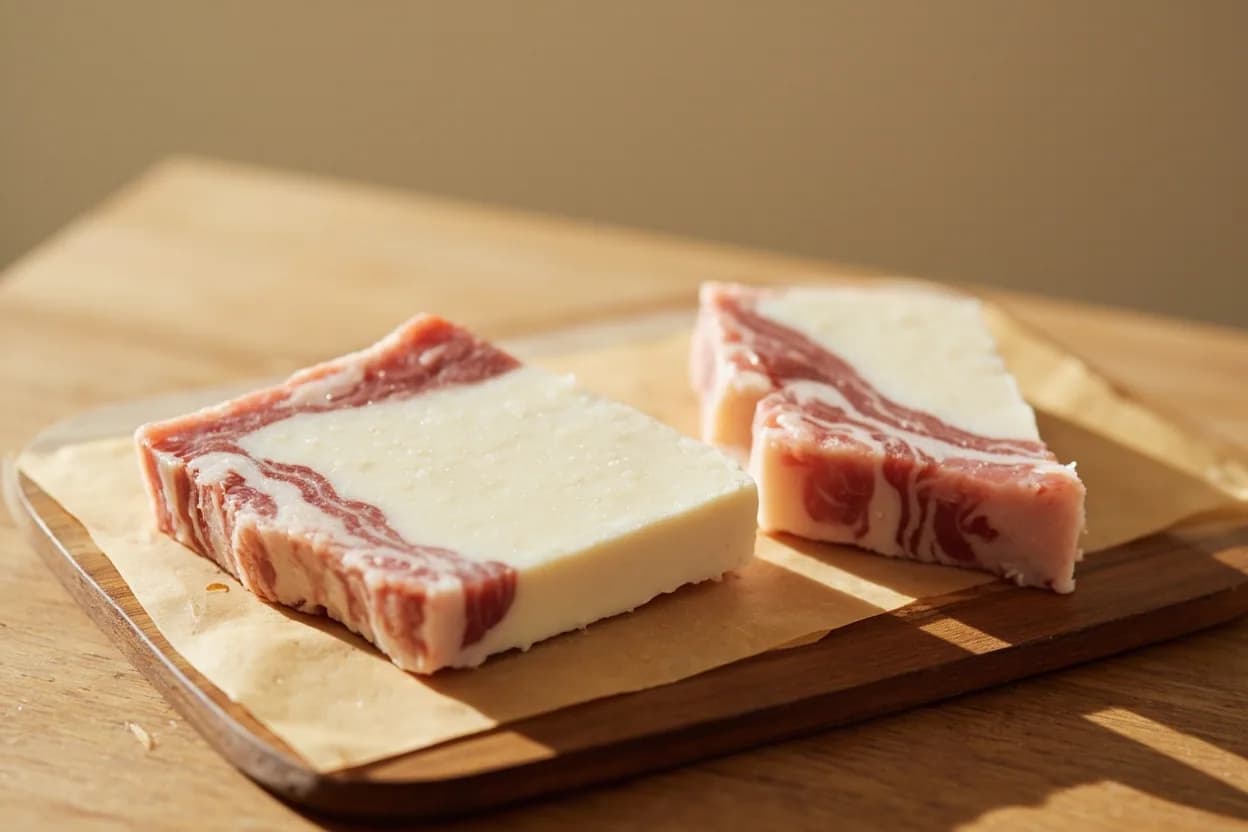
Tofu block breakdown encompasses three distinct cutting approaches adapted to the block's density. Silken tofu is handled with a spoon or pulled apart; firm and extra-firm blocks are sliced into slabs (1–2 cm), diced into cubes (1–2 cm), or broken by hand or fork into irregular crumbles. The correct cut determines texture, surface area, and how the tofu absorbs sauce or holds shape under heat.
In photos
Where it comes from
A rectangular block of coagulated soy milk curds pressed to varying moisture levels: silken (uncurdled, custard-like), soft, firm, extra-firm, and super-firm. The cutting plane is chosen relative to the block's long axis and the desired cross-section.
Best for
How to cook it
- 1Press firm or extra-firm blocks between paper towels or in a tofu press for 15–30 minutes before cutting; removing moisture improves browning and cohesion
- 2For slabs: lay the block flat and cut horizontally through its thickness at 1–2 cm intervals, yielding broad planks
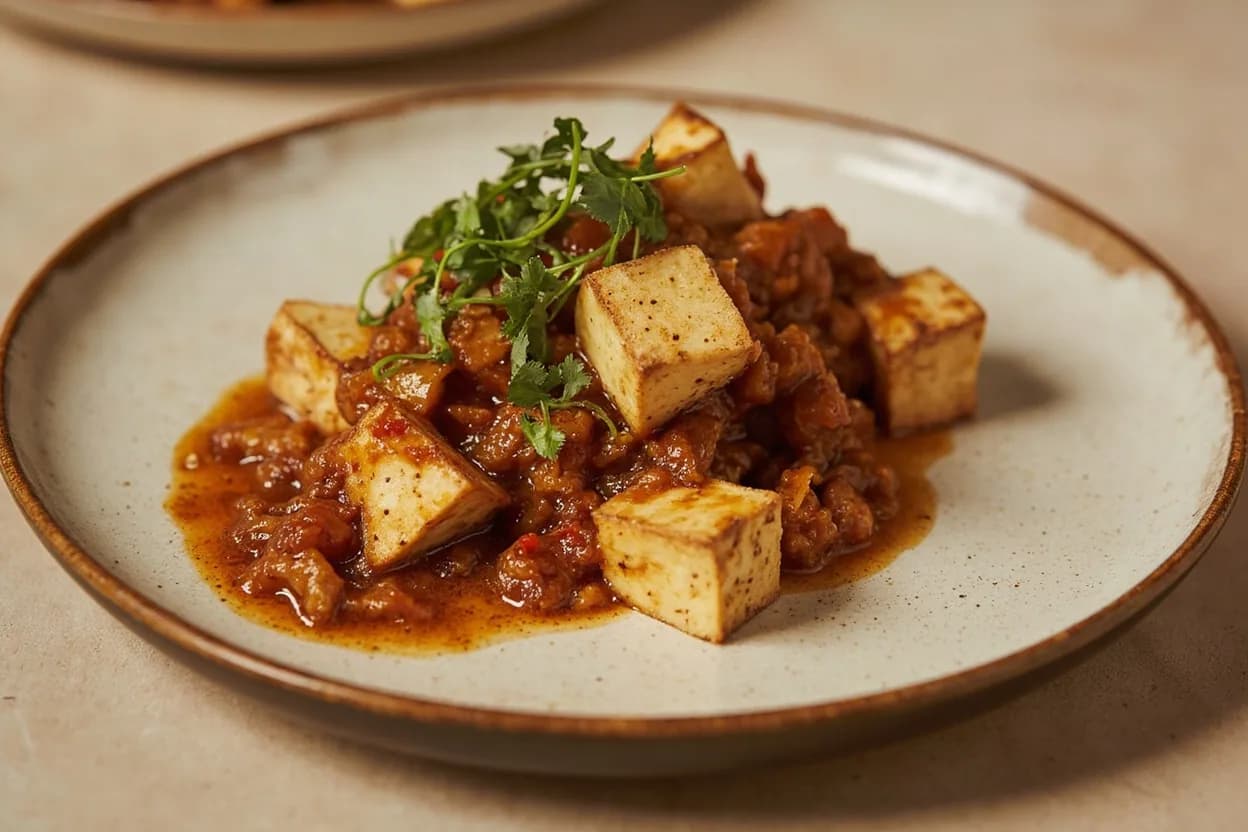
- 3For cubes: stack two slabs, cut into strips, then cross-cut to produce uniform cubes; 1.5 cm is the standard for mapo tofu and soups
- 4For crumbles: break extra-firm tofu directly into a hot pan with your fingers or use a fork; irregular edges fry crisp and resemble ground meat
- 5Handle silken tofu with a large metal spatula or a slotted spoon — a knife cut is usually the final step done in the pot or bowl, not on a board
- 6For agedashi, cut soft tofu into 5–6 cm cubes after thorough draining on a rack for 20 minutes
Prep & butchery
- Always drain the block and pat dry before cutting firm or extra-firm tofu
- Use a sharp, thin-bladed knife and a single downward press — dragging tears the curd structure
- Freeze then thaw firm tofu before cutting to create a chewier, more porous crumb that absorbs marinades deeply
- For silken tofu in cold dishes (hiyayakko), cut gently through the block in the serving dish with a metal scraper
Substitutes
Similar firm, non-melting curd; cubes behave comparably in high-heat applications but lacks tofu's neutral soy flavor
Denser and nuttier; slice or crumble as you would extra-firm tofu but reduce soaking time
- Silken tofu (for firm)
Texture will collapse — only substitute if the dish is blended or lightly warmed
Related cuts
Another produce-cut that relies on a single central slab through a dense structure to retain integrity
Small-dice technique applicable when tofu must be cut finely for filling or stuffing applications
Appears in
References
- 1.On Food and Cooking — Harold McGee
- 2.The Food Lab — J. Kenji López-Alt
- 3.Japanese Soul Cooking — Tadashi Ono & Harris Salat
- 4.Every Grain of Rice — Fuchsia Dunlop
Confidence: high
Notes
Why moisture removal is the single most important prep step
Tofu is roughly 85–90% water by weight. Even extra-firm tofu must be pressed before pan-frying; water on the surface instantly steams the pan, preventing the Maillard reaction and causing sticking. A 20-minute press on paper towels reduces surface moisture enough for a proper sear. For crumbles, the large surface area means moisture evaporates quickly in a hot pan, but adding soy sauce or liquid too soon re-wets the crumble and stalls browning.
Slab vs. cube: a sauce-absorption question
In mapo tofu, 1.5 cm cubes are standard because they create enough surface area to carry the Sichuan doubanjiang-laced sauce while the interior remains silky. A slab would shed the sauce coating; a crumble would disintegrate. In Korean soon tofu, silken tofu is not cut at all — it is broken into the broth with a spoon, letting irregular jagged surfaces trap egg and fat from the broth.