Poultry — Breakdown & Cuts
Tori no Hire (Japanese Poultry Wing Breakdown)
Also: teba, tori hire, yakitori wing sectioning, tebasaki breakdown, chicken wing trisection
The Japanese trisection of the whole chicken wing into drumette, flat (nakabone), and tip — each portioned to exacting yakitori geometry for even skewering and charcoal cooking.
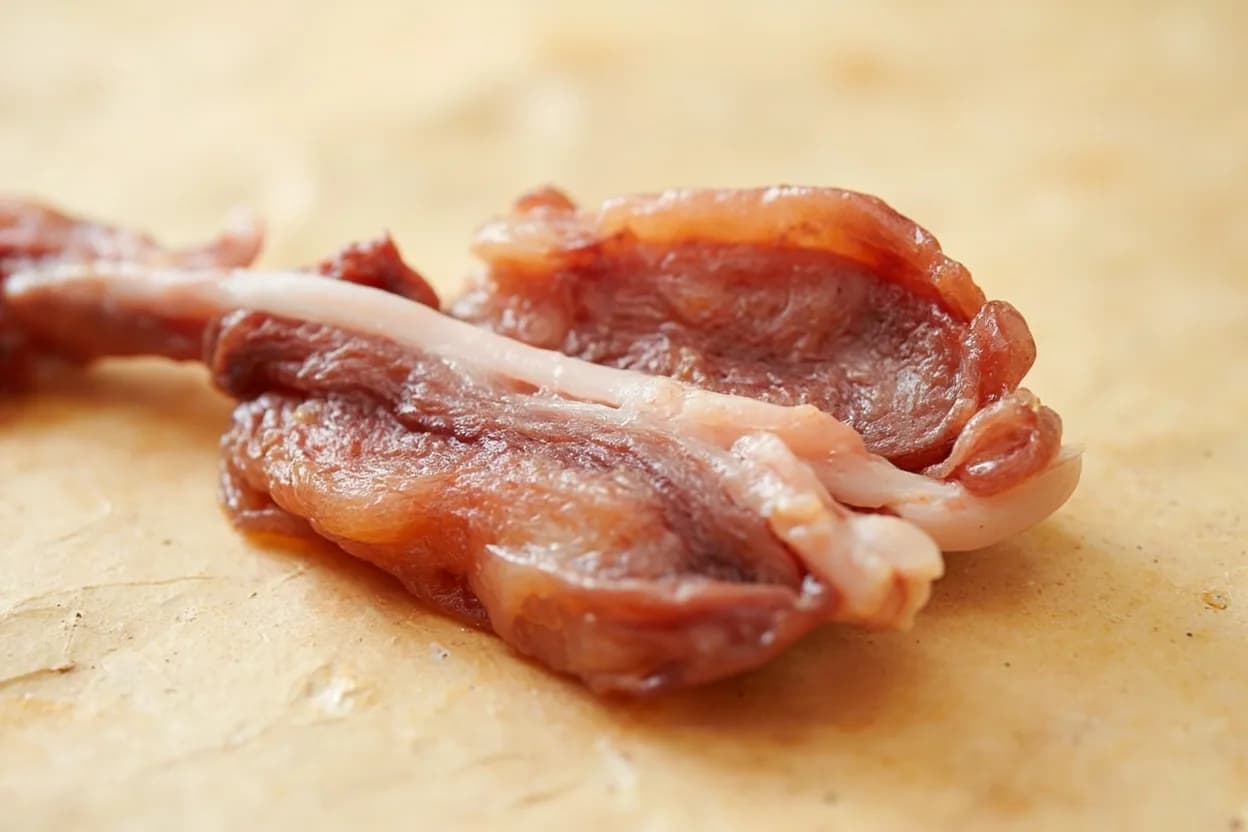
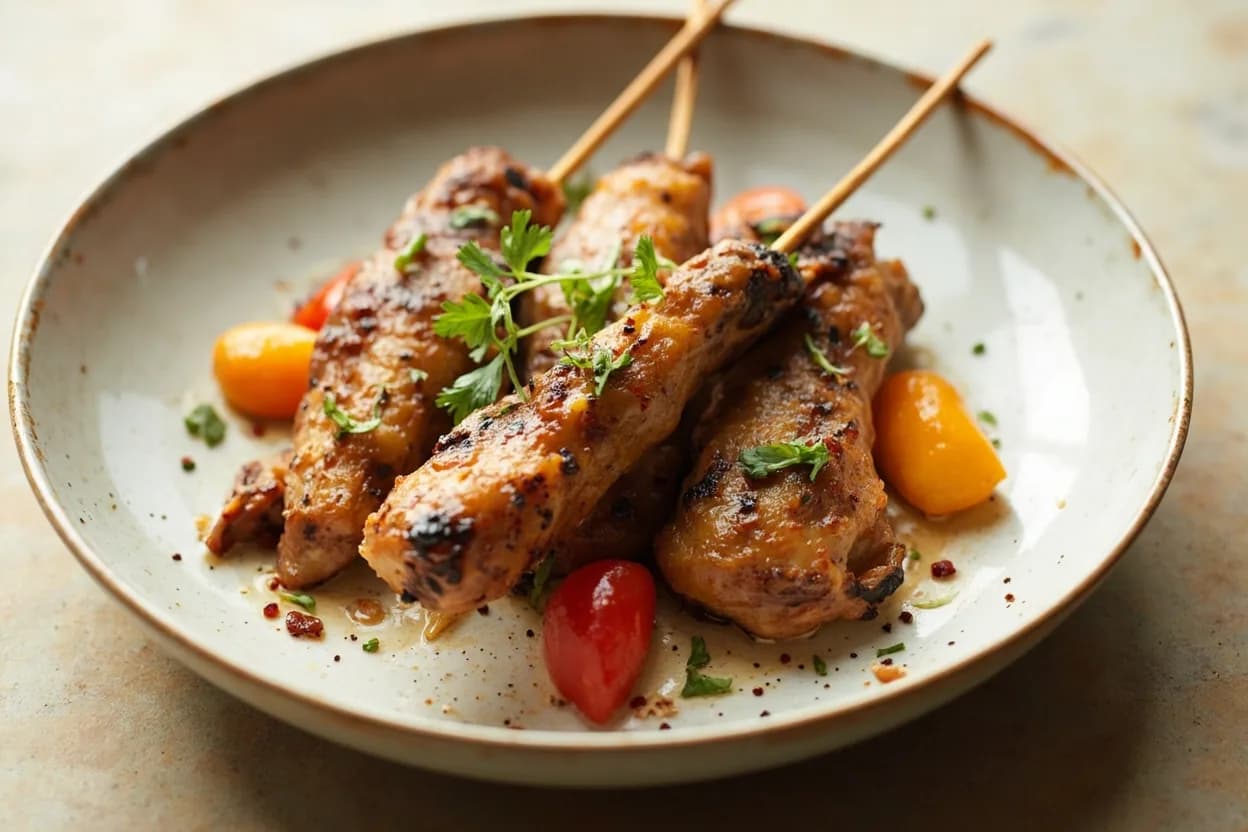
Tori no hire (鶏のヒレ / teba breakdown) refers to the methodical sectioning of a whole chicken wing at its two joints — the shoulder-elbow joint and the elbow-wrist joint — to yield three distinct pieces: the drumette (ichiban-teba or 'first wing'), the flat/nakabone (ninoude or 'second wing'), and the tip (teba-saki or 'wing tip'). In yakitori-specific contexts, the flat section is often further manipulated: both bones (radius and ulna) are cleaned from one end and pushed to create the distinctive 'lollipop' or folded fan shape used in high-end teba skewers.
In photos

Where it comes from
The full chicken wing (teba, 手羽) consists of three bony sections: the humerus (drumette), the radius-ulna pair (flat/nakabone), and the carpals-phalanges (tip). The two cut points are the glenohumeral joint (shoulder) and the humeroulnar joint (elbow). The tip section contains little usable meat and is most often reserved for stock or deep-fried whole.
Best for
How to cook it
- 1For yakitori drumettes: skewer lengthwise through the meat parallel to the bone; grill over binchotan at medium-high heat, turning every 90 seconds; glaze with tare in the final 2 minutes.
- 2For yakitori flats (nakabone manipulation): grip the cut end of the flat; using a knife tip, scrape both bones free from the meat from the cut end toward the tip, leaving bones protruding; fold the meat back over itself and skewer through the meaty flap to create a compact 'fan' shape.
- 3For Nagoya tebasaki: pat the flat and drumette completely dry; fry at 170°C for 8 minutes until deep golden, then raise to 190°C for 2 minutes for crisping; toss immediately in a sweet-spicy soy-mirin-garlic glaze.
- 4For stock: split wing tips with a cleaver to expose marrow; roast at 220°C until deeply caramelized; add to stockpot with water, kombu, and ginger.
- 5For braising: sear all sections skin-side down until golden; braise in a 1:1:1 ratio of soy sauce, mirin, and sake for 20–25 minutes until lacquered.
Prep & butchery
- Chill wings to 2–4°C for cleanest joint cuts — cold cartilage cuts more precisely.
- For the shoulder cut (removing drumette from whole wing): bend the wing backward to expose the glenohumeral joint; insert a sharp knife tip directly into the joint cartilage and cut through — no sawing through bone needed if the joint is found precisely.
- For the elbow cut (separating flat from tip): similarly bend backward to expose the humeroulnar joint and cut cleanly through the cartilage.
- Pat all sections completely dry before grilling or frying — surface moisture is the primary enemy of skin crispness.
- For the lollipop/nakabone manipulation, a thin flexible boning knife or a stiff paring knife works best to separate the radius and ulna from the meat without tearing.
Substitutes
- Whole chicken wing (unsectioned)
Can be cooked whole but results in uneven cooking — drumette overcooks before the flat is done
- Duck wing sections
Richer fat content; require longer cooking times; excellent in braised applications
- Turkey wing drumette
Much larger; use for braising rather than yakitori skewering
Related cuts
- Chicken Drumette
The first wing section — the humerus segment with its single bone
- Chicken Flat (Wing Mid-Section)
The radius-ulna segment; the nakabone of yakitori
- Wing Tip
The distal cartilage-rich tip section; used for stock or deep-fried whole
Companion technique for leg boning using the honetsuki knife
Appears in
References
- 1.Yakitori: The Japanese Art of Grilled Chicken — Harris Salat
- 2.The Food Lab — J. Kenji López-Alt
- 3.Japanese Farm Food — Nancy Singleton Hachisu
- 4.On Food and Cooking — Harold McGee
Confidence: high
Notes
Nagoya tebasaki culture
Nagoya has built an entire food identity around tebasaki (手羽先). The city's signature version — double-fried until lacquered and dusted with black pepper and sesame — uses the flat and drumette sections almost exclusively. The technique of double-frying at two temperatures (first to cook through at ~170°C, second to crisp the skin at ~190°C) is essential; single-frying produces either an undercooked interior or a burnt exterior.
The nakabone yakitori cut
The nakabone (中骨) preparation is the mark of a skilled yakitori cook: by scraping both the radius and ulna bones free from the meat at the cut end and folding the freed meat back over the exposed bone ends, a compact, skewerable piece is created that cooks evenly, presents beautifully, and allows the diner to eat the entire piece off the skewer without encountering loose bones. It is labor-intensive but signals kitchen craft.