Poultry — Breakdown & Cuts
Japanese Honetsuki-Boning (Poultry)
Also: honetsuki boning, maru-nuki, chicken bone-in leg boning, Japanese poultry fabrication
A Japanese single-stroke boning technique that removes the leg bone while keeping the skin flawlessly intact and the meat in a flat butterflied sheet.
Honetsuki-boning (骨抜き解体) is the Japanese method of boning a chicken leg — or sometimes the whole bird — using a short, stiff, asymmetric honetsuki knife. The goal is a clean, single continuous cut that runs along the bone from joint to joint, leaving the skin unbroken, the meat unscraped, and the resulting piece flat enough to grill, roast, or pound. The technique prized most in yakitori and teishoku kitchens is the 'maru-nuki' method applied to a whole bone-in leg (momoniki): the bone is popped free as one unit without piercing the skin on the exterior side.
In photos
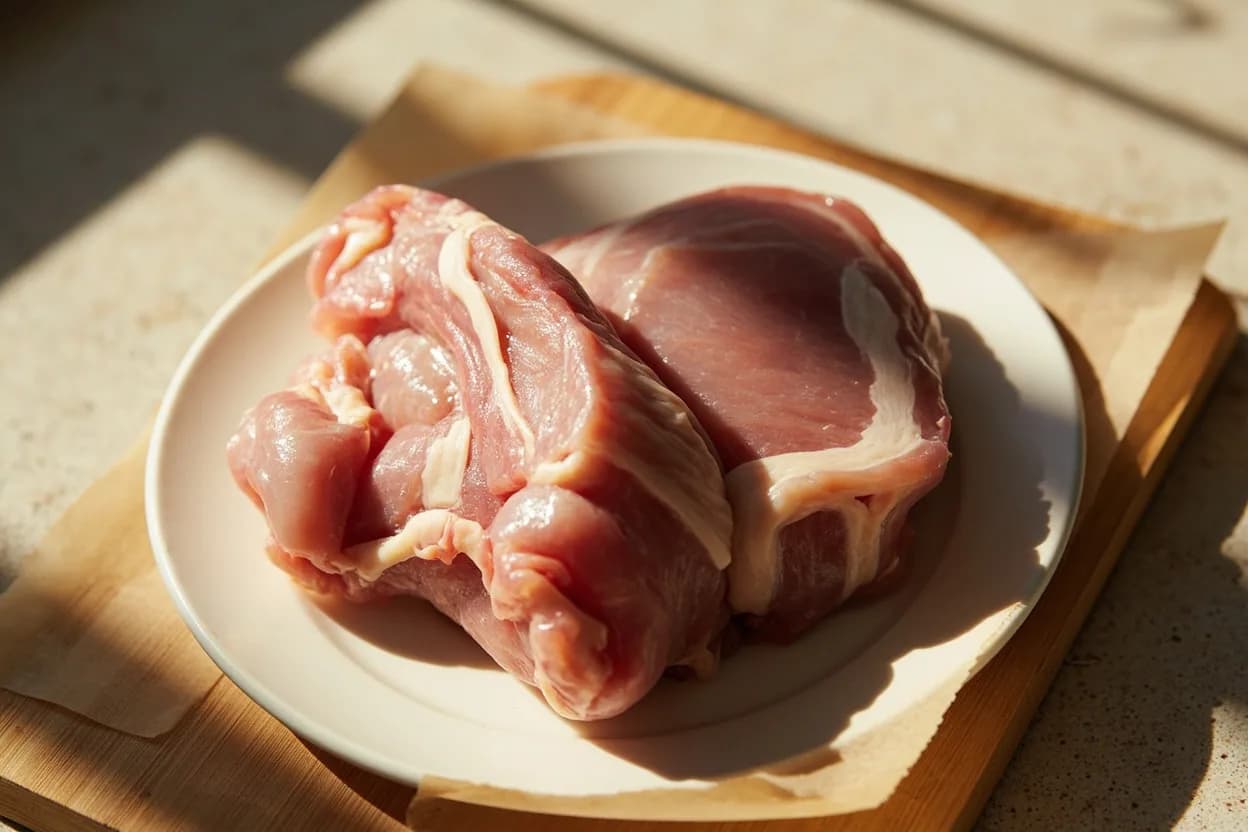
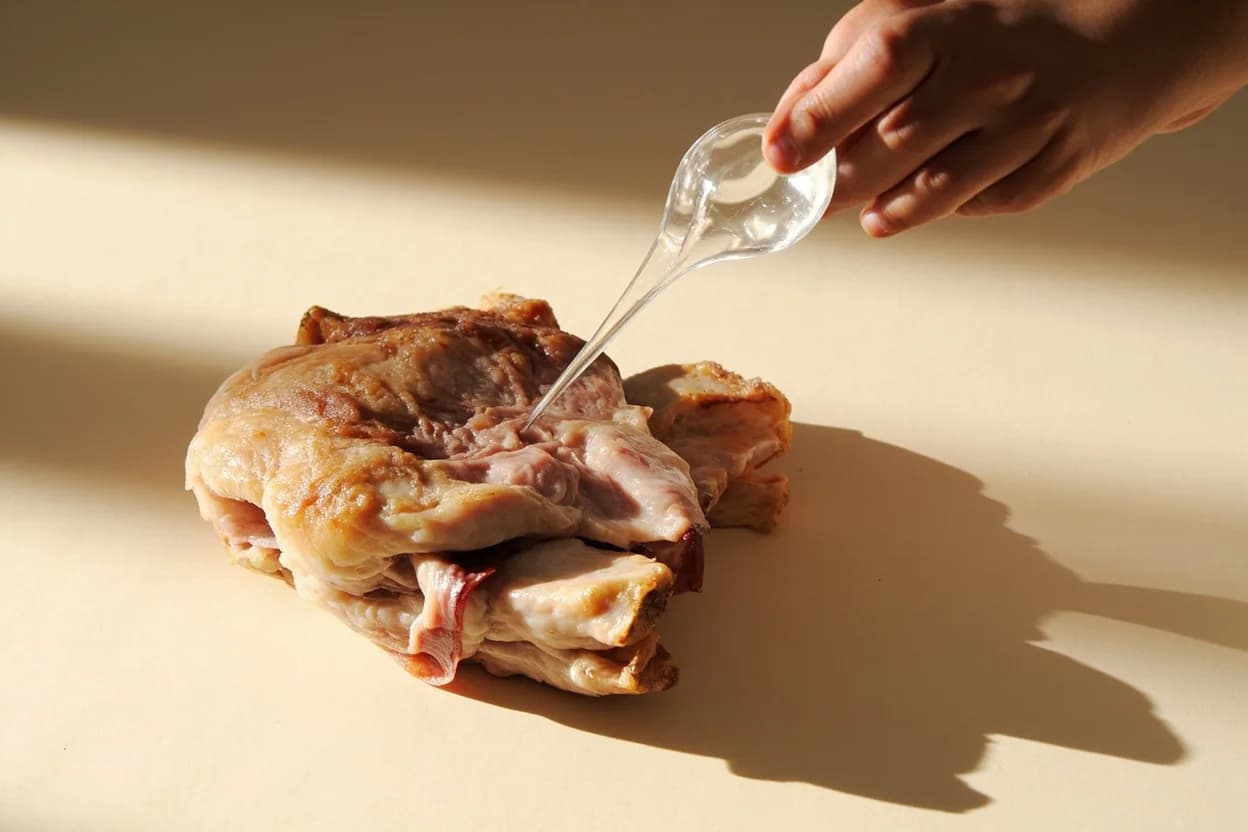
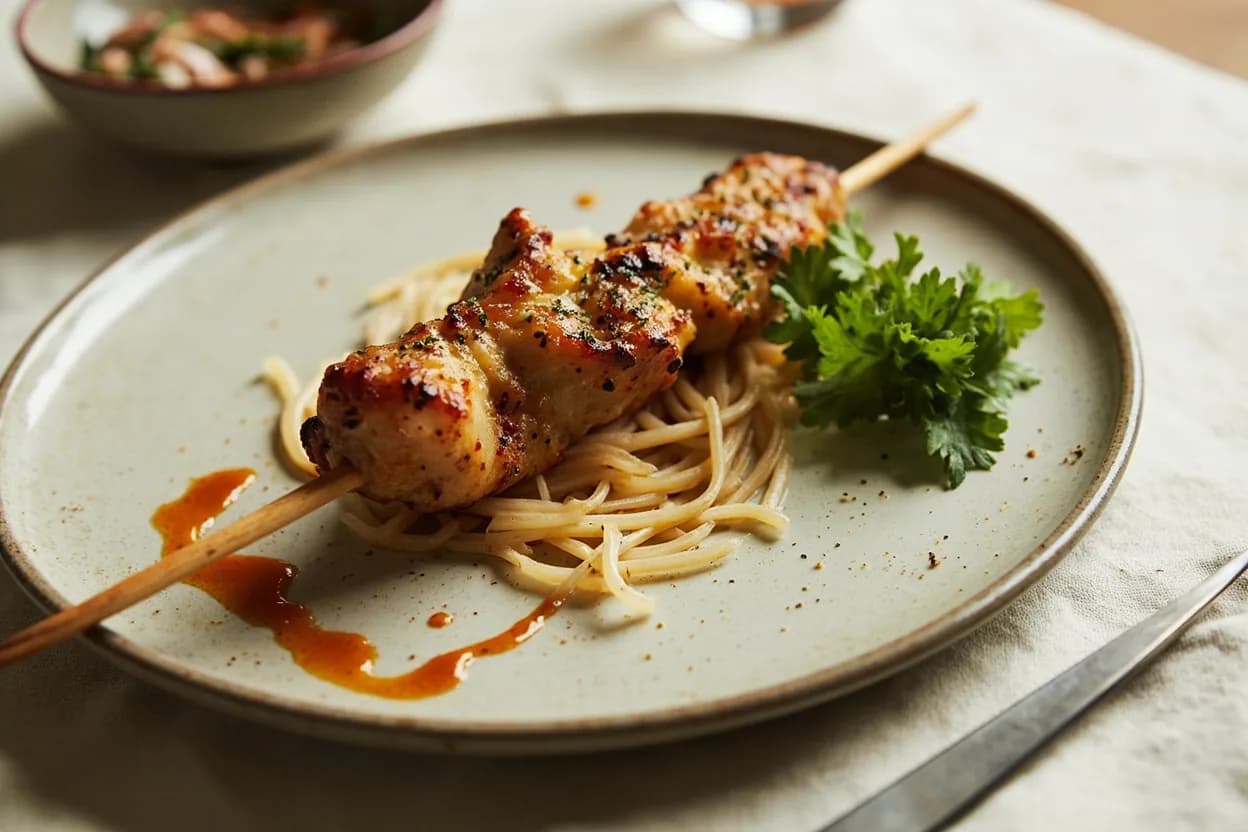
Where it comes from
Applied to the chicken leg quarter (thigh + drumstick combined, skin on). The technique can also be used on a whole bird or on the breast-keel joint. The honetsuki knife — typically 145–165 mm, with a rigid spine and single-bevel or asymmetric grind — provides the precision and lateral stiffness needed to scrape cleanly against hard bone.
Best for
How to cook it
- 1After boning, score the thick thigh muscle once or twice across the grain so the piece lies flat — this is called 'sakudori' flattening.
- 2Pat the skin completely dry with paper towels; moisture is the enemy of crispy yakitori skin.
- 3For binchotan grilling: grill skin-side down over moderate heat for 4–5 minutes until golden and rendered, then flip for 2–3 minutes; glaze with tare in the final minute.
- 4For pan-roasting: press skin-side down in a cold dry skillet, weight with a heavy pan, and raise heat slowly to medium — low and slow skin rendering produces the crispest result.
- 5Rest 3–4 minutes tented before slicing across the grain on a bias for even mouthfeel.
- 6The removed bone can be immediately cracked and added to a tori-gaara (chicken carcass) stock pot.
Prep & butchery
- Use a dedicated honetsuki knife (145–165 mm, rigid spine) — a flexible fillet knife will not provide the lateral control needed for clean bone contact.
- Chill the leg to 2–4°C before boning: cold meat is firmer and the skin contracts slightly, making it easier to keep intact.
- Start at the hip socket: insert the tip of the honetsuki and free the ball joint with a firm twisting cut, then lay the leg skin-side down.
- Run the knife along the femur with short scraping strokes, rotating the bone as you go rather than lifting and repositioning the knife.
- At the knee joint, cut through the cartilage cleanly; continue the same scraping motion along the tibia-fibula.
- Pop the ankle joint free and remove the bone in one piece — this is the 'maru-nuki' single extraction.
- Check the skin on the exterior: it must have no cuts. Any nick will open during high-heat cooking and allow fat to escape, ruining the presentation.
Substitutes
- Bone-in chicken thigh
Retain bone for added moisture and flavor when the flat presentation is not needed
- Boneless skin-on chicken thigh (Western fabrication)
Faster to produce but often leaves an irregular shape and may pierce the skin
- Spatchcocked poussin leg
Smaller scale; same technique applies but requires a smaller honetsuki or boning knife
Related cuts
- Tori no Hire (Wing Breakdown)
Companion yakitori fabrication for wings
- Chicken Thigh (Western boneless)
Western equivalent — skin often less carefully preserved
- Duck Leg Confit Cut
Similar leg anatomy but boned differently for a French application
- Ballotine
French technique that also begins with a fully boned-out leg for stuffing
Appears in
References
- 1.The Japanese Kitchen — Hiroko Shimbo
- 2.Yakitori: The Japanese Art of Grilled Chicken — Harris Salat
- 3.Japanese Farm Food — Nancy Singleton Hachisu
- 4.Knife Skills Illustrated — Peter Hertzmann
Confidence: high
Notes
The honetsuki knife
The honetsuki (骨抜き包丁) is purpose-built for this task: its rigid, triangular profile and asymmetric grind let the cook lever against bone without the blade flexing away. Western boning knives are typically more flexible and longer — they work for French-style boning (pulling meat away from bone) but lack the precision for the Japanese style of scraping along the bone with the knife pressed flat against it.
Why single-stroke matters
Multiple passes over the same section of bone bruise the meat and leave thin muscle shreds attached to the bone (wasteful) or on the meat surface (unsightly). High-end yakitori shops use the honetsuki technique as a quality marker: a well-boned leg has clean muscle surfaces that take tare evenly, with no ragged edges that would char before the center cooks.