Knife Cuts — Regional & Global
Jackfruit Breakdown — Raw vs. Ripe
Also: green jackfruit butchery, kathal cutting, nangka preparation
Two entirely different cutting strategies for the same fruit: raw jackfruit is sectioned for its fibrous, meat-like flesh; ripe jackfruit is opened for sweet arils — each demands latex management and a different knife approach.
Jackfruit (Artocarpus heterophyllus) breakdown requires the cook to adapt entirely to the fruit's ripeness state. Raw (unripe) jackfruit has firm, white starchy flesh packed in a latex-rich exterior that must be neutralized with oil before cutting. Ripe jackfruit has yielded to a golden, aromatic, honey-sweet interior where individual arils — the edible seed pods — pull away cleanly from the core and rind. The two states demand different knife weights, different oil strategies, and yield completely different culinary products.
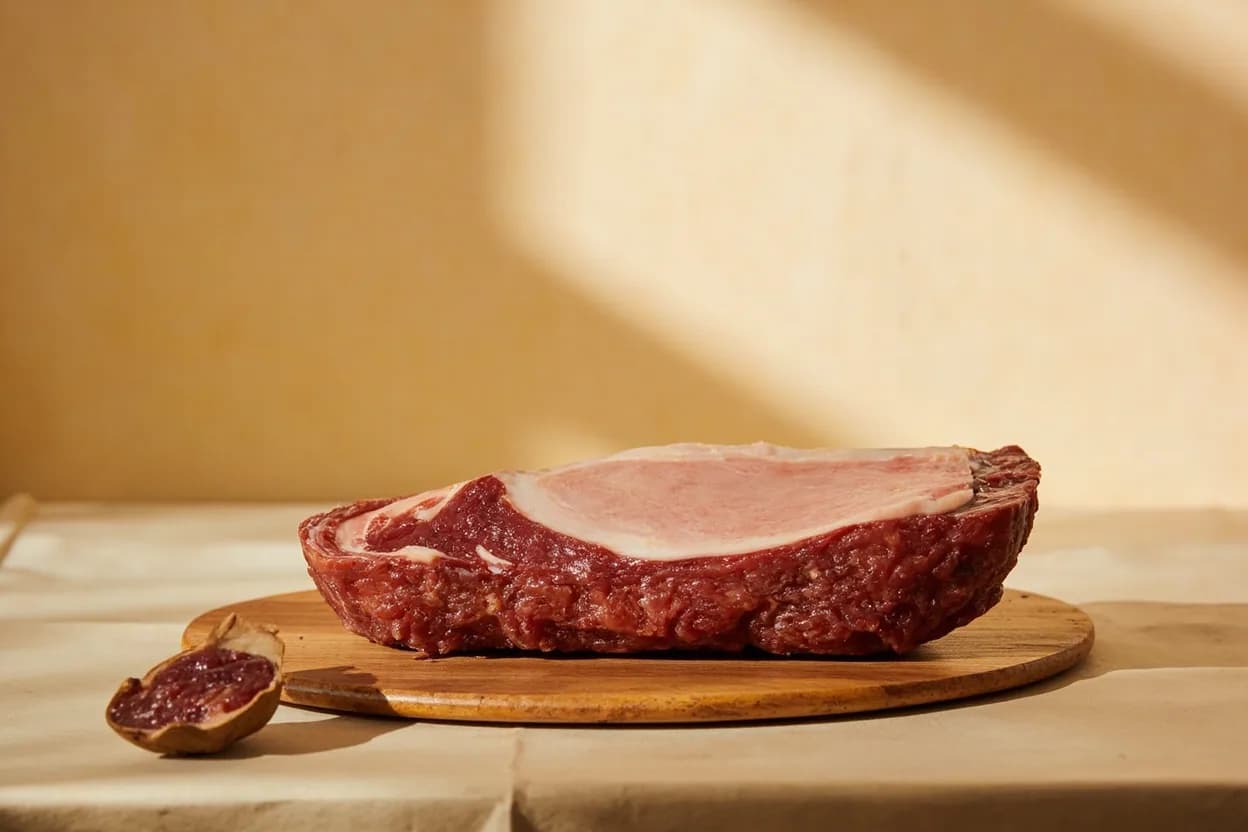
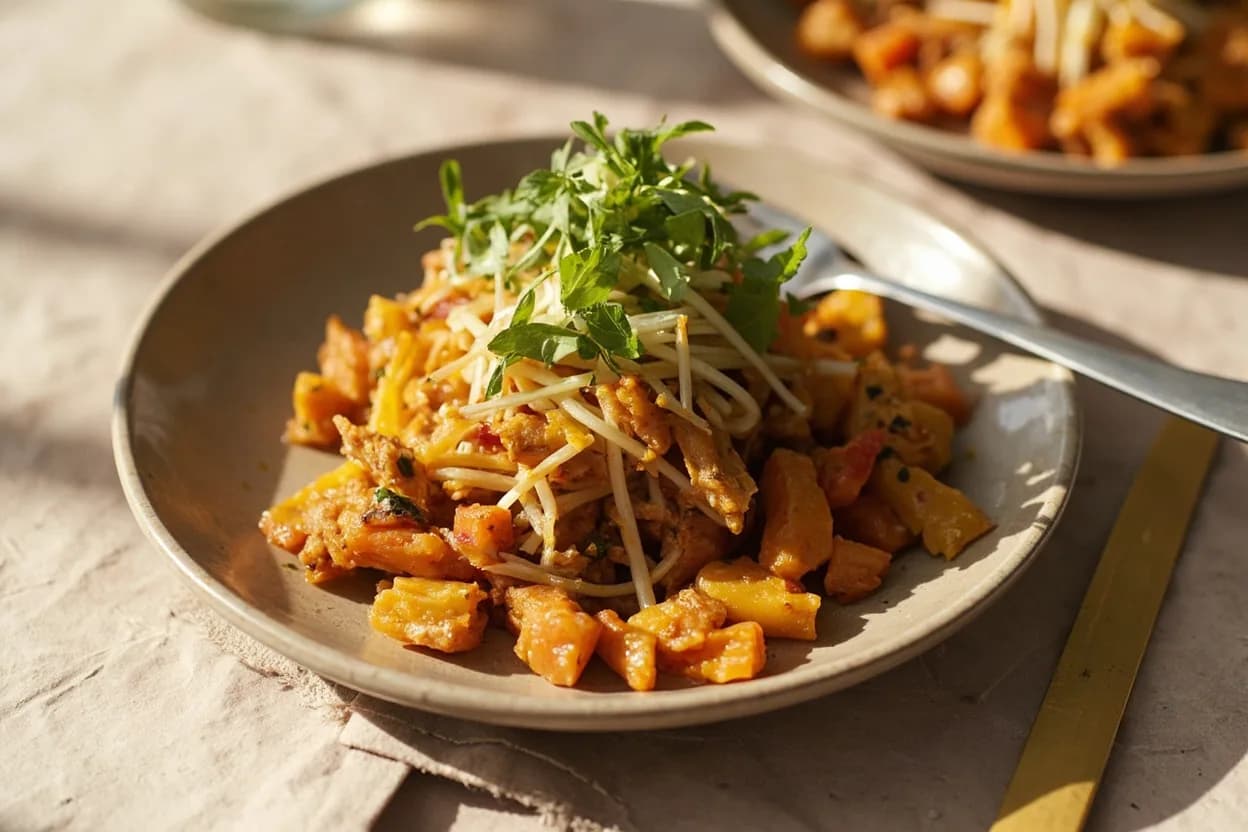
In photos
Where it comes from
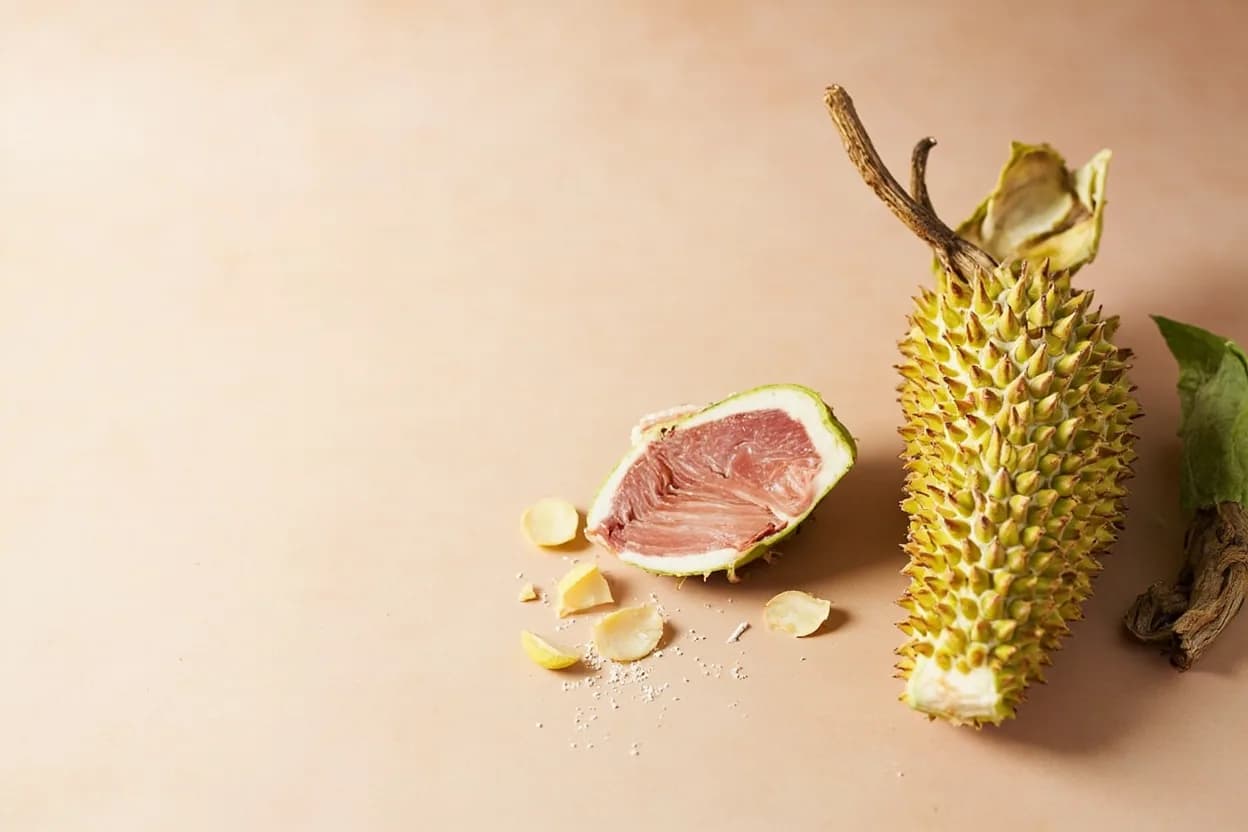
The world's largest tree fruit, borne directly on the trunk and main branches (cauliflory). The exterior is a spiky, thick green rind (raw) or yellowish-green rind (ripe). Beneath is a white or golden inner rind, a fibrous core, and tightly packed arils surrounding seeds. Raw flesh surrounds the arils as neutral, fibrous strands; ripe arils encase the seed in sweet, slippery pods.
Best for
How to cook it
- 1Oil your knife blade, cutting board, and hands with vegetable oil or coconut oil — this prevents latex adhesion
- 2For RAW jackfruit: cut off the stem end, then halve the fruit lengthwise with a heavy cleaver or chef's knife; the latex will immediately begin to seep
- 3Quarter each half, then cut away the fibrous core running through the center of each section; the core is tough and must be removed before cooking
- 4Pull apart or cut the white fibrous sections surrounding each aril — these are the 'meat substitute' strands; discard or cook the arils separately
- 5Soak raw jackfruit pieces in salted water for 20 minutes after cutting to remove excess latex and reduce bitterness
- 6For RIPE jackfruit: halve through the stem and score the inner rind lengthwise; individual arils will separate easily from the connective tissue by hand
- 7Remove the papery seed coat from each aril by pinching; the seed inside can be reserved for boiling
Prep & butchery
- A heavy chef's knife or cleaver is required — a paring knife will stick in the latex-filled flesh
- Keep a bowl of oiled water nearby; rinse knife frequently to prevent latex buildup
- Wear gloves if skin sensitivity is a concern — jackfruit latex can cause temporary skin irritation
- Work quickly once cut; cut surfaces oxidize and latex hardens on exposed flesh and equipment
- Clean latex from knives and boards immediately with cooking oil on a cloth before washing with soap and water
Substitutes
- Canned green jackfruit in brine
Nearly identical result for pulled applications; rinse thoroughly to remove brine, then squeeze dry before cooking
- Young banana blossom
Similar fibrous texture when cooked; smaller scale with less latex management needed
- Artichoke hearts
For flavor profile not texture; lacks the shredding property
Related cuts
- Durian Opening
Another large tropical fruit requiring careful sectioning and odor/mess management
- Pineapple Crown-and-Core Removal
Similar cylindrical tropical produce breakdown with a central core to remove
Appears in
References
- 1.The Vegetarian Meat and Potatoes Cookbook — Robin Robertson
- 2.Tropical Fruits — Julia Morton, USDA
- 3.The Complete Asian Cookbook — Charmaine Solomon
- 4.Burma: Rivers of Flavor — Naomi Duguid
Confidence: high
Notes
Latex management — the core skill
Jackfruit latex (articin and jacalin proteins in the milky sap) is extraordinarily adhesive. Experienced cooks in South and Southeast Asia oil everything before touching the fruit: the board, the knife, their hands, and sometimes even the surface of the fruit itself. Once latex hardens on steel it must be dissolved with oil, not water. This is why canned jackfruit — pre-cut, pre-blanched, latex already denatured — has become the standard for Western kitchens: it sidesteps the most demanding preparation challenge while delivering nearly identical results for cooked applications.
Raw vs. ripe: two different ingredients
Raw and ripe jackfruit are culinarily unrelated despite coming from the same tree and sometimes the same fruit at different stages. Raw flesh has almost no sweetness and a pronounced starchiness that absorbs bold spices and sauces; it shreds after a long braise into convincing pulled-meat textures. Ripe jackfruit is dominated by isoamyl acetate and ethyl butyrate — banana and pineapple esters — that make it unsuitable for savory applications. In Southeast Asian markets, the ripeness stage is specified by color and the sound the exterior makes when tapped.