Japanese Fish & Sashimi Cuts
Ito-zukuri (Thread Cut for Delicate Fish)
Also: ito-zukuri, itozukuri, thread cut, fine julienne sashimi
Ultra-fine thread-like strips of squid, young yellowtail, or other translucent fish that dissolve on the tongue and catch dipping sauce in their filaments.
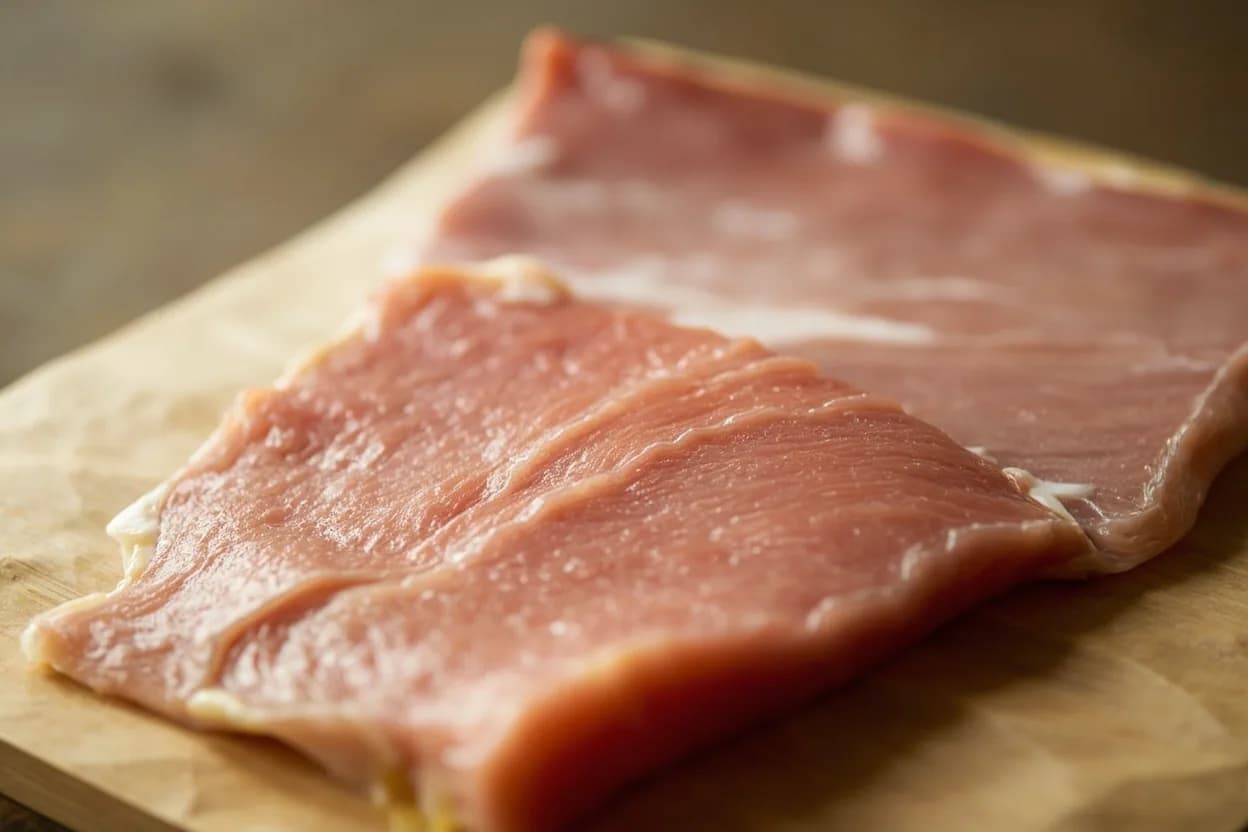
Ito-zukuri (糸造り, 'thread presentation') is the finest sashimi cut, producing strips as thin as 1–2 mm wide and 5–8 cm long that resemble silk thread. The fish is first reduced to thin sheets via sogi-zukuri, then the sheets are stacked and drawn through a single long knife stroke to produce uniform filaments. The technique demands a razor-sharp single-bevel blade and total knife control.
In photos

Where it comes from
Most commonly applied to ika (squid — especially surume-ika and yari-ika), shirouo (ice goby), kisu (whiting), and young hamachi (buri/yellowtail). The cut also appears with hotate (scallop) and occasionally with the white flesh of hirame (flounder). The thin sheets needed as an intermediate step come from the flanks of tube-shaped squid or the fillet of small flat fish.
Best for
How to cook it
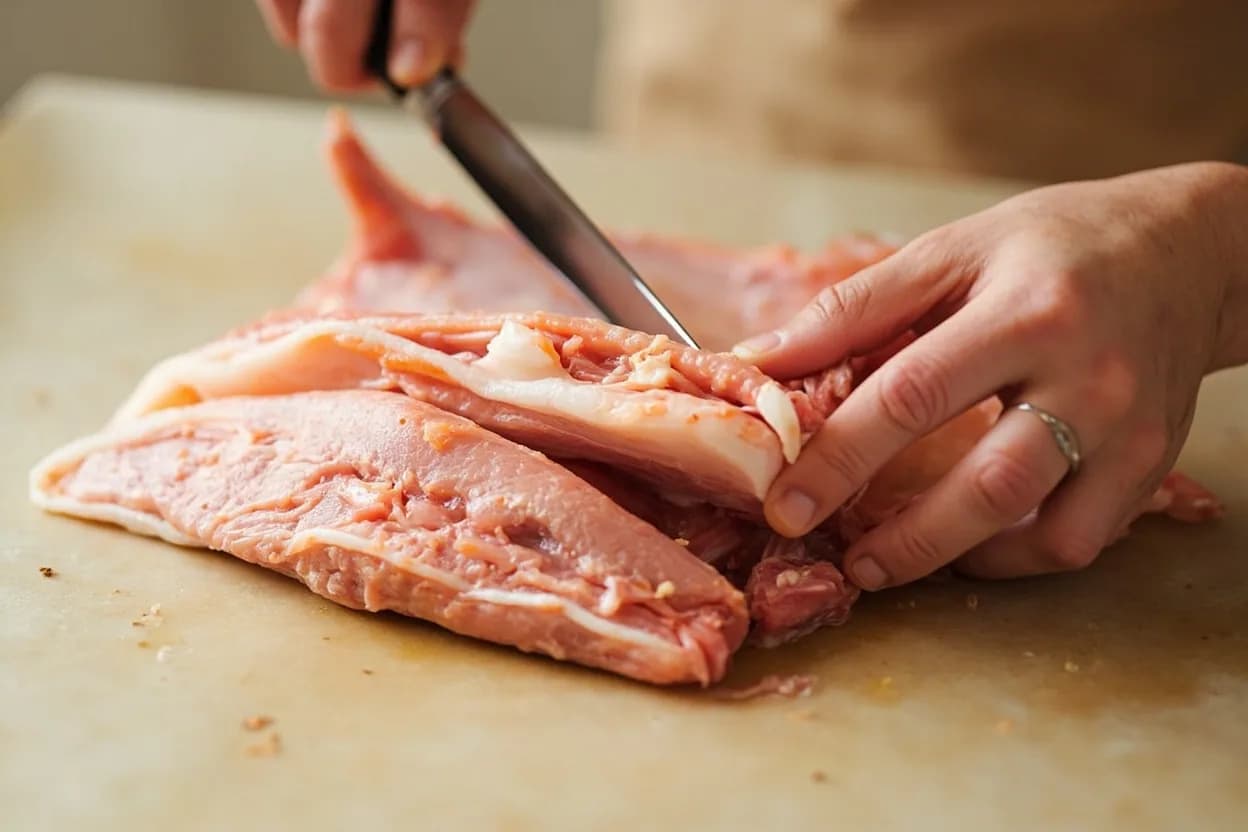
- 1For squid: remove the skin, open the tube flat, score the inner surface lightly in a crosshatch (improves texture), then slice into thin sheets of ~2 mm thickness using a sogi-zukuri angle
- 2Stack two to three sheets with the grain aligned in the same direction
- 3Using the full length of a yanagiba, draw through the stacked sheets in one stroke parallel to the grain, producing 1–2 mm filaments
- 4Transfer the bundle with the flat of the blade or chopsticks; never use fingers — the strands break easily and pick up heat
- 5Arrange in a loose nest or bundle on a chilled dish; garnish with finely shredded shiso, myoga, or daikon threads
- 6Serve immediately with ponzu or a light soy-citrus dipping sauce; the thin strands oxidize and wilt quickly
Prep & butchery
- Absolute blade sharpness is non-negotiable — a slightly dull knife crushes filaments instead of cutting them
- Squid must be skinned completely; any remaining purple membrane causes the strand to curl and break
- Work quickly at refrigerator temperature; ito-zukuri filaments warm rapidly under kitchen heat and lose structural integrity
- Chilling the cutting board and blade with a damp cold cloth before cutting helps maintain filament integrity
Substitutes
- Kaku-zukuri
Block cubes of the same fish — loses the gossamer texture but is far more practical in high-volume service
- Sogi-zukuri
Intermediate thin slices — provides some delicacy without the extreme precision demanded by ito-zukuri
Related cuts
- Sogi-zukuri
Produces the thin sheet that is the mandatory intermediate step before ito-zukuri threading
- Hiki-zukuri
The standard thick-slice pull cut — opposite end of the sashimi thickness spectrum
- Usu-zukuri
Paper-thin wide slices — also maximally thin but wide rather than filament-like
Appears in
References
- 1.Sushi and the Art of the Japanese Knife — Hiromitsu Nozaki
- 2.The Japanese Kitchen — Hiroko Shimbo
- 3.Washoku: Recipes from the Japanese Home Kitchen — Elizabeth Andoh
- 4.Dashi and Umami: The Heart of Japanese Cuisine — Heston Blumenthal & Cross-Cultural Culinary Foundation
Confidence: high
Notes
Ika somen — the iconic application
The most celebrated use of ito-zukuri is ika somen, where squid is cut into thread-fine strips that visually and texturally mimic thin somen noodles. The dish is served ice-cold over shaved ice with a dipping tsuyu — the noodle illusion depends entirely on the consistency of the cut. A single irregular strand breaks the presentation. In Aomori and Akita prefectures, ika somen is a regional icon eaten from mid-summer into autumn when surume-ika is at peak freshness.
Knife selection
The yanagiba is standard, but some itamae prefer the takohiki for ika specifically — its squarer tip negotiates the edge of stacked squid sheets more cleanly. In either case, the bevel must be hair-shaving sharp. The single-bevel geometry is essential: a double-bevel Western knife cannot produce ito-zukuri because the secondary bevel pushes the filament sideways during the cut, causing it to buckle.