Knife Cuts — Regional & Global
Juliana (Spanish / Peruvian Julienne)
Also: juliana, corte en juliana, tiras, Spanish julienne, Peruvian strip cut
The Iberian and Latin American counterpart of julienne — long, uniform vegetable strips essential to sofrito, lomo saltado, and nopales preparation.
Juliana is the Spanish-language term for what French cuisine calls julienne: fine to medium matchstick strips of vegetables cut to a consistent width and length. In Spanish and Latin American kitchens the dimension is typically slightly more generous than the French fine julienne (1–2 mm), often running 3–4 mm wide and 5–8 cm long, better suited to the higher-heat stir-fry style of lomo saltado or the braised texture expected in cocido. The same word covers everything from hair-fine chiffonade-adjacent cuts to the 5 mm tiras used for nopales prep.
In photos
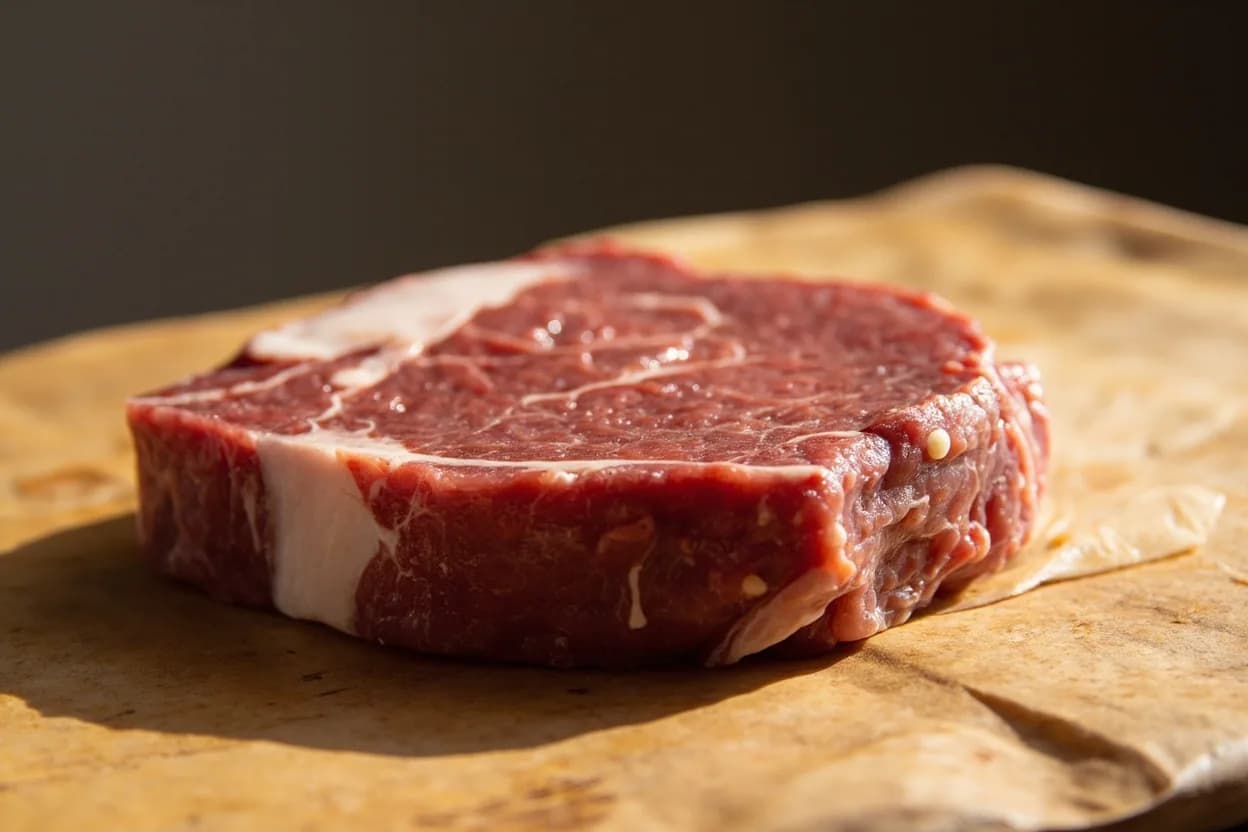
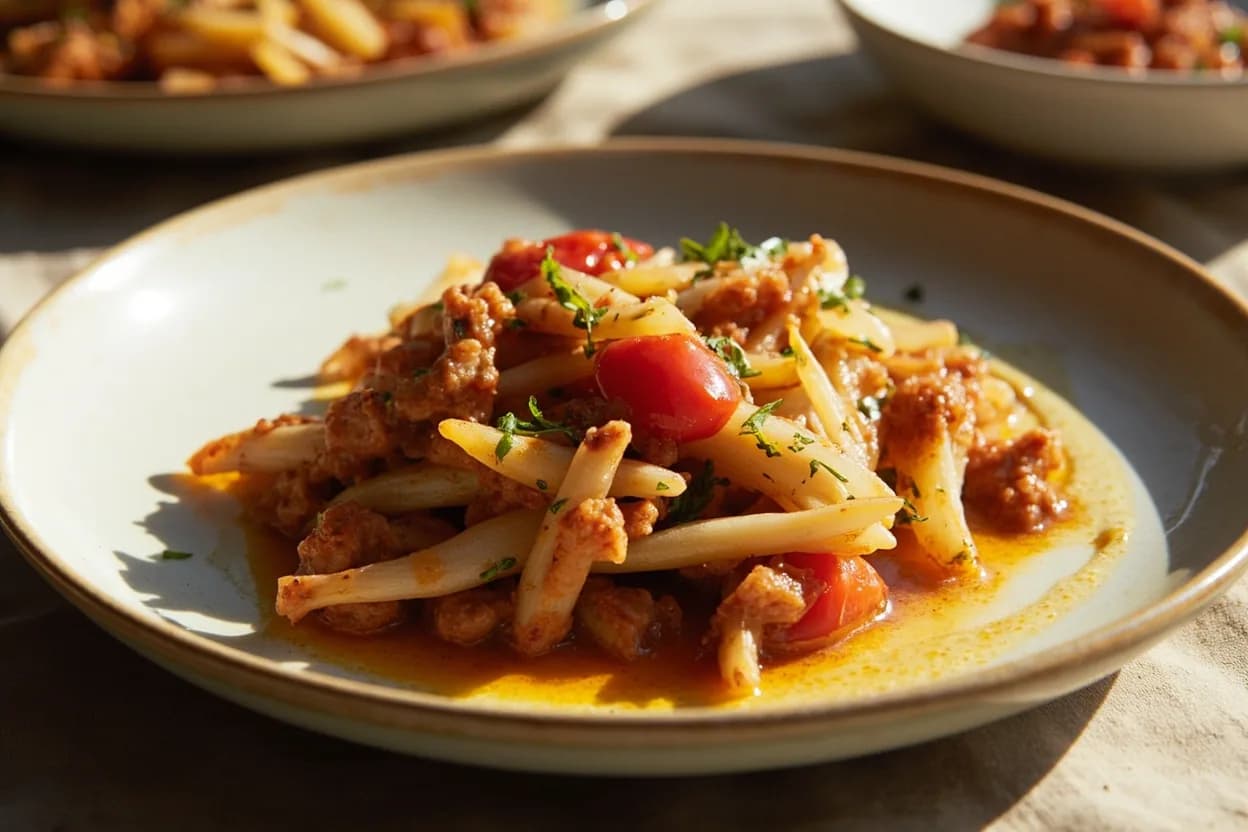
Where it comes from
A produce knife cut applied universally across Spanish and Latin American cuisines. Vegetables most frequently cut en juliana include: onions and peppers for sofrito and recado bases; beef or chicken for lomo saltado (which also juliana-cuts the protein); nopales (cactus paddles) for salads and tacos; chayote and jícama for fresh salsas; plantain for tostones strips; and potatoes for papas a la huancaína accompaniments.
Best for
How to cook it
- 1Square off the vegetable by trimming flat edges — for a pepper, remove stem, core, and press flat; for onion, halve through the root and peel.
- 2Slice lengthwise into planks of the target width (2–5 mm depending on application). For onion, cut with the grain for sweet slow-cook applications; against the grain for juliana that will stay more separate in a quick stir-fry.
- 3Stack 3–4 planks and cut lengthwise again into even strips. All strips should be the same width as the plank thickness.
- 4For beef lomo saltado: slice the sirloin or flank against the grain into 5 mm planks first, then cut planks into 5 mm strips. Pat dry thoroughly before stir-frying at very high heat.
- 5For nopales: remove spines first with a Y-peeler or knife tip. Cut the paddle into 5–6 mm strips running the length of the paddle. Salt and let drain 10 minutes, rinse, then cook.
- 6For sofrito juliana (which will be fine-cooked to a paste): aim for 2–3 mm width so the strips dissolve cleanly in 20–30 minutes of gentle frying.
Prep & butchery
- A sharp chef's knife 18–20 cm long handles most juliana work more efficiently than a cleaver for Western vegetables
- A mandoline with a julienne blade produces consistent 2–3 mm tiras for high-volume nopales or jícama prep
- For lomo saltado beef: semi-freeze the sirloin 20–30 minutes for cleaner strips before cutting
- Always cut nopales with gloves or fold a towel over the spine-bearing surface — invisible glochids cause skin irritation
Substitutes
- Fine julienne (French)
Functionally identical — narrower at 1–2 mm; appropriate when the juliana will become a base paste rather than a visible strip in the finished dish
- Rough chop / picado
Faster for sofrito bases that will be blended; loses textural identity but acceptable when presentation is not a concern
Small dice; used in the same sofrito context but produces a different textural finish — brunoise stays more discrete than a juliana that melts into the base
Related cuts
- Julienne (French)
The French canonical version — typically finer at 1–2 mm × 5 cm; juliana is the Spanish analog at a slightly more generous dimension
The fine-strip technique applied specifically to leafy herbs and greens; the same rolling-and-slicing motion as juliana but for soft leaves
- Tiras anchas (wide strips)
A coarser version used for rajas and roasted chile strips where structural integrity through cooking is needed
Appears in
References
- 1.The Complete Spanish Cookbook — Jacki Passmore
- 2.Gran Cocina Latina — Maricel Presilla
- 3.The Peru Cookbook — Patricia Quintana
- 4.Nopalitos: A Story of Love, Food, and the Mexico in My Heart — Christina Morales
Confidence: high
Notes
Lomo saltado and the juliana-width rule
Lomo saltado is Peru's canonical Chinese-Peruvian (chifa) stir-fry, and its Chinese influence is apparent in the technique: the beef, onion, and tomato are all cut to matching juliana width so they finish cooking simultaneously over a screaming-hot wok or iron pan. If the beef strips are 5 mm and the onion is juliana'd to 8 mm, the onion will be raw when the beef is done. Dimensional matching is a chifa principle absorbed wholesale into Peruvian home cooking.
Nopales mucilage management
Raw nopales (cactus paddles) contain a viscous mucopolysaccharide that many cooks find unpleasant. Cutting en juliana (rather than dicing) maximizes edge-to-volume ratio, accelerating mucilage drainage during the mandatory salting step. Many Mexican cooks then briefly blanch the strips before incorporating them — the strip format ensures the blanching water reaches the center of each piece in under two minutes.