Japanese Fish & Sashimi Cuts
Kazari-giri (Decorative Vegetable Cuts)
Also: kazari giri, kazari-bōchō, mukimono, vegetable carving, ornamental cutting
Japanese ornamental knife craft that transforms vegetables and fruit into seasonal motifs — pine needles, cranes, plum blossoms — serving as edible sculptural garnishes in kaiseki and formal banquet presentations.
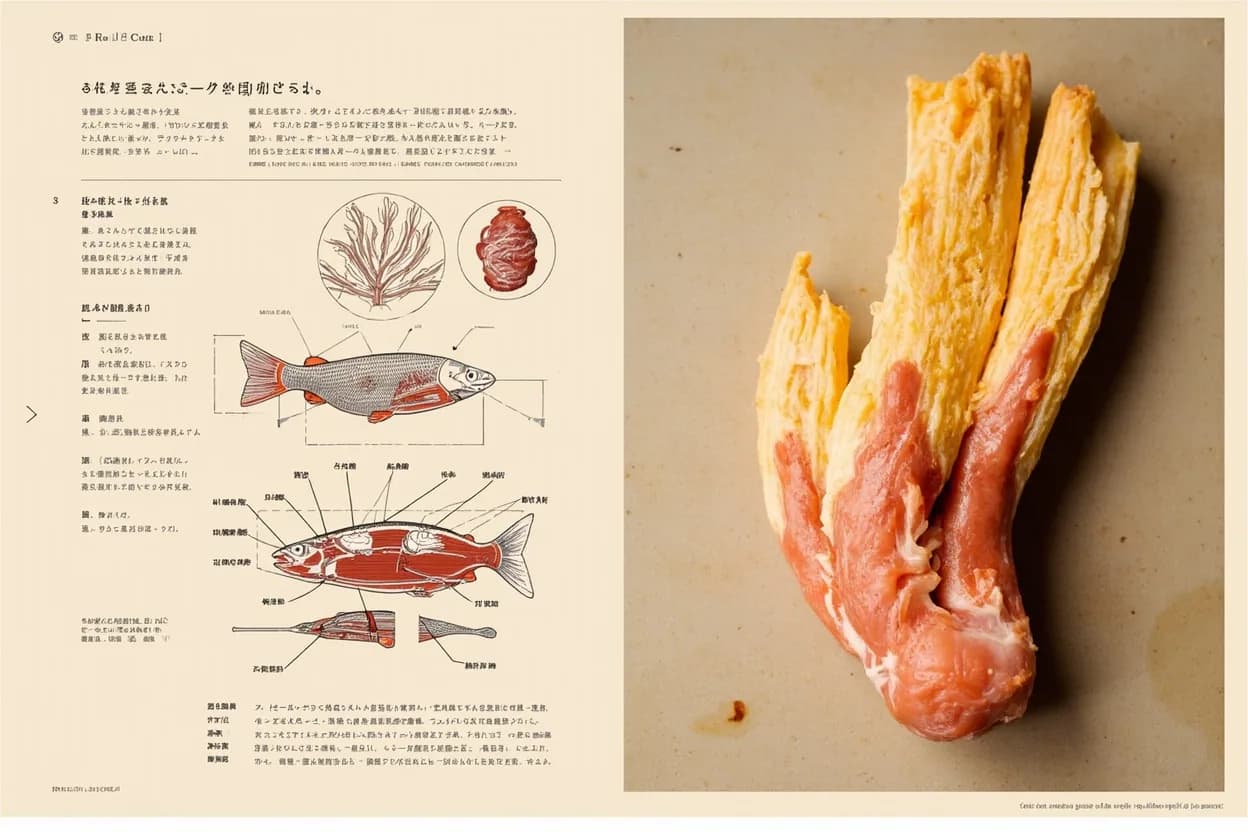
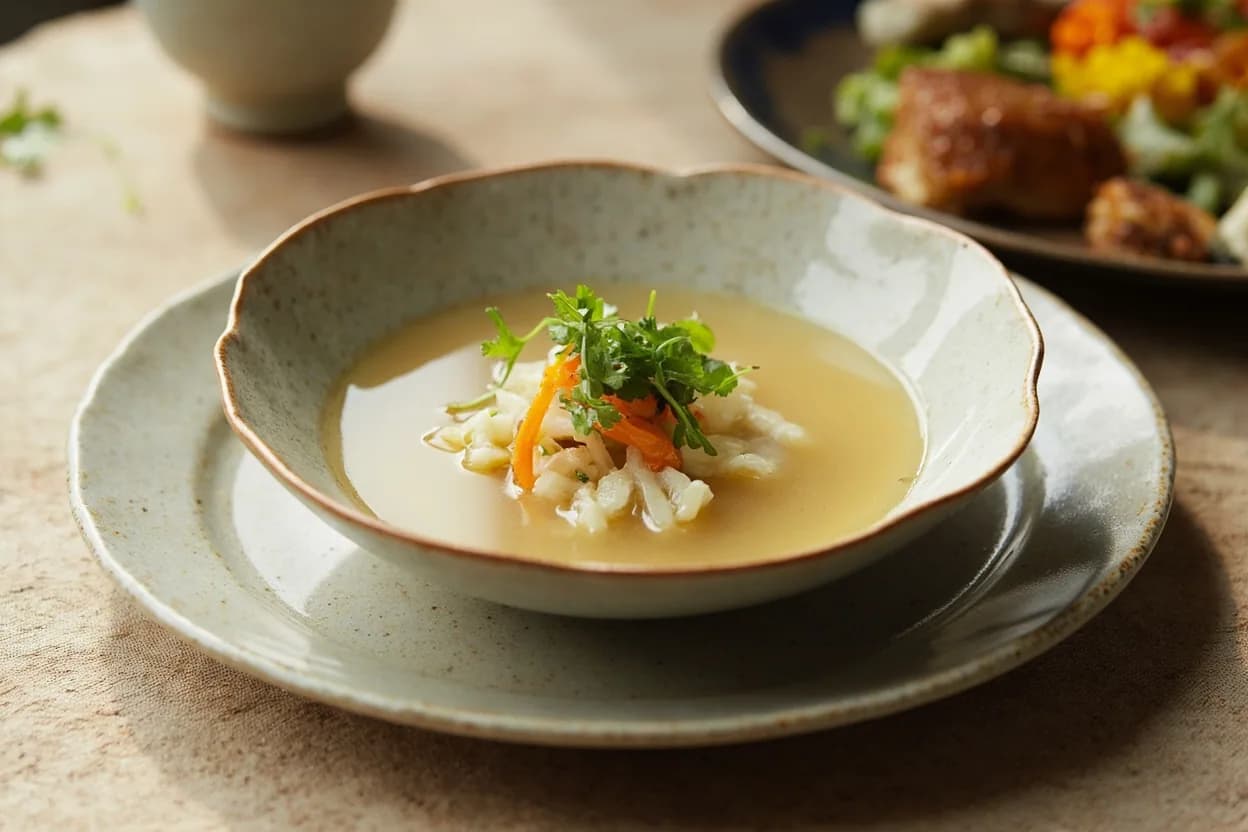
Kazari-giri (飾り切り, 'decorative cutting') is the discipline of using a knife to carve vegetables, fruit, and occasionally fish into recognisable shapes drawn from nature, seasonality, and Japanese symbolism. Unlike Western decorative carving (mukimono in its broadest reading), kazari-giri relies on the inherent blade work of the hocho rather than gouges, and its outputs are integrated into the dish — they are eaten, not merely ornamental. Motifs include the matsu-kazari (松飾り, pine-needle radish), tsuru (crane silhouette from cucumber), ume (plum blossom from carrot or turnip), and kiku (chrysanthemum from turnip or radish). Each shape encodes a season or auspicious meaning within the kaiseki aesthetic framework.
In photos

Where it comes from
Applied primarily to firm root vegetables (daikon, carrot, turnip, lotus root) and firm cucumbers; secondary applications on citrus rind, eggplant, and — less commonly — on the skin side of fish or squid for a patterned effect during grilling.
Best for
How to cook it
- 1Select firm, blemish-free vegetables at peak freshness — soft or fibrous vegetables collapse when carved.
- 2Cut a flat base section for stability before beginning any decorative work.
- 3For ume (plum blossom): cut a carrot or turnip cylinder 3 cm in diameter; make five equally spaced V-notch cuts lengthwise around the circumference, then slice crosswise to reveal the five-petal form. Round each petal slightly with the blade tip.
- 4For matsuba (pine needle) from daikon: cut a 4 cm rectangle, slice almost through lengthwise to leave 0.5 cm connected at one end, then make a second identical cut adjacent, producing a two-needle pair. Twist slightly and fix with a toothpick if serving loose.
- 5For kiku (chrysanthemum) from turnip: place the turnip between two chopsticks as depth guides; make dense parallel cuts across the top face, rotate 90°, repeat to create a crosshatch that fans into petals when the turnip is pressed gently.
- 6Blanch delicate carved shapes for 20–30 seconds in boiling salted water, then shock in ice water to set colour.
- 7Marinate in sweetened dashi or rice vinegar if the garnish is meant to be eaten rather than merely displayed.
Prep & butchery
- Use a ko-deba or thin-bladed usuba for detailed work; a yanagiba tip is used for relief lines and fine detail on larger pieces.
- Keep vegetables cold throughout carving — warmth softens cell walls and causes petals and points to droop.
- Templates (paper cut-outs pressed onto the vegetable surface) are legitimate training aids for complex shapes like the crane.
- Always cut away from the fingers using controlled tip-pull strokes for fine relief lines.
- Pre-soak carved lotus root in water with a few drops of rice vinegar to prevent oxidation.
Substitutes
- Simple notch-cut citrus wheel
A decorative wheel with V-notch edge — far simpler, appropriate for casual home service where complex carving is impractical.
- Herb leaf or edible flower
Modern restaurant shorthand for the seasonal garnish signal; lacks the craft dimension.
Related cuts
- Ken (daikon julienne)
The functional strand counterpart — precision cutting for bed/garnish rather than sculptural form.
- Kakushi-bōchō
Hidden scoring on the same vegetables — functional rather than decorative, placed on the non-presentation face.
- Katsura-muki
Rotary sheet peeling that underpins ken and also produces the thin strips used in some rolled kazari-giri forms.
Appears in
References
- 1.Japanese Cooking: A Simple Art — Shizuo Tsuji
- 2.The Japanese Kitchen — Hiroko Shimbo
- 3.Kaiseki: The Exquisite Cuisine of Kyoto's Kikunoi Restaurant — Kunio Tokuoka
Confidence: high
Notes
Seasonal grammar
Kazari-giri operates within a strict seasonal vocabulary. A chef who presents a chrysanthemum (kiku) garnish in spring, or a pine-needle motif in summer, signals ignorance of the shun calendar. The garnish is the first signal of seasonal awareness — before any ingredient is tasted, the diner reads the season in the shape on the rim of the bowl.
Tools
Professional practitioners often maintain a separate set of small decorative knives alongside the standard hocho set. The ko-deba (small thick knife) and various usuba variants are favoured. Some artisans use a special thin-bladed kiridashi (marking knife) for the finest relief lines on large-scale carvings for banquet presentations.
Mukimono vs kazari-giri
Mukimono (剥き物) in its narrow sense refers to the larger tradition of food carving shared across Southeast Asia and East Asia, often producing large sculptural centrepieces. Kazari-giri is the Japanese sub-discipline: smaller scale, integrated into the meal, executed entirely with standard kitchen knives rather than specialist gouging tools.