Knife Cuts — Japanese
Katsura-muki (Rotary Sheet Peeling)
Also: katsura muki, katsuramuki, rotary peel, continuous sheet peel
A foundational Japanese technique of rotating daikon or cucumber against a stationary blade to peel a continuous, paper-thin sheet.
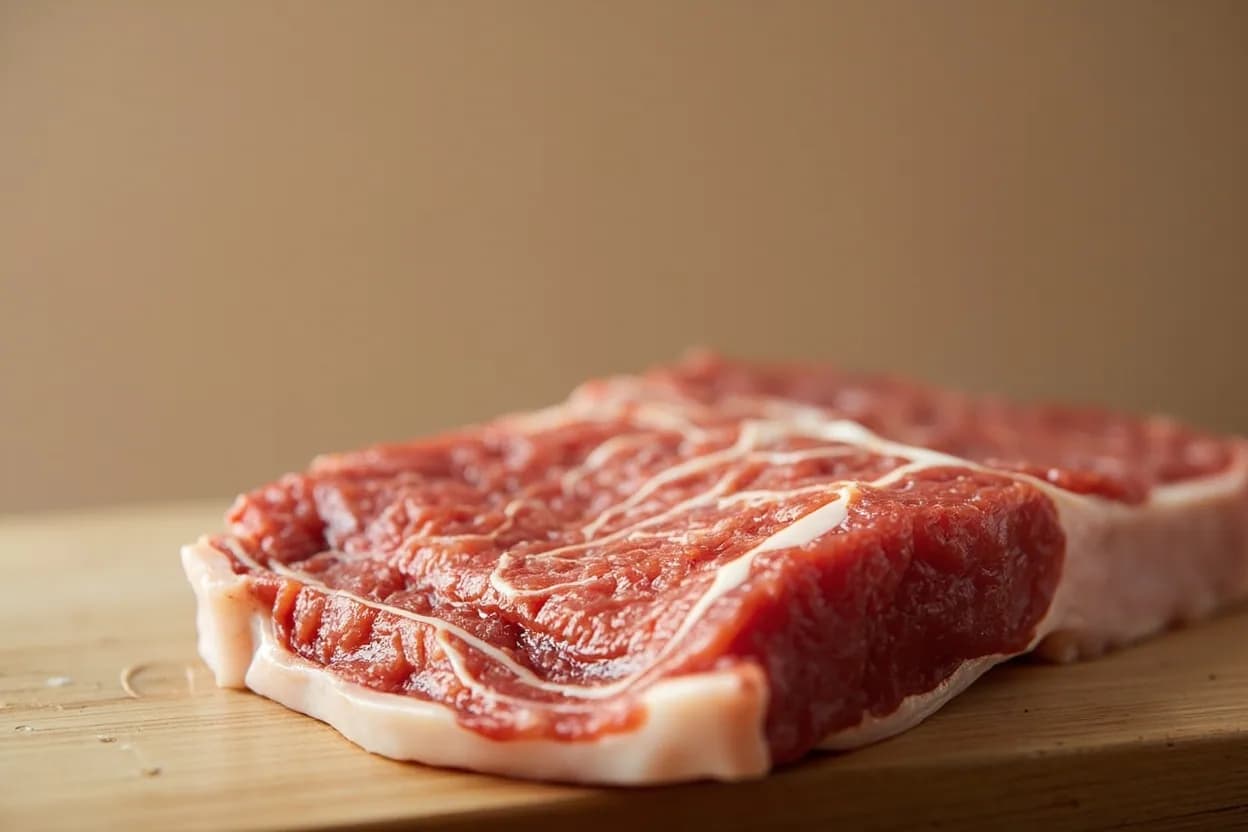
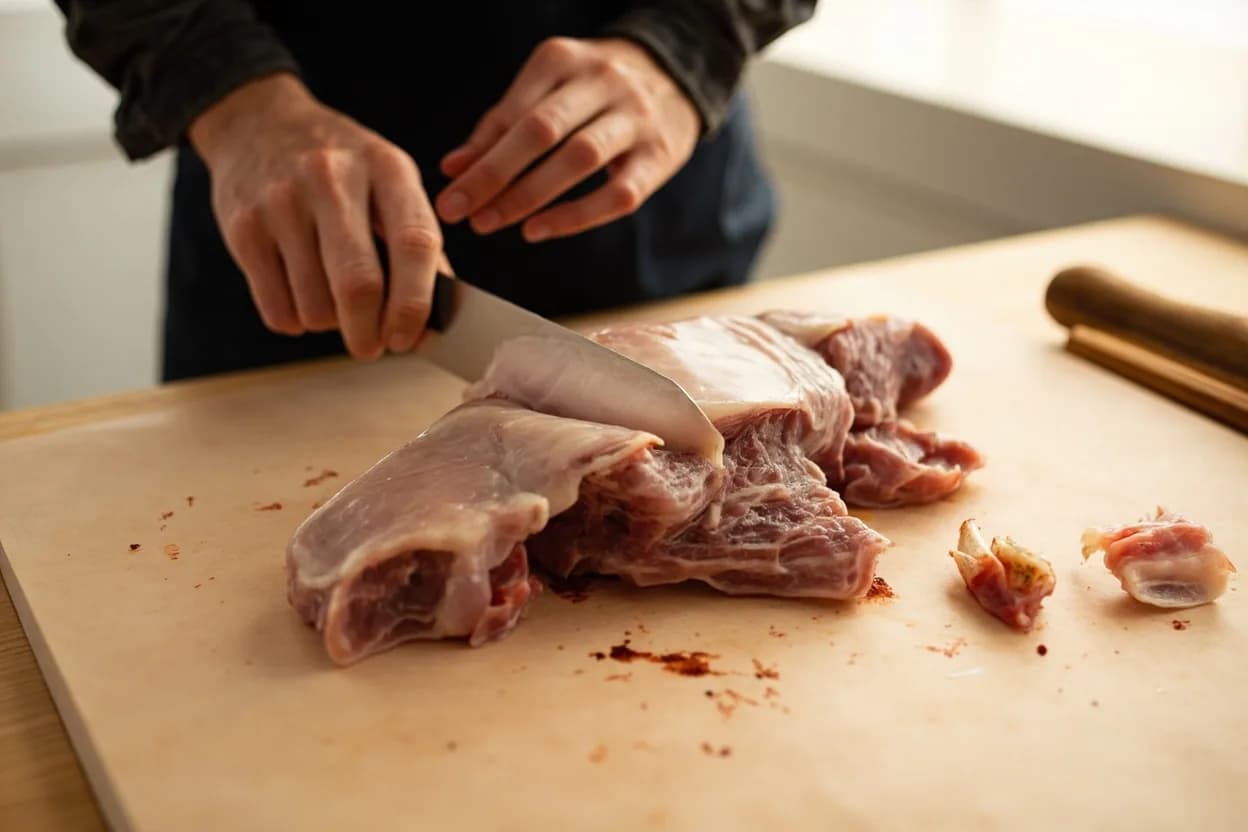
Katsura-muki is the rotary sheet-peeling technique in which a cylindrical vegetable — most commonly daikon radish or large cucumber — is rotated slowly against the edge of a usuba or yanagiba knife held at a consistent angle, unrolling the flesh in one unbroken translucent sheet. The name references the katsura tree (Cercidiphyllum japonicum), whose bark peels in smooth, layered sheets. Mastery of katsura-muki is considered a foundational benchmark of Japanese knife skill.
In photos
Where it comes from
Technique applied to cylindrical root vegetables and cucumbers; primarily daikon (Raphanus sativus var. longipinnatus) and Japanese cucumbers. The cut exploits the radial structure of the vegetable flesh.
Best for
How to cook it
- 1Peel the daikon and cut a cylinder 12–15 cm long with perfectly square ends.
- 2Hold the cylinder horizontally in the left hand (for right-handed cooks), with thumb and index finger guiding the rotation.
- 3Press the usuba blade flat against the surface at a very shallow angle — the blade should be nearly parallel to the cylinder's axis.
- 4Rotate the daikon slowly and steadily away from you while drawing the blade gently inward, allowing the sheet to peel free continuously.
- 5Maintain even thumb pressure to regulate sheet thickness; adjust wrist angle rather than blade pressure when thickness drifts.
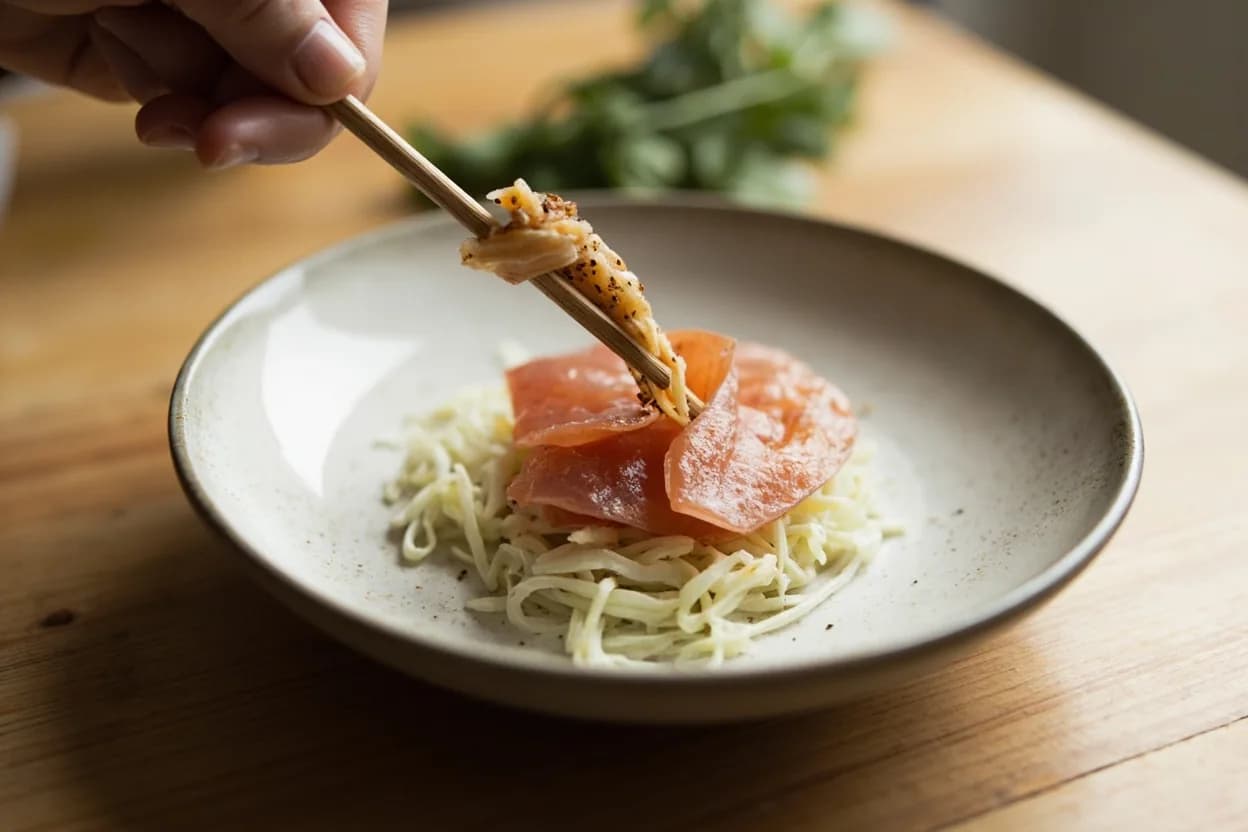
- 6Once the sheet is peeled, roll it loosely and cut across into ken (fine julienne roughly 3–4 cm long) for sashimi service.
- 7Soak ken in ice water for 5–10 minutes to crisp and curl before plating.
Prep & butchery
- Use an usuba (Kanto-style rectangular single-bevel) or yanagiba — a double-bevel knife will not achieve the thin, flat contact angle required.
- The knife must be hair-shaving sharp; any micro-serration or drag causes the sheet to tear.
- Choose a daikon with dense, firm flesh — watery or pithy specimens split during rotation.
- Keep the cut surface moist by periodically dipping the blade in cold water during long peeling sessions.
Substitutes
- Mandoline ultra-thin slicing
Produces individual slices rather than a continuous sheet; acceptable for home applications but lacks the seamless elegance of hand-peeled katsura-muki.
- Peeler ribbon cuts
A Y-peeler can approximate short ribbons from zucchini or cucumber but cannot match the length or translucency of true katsura-muki.
Related cuts
- Ken (daikon julienne)
The most common end-product of katsura-muki — the sheet is stacked and cut into fine threads for sashimi service.
- Tanzaku-giri
Rectangular strips can be cut from the katsura-muki sheet as an alternative to ken.
- Sasagaki
Another advanced Japanese vegetable-cutting technique, though it operates by whittling rather than continuous rotation.
Appears in
References
- 1.Japanese Cooking: A Simple Art — Shizuo Tsuji
- 2.The Japanese Kitchen — Hiroko Shimbo
- 3.Knife Skills Illustrated — Peter Hertzmann
- 4.Washoku: Recipes from the Japanese Home Kitchen — Elizabeth Andoh
Confidence: high
Notes
The apprenticeship benchmark
In traditional Japanese kitchen apprenticeships (deshi training), a cook might spend months practising katsura-muki on daikon before being allowed to touch fish. A sheet that is uniformly thin, unbroken, and wide enough to drape over the hand is the standard. Tears, thickness variations, or a cylinder that tapers off-axis all indicate insufficient knife control or an inadequately sharpened blade.
Why the name?
The katsura tree's bark, when processed in traditional papermaking or peeled in spring, comes away in smooth, layered sheets. Japanese culinary language has long borrowed from the natural world to name techniques — the association is both poetic and descriptive of the physical action.