Japanese Fish & Sashimi Cuts
Kaku-zukuri (Block-Cut Sashimi)
Also: kaku-zukuri, kakuzukuri, cube cut, block cut, kakugiri
Uniform cubes of firm fish — tuna, yellowtail, or salmon — cut for sashimi that delivers a satisfying, chewy bite and bold visual presence.
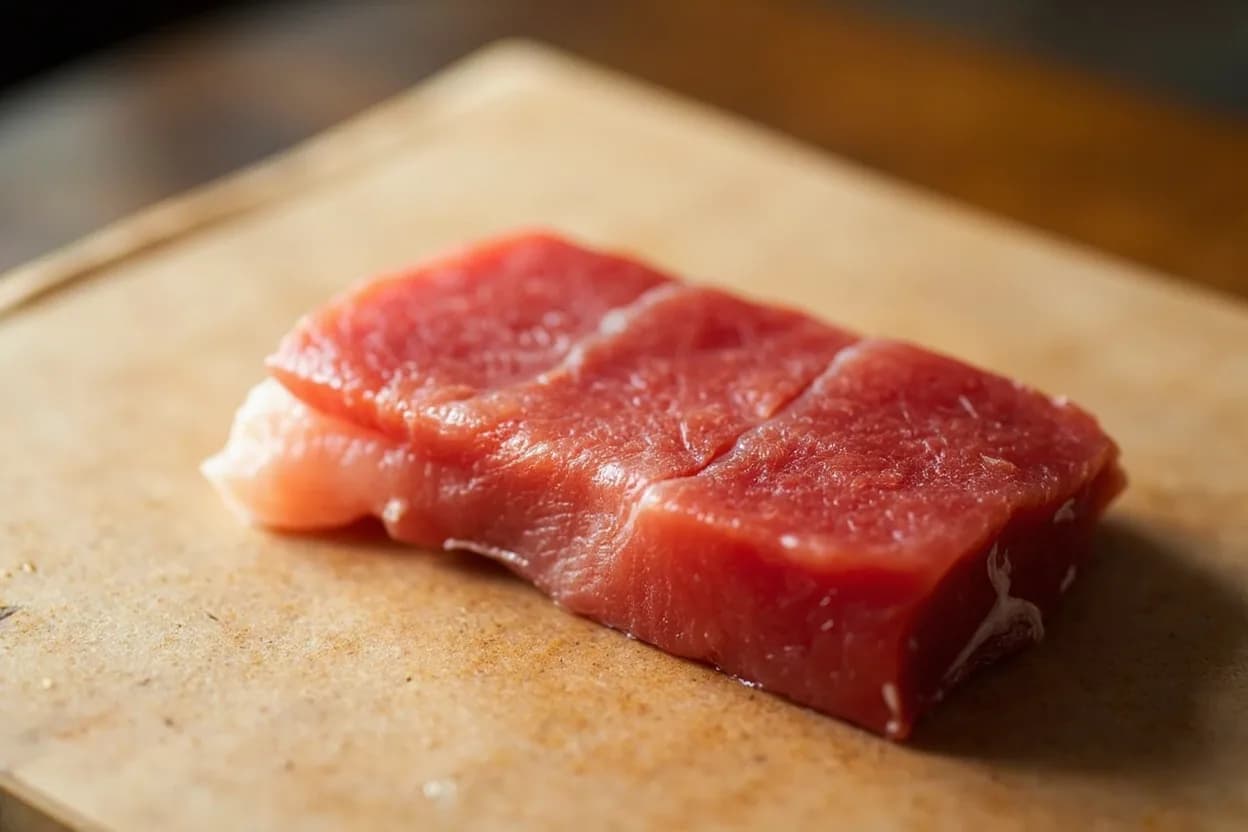
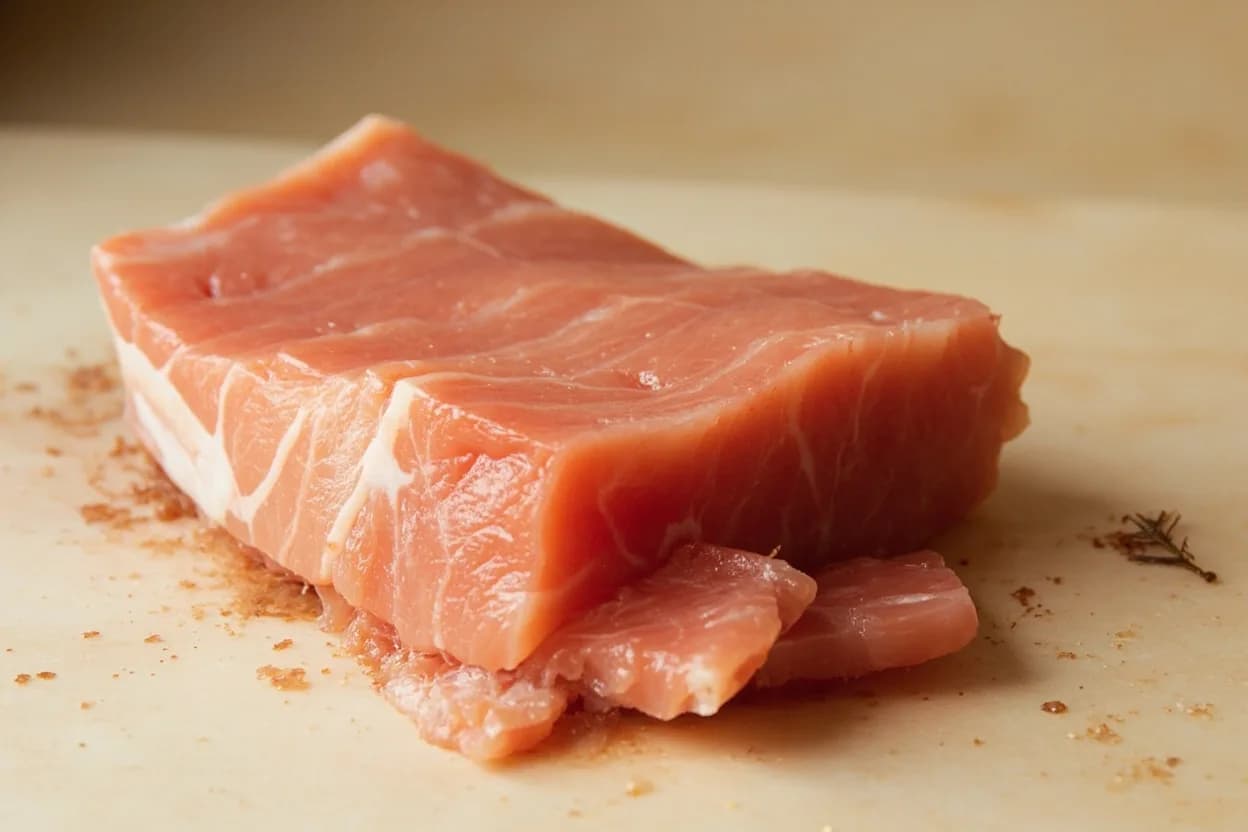
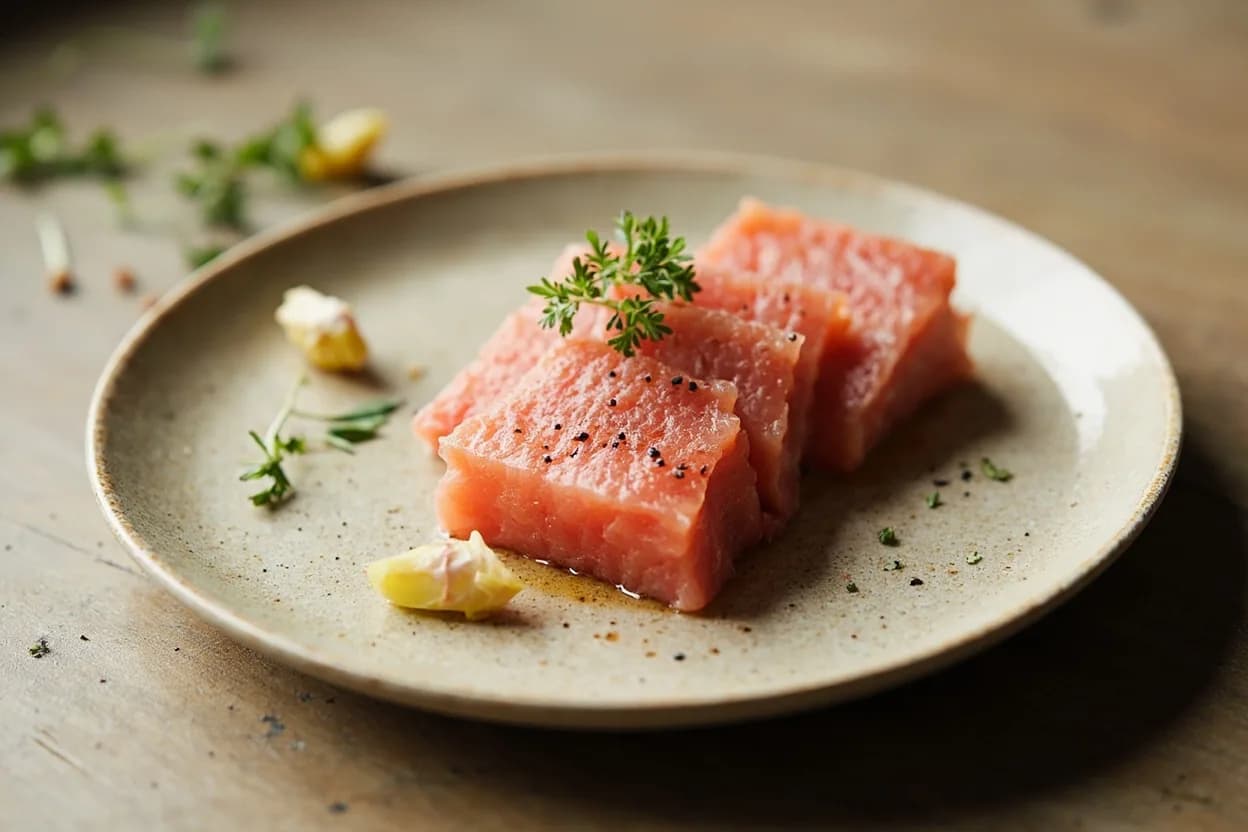
Kaku-zukuri (角造り, 'square or angular presentation') produces neat cubes or rectangular blocks of fish, typically 15–20 mm on each side. Unlike the long pulling stroke of hiki-zukuri, kaku-zukuri uses a short, precise downward draw to section a saku into equal segments in two or three cuts. The resulting pieces hold their geometry on the plate and are eaten in a single full bite.
In photos
Where it comes from
Executed on the saku (portioned block) of large, firm-fleshed fish — most classically maguro (tuna) in its akami form, hamachi (yellowtail), and buri (amberjack). Salmon and firm white fish such as hirame can be used when the texture suits the format.
Best for
How to cook it
- 1Start with a squared, chilled saku on a clean dry board; the block must be a perfect rectangle to produce uniform cubes
- 2Slice the saku lengthwise into batons of the target cube width (15–20 mm) using a single pulling draw per baton
- 3Rotate each baton 90 degrees and cross-cut at identical intervals to form the cubes — each cross-cut is a short drawing stroke, not a push
- 4Cubes should be identical; trim any irregulars and reserve for tartare
- 5Plate with the cleanest face up; align cubes in a geometric arrangement for visual impact
- 6Serve immediately or hold refrigerated for up to 20 minutes on a chilled plate
Prep & butchery
- Square the saku precisely — any taper produces unequal cubes and complicates plating
- A yanagiba or, for cross-cuts, a deba can be used; the key is a sharp blade and dry fish surface
- Measure the first batons with a finger-width guide before cutting if training; experienced itamae judge by eye
- Remove any sinew lines (suji) that run along certain tuna muscles — they resist the blade and cause tearing
Substitutes
- Hiki-zukuri
Produces rectangular slices from the same saku — use when a softer bite or nigiri format is preferred
- Ito-zukuri
Fine thread cuts — the opposite end of the size spectrum, for delicate presentation of the same fish
Related cuts
- Hiki-zukuri
The long-slice counterpart from the same saku, producing rectangular slices rather than cubes
- Sogi-zukuri
Angled slice producing thin, wide pieces — contrasts with kaku's thick, compact geometry
- Tataki-zukuri
Rough chop that breaks down the cube further into irregular pieces for mixed preparations
Appears in
References
- 1.Sushi and the Art of the Japanese Knife — Hiromitsu Nozaki
- 2.The Japanese Kitchen — Hiroko Shimbo
- 3.Japanese Farm Food — Nancy Singleton Hachisu
- 4.On Food and Cooking — Harold McGee
Confidence: high
Notes
Dimension standards
Traditional kaku-zukuri for sashimi runs 15–20 mm per side — large enough to chew meaningfully but small enough to eat whole. Restaurant practice often favors a slight rectangle (15 × 20 mm) over a perfect cube, as the rectangular form stacks more elegantly on the plate and reveals the muscle grain direction on the long face.
Why firm fish only
Soft-textured fish (mackerel, sardine, raw squid in some forms) tend to compress and deform during the cross-cutting stage. Kaku-zukuri is therefore reserved for fish with a dense, coherent muscle structure — tuna and yellowtail being the canonical examples. With softer fish, hiki-zukuri's single long stroke is safer and produces better surface quality.