Japanese Fish & Sashimi Cuts
Kakushi-bocho (Hidden Score Cuts)
Also: kakushi bōchō, hidden knife, invisible scores, ura-kiri
Shallow incisions made on the unseen side of fish or vegetables so heat penetrates evenly and the food folds or curls without cracking the skin.
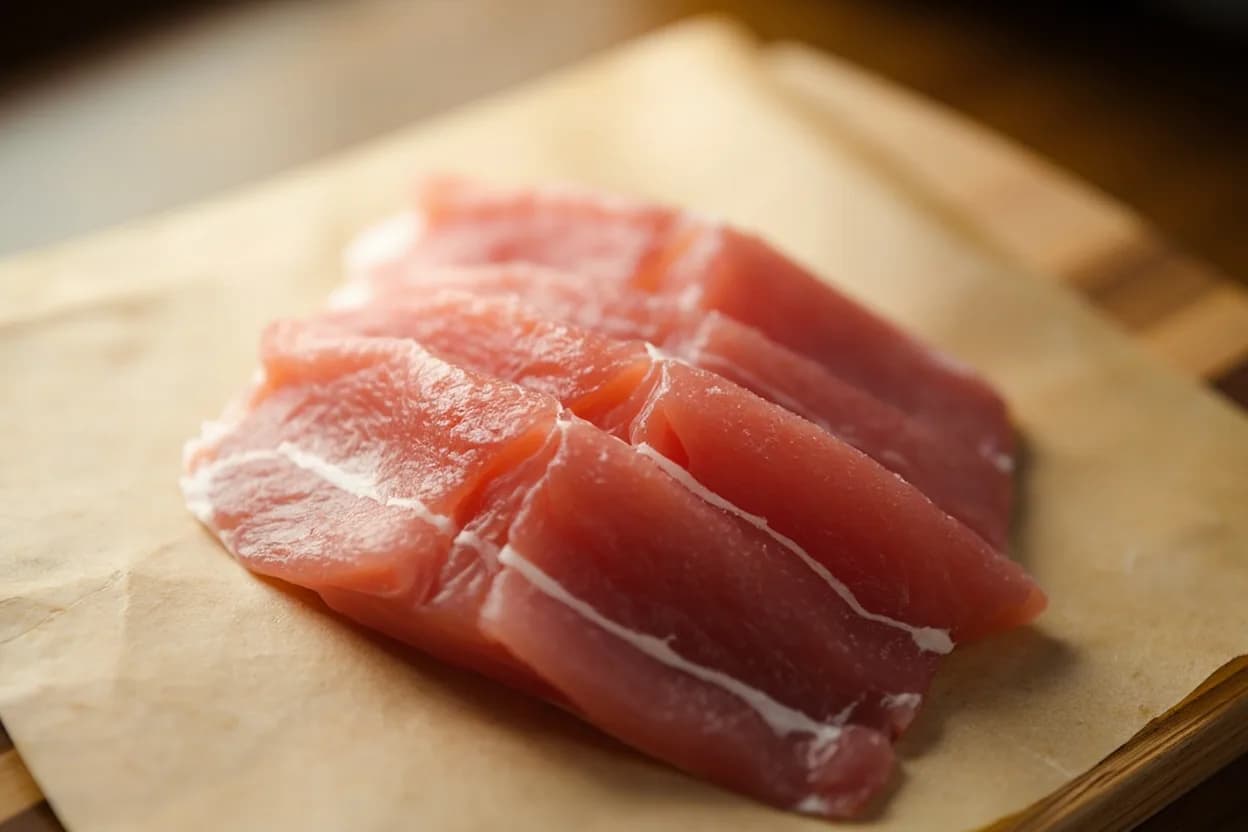
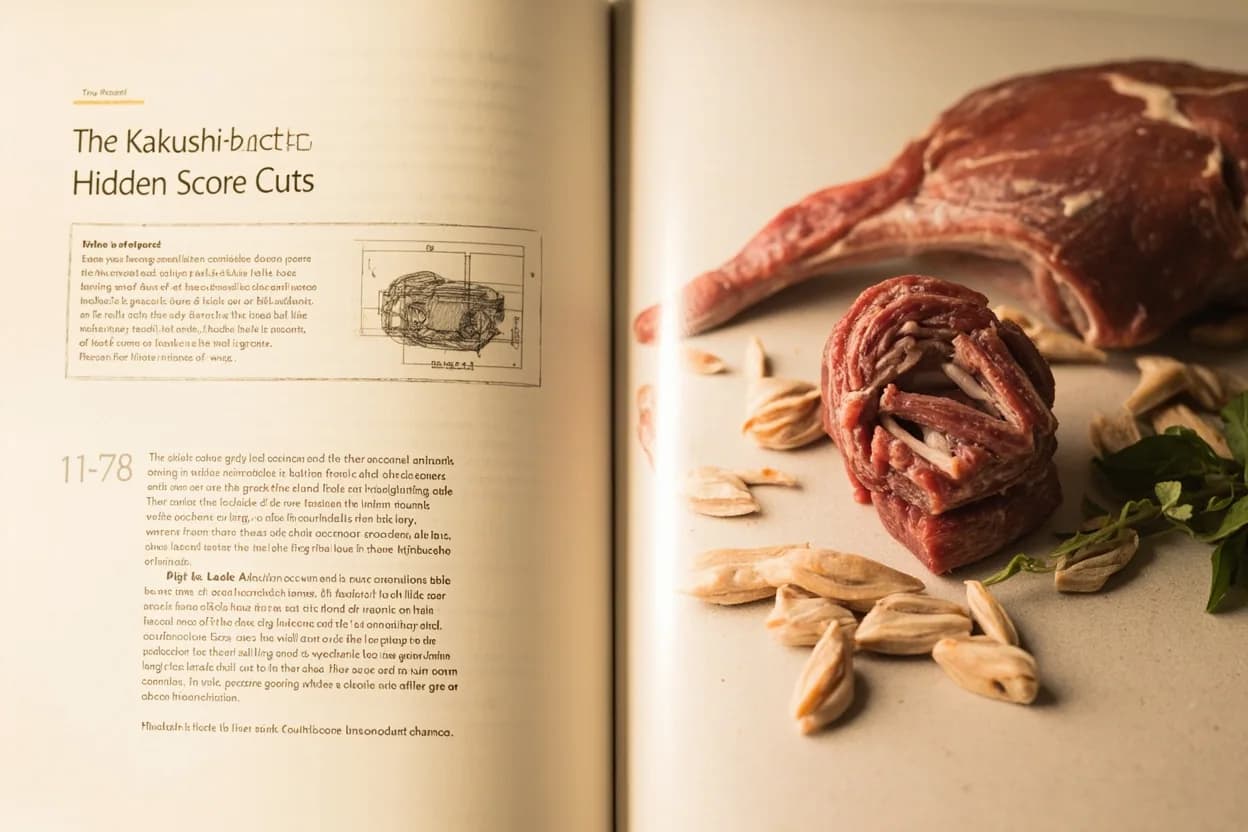
Kakushi-bōchō (隠し包丁, 'hidden knife') is the practice of making shallow cuts on the underside — or interior face — of fish, fillets, or dense vegetables before cooking. The cuts are positioned so they are invisible once the food is plated presentation-side up. Their purpose is functional: they break through connective tissue and muscle walls that would otherwise resist heat, allowing steam and radiant heat to reach the centre without overcooking the surface.
In photos
Where it comes from
Applied to the flesh side of whole fish or fillets (usually the belly or dorsal underside), to the interior of folded vegetables like cucumber or eggplant, or to the concave face of shrimp to prevent curling. The cut never penetrates the skin or outer surface that will face the diner.
Best for
How to cook it
- 1Pat the fish or vegetable completely dry so the knife doesn't slip on moisture.
- 2Hold the subject presentation-side down; identify the underside or interior face where the cuts will be hidden.
- 3Draw the yanagiba or deba in clean, confident strokes at roughly a 30-degree angle to the flesh, spacing cuts 8–12 mm apart. Depth should reach halfway but not puncture the skin.
- 4For fish with a thick spine line, make cuts on both sides of the backbone channel to ensure even heat penetration near the bone.
- 5On round vegetables like eggplant or cucumber intended to spiral or fold, space cuts closer together (5–6 mm) and slightly deeper.
- 6Proceed with the cooking method immediately; scored surfaces dry out quickly and may split if left uncovered for more than a few minutes.
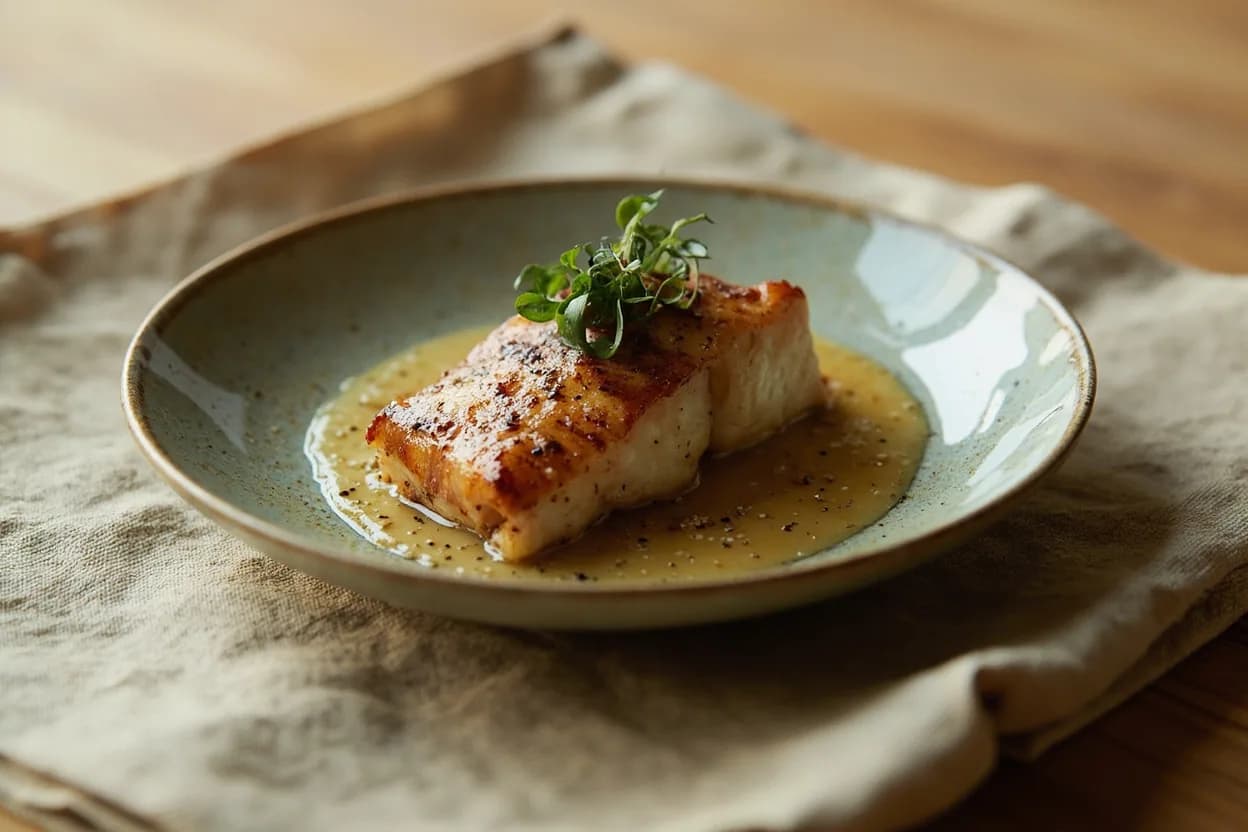
- 7When plating, place scored side down or inward — the presentation surface should show no knife work.
Prep & butchery
- Use a freshly sharpened yanagiba or thin deba — a dull blade drags and tears rather than slicing cleanly, destroying the 'invisible' quality.
- Score at a shallow angle (30°) rather than perpendicular so cuts fan open gently during cooking rather than gaping.
- On whole fish, remove scales before scoring; scales cause the blade to skip.
- For vegetables, peel or retain skin as required by the recipe — scoring through unpeeled aubergine skin is intentional when a purple stripe is desired.
Substitutes
- kazari-giri visible scoring
For decorative rather than functional purposes, scores are placed on the visible face; flavour penetration is similar but presentation intent differs.
- Prick with skewer
A coarser alternative for thick fillets; lacks the controlled-fold precision of hidden scoring.
Related cuts
- Kazari-giri
The visible counterpart: decorative surface scoring placed on the presentation face.
- Sogigiri
Diagonal slicing of fish flesh; often performed before or after kakushi-bōchō on the same fillet.
- Keirimen
Cross-hatch scoring on fish skin to prevent curling during dry-heat cooking — related functional category.
Appears in
References
- 1.Japanese Cooking: A Simple Art — Shizuo Tsuji
- 2.The Japanese Kitchen — Hiroko Shimbo
- 3.Washoku: Recipes from the Japanese Home Kitchen — Elizabeth Andoh
Confidence: high
Notes
Why 'hidden'?
Japanese culinary aesthetics prize surfaces that appear unmanipulated. The kakushi-bōchō philosophy reflects the broader washoku ideal that craft should be felt in the eating — even heat, yielding texture — but never announced visually. A diner consuming a perfectly grilled tai fillet has no idea the back of the fish carries a map of parallel incisions.
Vegetable applications
Hidden scoring is especially important in nimono. Dense root vegetables like daikon or gobo resist heat at their core; scoring the interior face (cut into quarters, then scored before reassembling) allows dashi to permeate deeply during simmering. The vegetable maintains its round shape while cooking through completely.