Knife Cuts — Japanese
Mijin-giri (Micro-Mince)
Also: mijin giri, みじん切り, Japanese fine mince, knife mince
Japanese technique for mincing aromatics — ginger, garlic, shallot — to a near-paste without mortar or blender, using a rocking knife motion to achieve uniform sub-millimetre particles.
Mijin-giri (みじん切り, literally 'dust cut' or 'fine-particle cut') is the Japanese method for reducing aromatics to an extremely fine, near-paste mince — particles 1 mm or smaller — using knife rocking rather than a mortar, food processor, or microplane. The technique preserves more volatile aromatics than machine processing while achieving the textural dissolution required in refined Japanese cookery.
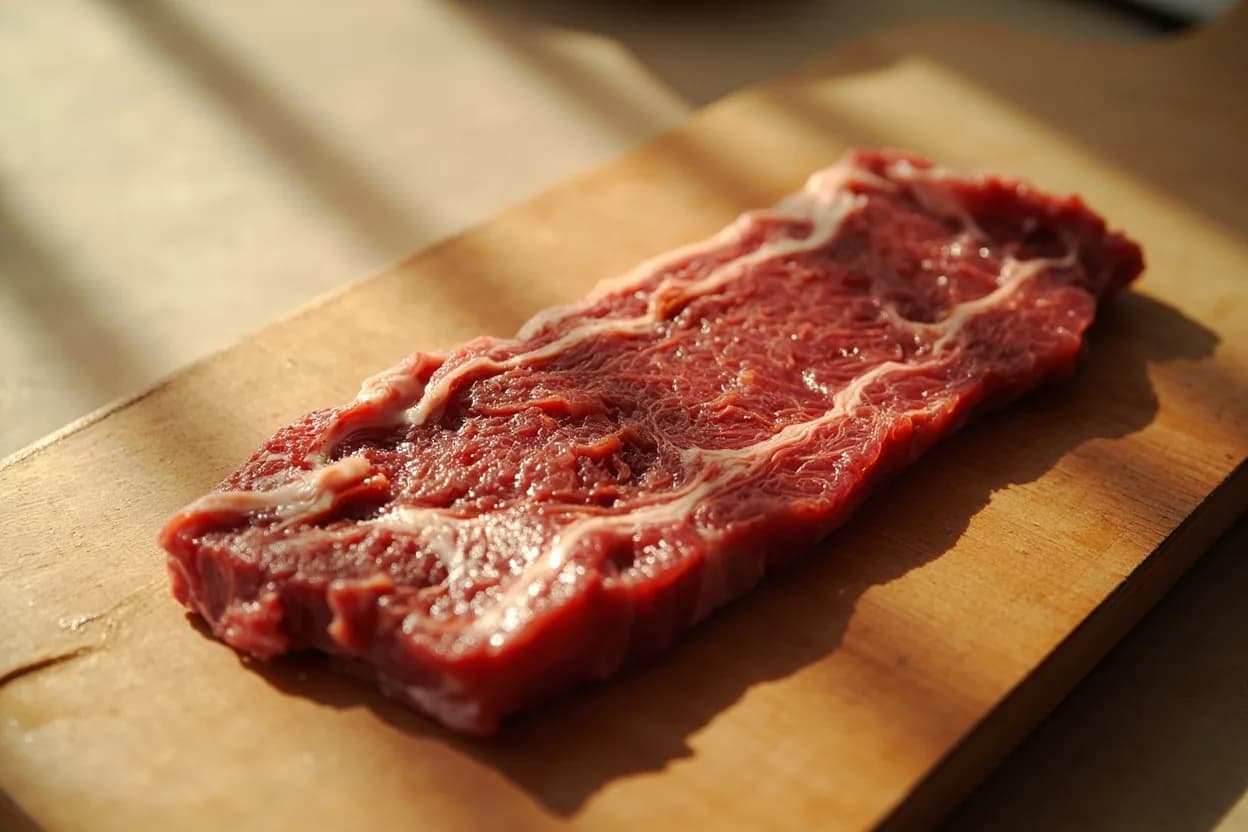
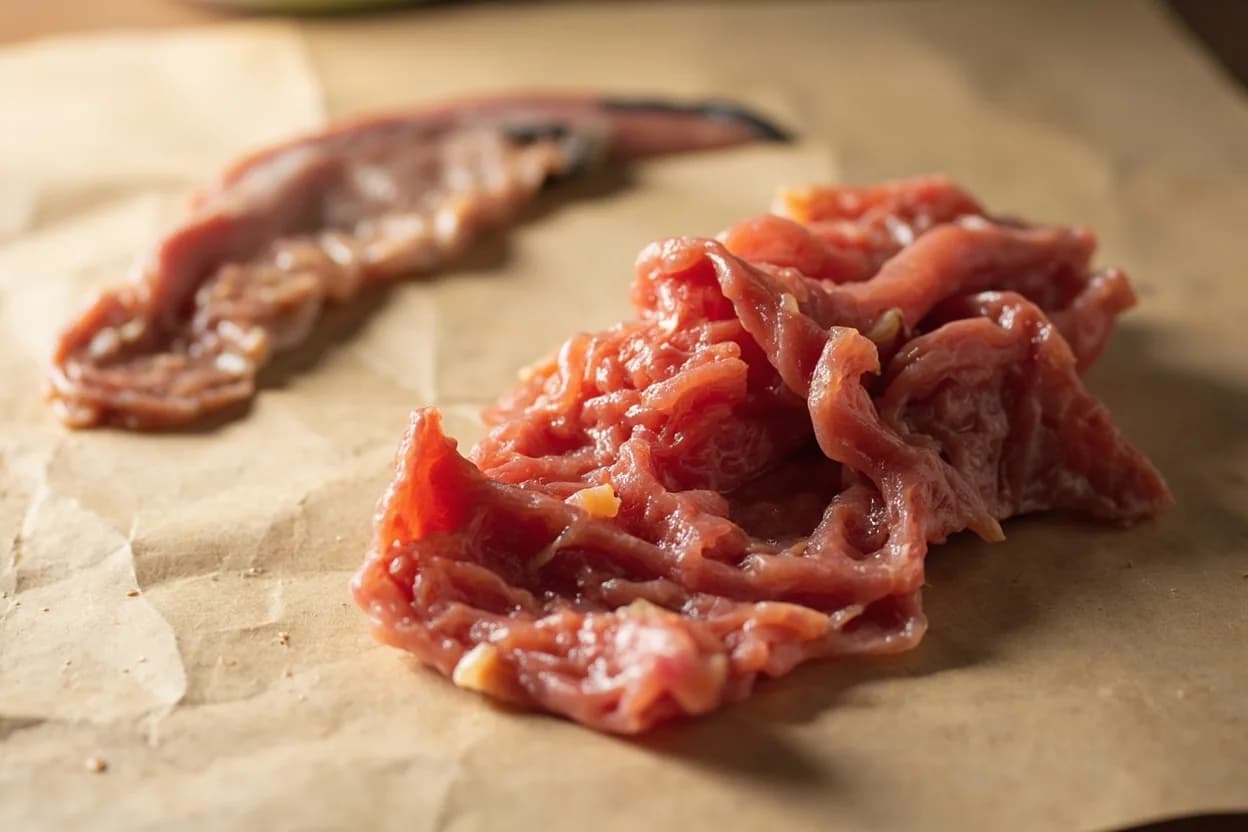
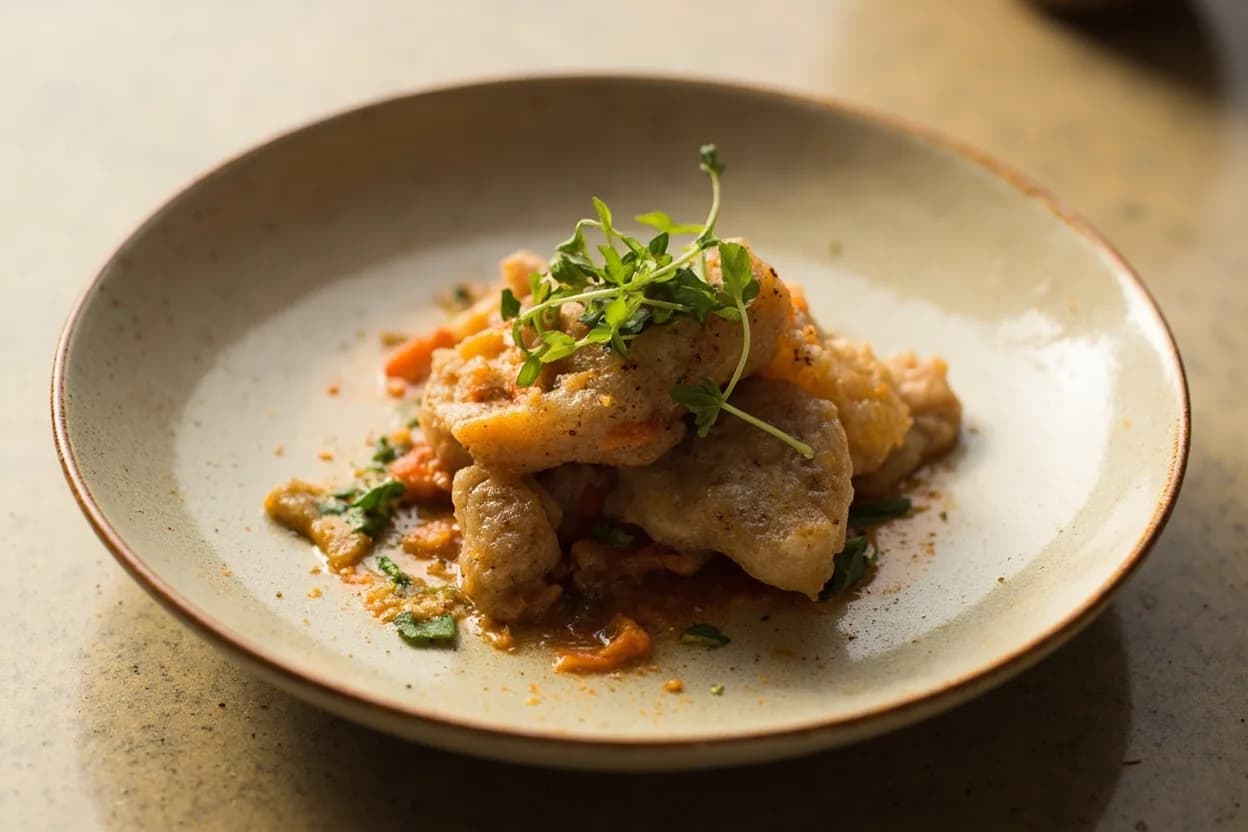
In photos
Where it comes from
Knife technique applied to aromatics: ginger (shoga), garlic (ninniku), myoga, shallot (asatsuki or rakkyo), and sometimes yuzu zest. Occasionally used on firm mushrooms or chilli. The work begins with coarse chops, then the blade rocks in an arc using the tip as a pivot, periodically gathering particles back into the pile.
Best for
How to cook it
- 1Peel and dry the aromatic — moisture on the surface makes the ingredient slip. For ginger, scrape the skin with the edge of a spoon rather than peeling with a knife to minimize waste.
- 2Slice across the grain into thin coins (for ginger and garlic), then stack and cut into a coarse rough chop, forming a loose pile.
- 3Place the tip of the blade on the far side of the pile and use it as a pivot point; rock the heel of the blade down through the pile in short, rapid arcs, working across the pile from one side to the other.
- 4Every 10–15 seconds, use the flat of the blade to scrape the paste back into a pile — the particles will stick to the board at this fineness.
- 5Continue rocking and gathering for 2–3 minutes until particles are under 1 mm and the pile resembles a wet paste. A few drops of salt added midway draw out moisture and accelerate breakdown.
- 6Scrape into a bowl with the blade flat against the board; do not drag the tip, as this tears the board and contaminates the mince with wood fibres.
Prep & butchery
- A sharp gyuto or santoku is preferred — a dull blade crushes rather than cuts, releasing bitter compounds from aromatics.
- Flatten garlic cloves with the flat of the blade before starting — this pops the skin and begins breaking down cell walls for easier mincing.
- For ginger, cut with the grain first (along the fibres), then across — mincing against the grain alone leaves long fibres that resist full breakdown.
- Add a pinch of coarse salt partway through the rocking process to act as an abrasive and accelerate breakdown toward a paste.
- A dedicated aromatic board is common in professional Japanese kitchens to avoid cross-contamination of fish or delicate flavours.
Substitutes
- Suribachi and surikogi (Japanese mortar and pestle)
Produces a similar result for ginger and garlic with less knife skill required; slightly more oxidation due to crushing action.
- Microplane grater
Excellent for ginger and garlic to a smooth paste; loses the texture contrast that a rough mijin-giri sometimes provides.
- Food processor pulse
Fast but inconsistent particle size and over-processing risk; also introduces air, which causes rapid browning of garlic.
- Garlic press
Only for garlic; produces a similar paste but wastes a significant portion of the clove.
Related cuts
- Sainome-giri
Small dice (1 cm); mijin-giri is the extreme fine end, at sub-millimetre scale.
- Sengiri
Fine julienne; a completely different geometry but similarly precision-focused.
- Arare-giri
Tiny 3 mm cubes — between sainome and mijin in the size continuum.
- Western brunoise
3 mm precision cubes; equivalent in intent to fine dicing but much coarser than true mijin-giri.
Appears in
References
- 1.Japanese Cooking: A Simple Art — Shizuo Tsuji
- 2.Knife Skills Illustrated — Peter Hertzmann
- 3.The Japanese Kitchen — Hiroko Shimbo
- 4.Washoku: Recipes from the Japanese Home Kitchen — Elizabeth Andoh
Confidence: high
Notes
Why not a blender?
The rocking knife method is preferred in Japanese professional kitchens not from tradition alone but because the shearing action of a blade releases aromatic compounds more selectively than the tearing action of a food processor blade. Blended garlic, in particular, releases more alliinase-driven compounds and browns faster when cooked. Mijin-giri garlic retains better sweetness in finished sauces.
Ginger grain direction
Ginger root is heavily fibrous along its growth axis. If you mince against the grain only, you produce a pile of tough fibres that never break down into a true paste. The professional approach cuts along the grain into planks first, stacks and slices across into a rough chop, then rocks — so fibres are already cut short before the rocking stage begins.