Fish — Fabrication & Breakdown
Paupiette / Fish en Paupiette
Also: fish paupiette, roulade de poisson, fillet roll
A thin fish fillet rolled around a stuffing and poached or braised in a flavoured court-bouillon or beurre blanc sauce.
A paupiette is a fillet of fish (or meat) that has been beaten or butterflied to an even thinness, spread with a mousseline or vegetable stuffing, then rolled into a compact cylinder and secured before gentle cooking. The French word derives from 'paupière' (eyelid), evoking the smooth, closed shape of the finished parcel. In classical brigade kitchens it is a fundamental preparation of the entremetier and poissonnier stations.
In photos
Where it comes from
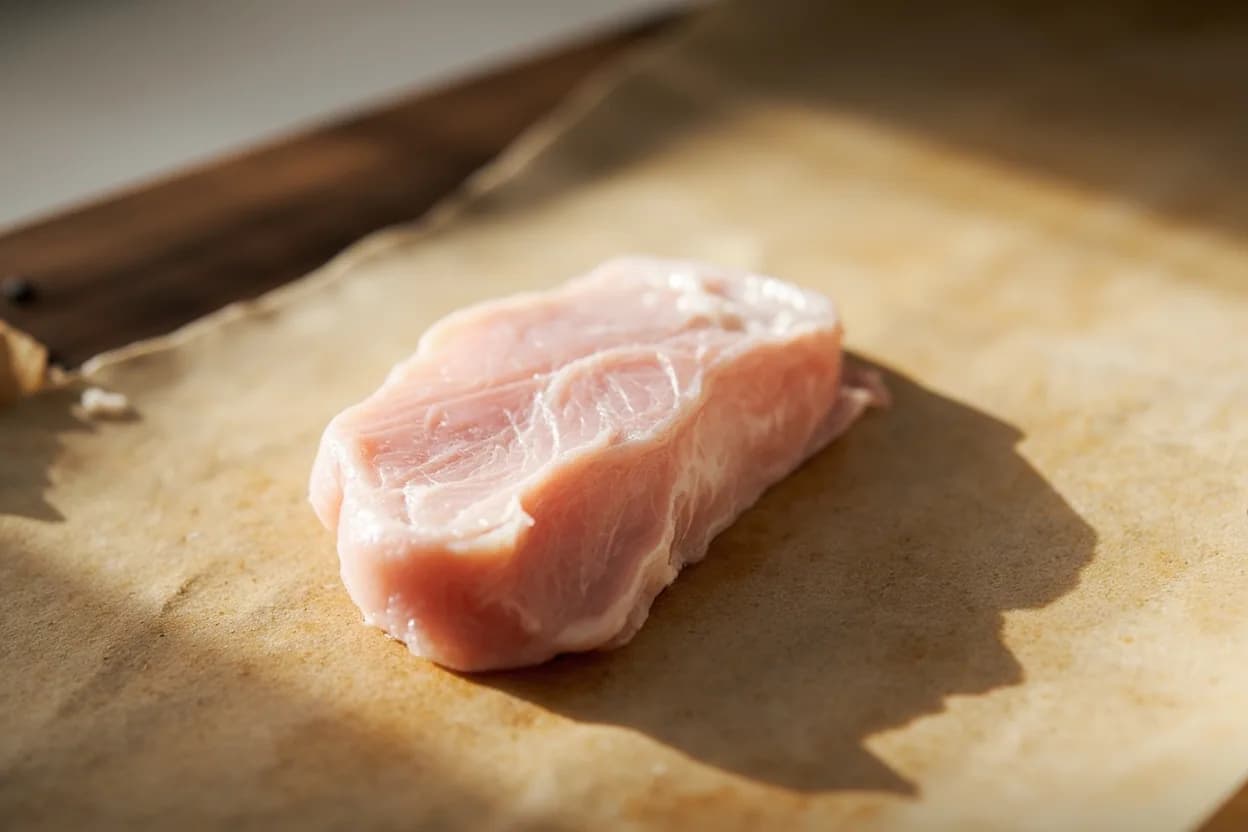
Fabricated from skinless, boneless flat-fish fillets — Dover sole (Solea solea), lemon sole, plaice (Pleuronectes platessa), or John Dory. The fillet is taken from the lateral muscle of the fish; thicker portions may be lightly scored or placed between cling film and gently flattened with a mallet.
Best for
How to cook it
- 1Chill the fillet to near-frozen firmness before rolling — cold fish is more pliable and the filling holds its shape.
- 2Skin the fillet and lay it presentation side down; if the fillet is uneven, beat gently between cling film to an even 4–5 mm thickness.
- 3Spread 20–30 g of mousseline or duxelles stuffing in a thin, even layer, leaving a 1 cm border at the far edge.
- 4Roll tightly from the thick (head) end toward the tail, keeping tension uniform; secure with two pieces of kitchen string or two toothpicks.
- 5Stand paupiettes upright (seam down) in a buttered sauteuse; add enough hot fish stock and dry white wine to come halfway up the rolls.
- 6Cover with a cartouche (buttered parchment) and poach at 80–85 °C for 8–12 minutes until the core temperature reaches 55–60 °C and the flesh is just opaque.
- 7Rest briefly under the cartouche; reduce the poaching liquor to a sauce consistency and mount with cold butter for a simple beurre blanc.
Prep & butchery
- Always skin flat-fish fillets before rolling; skin shrinks under heat and deforms the roll.
- Use a flexible filleting knife and keep it parallel to the skin when removing it.
- Chill mousseline before spreading — warm filling begins to melt and slide during rolling.
- String is preferred over toothpicks for larger rolls because it applies even compression; remove before plating.
- Portion-control is easy: a standard Dover sole yields four paupiettes of roughly 60–70 g each.
Substitutes
- Dover sole fillet
Classic choice; other flat fish are good alternatives at lower cost
- Thin-sliced salmon escalope
Richer flavour; adjust poaching time slightly as salmon is thicker
- Flounder fillet
Available widely; slightly less flavourful but works well with a bold mousseline
Related cuts
- Suprême (fish)
An unrolled flat fillet portion — the starting point from which paupiettes are fabricated
- Goujon
Diagonal strip cut from the same flat-fish fillet for frying — a contrasting preparation
- Darne
A bone-in round-fish steak; opposite in technique — not rolled, cut transversally
Appears in
References
- 1.Le Guide Culinaire — Auguste Escoffier (1903)
- 2.The Professional Chef, 9th ed. — The Culinary Institute of America (2011)
- 3.Jacques Pépin: New Complete Techniques (2012)
- 4.Fish & Shellfish — James Peterson (1996)
Confidence: high
Notes
Mousseline filling
A classic fish mousseline for the filling: 150 g skinless sole or scallop, 1 egg white, 150 ml double cream, salt and white pepper. Purée the fish cold, pass through a drum sieve, then work in the egg white and fold in the cream over ice. The filling must be kept below 4 °C until just before use or it will break.
Sauce pairing
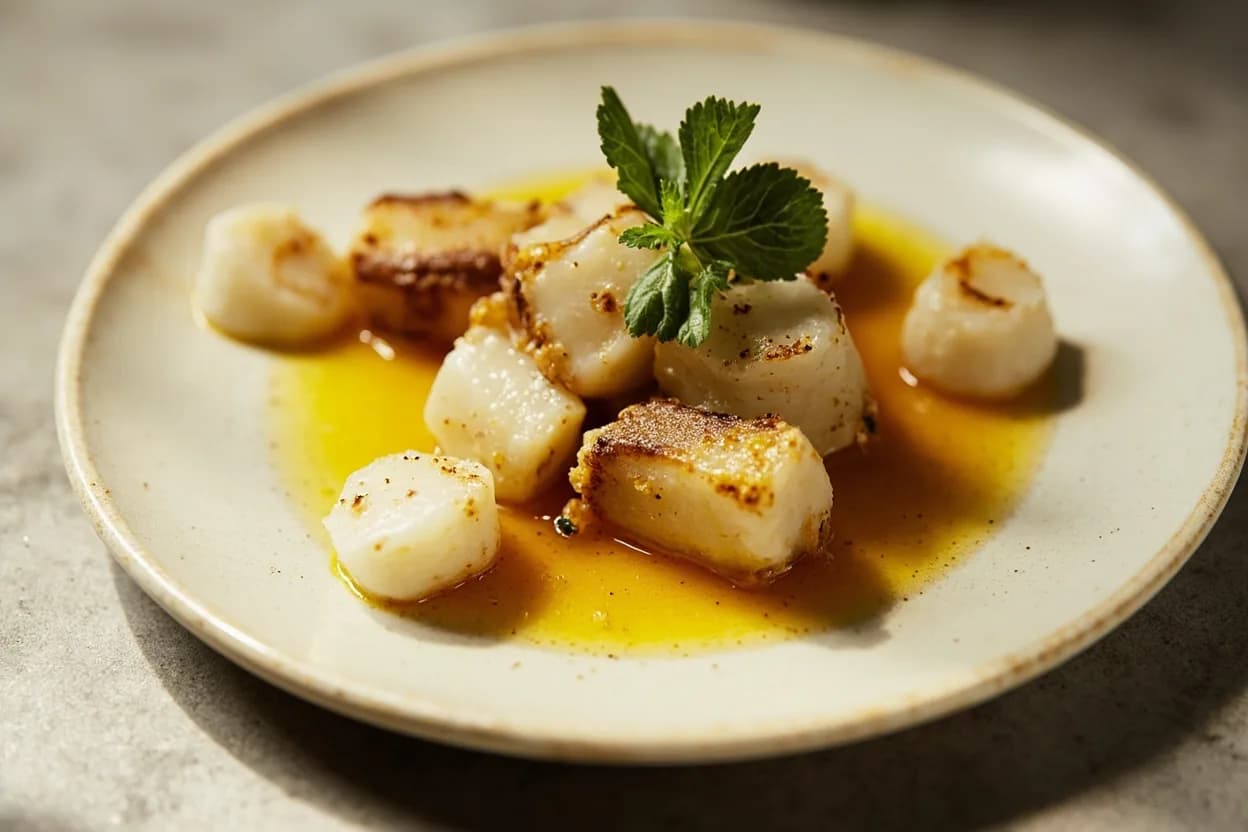
The poaching liquor is the natural base for the sauce. Classical pairings are beurre blanc (reduced liquor mounted with cold butter), sauce Normande (cream, egg yolk, shellfish coral), or a light velouté finished with crème fraîche and fine herbs.