Offal & Variety Meats
Paya (Trotter — Whole & Split)
Also: paye, nihari paya, beef trotters, lamb trotters, siri paya, paya nihari
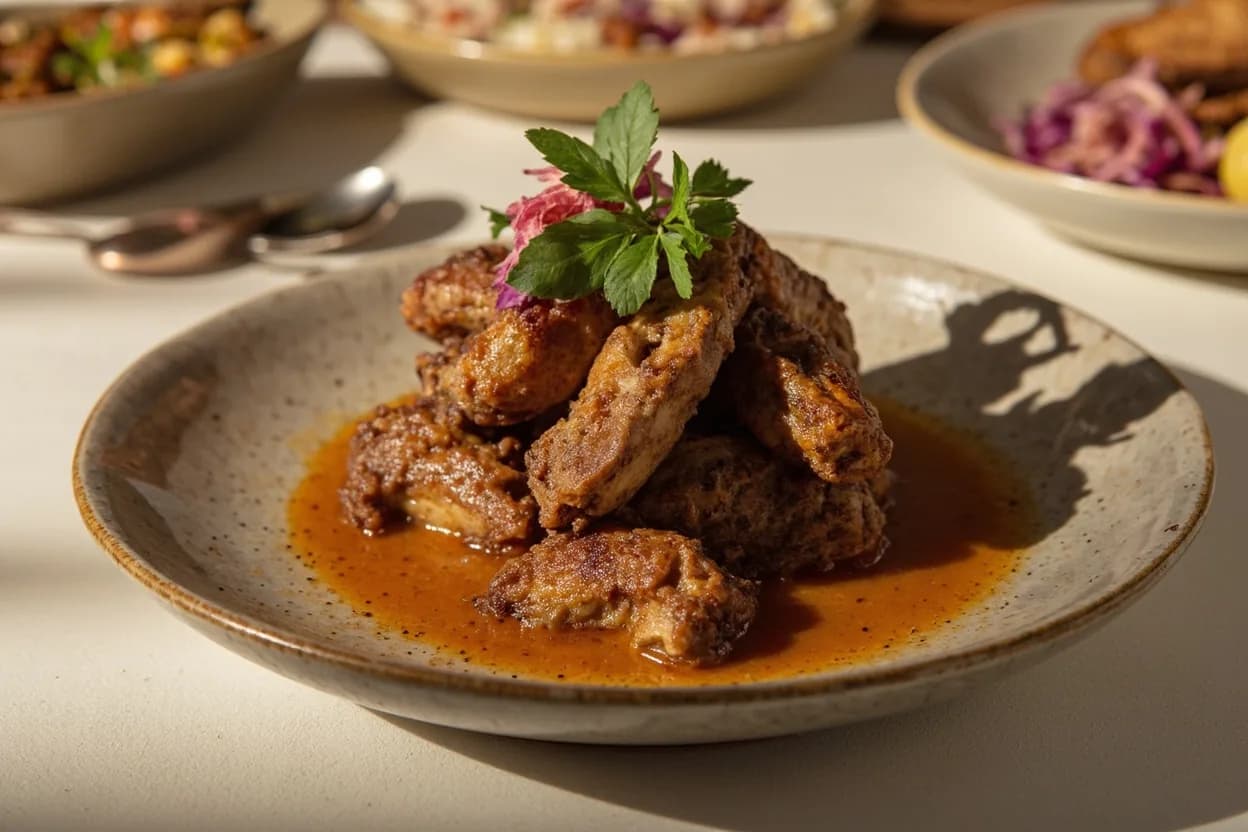
South Asian trotters — feet and lower legs of cattle or sheep — cleaned, singed, and split for the gelatin-laden long braises of nihari and paya curry.
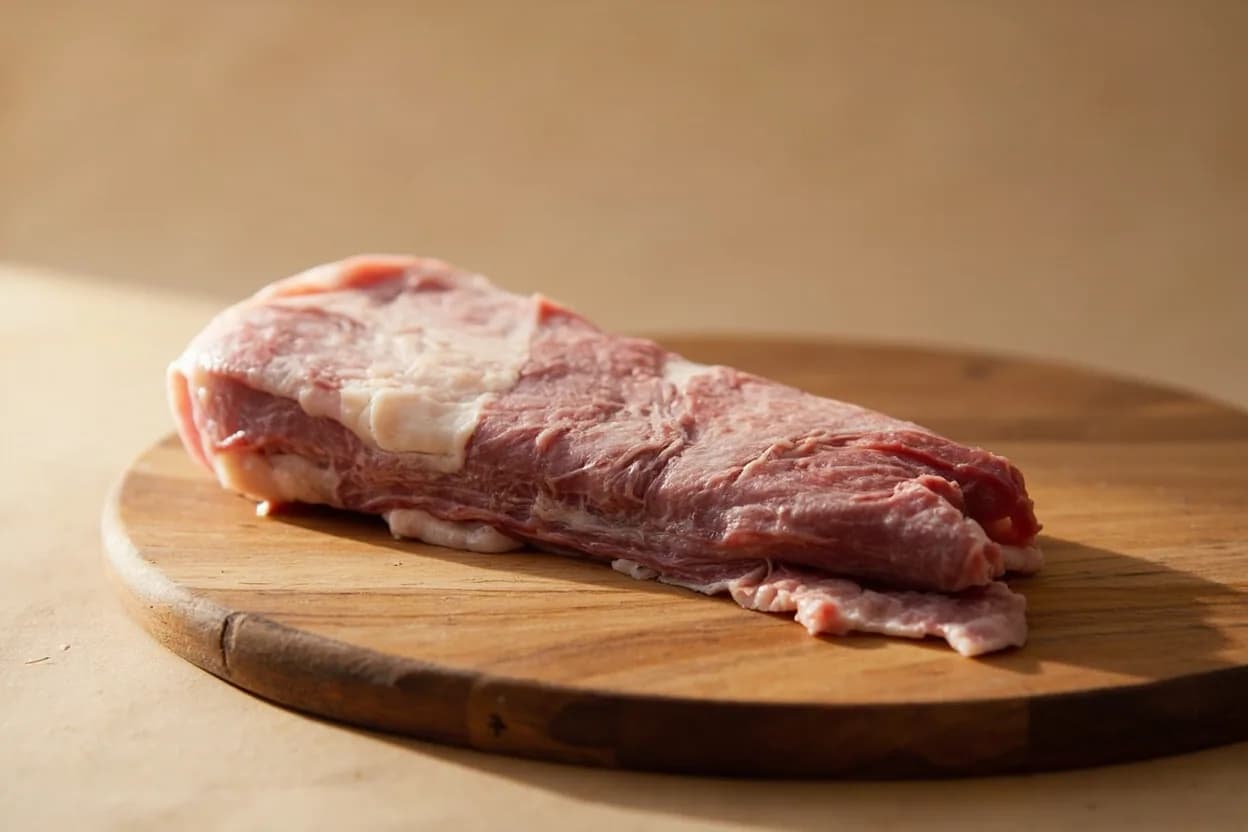
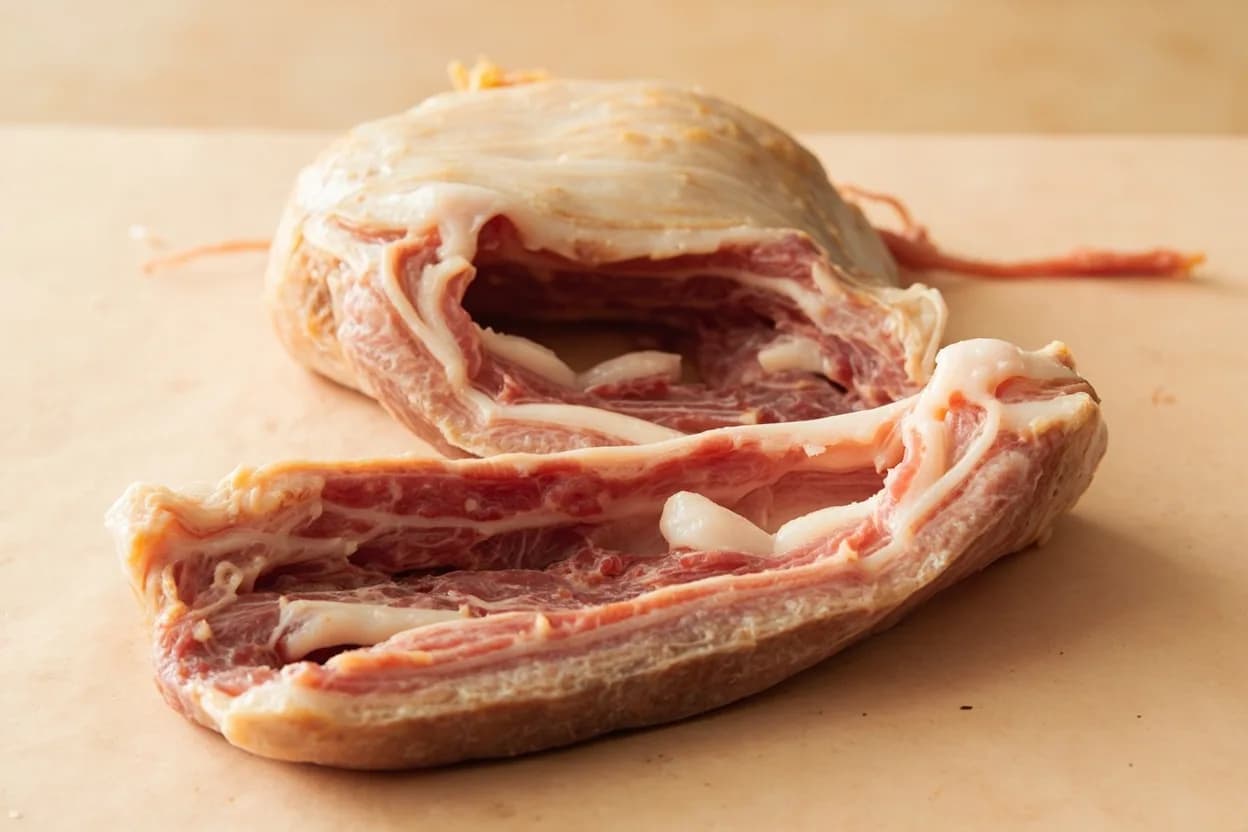
Paya refers to the foot and lower leg (below the hock) of cattle or sheep, used whole or split lengthwise for South Asian slow-braised dishes. The cut comprises the hoof, pastern bones, fetlock joint, cannon bone, and the surrounding dense connective tissue, tendons, and periosteal collagen. When braised over many hours, this collagen converts to gelatin, producing the lip-coating, intensely savoury broth that defines nihari and paya curry. The meat yield is modest — small amounts of tendon and inter-bone muscle — but the gelatin extraction is the entire point.
In photos
Where it comes from
Cattle: the two front feet (foreleg trotters) and two hind feet (hindleg trotters) below the carpus/tarsus. Sheep and goat: all four feet. Hindleg trotters from beef carry more muscle; front trotters produce slightly more gelatin from the fetlock-heavy anatomy.
Best for
How to cook it
- 1Singe off remaining hair from the trotter using an open flame (gas burner or blowtorch), then scrub vigorously with a stiff brush under cold running water.
- 2Use a heavy cleaver to split the trotter lengthwise: position the blade along the cannon bone and strike firmly to split through bone and joint, halving each trotter to expose the marrow and increase surface area for gelatin extraction.
- 3Blanch split trotters in boiling water for 10 minutes; drain and discard the water to remove impurities and residual blood.
- 4Build a whole-spice base: blooming cardamom, cloves, black peppercorns, bay leaf, and dried chilies in ghee or oil, then add sliced onions and cook until deep golden.
- 5Add trotters, ginger-garlic paste, and spice powders (coriander, cumin, turmeric, red chili); stir to coat and cook 10 minutes to develop the masala base.
- 6Add enough water to submerge by 5 cm; bring to a boil, then reduce to a bare simmer. For nihari: cook 6–8 hours. For paya curry: a pressure cooker can reduce this to 45–60 minutes at full pressure.
- 7For nihari: thicken with a slurry of whole-wheat flour (atta) stirred into cold water, whisked in during the last 30 minutes; finish with fried onions, julienned ginger, green chili, and fresh coriander.
Prep & butchery
- Singeing with open flame is essential — no commercially produced trotters will be entirely hair-free after slaughter.
- Splitting is done with a heavy cleaver and single firm strokes; do not saw — sawing produces bone dust that clouds the broth.
- Soaking split trotters in cold salted water for 1–2 hours after blanching draws out additional blood for a cleaner, lighter-coloured final broth.
- For siri paya, the sheep's head is split similarly — through the skull with a cleaver — before being combined with the trotters.
Substitutes
- Oxtail
High gelatin, similar long-braise requirement; produces comparable body but less cartilaginous texture
- Pig's trotters
Structural and cooking analogue; not used in South Asian Muslim cooking but identical technique
- Beef shin (bone-in)
Much more meat, less gelatin; acceptable when trotters are unavailable — combine with a split trotter if possible
Related cuts
- Oxtail
Shares the long-braise, high-gelatin profile — sometimes combined with paya in mixed curries
- Beef Shin (Osso Buco cut)
The European analogue for collagen-rich braising cuts
- Siri (Sheep's Head)
Combined with paya in siri paya — same singeing and splitting technique
Appears in
References
- 1.Flavours of the Mughal Empire — Salma Husain (2008)
- 2.Cooking with Sadia — Sadia Dehlvi (2013)
- 3.The Complete Pakistani Cookbook — Zubaida Tariq (various editions)
- 4.Prashad Cooking with Indian Masters — J. Inder Singh Kalra (1986)
Confidence: high
Notes
Nihari and the Overnight Braise
Nihari — from the Arabic nahar, meaning 'day/morning' — was developed in Delhi's royal kitchens during the Mughal period and slow-cooked overnight to be ready at dawn after the Fajr prayer. The original cooking vessel was buried in hot embers before sunrise. The dish spread to Lahore and Karachi with Partition migration and is now the signature breakfast of both cities, served at specialist nihari restaurants (nihariyas) that open only until midday.
Why Splitting Matters
The whole trotter seals gelatin inside the cannon bone's periosteum and within the intact joint capsules. Splitting the trotter lengthwise exposes the bone marrow, breaks open the joint, and dramatically increases the surface area available for collagen dissolution. A braise begun with split trotters will reach full gelatin extraction in roughly half the time of an equivalent whole-trotter braise.