Fish — Fabrication & Breakdown
Red Mullet (Sultan Ibrahim) Bone-Out Technique
Also: rouget de roche filleting, triglie bone-out, Sultan Ibrahim preparation, barbunya filleting, red mullet pin-boning
Precision filleting and pin-boning of small, fragile red mullet for skin-on presentation in Levantine, Greek, and Mediterranean cooking.
Red mullet (Mullus surmuletus and M. barbatus) — called rouget de roche in France, triglie in Italy, barbunya in Turkish and Levantine kitchens, and Sultan Ibrahim across Arab Mediterranean markets — is one of the most prized small fish in the Mediterranean, esteemed for its coral-red skin, intensely flavored dark liver, and distinctly sweet, slightly iodine-tinged flesh. The fish reaches 15–30 cm in length, yielding fillets of just 40–80 g each — but those fillets require technical precision to bone: the pin bones run at an unusually oblique angle, the flesh is extremely delicate and tears readily, and the skin must be preserved intact for presentation. The bone-out technique is designed to yield two clean, skin-on fillets with all bones removed without damaging the crimson skin.
In photos
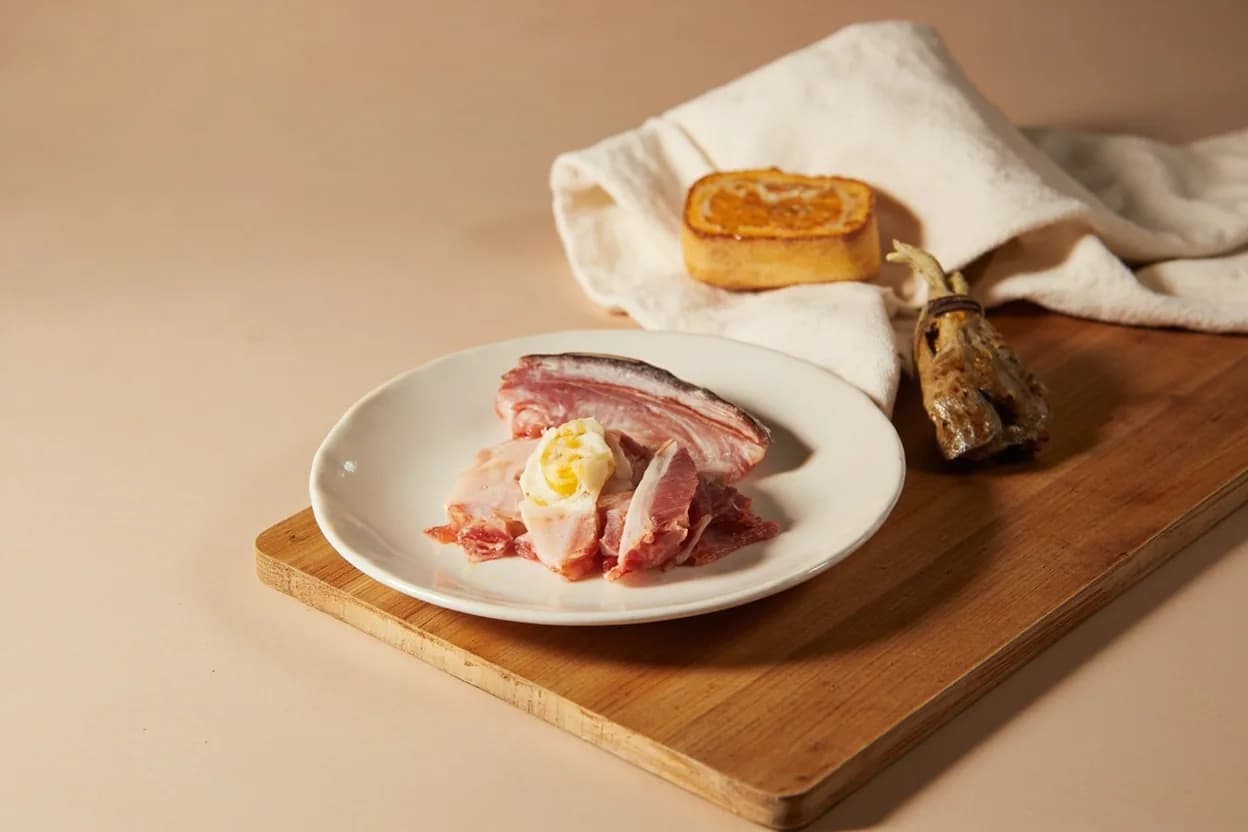
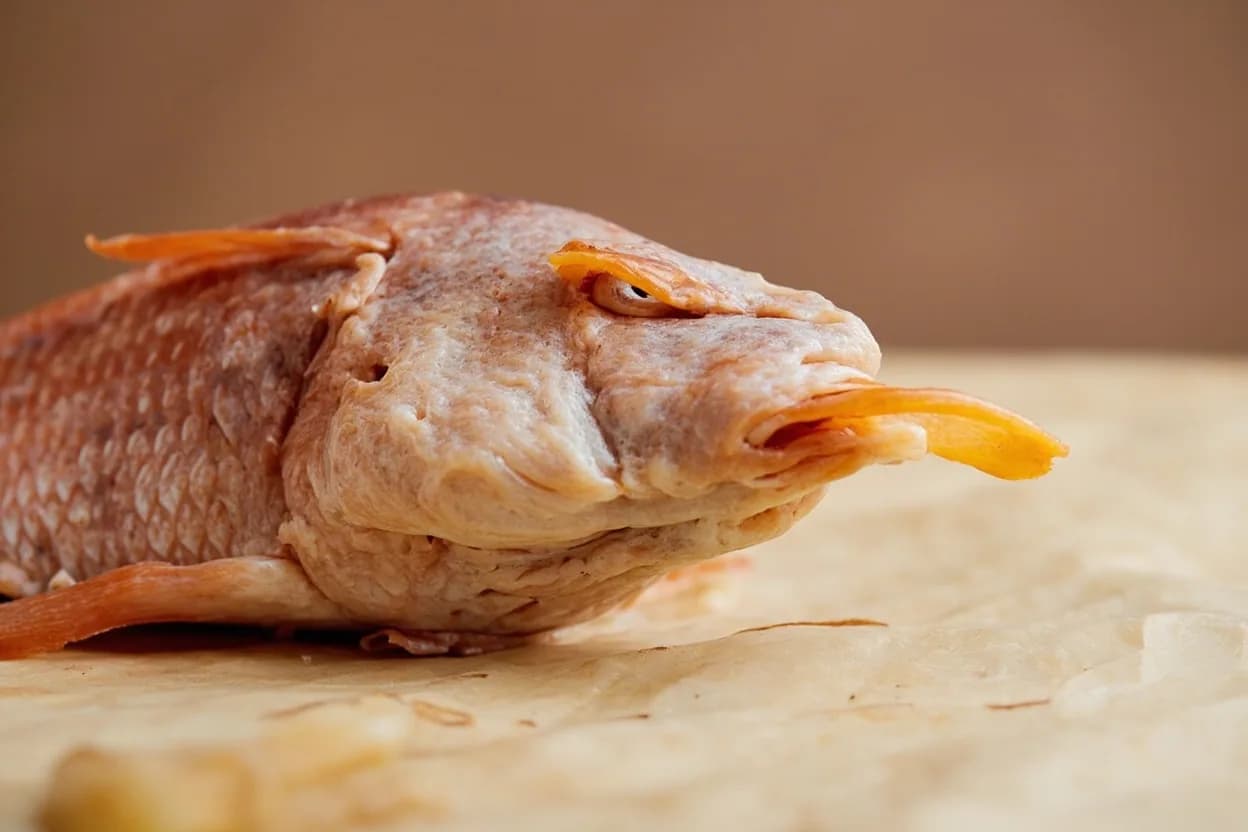
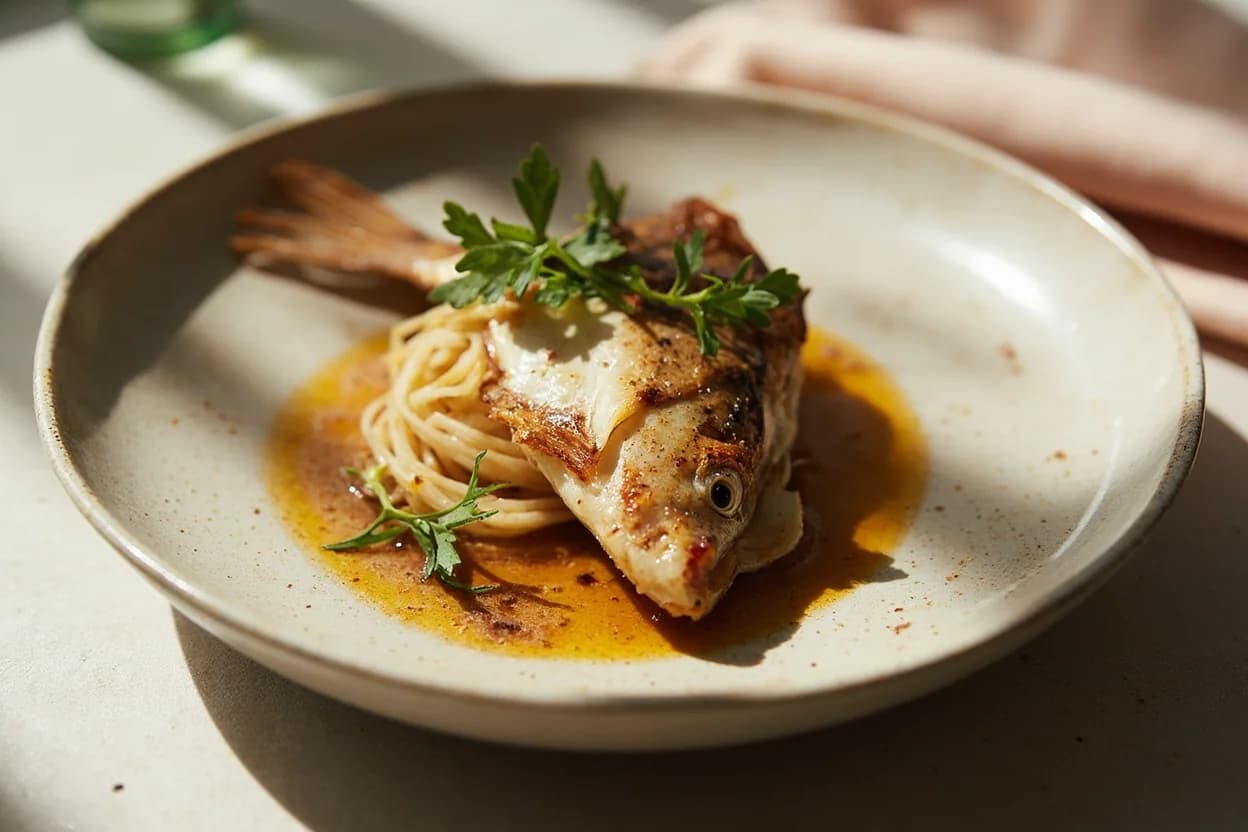
Where it comes from
Two small fillets from each fish, running the full dorsal-to-ventral length on either side of the central backbone. The fish is typically 15–30 cm long. M. surmuletus (striped red mullet, rouget de roche) has firmer flesh and a more pronounced flavor; M. barbatus (plain red mullet, rouget de vase) is softer and milder. Both are handled identically in butchery.
Best for
How to cook it
- 1Scale the fish first: hold the tail, scrape from tail toward head with a fish scaler or the back of a knife. Red mullet scales are large and release easily. Rinse under cold water.
- 2Remove the head with one angled cut behind the pectoral fin, angling to preserve maximum shoulder flesh.
- 3Hold the fish on its side. Using a flexible filleting knife, insert the blade just behind the pectoral fin and draw it along the backbone from shoulder to tail, keeping the knife flat against the bone. Lift the fillet away.
- 4Turn the fish over and repeat for the second fillet. You now have two skin-on fillets and the central skeleton (which, along with the head and liver, makes excellent stock or rouille enrichment).
- 5Pin bone removal: lay the fillet flesh-side up. Run your fingertip from head end toward tail along the center of the fillet — you will feel the pin bones as a ridge. Using fish tweezers (pinzette), grip each bone as close to the flesh as possible and pull at a 45° angle toward the head end (the direction the bones naturally lean). Work systematically from head to tail.
- 6There are typically 8–14 pin bones per fillet depending on fish size. On very small fish (15 cm), some cooks omit this step and serve with the warning that pin bones are present.
- 7To cook: heat a heavy skillet over high heat until very hot. Add a thin film of olive oil. Lay fillets skin-side down, pressing gently for the first 10 seconds to prevent curling. Cook 2–3 minutes without moving until the skin is deeply golden and crisp. Flip; cook 30 seconds more. The flesh should just turn opaque. Serve immediately.
Prep & butchery
- Work on a very cold surface and keep the fish as cold as possible throughout filleting — warm flesh tears more readily.
- A 15 cm flexible filleting knife with a pointed tip is optimal; a stiff knife will drag and tear the small fillets.
- Never rinse the filleted flesh under water — surface moisture steams rather than crisps the skin during cooking. Pat dry with kitchen paper.
- The liver: traditionalists remove it gently before filleting and reserve it. It can be quickly sautéed in butter, spread on toast croutons, or stirred into a sauce at the last moment — it cooks in under 60 seconds and is extremely rich.
- For crispy skin without any tearing: score the skin side lightly 3–4 times across the width of the fillet to prevent it from contracting and buckling during cooking.
Substitutes
- Sardine fillets
Similar small size and oily character; easier to bone but less prized flavor; same cooking methods apply.
- Small sea bream (daurade/dorade) fillets
Firmer, larger, more forgiving to bone; similar Mediterranean flavor direction but milder.
- Rouget grondin (gurnard)
Firmer flesh; an acceptable substitute in bouillabaisse but not for delicate plated service.
- Salmonete de roca (rockfish mullet, Spain)
The direct Spanish equivalent — same species complex; treated identically.
Related cuts
- Rouget de vase (M. barbatus)
The plain red mullet — softer flesh, milder flavor; identical preparation but more forgiving to handle.
- Sea bream fillet (orata/daurade)
The prestige Mediterranean white fish fillet alongside rouget; firmer, larger, more forgiving to work with.
- Sardine fillet
Same size class and skin-on cooking tradition in Mediterranean cuisine; less technically demanding.
Appears in
References
- 1.La Vraie Cuisine de la Méditerranée, Félix Benoit, Hachette
- 2.The Cooking of the Eastern Mediterranean, Paula Wolfert, HarperCollins
- 3.Fish & Shellfish, Rick Stein, BBC Books
- 4.Culinaria Greece, Marianthi Milona, Könemann
- 5.La Cucina del Mare, Allan Bay, Giunti Editore
Confidence: high
Notes
Sultan Ibrahim across the Levant
The name 'Sultan Ibrahim' (سلطان إبراهيم) is used across Lebanon, Egypt, Israel, Syria, and Gulf Arab markets for red mullet. The fish holds an honored place in Levantine coastal cooking — typically fried whole (maqli) with a spice mixture of cumin, coriander, and paprika, then served with tahini sauce or tartar sauce. The filleting and pin-boning technique described here is the restaurant version; home cooking across the Levant more often leaves the fish whole, relying on diners to navigate the bones at the table.
The liver as a culinary asset
In Provençal and Italian fine-dining traditions, red mullet liver is treated as a luxury item comparable to a miniature foie gras. Some recipes call for cooking the fish unopened — leaving the liver inside — so that it bastes the flesh from within during cooking and transfers its rich, slightly bitter, intensely flavored fat to the fillet. This is particularly celebrated in the Provençal preparation rouget en écailles (mullet in its scales, cooked in clay), where the closed body traps all juices.