Knife Cuts — Regional & Global
Rodajas (Coin Cuts)
Also: rodajas, coin cuts, round slices, cross-cuts, ruedas, rondelles
Uniform round cross-sections cut perpendicular to a cylindrical vegetable's length — the foundational slice of Latin American and Caribbean vegetable cookery.
Rodajas (Spanish: small wheels or discs) are round or near-round cross-sectional slices cut perpendicularly — or very slightly on a bias — through cylindrical and tapered vegetables. The defining characteristic is uniformity: all slices should be cut to the same thickness so they cook evenly when sautéed, fried, or braised. Thickness ranges from 3 mm (thin, for quick frying or crispy tostones preparation) to 2 cm (thick, for grilling or braising plantain, chayote, or yuca). The technique is the Spanish-language equivalent of the French rondelle, but it is used across a wider range of produce in Mexican, Caribbean, and Central American cooking.
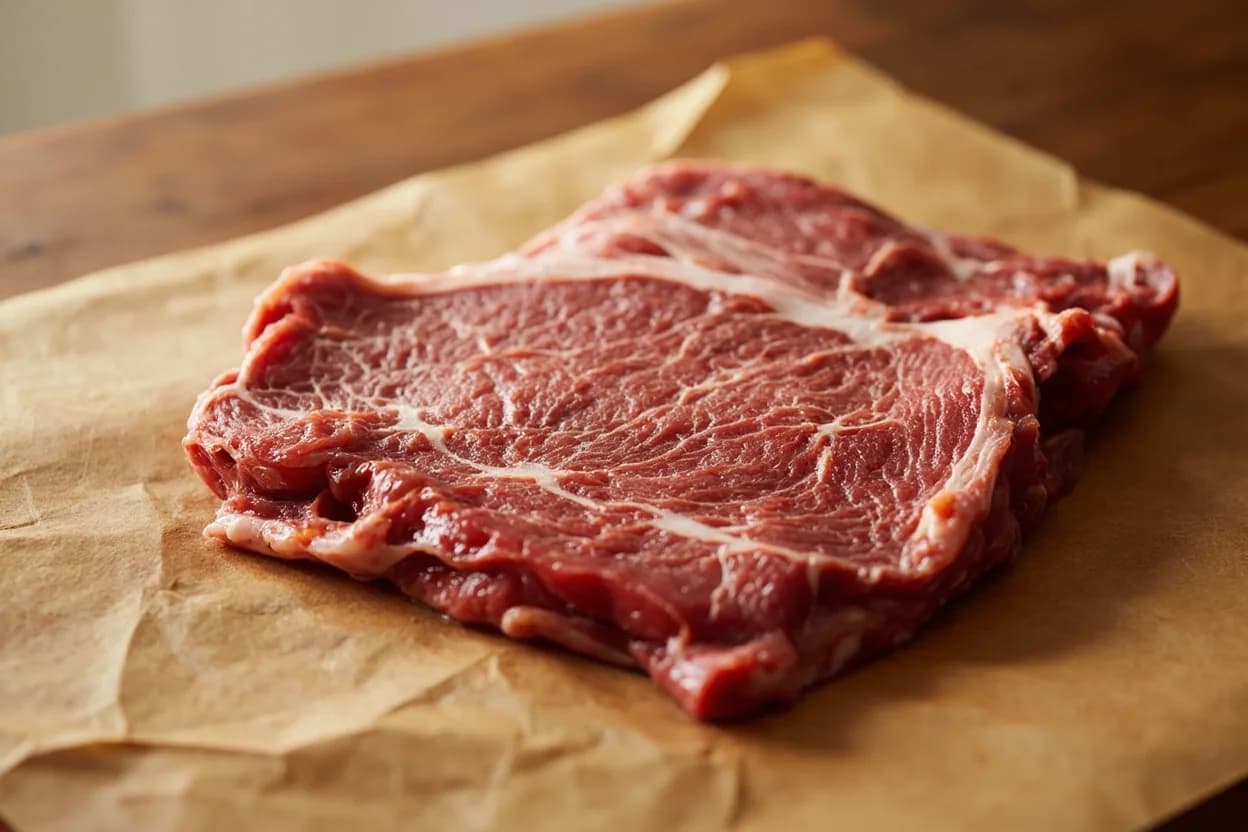
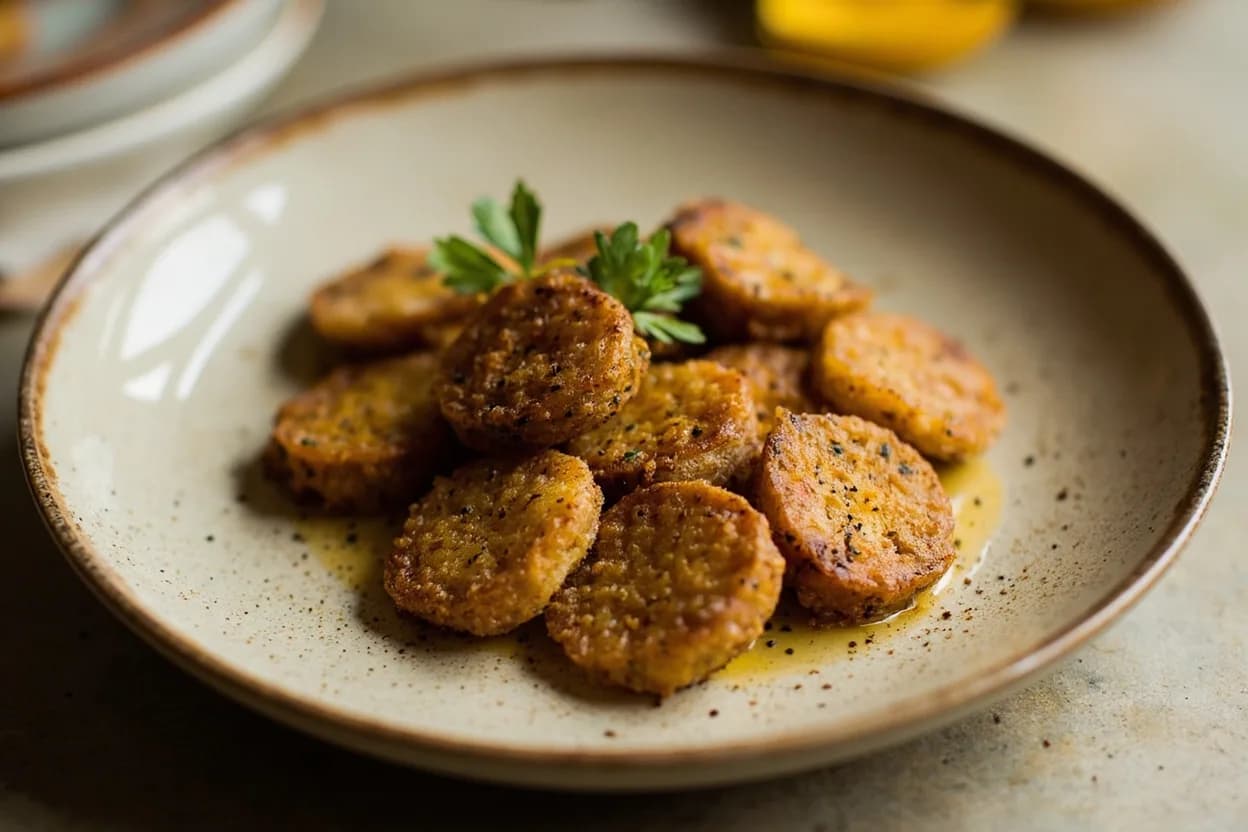
In photos
Where it comes from
Applied to a broad family of round-to-oval vegetables and starchy fruits common in Latin American cuisines: green and ripe plantain (plátano macho and plátano maduro), chayote (vegetable pear), nopales stems cut differently from paddle strips, yuca (cassava), zucchini (calabacitas), cucumber for ceviches and agua fresca garnish, and beets. The technique is also applied to citrus for garnish (ruedas de limón).
Best for
How to cook it
- 1Peel the vegetable if required (plantain, yuca, beet) or scrub clean if skin is edible (zucchini, cucumber).
- 2Trim the ends flat and square. Place the vegetable on the board with one flat end down for stability.
- 3Using a sharp chef's knife, cut straight down perpendicular to the vegetable's length. Keep the blade perfectly vertical — any angle produces oval or parallelogram slices rather than true rounds.
- 4For consistency, use a ruler or chef's ring cutter as a spacing guide on the first few cuts until your eye is calibrated to the target thickness.
- 5For green plantain tostones: cut 2 cm thick rounds. Fry at 160°C until just tender but not crisp (3–4 minutes), remove, smash flat to 6–7 mm with a tostonera or flat-bottomed glass, then return to 190°C oil for the second fry.
- 6For ripe plantain maduros: cut 1–1.5 cm thick on a slight bias for a larger face; fry at 175°C until caramelized deep gold, approximately 2 minutes per side. The natural sugars brown rapidly — watch carefully.
Prep & butchery
- A sharp, wide blade — 20 cm chef's knife or Chinese cleaver — prevents the vegetable from rocking as you cut, producing more consistent thickness than a narrow boning knife
- For plantain: score the skin along its ridges and peel by hand rather than using a peeler — the skin is thick and fibrous
- For chayote: the seed (which is edible and nutty) can be left in the center round or removed with a melon baller after slicing
- For yuca: quarter lengthwise first to remove the fibrous central core, then cut the quarters into arc-shaped rodajas rather than true rounds
- For beets: wear gloves and cut on a surface you can stain — beet juice is a persistent dye
Substitutes
- Diagonal bias cut
Produces oval slices with more surface area — appropriate when more browning per slice is wanted; changes the visual presentation
- Half-moon cut (media luna)
Halve the vegetable lengthwise first, then cross-cut — for large chayote or oversized cucumber where full rounds are unwieldy
- Roll cut / oblique cut
More surface area per piece for braising applications; the roll cut is preferred over rodajas when maximum liquid absorption is the goal
Related cuts
- Rondelle (French)
The direct French equivalent — term used interchangeably in European-trained kitchens; functionally identical
- Coin cut
English culinary school term for the same perpendicular cross-section, especially for carrots and celery
- Media luna (half-moon)
Rodaja halved; used when full round cross-sections produce pieces too large for the dish context
- Diagonal slice / bias cut
Angled cousin to the rodaja — same single-cut motion but at 30–45 degrees to the axis, producing oval faces
Appears in
References
- 1.Gran Cocina Latina — Maricel Presilla
- 2.Secrets of Colombian Cooking — Patricia McCausland-Gallo
- 3.My Mexico — Diana Kennedy
- 4.The Food and Cooking of the Caribbean, Central and South America — Jenni Fleetwood
Confidence: high
Notes
Thickness and the twice-fry rule for tostones
The classic Puerto Rican and Dominican tostonero instruction is 'dos dedos de grueso' — two finger-widths thick — before the first fry. This translates to approximately 2 cm. Any thinner and the round collapses during smashing rather than flattening cleanly; any thicker and the center never cooks through in the brief second fry. The rodaja is not just a shape here but a measurement standard passed down by hand-gesture rather than ruler.
Chayote's odd geometry
Chayote (Sechium edule) presents an interesting challenge for rodaja cutting: the vegetable is pear-shaped and asymmetrical, so true perpendicular rounds change in size dramatically from shoulder to tip. Many cooks halve the chayote lengthwise first to create a flat-bottomed piece, then cut half-moon (media luna) rodajas rather than true rounds — these cook more evenly because all pieces are similar in size. The seed in the central round is often prized and given to guests as the cook's informal gift.