Fish — Fabrication & Breakdown
Round Fish Filleting (Flat Fillet & Pin-Bone Removal)
Also: flat fillet, fish fillet, bilateral filleting, pin-boning
The standard two-fillet technique for round-bodied fish, yielding a boneless side of flesh from each flank by running a knife along the spine and lateral line, then removing pin bones.
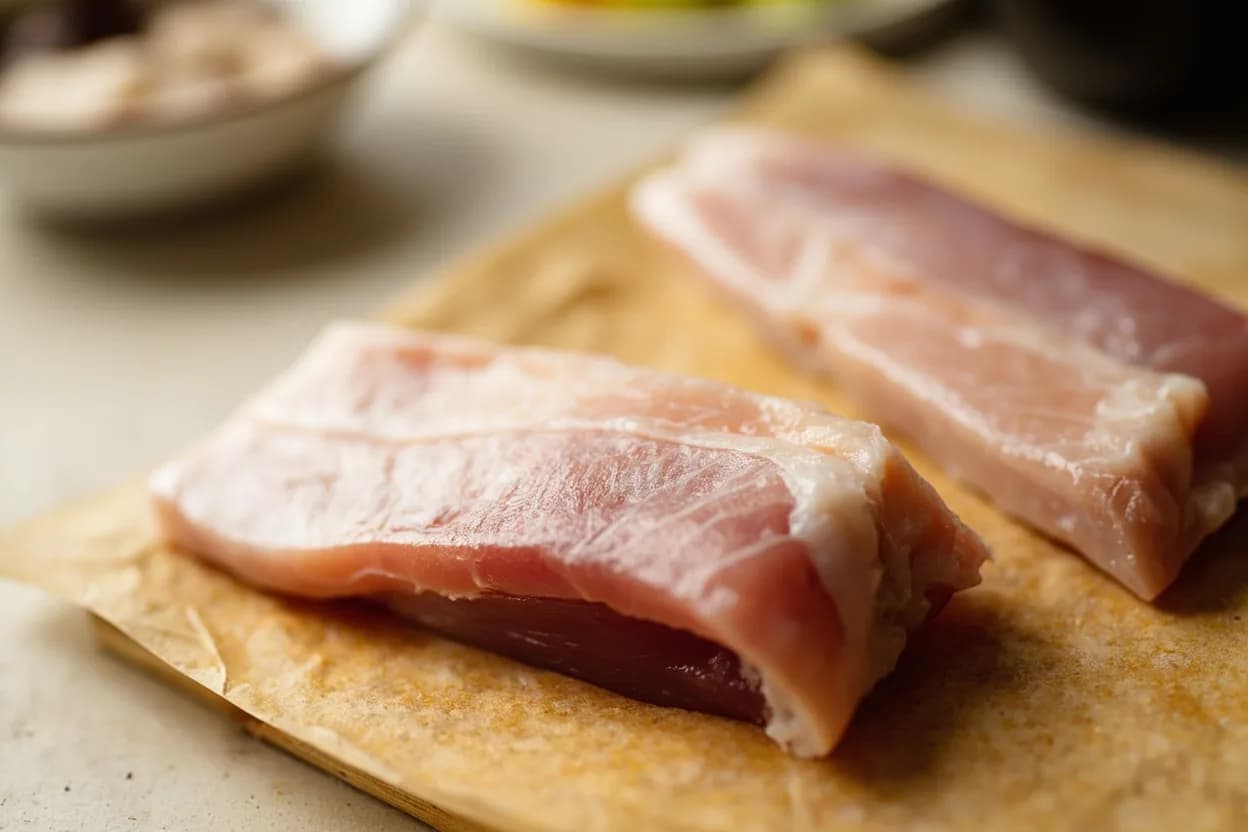
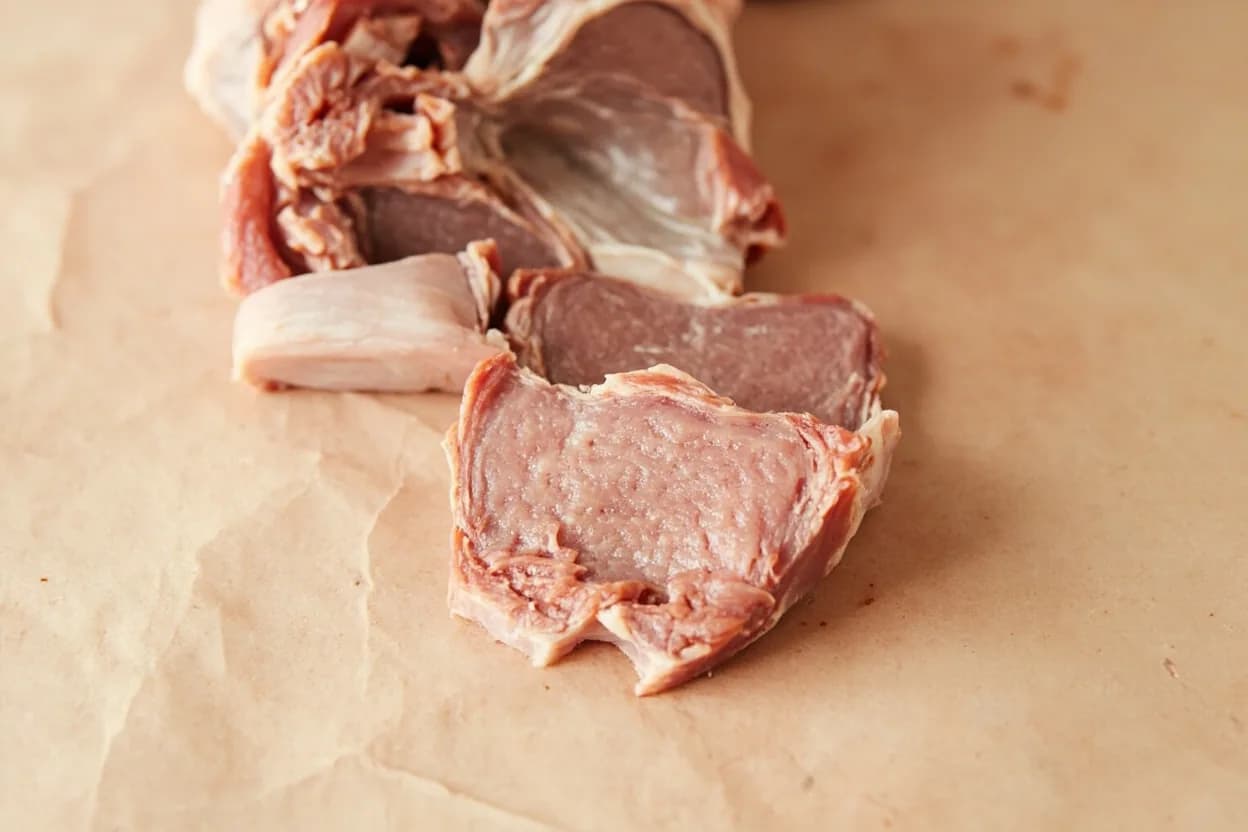
Round fish filleting produces two mirror-image fillets — one from each side of the fish — by making a series of cuts along the dorsal and ventral edges and running the blade along the backbone from head to tail. The result is a flat slab of flesh, skin on or off, ready for portioning. Pin-bone removal is the finishing step: small intermuscular bones that branch off the spine and run through the thick center of each fillet must be extracted with fish pliers or tweezers before service.
In photos
Where it comes from
The musculature of any round-bodied (laterally compressed) fish: salmon (Salmo salar), sea bass (Dicentrarchus labrax), cod (Gadus morhua), trout, halibut on the round axis, snapper, and most market fish. Each fillet is one epaxial and hypaxial muscle block running from behind the pectoral girdle to the caudal peduncle.
Best for
How to cook it
- 1Scale the fish thoroughly, then make an incision just behind the pectoral fin at a 45-degree angle down to the backbone — do not sever the head.
- 2Turn the knife flat and run it along the top of the backbone from head to tail, using short slicing strokes and keeping the blade in contact with the spine at all times.
- 3Lift the fillet free; repeat on the second side.
- 4Locate pin bones by running a fingertip along the lateral line — they protrude at a slight angle. Grip each bone firmly with fish-bone pliers or needle-nose tweezers and pull in the direction of growth (slightly toward the head) to avoid tearing flesh.
- 5To skin: lay the fillet skin-side down, nick the tail end, grip the skin firmly, and slide the knife along the skin-flesh interface with the blade angled slightly toward the board.
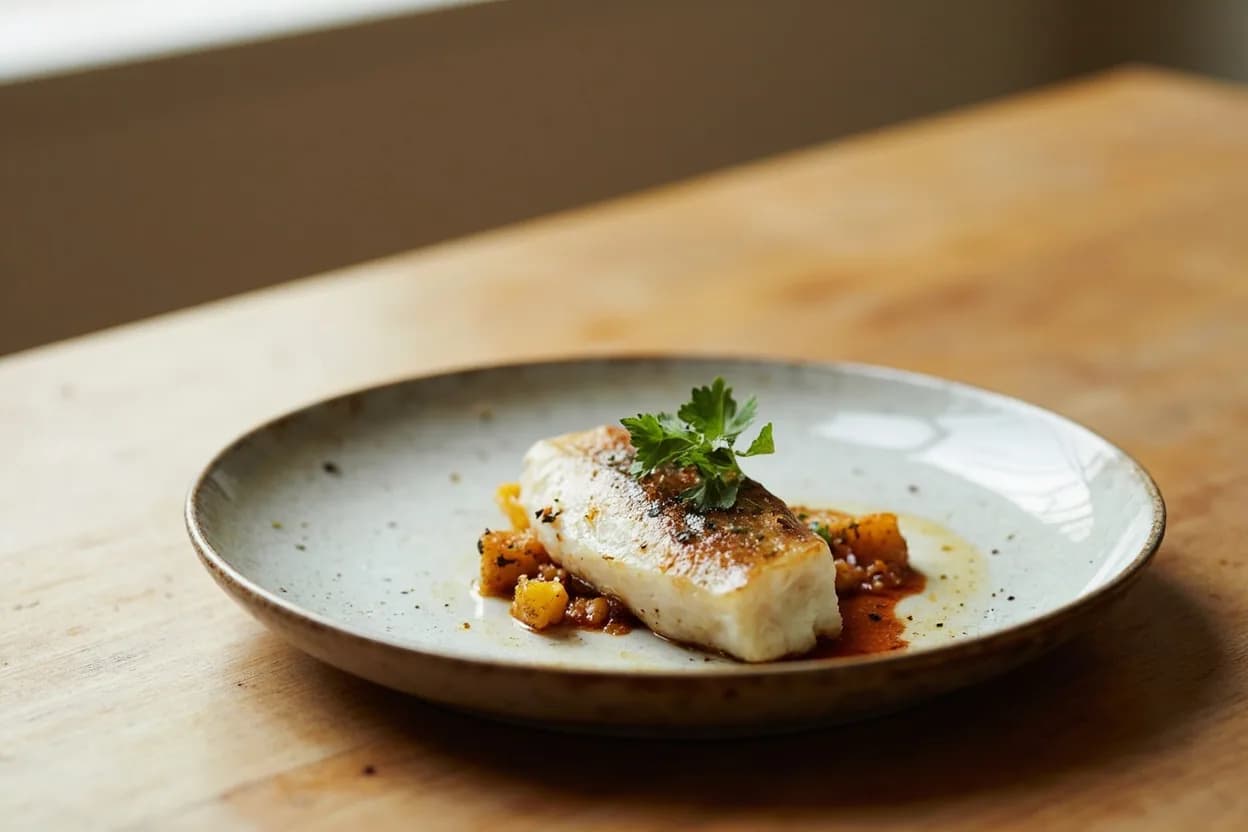
- 6For pan-searing: dry the skin thoroughly, season, and cook skin-side down in a pre-heated pan over medium-high heat until the flesh is opaque two-thirds of the way up, then flip briefly.
Prep & butchery
- Use a flexible filleting knife (ideally 6–9 inches) for most round fish; a stiff boning knife for very large specimens like whole salmon.
- Work on a clean, damp board to prevent slipping; angle the fish so the spine is parallel to the knife hand's motion.
- Remove pin bones before final portioning — they are easiest to feel and grip when the fillet is whole and slightly chilled.
- For sushi or crudo, pull bones immediately after filleting; for cooked preparations, pin-boning after a brief chill (20 minutes) firms the flesh and makes extraction cleaner.
Substitutes
- Flat fish fillet (sole, flounder)
Much thinner; cooks faster and is structurally more delicate — adjust timing significantly.
- Salmon steak (cross-section cut)
Contains pin bones and spine segment; requires different de-boning approach.
Related cuts
- Flat Fish Fillet — Four-Fillet Method
Analogous technique adapted for flatfish anatomy yielding four fillets instead of two.
- Sanmai Oroshi
Japanese formalization of the same two-fillet principle, performed with a deba or yanagiba.
- Salmon Loin Portion
A portioned cross-section of the round fillet, cut after filleting and pin-boning.
- Salmon Belly Flap
The thin ventral strip left after squaring the fillet; prized for its fat content in ramen and yakitori.
Appears in
References
- 1.The Professional Chef, 9th ed. — Culinary Institute of America (2011)
- 2.Fish & Shellfish — James Peterson (1996)
- 3.On Food and Cooking — Harold McGee (2004)
- 4.Larousse Gastronomique — Prosper Montagné (2009 ed.)
Confidence: high
Notes
The lateral line as a guide
Round fish have a visible lateral line — a sensory organ running the length of the body. In filleting, this line marks roughly where pin bones terminate; keeping the knife just above it on the dorsal cut and just below it on the ventral cut produces the cleanest, most complete fillet.
Pin-bone geometry
Pin bones (os intermuscular) are not attached to the spine directly but are embedded in the myosepta — connective tissue partitions between muscle segments. In Atlantic salmon, there are typically 20–25 pin bones per fillet. They exit the flesh at roughly 35–45 degrees toward the head, so pulling in that direction removes them cleanly without tearing the surrounding flesh.
Skin-on cooking
Cooking a round fish fillet skin-on over high dry heat yields a dramatic textural contrast: crackling, lacquered skin against silky interior flesh. This requires the skin surface to be completely dry and the pan to be properly pre-heated; any moisture causes the skin to steam rather than crisp, and the fillet will stick.