Fish — Fabrication & Breakdown
Smoked Fish — Flaking vs. Whole-Addition
Also: smoked fish preparation, crayfish vs smoked fish, egusi fish prep, ponmo and smoked fish
The critical West African kitchen decision: whether to flake cured or smoked fish into fine shreds that dissolve into a dish, or add it in substantial pieces that remain identifiable — each technique produces fundamentally different results in egusi and soup.
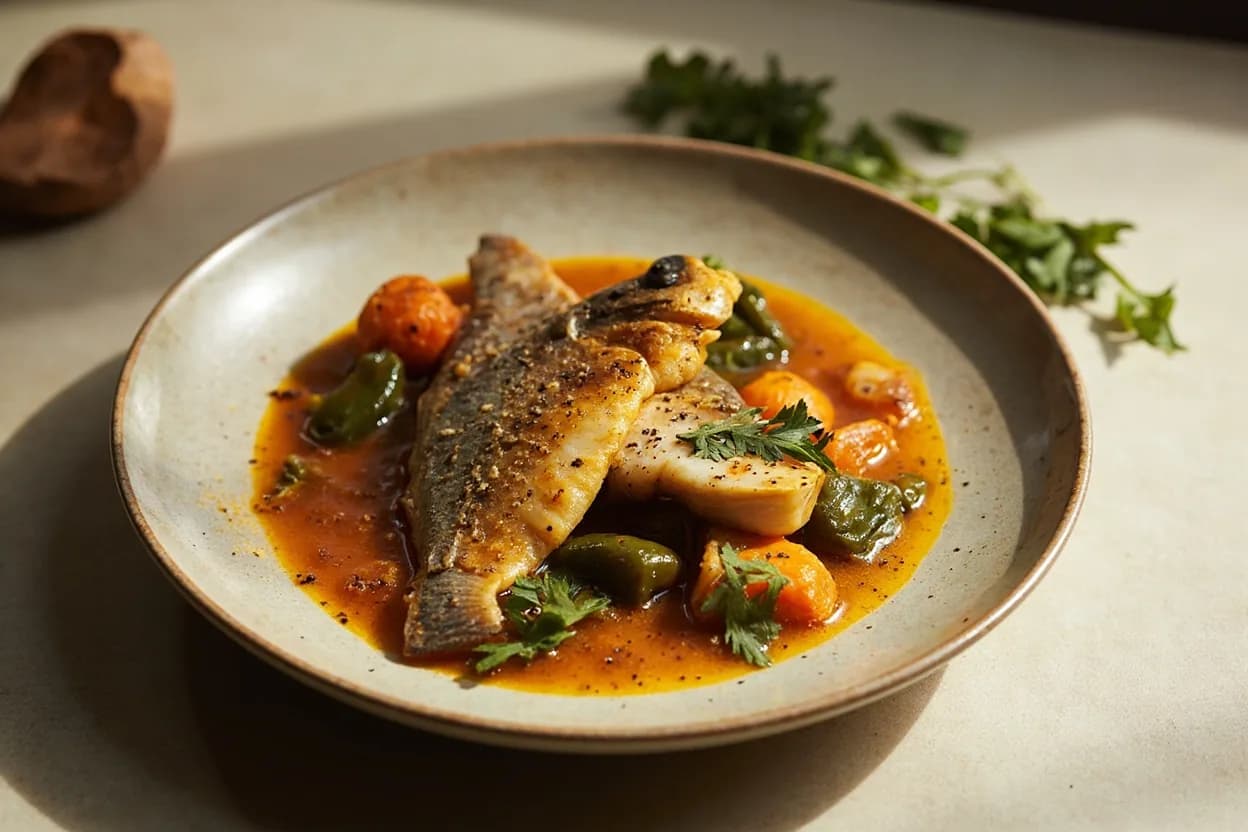
Smoked and dried fish are not garnishes in West African cooking — they are umami infrastructure. The decision of how to introduce them is a structural one that determines a soup's texture, flavor distribution, and eating experience. Flaking reduces the fish to fine strands or powder-adjacent shreds that disperse through the soup, creating a uniform depth of savory flavor. Whole-addition (breaking the fish into thumb-sized chunks before adding) preserves distinct pockets of intense smoked flavor and provides textural contrast against softer protein elements. Many West African soups use both strategies simultaneously — a base built on flaked smoked catfish and a finish of chunked stockfish or smoked titus (chub mackerel).
In photos
Where it comes from
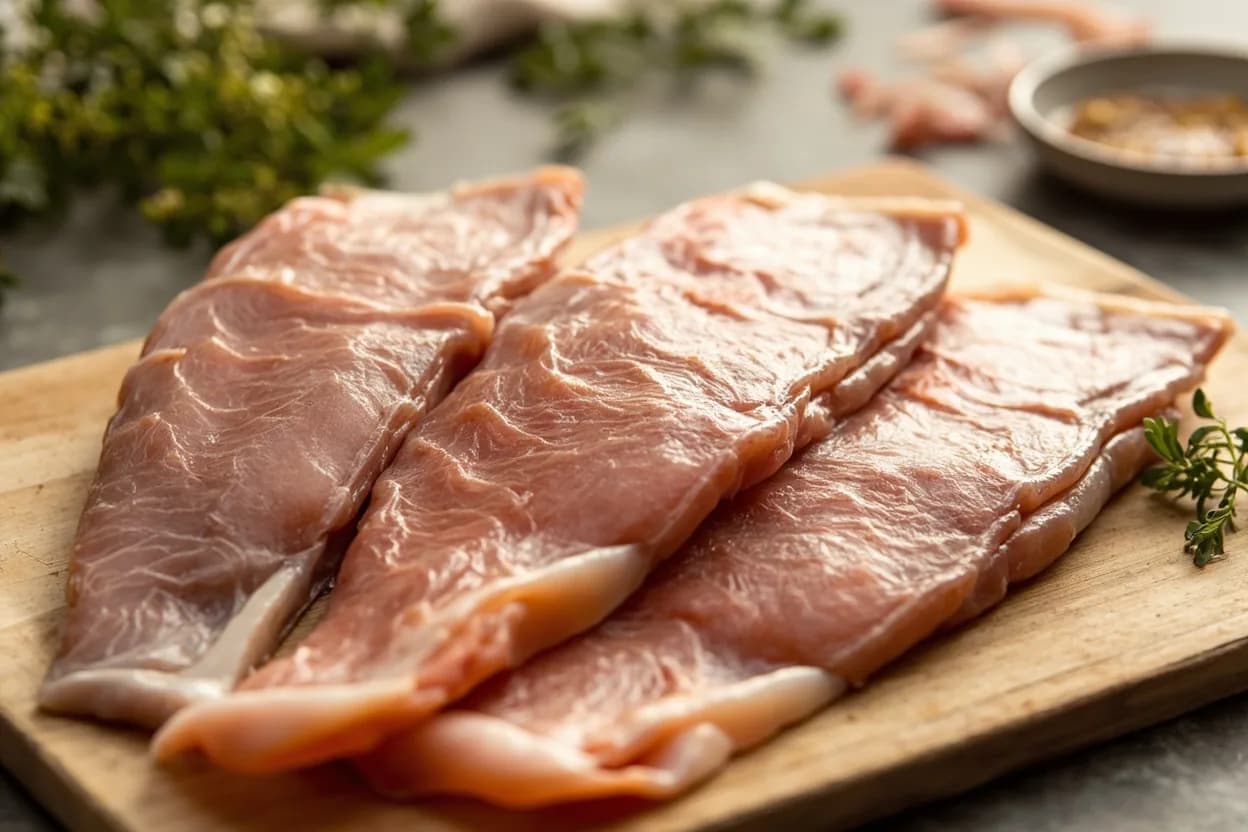
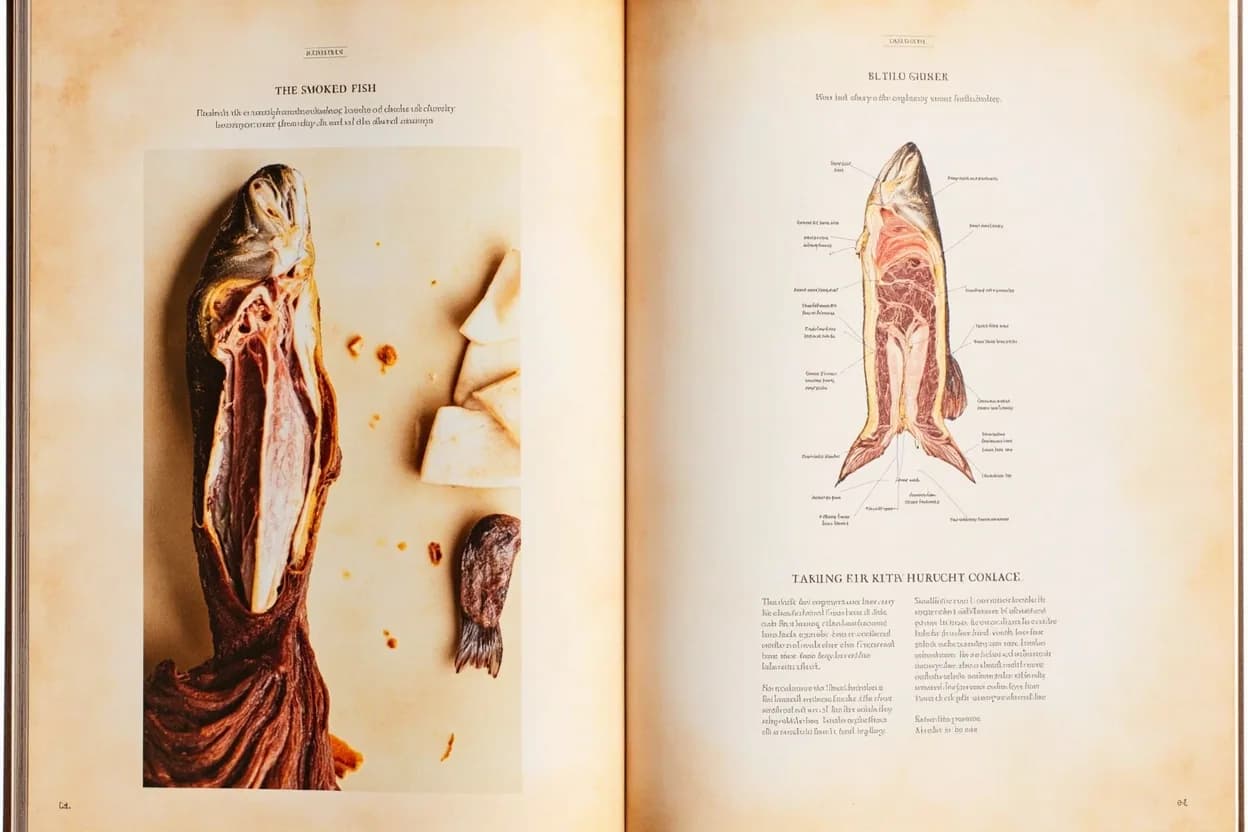
The primary smoked fish used in West African cooking include: smoked titus/chub mackerel (eja abobi in Yoruba), smoked catfish (eja nla or eja osan), dried stockfish (bacalhau derivative, 'okporoko' in Igbo), dried prawns and crayfish (technically crustaceans but handled identically), and smoked herrings. Each has different structural integrity and flakes differently.
Best for
How to cook it
- 1FLAKING METHOD: Break the smoked fish open and inspect for bones; remove all visible bones with fingers — even 'boneless' smoked fish has residual pin bones. Shred the flesh into fine strands by rubbing between the palms. Add to the pot early in cooking (with the stock and ground egusi) so the shreds dissolve into the base and create uniform flavor depth.
- 2WHOLE-ADDITION METHOD: After deboning, break or cut the smoked fish into thumb-sized pieces (2–4 cm). For stockfish, soak in cold water for 12–24 hours, changing the water twice, until pliable; then portion. Add to the pot after initial frying and simmering, when the soup has body — this preserves the pieces' integrity and creates focal points of intense flavor.
- 3COMBINATION APPROACH (classic egusi): Fry ground egusi in palm oil, add flaked smoked catfish and crayfish to the frying egusi for the base umami, then add stockfish chunks later for textural contrast.
- 4Smoked herring: rinse the exterior, then add whole (the small size means it cooks down to soft pieces naturally); its bones are fine but soften fully during a long simmer and are safe to eat.
- 5Quality check: smoked fish should smell intensely of smoke and fish fat without ammonia or rancidity. Discard any pieces with off odors.
Prep & butchery
- Always check for bones before adding to a dish, regardless of whether the fish was sold as 'boneless' — bones concentrate and harden during smoking.
- Rinse smoked herrings under cool water before use to remove excess salt and any surface impurities from the smoking process.
- Soaking stockfish: start the soak the evening before cooking. The fish is fully rehydrated when it bends without cracking and the interior is no longer white-dry.
- Ground crayfish (dried shrimp powder) is often used alongside smoked fish, not instead of it — the two provide different registers of umami.
Substitutes
- Dried anchovies (ikan bilis)
Southeast Asian parallel; dissolves into a dish in the same way as flaked smoked catfish — an acceptable substitute in diaspora kitchens.
- Japanese dashi (katsuobushi)
A structural analog as a umami base — delivers depth without the texture or the West African smoke register.
- Miso paste
Emergency umami substitute; changes the dish's cultural register entirely but addresses the flavor function.
Related cuts
- Whole fish breakdown — West African
The fresh fish processing tradition that produces some of the fish later smoked for soup use.
- Stockfish (okporoko)
The dried/salt-cured Norwegian cod that is a central ingredient in Igbo cooking, almost always used in the whole-addition method.
- Smoked herring preparation
Closely related — herrings are added whole or halved, bones softened by long simmering.
Appears in
References
- 1.Zoe's Ghana Kitchen — Zoe Adjonyoh (2017)
- 2.The Groundnut Cookbook — Duval Timothy, Jacob Fodio Todd & Folayemi Brown (2015)
- 3.My Grandmother's Chinese Kitchen — Barbara Tropp (comparative umami infrastructure reference)
- 4.Nigerian cookbook traditions: 'Nigerian Cooking' — Chief (Mrs.) N. Barrow (1982)
- 5.The Africa Cookbook — Jessica B. Harris (1998)
Confidence: high
Notes
Umami architecture
West African soups are built on layered umami in a way that parallels Japanese dashi construction, though the ingredients are entirely different. Crayfish provides the first layer of glutamate; smoked catfish flaked into the base adds a smoky inosinate depth; stockfish chunks provide a third dimension of collagen and concentrated protein. The layering is not accidental — it reflects centuries of empirical cooking intelligence about flavor building.
Why bones are left in
In long-simmered West African soups, fish bones are often left in deliberately — not from carelessness, but because a 45-to-90-minute simmer softens them to the point where they contribute calcium and collagen to the pot rather than posing a hazard. This is particularly true for herring and catfish bones. The cook's judgment on whether bones will soften in the cooking time allotted is a genuine skill.