Beef Doneness
Brisket Probe-Tender Temperature
Also: brisket done temperature, brisket pull temp, collagen conversion temperature beef
Brisket is done when a probe slides in with zero resistance — typically between 90–96°C (195–205°F) — signaling complete collagen-to-gelatin conversion throughout the connective tissue.
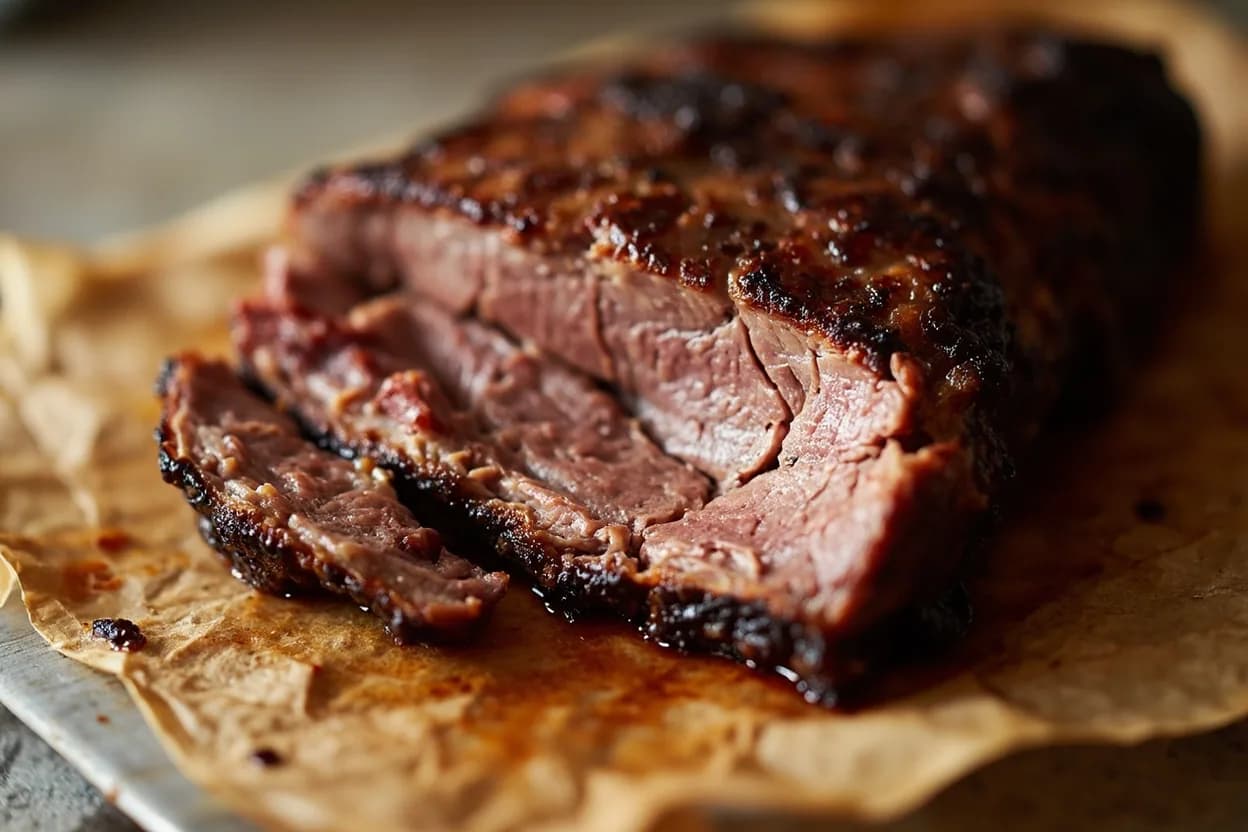
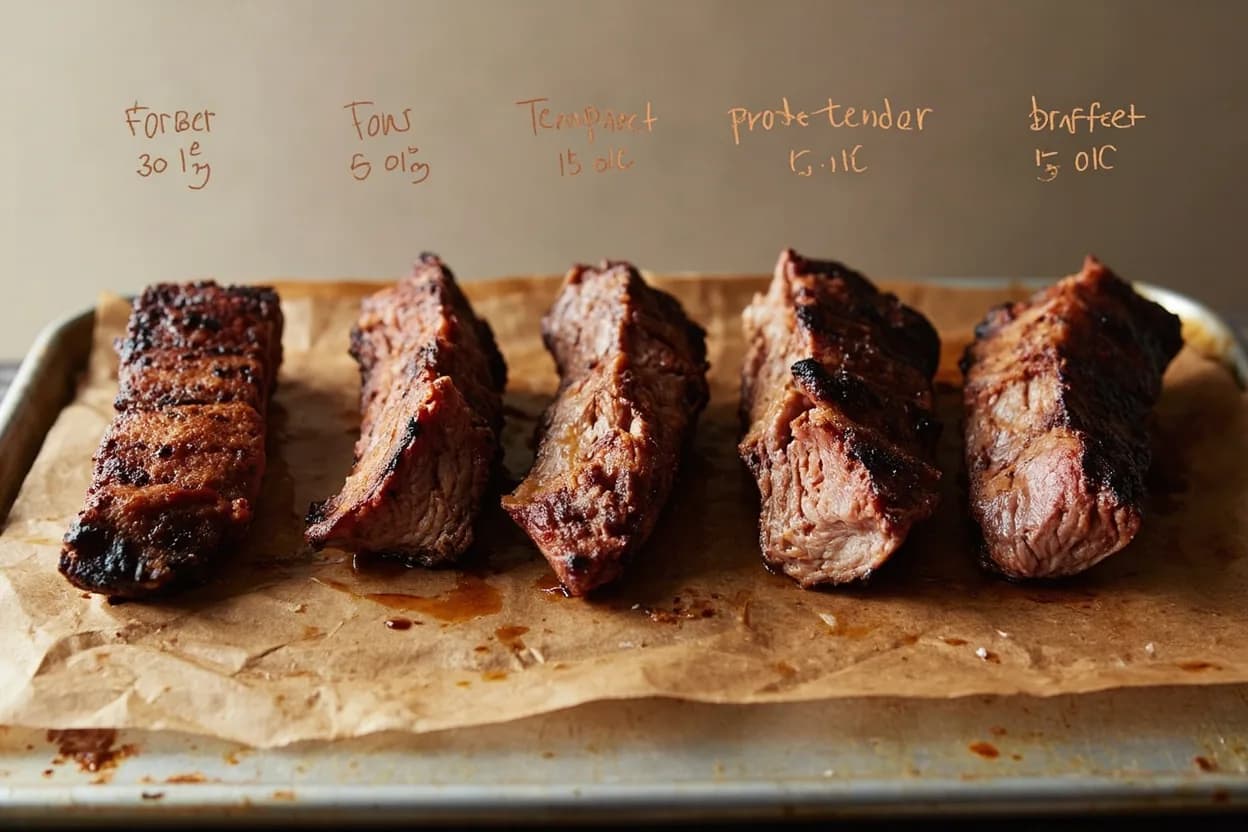
Brisket is a collagen-dense primal from the pectoral region of the steer, composed largely of two muscles (flat and point) running through a thick seam of connective tissue. Unlike tender steaks where temperature alone determines doneness, brisket requires extended cooking well above 90°C to hydrolyze collagen into gelatin. The defining doneness marker is 'probe tenderness' — when a metal skewer, thermometer probe, or toothpick pushed into the thickest part of the flat meets no resistance whatsoever, sliding in 'like warm butter.' Temperature is a guide (90–96°C), but probe feel overrides the thermometer; individual briskets vary by a full 6°C in pull temperature.
In photos
What happens
Collagen in brisket's connective tissue begins hydrolyzing to gelatin at around 70°C, but the conversion is slow. Sustained temperatures above 90°C are needed to fully dissolve the dense collagen network within the flat and the point-flat seam. As collagen dissolves, the previously tough, chewy connective tissue transforms into gelatin, which lubricates and tenderizes the muscle fibers. Simultaneously, intramuscular fat in the point has largely rendered. The structure goes from 'resistant and fibrous' to 'yielding and gelatinous,' producing the moist, pull-apart texture that defines a properly smoked brisket. The stall (typically 65–75°C) is a plateau caused by evaporative cooling; pushing through it is essential to reach probe-tender.
What to look for
- Probe or skewer slides into the thickest part of the flat with no resistance — the single definitive cue
- Flat jiggles like set Jell-O when the brisket is lifted from the smoker or oven
- The point (deckle end) is even softer than the flat; both zones should feel equally yielding
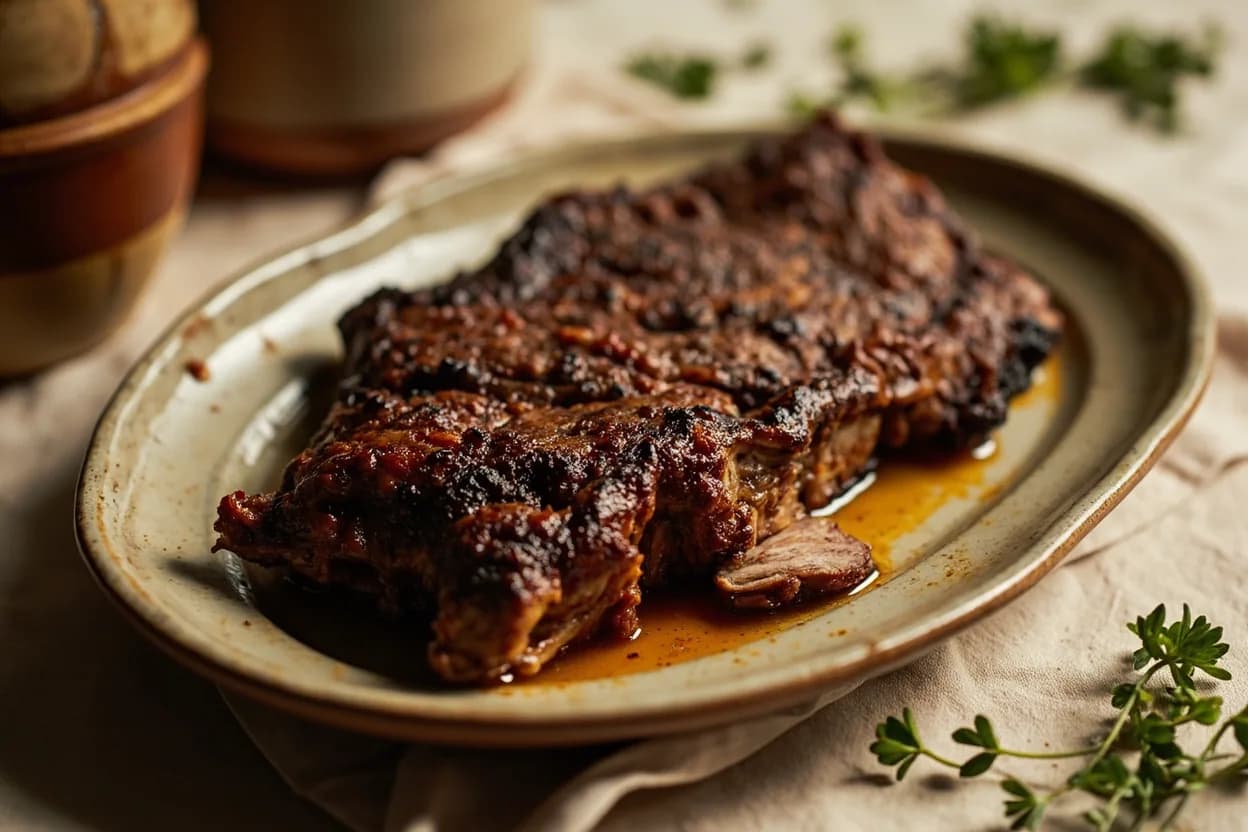
- A deep mahogany bark has formed on the exterior, firm and dry to the touch
- When sliced, the flat holds its shape but yields to gentle pressure without tearing
How to check
- Insert a metal probe or instant-read thermometer into the center of the flat (the leaner, thicker muscle) — avoid the fat seam between point and flat
- Assess resistance as you push in: any springback or resistance means more time is needed
- Check multiple spots — the flat and point cook at different rates; probe both zones
- Temperature reading of 90–96°C (195–205°F) in the flat with zero resistance confirms doneness
- The 'jiggle test': grip the brisket with tongs and lift gently — a done brisket will flex and jiggle; a stiff, rigid brisket needs more time
Carryover & resting
Brisket benefits from a substantial rest — 1–4 hours wrapped in butcher paper or foil, held in a cooler or warming oven at 60°C (140°F). During this rest, gelatin redistributes through the muscle fibers, juices reabsorb, and the bark firms further. Brisket rested 2+ hours slices significantly better and more evenly than brisket cut immediately off the smoker. The internal temperature will drop to approximately 65–70°C during a full rest.
The science behind it
- Collagen hydrolysis
The conversion of tough connective-tissue collagen to gelatin is the defining reaction in brisket cookery; it requires sustained heat above 90°C
- The stall (evaporative cooling plateau)
Brisket temperature plateaus at 65–75°C due to surface evaporation; wrapping in butcher paper or foil (the Texas Crutch) accelerates past it
- Bark formation
The maillard-reaction crust that forms on the brisket exterior; firm bark requires periods of unwrapped cooking at low humidity
- Probe tenderness
The zero-resistance feel of a probe entering fully converted brisket; the gold standard for doneness in collagen-rich cuts
- Point vs. flat
The brisket's fatty deckle point reaches probe-tender earlier than the lean flat; always probe the flat for the doneness decision
Appears in
References
- 1.Franklin Barbecue: A Meat-Smoking Manifesto — Aaron Franklin & Jordan Mackay (2015)
- 2.Meathead: The Science of Great Barbecue and Grilling — Meathead Goldwyn (2016)
- 3.On Food and Cooking — Harold McGee (2004)
- 4.The Food Lab — J. Kenji López-Alt (2015)
- 5.Modernist Cuisine: The Art and Science of Cooking — Myhrvold et al. (2011)
Confidence: high
Notes
Why temperature is only a guide
Collagen hydrolysis rate depends on the proportion of connective tissue (which varies by USDA grade, animal age, and packer), the moisture environment (wrapped vs. unwrapped), and smoker consistency. A Choice brisket may probe-tender at 93°C while a Prime or grass-fed one may need 96°C. Conversely, a thin flat can probe-tender at 88°C before the point is done. Probe feel is the operator's final authority; the thermometer confirms you're in the right zone.
The Texas Crutch
Wrapping brisket tightly in unlined butcher paper (or foil) at the stall — typically when bark is set and the internal temperature has been stuck at 70–74°C for an hour or more — seals in moisture and accelerates collagen conversion by raising the effective environment temperature around the meat. Foil produces a softer bark; butcher paper allows some vapor exchange and maintains more of the exterior crust. Both work; the choice is stylistic.
Braised vs. smoked brisket
In braised brisket (Jewish style, pot roast, pho prep), the same probe-tender principle applies at lower smoker temperatures (conventional oven 150–165°C), but the moist cooking environment means evaporative stalling does not occur. Braised brisket becomes probe-tender at the same internal temperature range (90–96°C) but often faster in elapsed time. Bark does not form in wet-braise cooking; instead, a glossy, gelatinous crust develops from the braising liquid.