Bread & Dough Doneness
Bread: Internal Crumb Temperature
Also: lean bread doneness, artisan loaf temperature, bread core temp
Lean artisan breads are fully baked when the crumb reaches 93–99°C (200–210°F), ensuring starch is completely gelatinized and the structure is set.
The internal crumb temperature of a lean artisan bread — baguette, sourdough boule, ciabatta, country loaf — is the single most reliable indicator of doneness. The target window of 93–99°C (200–210°F) marks the point at which wheat starch granules have fully gelatinized, proteins have coagulated, and residual moisture has redistributed from the crust into the interior. Below this range, starch remains partially hydrated and the crumb will be gummy or doughy even if the crust looks well-colored.
In photos
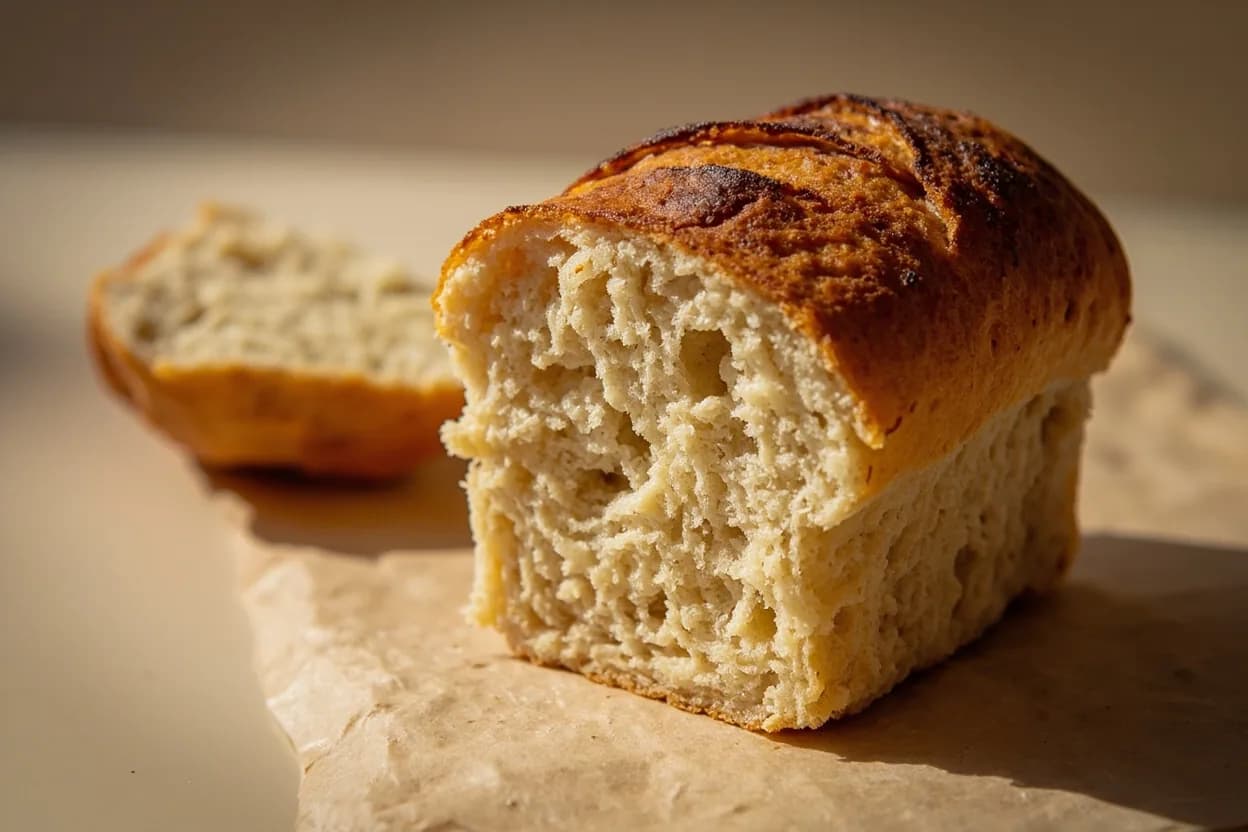
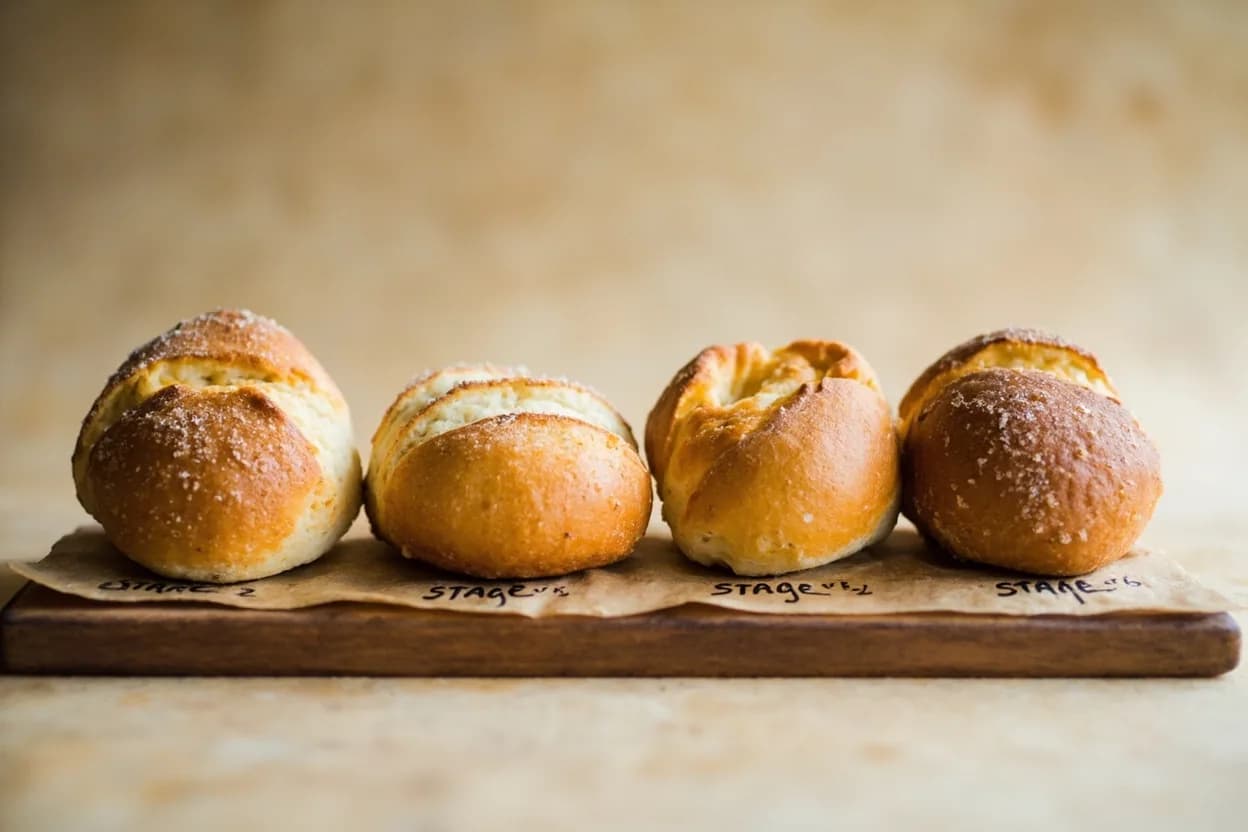
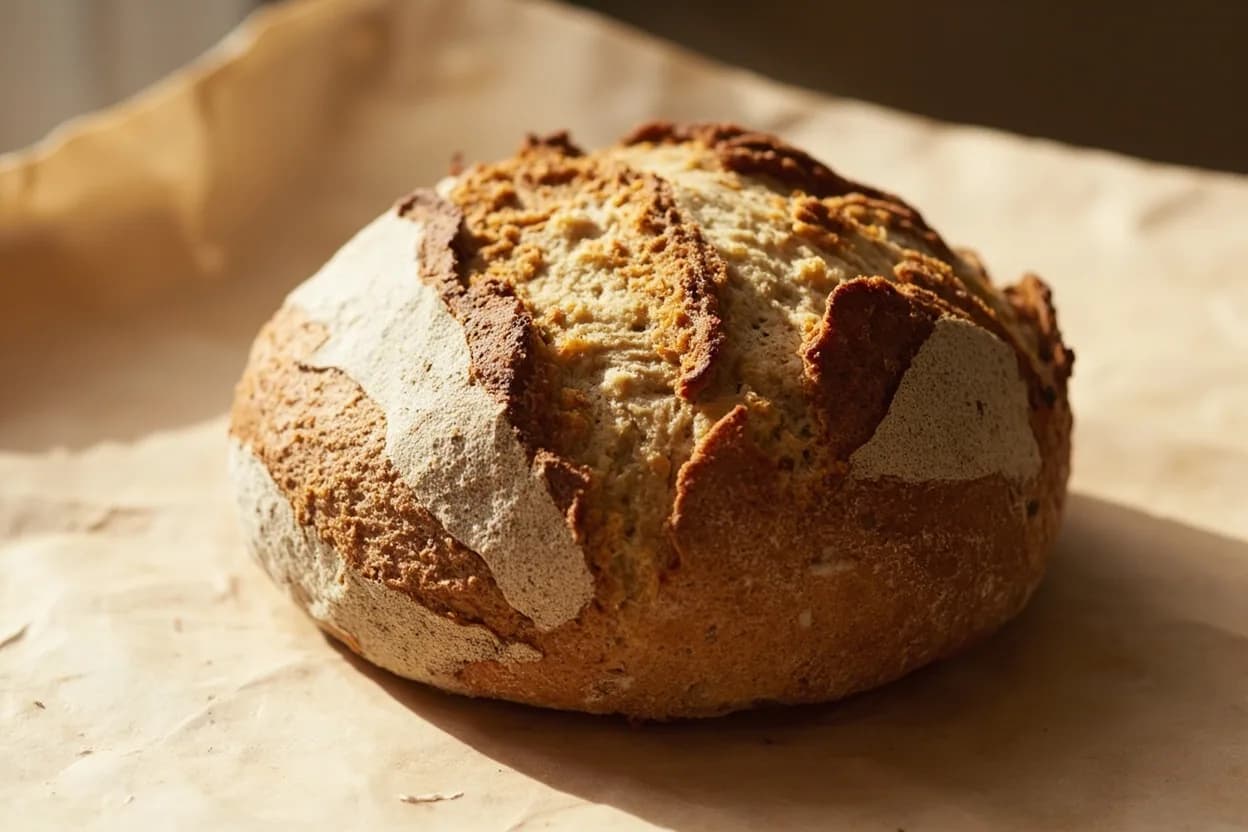
What happens
Between 60–80°C, starch granules absorb water and begin to swell (gelatinization onset). Above 85°C, gluten proteins fully denature and the network sets permanently. At 93–99°C, starch gelatinization is complete — amylose and amylopectin are fully hydrated, the crumb structure becomes rigid and non-sticky, and trapped steam drives residual moisture outward. The Maillard reaction and caramelization have already formed the crust; the final crumb temperature confirms the interior has caught up. Sourdough loaves often require the upper end of this range because the open, hydrated crumb needs more time to dry out internally.
What to look for
- Bottom of the loaf sounds hollow when thumped with a knuckle — a resonant thud rather than a dense thud
- Crust is firm and rigid all around, including the sides and bottom, not just the top
- Loaf feels notably lighter than when it went in — significant steam has escaped
- No detectable spring or give when the sides are gently squeezed
- Crust color is deep golden to chestnut brown, depending on recipe hydration and steam level
How to check
- Insert an instant-read thermometer through the bottom or side of the loaf, pushing toward the center — avoid the crust which runs much hotter
- Angle the probe so it reaches the geometric center of the crumb, not just the mid-depth
- Pull the loaf from the oven and check within 10–15 seconds to avoid significant carryover reading loss
- For batards and baguettes, probe at the thickest cross-section
- If probing from the top, insert at a low angle through the ear/slash to reach the core
Carryover & resting
Unlike meat, bread does not experience significant carryover cooking after removal from the oven — the crust acts as an insulator. However, resting on a wire rack for at least 30–45 minutes is essential: cutting too early releases trapped steam and causes the crumb to collapse and become gummy even if the target temperature was reached. The crumb continues to set as it cools below 60°C.
The science behind it
The core physical process that sets bread crumb structure; complete gelatinization is what the target temperature guarantees
Drives crust browning during baking but is complete before internal temperature reaches doneness; crust color and internal temp are independent indicators
The rapid rise in the first 10–15 minutes of baking as yeast activity peaks and then dies; internal temp lags far behind crust temp during this phase
- Gluten network
Sets permanently above 85°C as proteins denature, providing the structural scaffold for the crumb
Pre-hydration step that pre-swells starch and gluten, affecting how quickly the crumb reaches doneness temperature
Appears in
References
- 1.The Bread Baker's Apprentice — Peter Reinhart
- 2.Modernist Bread — Myhrvold & Migoya
- 3.How Baking Works — Paula Figoni
- 4.Advanced Bread and Pastry — Michel Suas
Confidence: high
Notes
Why the range spans 6°C
Lower-hydration lean loaves (60–65% hydration) tend to be fully gelatinized at 93–95°C because there is less free water to drive up the boiling-point locally. Higher-hydration open-crumb loaves (75–80%+) benefit from reaching 97–99°C to ensure the extra water is fully incorporated into the starch matrix rather than leaving pockets of underdone, wet crumb. When in doubt, bake to the higher end of the range.
Thumping vs. thermometer
The hollow-thump test is reliable for experienced bakers but is affected by loaf shape, density, and surface crust thickness. A thermometer removes ambiguity and is especially important for new recipes or high-hydration doughs where visual and tactile cues can mislead. Both methods complement each other.