Bread & Dough Doneness
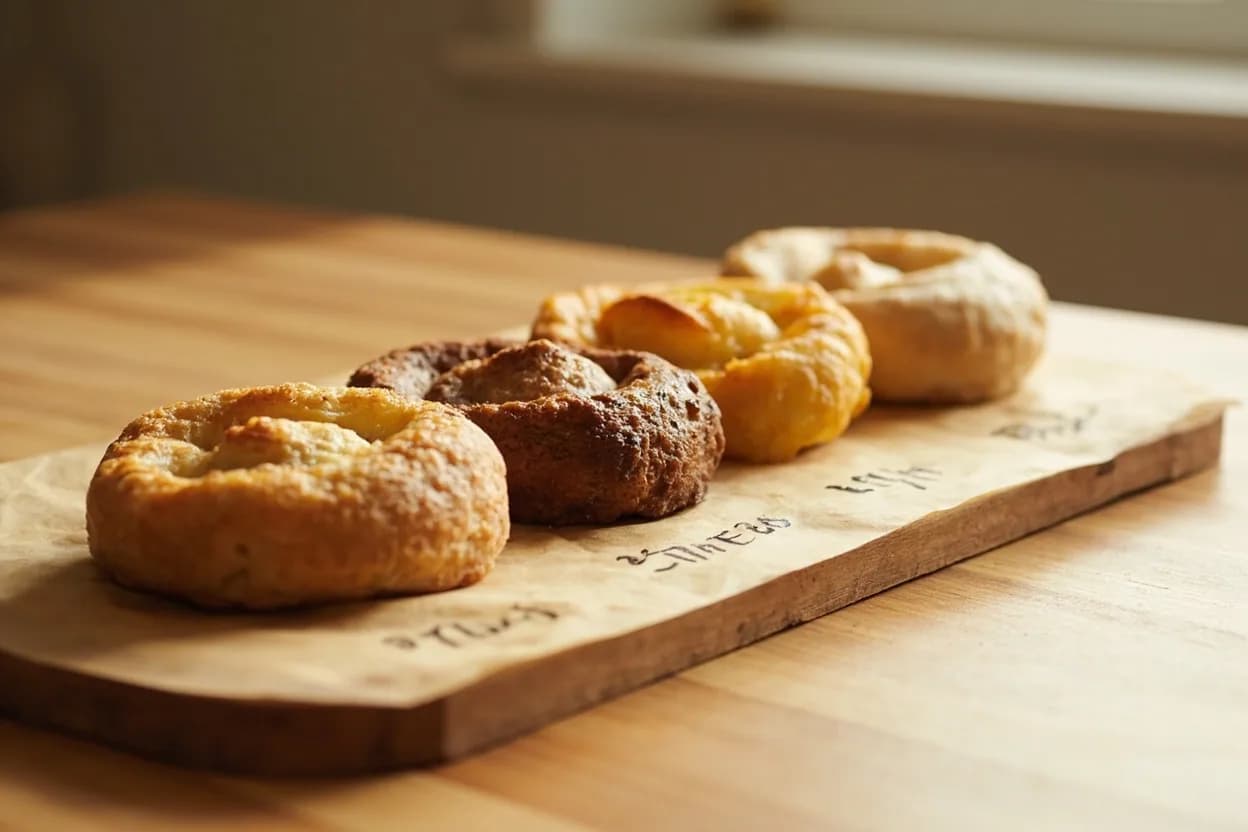
Bread Crust Color Stages
Also: bread browning stages, crust color progression, Maillard stages bread, bread bake color
Bread crust color progresses from blond through golden, chestnut, and dark brown — each stage reflecting distinct Maillard and caramelization activity and corresponding flavor, texture, and aroma development.
Bread crust color is the most visible doneness indicator and reflects a cascade of non-enzymatic browning reactions: primarily the Maillard reaction (reducing sugars reacting with amino acids, active above 140°C on the crust surface) and caramelization (sugar pyrolysis above 160°C). Each color stage — blond, golden, chestnut, dark brown — corresponds to a specific flavor profile, crust texture, and aroma intensity. Unlike internal crumb temperature, crust color is influenced by oven steam, sugar content, egg wash, dough hydration, and oven temperature, so the same color can occur at different internal temperatures depending on recipe. Crust color is a guide to flavor and texture development on the exterior, not a guarantee of interior doneness.
In photos

What happens
At crust surface temperatures above 100°C, water evaporates and the surface begins to dry. Above 140°C, the Maillard reaction generates hundreds of flavor compounds — pyrazines (nutty), furans (caramel-like), thiophenes (bread-like). Blond stage (crust surface ~140–155°C) sees early Maillard products with minimal flavor complexity. Golden stage (~155–175°C) produces peak Maillard diversity — the most complex and balanced bread aromas. Chestnut/mahogany stage (~175–195°C) deepens bitterness and char notes from further caramelization. Dark brown stage (above 195°C) introduces significant caramelization products and pyrolysis compounds; acrylamide formation increases above 180°C. Steam injection in the first phase of baking delays crust formation and browning, allowing oven spring to occur before the crust sets.
What to look for
- Blond: pale yellow-tan, dull surface, no sheen; crust is soft and barely crackling — under-baked, gummy interior likely
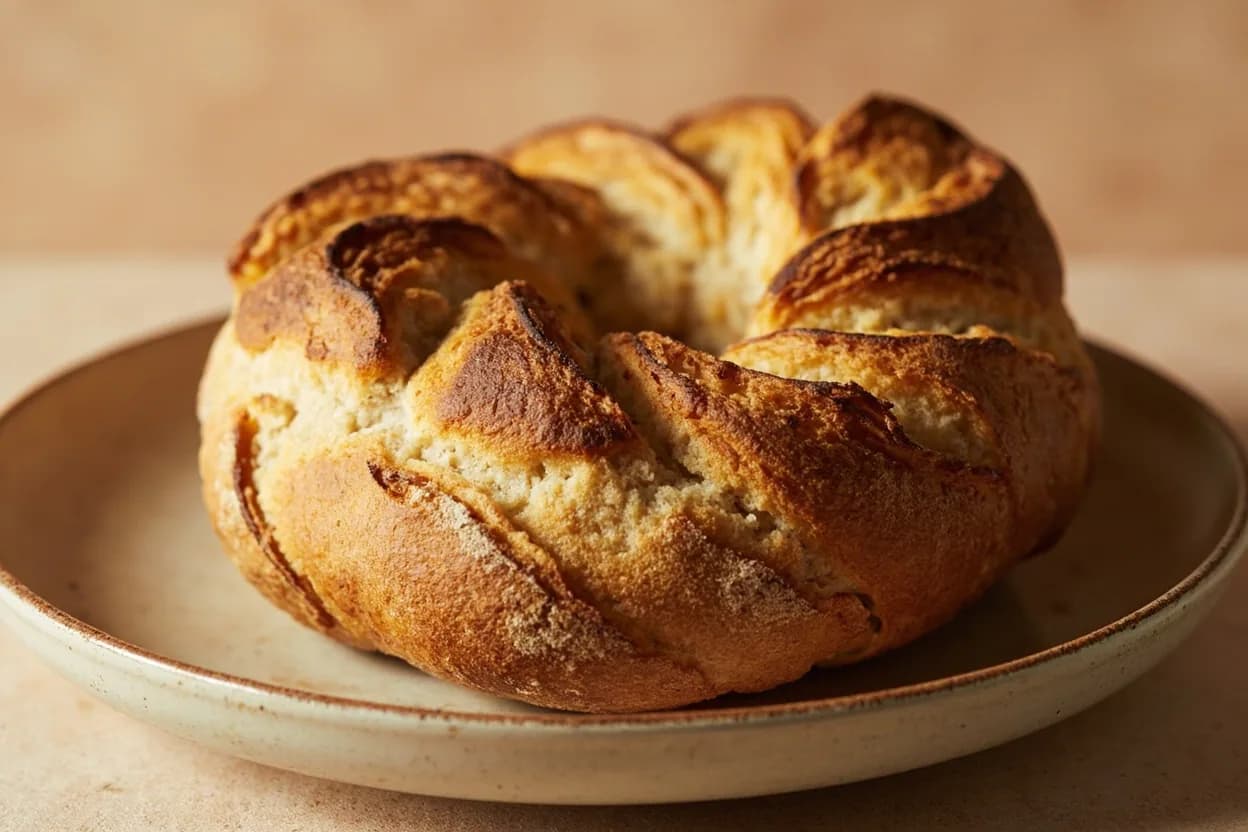
- Golden: bright amber-yellow with a slight sheen; crust crackles when pressed; balanced bread aroma — the minimum acceptable stage for most lean loaves
- Chestnut/mahogany: deep amber-brown with rich sheen; crust is hard and rigid; robust aroma with complex bitter-sweet notes — optimal for artisan sourdough and baguettes
- Dark brown: near-mahogany to deep brown; crust is very hard and thick; pronounced bitter, roasted, charred edge notes; some bakers' preferred stage for high-hydration loaves
- Black/burnt: carbonized crust, acrid smoke aroma, large blistered surface — over-baked, crust compounds are toxic and must be cut away
How to check
- Observe under consistent oven lighting — oven door glass can distort color perception; pull briefly and check in ambient light if uncertain
- Check bottom crust color independently by tipping the loaf — bottom browning often lags behind the top in convection ovens
- For enriched doughs, blond-to-golden is often the target because sugar browns faster; use a thermometer to confirm interior doneness rather than relying on crust color
- Compare against reference photos for the specific bread type — a French baguette's ideal chestnut is darker than a Japanese milk bread's ideal golden
- Note the crust texture (flexible vs. rigid vs. crackling) as a companion cue to color
The science behind it
The primary browning mechanism above 140°C on the crust surface; generates flavor complexity, color, and aroma in all four color stages
Sugar pyrolysis above 160°C that deepens color toward chestnut and dark brown; adds bitter-sweet notes
- Steam injection
Steam in the first 10–15 minutes delays crust formation, allowing oven spring before color development begins; affects the final color timeline
- Egg wash
Applies reducing sugars (glucose from egg white) and proteins directly to the surface, accelerating Maillard browning and producing a deep amber sheen independent of internal doneness
- Acrylamide formation
A heat-generated compound that increases above 180°C on the crust surface; a food safety consideration for very dark crusts, particularly in starchy foods
- Internal crumb temperature
Entirely independent of crust color stage; both must be assessed together for a complete doneness picture
Appears in
References
- 1.Modernist Bread — Myhrvold & Migoya
- 2.The Bread Baker's Apprentice — Peter Reinhart
- 3.On Food and Cooking — Harold McGee
- 4.Advanced Bread and Pastry — Michel Suas
- 5.How Baking Works — Paula Figoni
Confidence: high
Notes
Optimal stage by bread type
Different bread traditions have strong cultural and functional associations with specific color stages. French baguettes are optimally baked to a deep chestnut-mahogany — pale golden baguettes are a mark of inexperience in French baking tradition. Japanese milk bread (shokupan) is pulled at golden; dark crust is considered a defect. San Francisco sourdough is often taken to dark brown for a thick, crackling crust. Challah and brioche are pulled at golden-to-amber because their high sugar content means chestnut-stage browning may mean over-browning internally.
Color and flavor trade-offs
The chestnut stage maximizes flavor complexity through the peak of Maillard activity. Dark brown introduces bitter compounds from caramelization that some bakers and eaters find desirable (café-style bread) and others find harsh. Blond bread is not merely aesthetically deficient — it genuinely lacks the flavor depth of a properly browned crust because the Maillard compounds that constitute 'bread flavor' simply haven't formed.