Beef Doneness
Burnt Ends Caramelization Stage
Also: brisket burnt ends, point cubes second cook, burnt ends bark development, Kansas City burnt ends
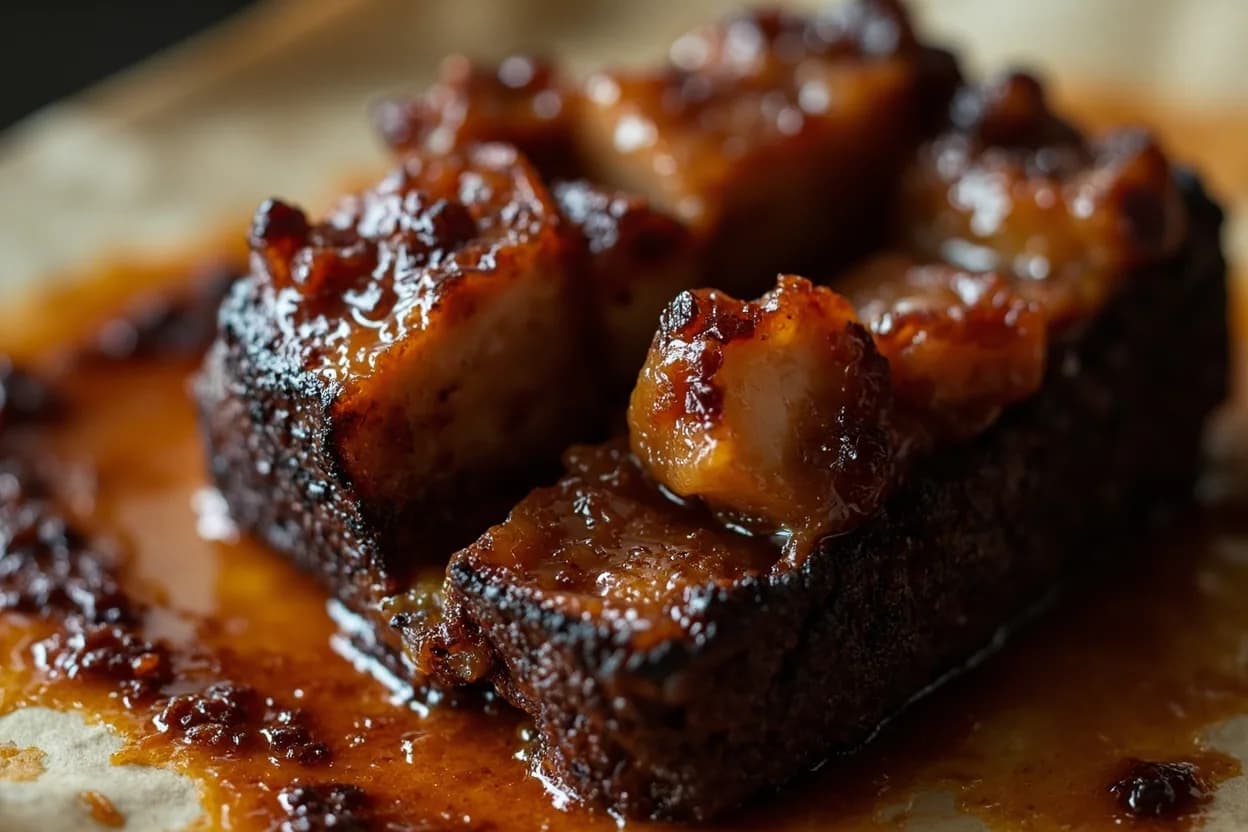
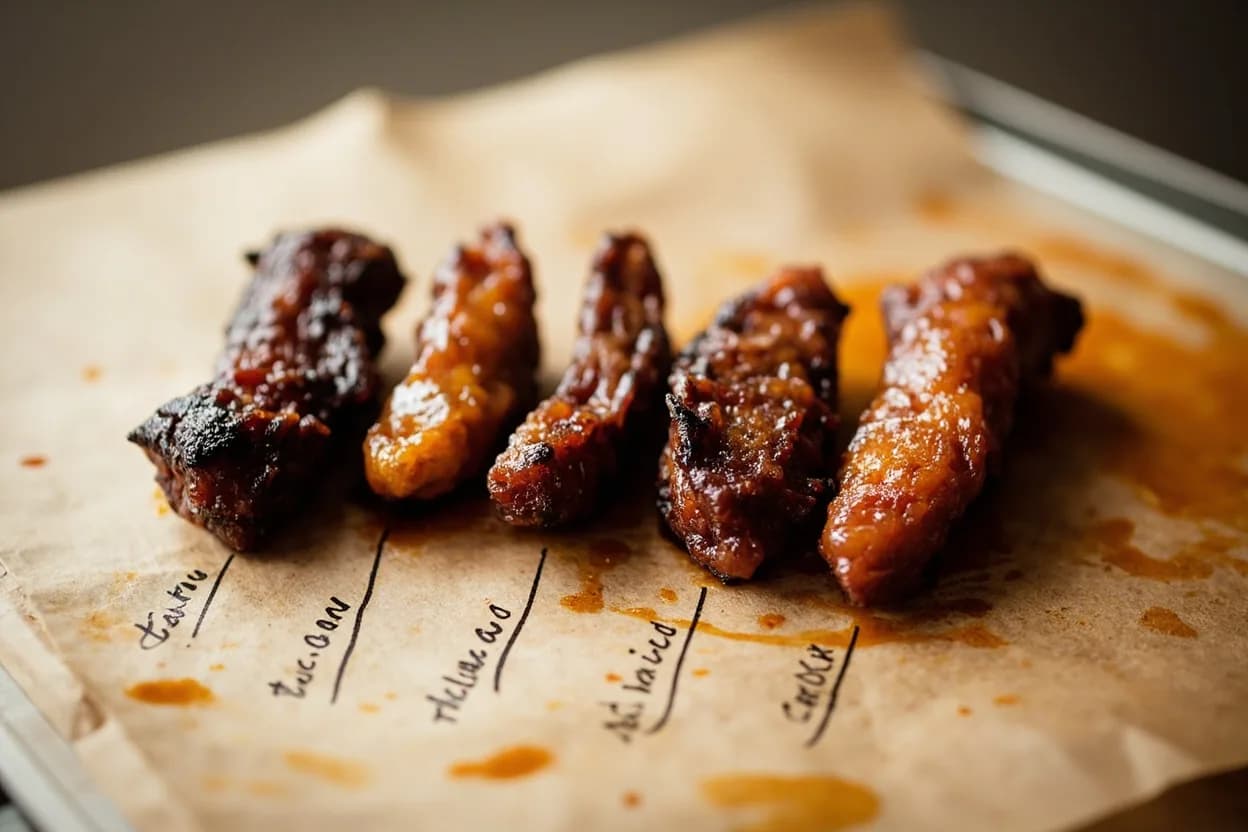
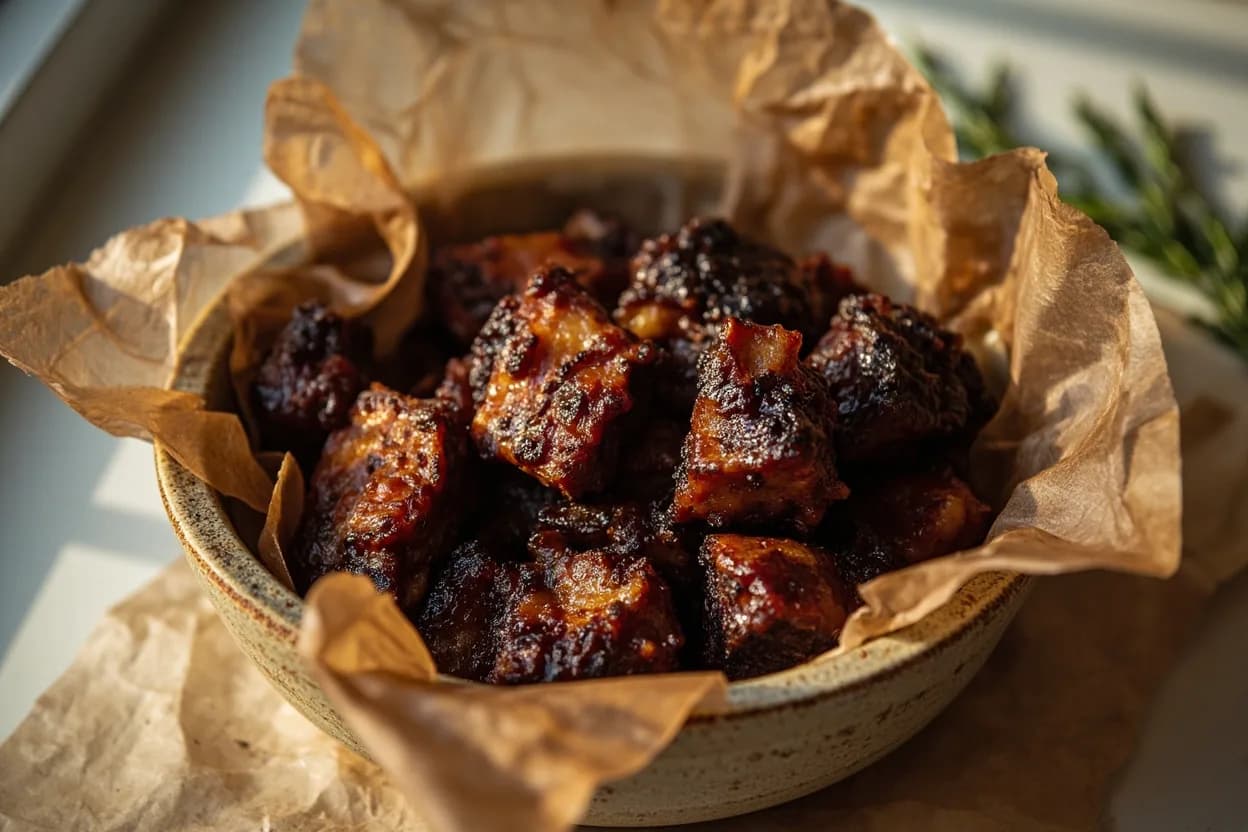
Burnt ends are cubed brisket point cooked a second time until their bark deepens to near-black and the surface caramelizes into a concentrated, lacquered crust.
Burnt ends are a distinctly Kansas City creation — the fatty, heavily marbled point (deckle) of a whole packer brisket, separated after the first smoke, cubed, sauced, and returned to the smoker or oven for a secondary cook of 1–3 hours. The goal of this second cook is not to raise internal temperature (the meat is already fully cooked at 200–205°F from the first smoke) but to develop the surface: the sauce reduces and caramelizes, the residual fat renders further into the meat, and the bark — the outer crust of seasoning, smoke, and Maillard reaction products — deepens and concentrates into a glossy, nearly black, intensely flavored crust. The term 'burnt' is a feature, not a flaw: these are deliberately caramelized to the edge of char, where bitter-sweet complexity peaks.
In photos
What happens
During the secondary cook, multiple reactions drive the caramelization stage. The sauce applied to the cubes (typically a Kansas City-style sweet BBQ sauce) undergoes caramelization of its sucrose and fructose, darkening and concentrating as water evaporates — sucrose caramelizes above 160°C at the surface while the cube interior remains well below that. Maillard reactions between the amino acids in the meat surface and residual sugars continue to build bark color and flavor. Residual intramuscular fat in the point — significantly fattier than the flat — continues to render and pool within the cube, basting the interior from within. The net result is a cube with a lacquered, chewy-crisp exterior and a gelatinous, rendered interior: simultaneously charred, sweet, smoky, and unctuous.
What to look for
- Surface of cubes is deeply mahogany to near-black, dry to the touch but with a lacquered sheen
- Cubes hold their shape but yield immediately to gentle pressure — not rubbery or springy
- Sauce has visibly reduced and set on the surface rather than pooling in the pan
- Interior of a cube, when torn, shows a glossy, gelatinous texture with rendered fat pockets
- Aroma shifts from smoke-forward to sweet-caramel-smoke as the secondary cook progresses
How to check
- Visual: the sauce on the surface should be set and tacky, not wet or liquid — a finger pressed to the cube should leave only a slight imprint, not a glossy smear
- Texture: pick up a cube with tongs; it should be firm enough to hold shape but collapse immediately when bitten
- Internal temp check is optional (meat is already above 93°C from the first cook); re-verify if you want to confirm, but texture is the real gate
- Taste test: a well-caramelized burnt end should be intensely savory-sweet with a slight bitter edge from the bark — no raw-sauce sweetness
The science behind it
Primary driver of bark color and flavor on the cube surface; continues throughout the secondary cook
Sugar-based browning from the BBQ sauce applied before the secondary cook; responsible for the lacquered, sticky surface
- Brisket Flat vs. Point
The point's higher fat content (marbling + deckle fat cap) makes it ideal for burnt ends; the flat lacks sufficient fat to survive a second cook without drying out
- Bark Formation
The dry crust on smoked meats formed by the combination of rub, smoke, and Maillard/caramelization reactions over time
Wrapping during the first brisket cook is sometimes used for the flat but often skipped for the point to maximize bark development before the burnt ends stage
Appears in
References
- 1.Franklin Barbecue: A Meat-Smoking Manifesto — Aaron Franklin & Jordan Mackay
- 2.Meathead: The Science of Great Barbecue and Grilling — Meathead Goldwyn
- 3.Peace, Love, and Barbecue — Mike Mills & Amy Mills
- 4.On Food and Cooking — Harold McGee
Confidence: high
Notes
History and Origin
Burnt ends were historically the trimmings and charred edges of sliced brisket — given away at Kansas City BBQ joints because they were considered scraps. Calvin Trillin's 1972 article in Playboy about Arthur Bryant's in Kansas City elevated burnt ends to a sought-after delicacy. The modern preparation — separating the point intentionally and cooking it as a secondary product — emerged later as demand outpaced the incidental supply.
Poor Man's Burnt Ends
Chuck roast burnt ends have become a popular alternative: the whole roast is smoked to 165°F (74°C), cubed, sauced, and finished in a covered pan at 250°F for 1.5–2 hours then uncovered for 30–45 minutes to caramelize. The collagen content of chuck achieves a similar gelatinous interior to brisket point without the cost or cook time of a full packer.