Bread & Dough Doneness
Cake Doneness (Toothpick & Spring-Back)
Also: cake toothpick test, cake skewer test, cake spring-back, baked cake doneness, 95-99C cake
A finished cake exits clean on a toothpick, rebounds under a gentle press, and registers 95–99°C at the center — with intentional exceptions for fudgy-style cakes.
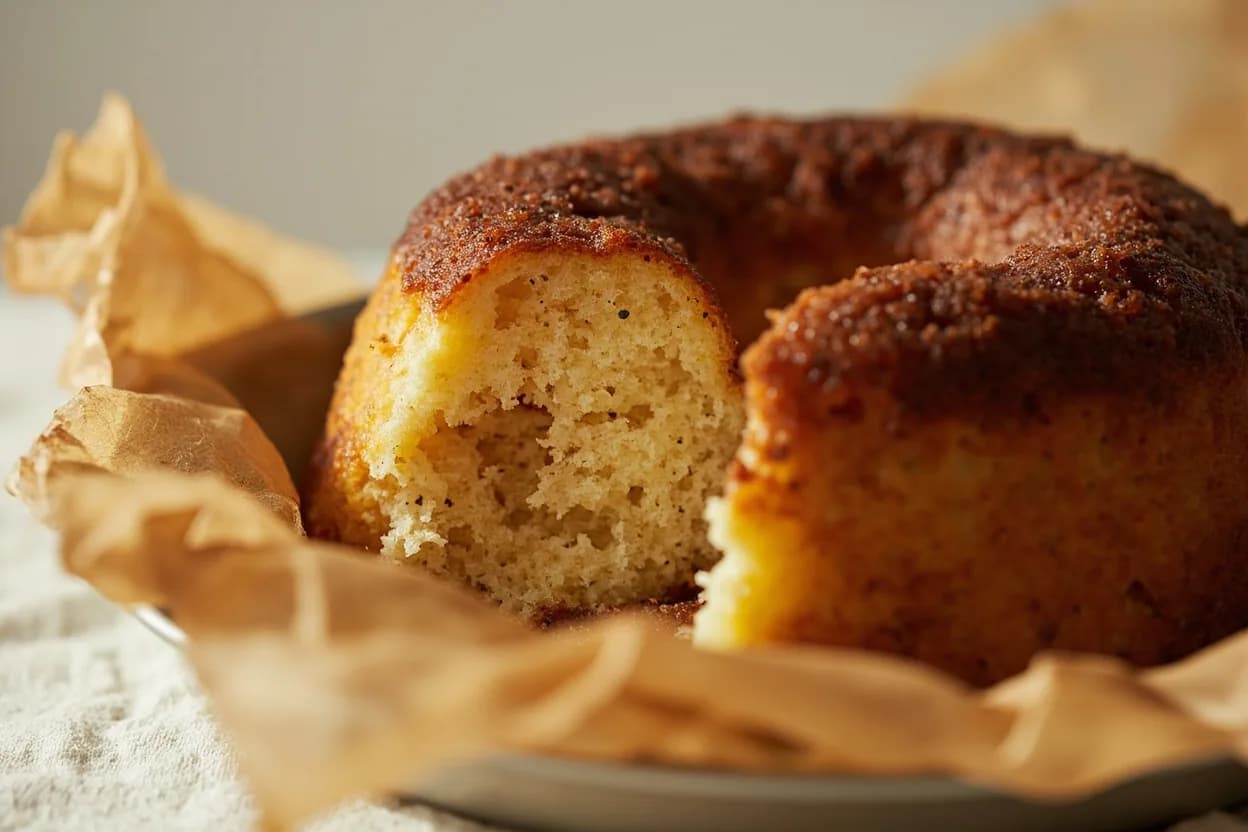
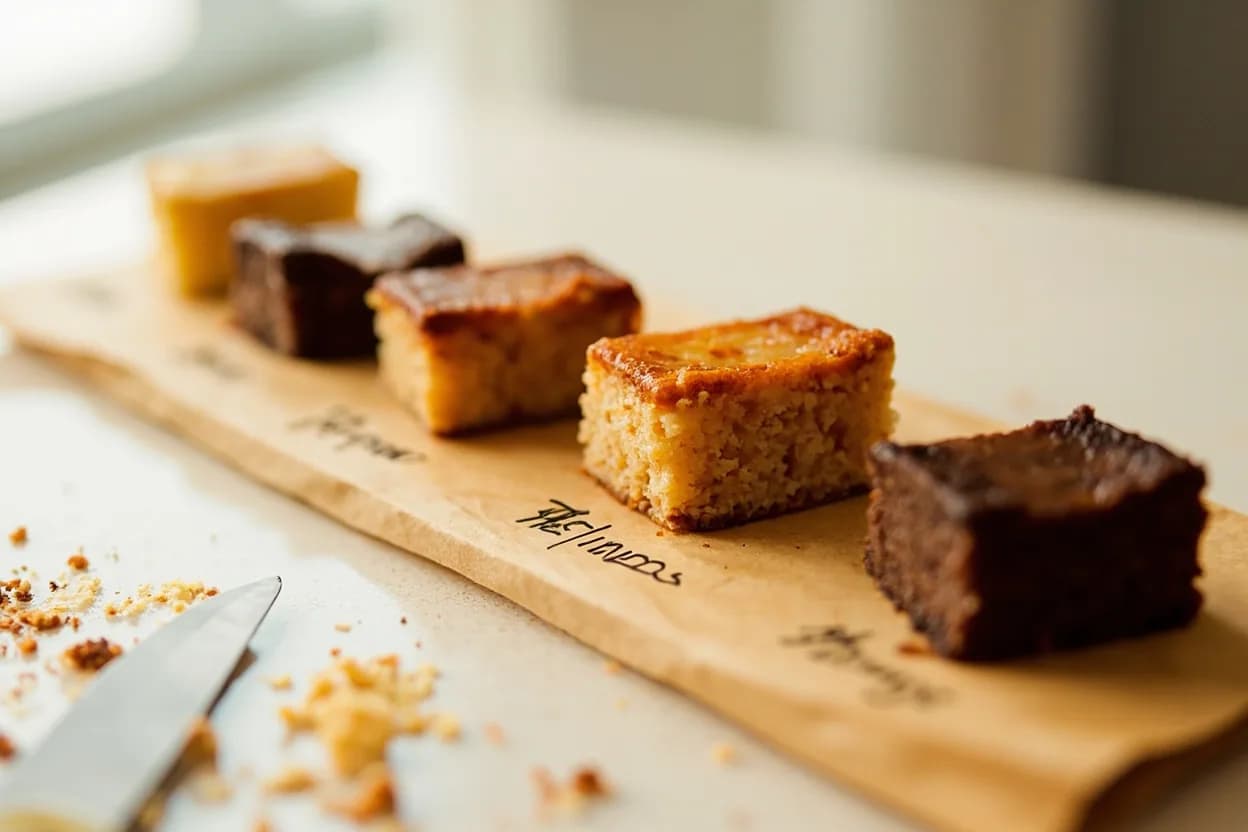
Standard butter and oil cakes (pound cake, layer cake, carrot cake, chiffon) are fully done when three concurrent tests pass: a toothpick or thin skewer inserted in the deepest center emerges either completely clean or with a few moist (not wet or batter-coated) crumbs; the center of the cake springs back when lightly pressed; and the internal temperature at the geometric center reads 95–99°C (203–210°F). Edge retraction from the pan sides is a supporting cue. For intentionally fudgy, gooey-center cakes (flourless chocolate cake, molten lava cake, some brownie-hybrid cakes) the toothpick test is deliberately failed — the target is a wet-batter result on the skewer and an internal temperature of 70–75°C (158–167°F) — and only the recipe's intent determines the appropriate doneness.
In photos
What happens
As cake batter heats, starch granules absorb water and gelatinize (beginning around 65°C), and egg proteins denature and coagulate (roughly 70–85°C depending on the ratio of eggs and sugar). Together they form the set crumb structure. Between 95–99°C, residual steam finishing puffs the crumb and the last of the free water exits, halting the gelatinization and leaving a baked, set network. At these temperatures the Maillard reaction has already done its work on the crust. For fudgy cakes, the starch is intentionally under-gelatinized and egg proteins are only partially set, leaving a dense, moist, quasi-liquid center — desirable, not a defect.
What to look for
- Toothpick inserted in center exits completely clean or with 1–2 moist crumbs, no wet batter
- Center surface springs back immediately under a light finger press with no persistent indent
- Sides of the cake have begun to pull 2–3 mm away from the pan
- Top is golden and set, no longer jiggles when the pan is gently shaken
- A rich baked-batter and caramelized-sugar aroma; no raw eggy smell
How to check
- Insert a toothpick or thin cake tester vertically into the very center — withdraw and hold horizontally to inspect
- Press two fingers lightly on the center dome — the cake should rebound fully within 1 second
- Insert an instant-read thermometer at a 45° angle from the side, reaching the geometric center: target 95–99°C
- Check edge retraction by running a butter knife along the inside of the pan — note whether the cake is already pulling free
Carryover & resting
Butter cakes continue to cook briefly after leaving the oven due to retained heat (carryover of roughly 2–3°C). Pull from the oven at the low end of the target range if you are sensitive to over-baking. Cool in the pan on a wire rack for 10–20 minutes before unmoulding to allow the crumb structure to stabilize — unmoulding too hot risks tearing the tender crumb.
The science behind it
The setting of flour starch that creates crumb structure; complete gelatinization corresponds to the upper end of the doneness temperature range
- Egg protein coagulation
The other structural pillar of cake crumb; high sugar content raises the coagulation temperature, so sugar-rich cakes bake at slightly higher temperatures
- Maillard reaction / crust browning
Occurs at the cake surface well before the center is done; exterior color alone is unreliable as a doneness proxy
- Molten lava cake doneness
Intentional partial doneness — the antithesis of full cake doneness; center stays liquid by design
Appears in
References
- 1.BakeWise: The Hows and Whys of Successful Baking — Shirley O. Corriher
- 2.On Food and Cooking: The Science and Lore of the Kitchen — Harold McGee
- 3.The Cake Bible — Rose Levy Beranbaum
- 4.Baking and Pastry: Mastering the Art and Craft — The Culinary Institute of America
Confidence: high
Notes
Moist crumbs vs. wet batter
The distinction on a toothpick between a 'moist crumb' (acceptable) and 'wet batter' (underdone) is the most commonly misunderstood doneness cue. Wet batter is glossy and liquid-smeared — it is raw batter clinging to the skewer. Moist crumbs are dry, particulate cake crumbs that may appear slightly damp. Recipes that say 'exit clean' for a dense, fudgy cake like a brownie-style chocolate cake will always over-bake it; a few moist crumbs are the correct target.
Altitude adjustments
At high altitude (above ~1,000 m / 3,300 ft) water boils at lower temperatures, meaning steam pressure inside the batter rises more rapidly and the cake can over-puff and then collapse. The internal temperature at doneness remains 95–99°C, but the time to reach it is shorter. Thermometer-based checking becomes even more important than visual or skewer cues at altitude.