Sugar & Candy Stages
Caramel: Burnt & Bitter Threshold
Also: burnt caramel, black caramel, over-caramelized sugar, ruined caramel
Above 180°C, caramel crosses into acrid, unpleasantly bitter territory — the boundary between intentionally dark and simply ruined sugar.
The burnt and bitter threshold marks the point at which caramelization has proceeded beyond the range of palatable flavor. Above approximately 180°C (356°F), sucrose decomposition produces an increasing concentration of volatile acrid compounds — acrolein, formaldehyde, formic acid — alongside tarry, high-molecular-weight polymers that contribute overwhelming bitterness with no residual sweetness. At this stage, the caramel is typically considered spoiled and discarded. However, the line is not absolute: some advanced applications (certain Nordic and modernist preparations, burnt-caramel glazes used in small quantities) deliberately push to the low end of this zone for extreme bitter-contrast effect, requiring expert judgment and tasting at every degree.
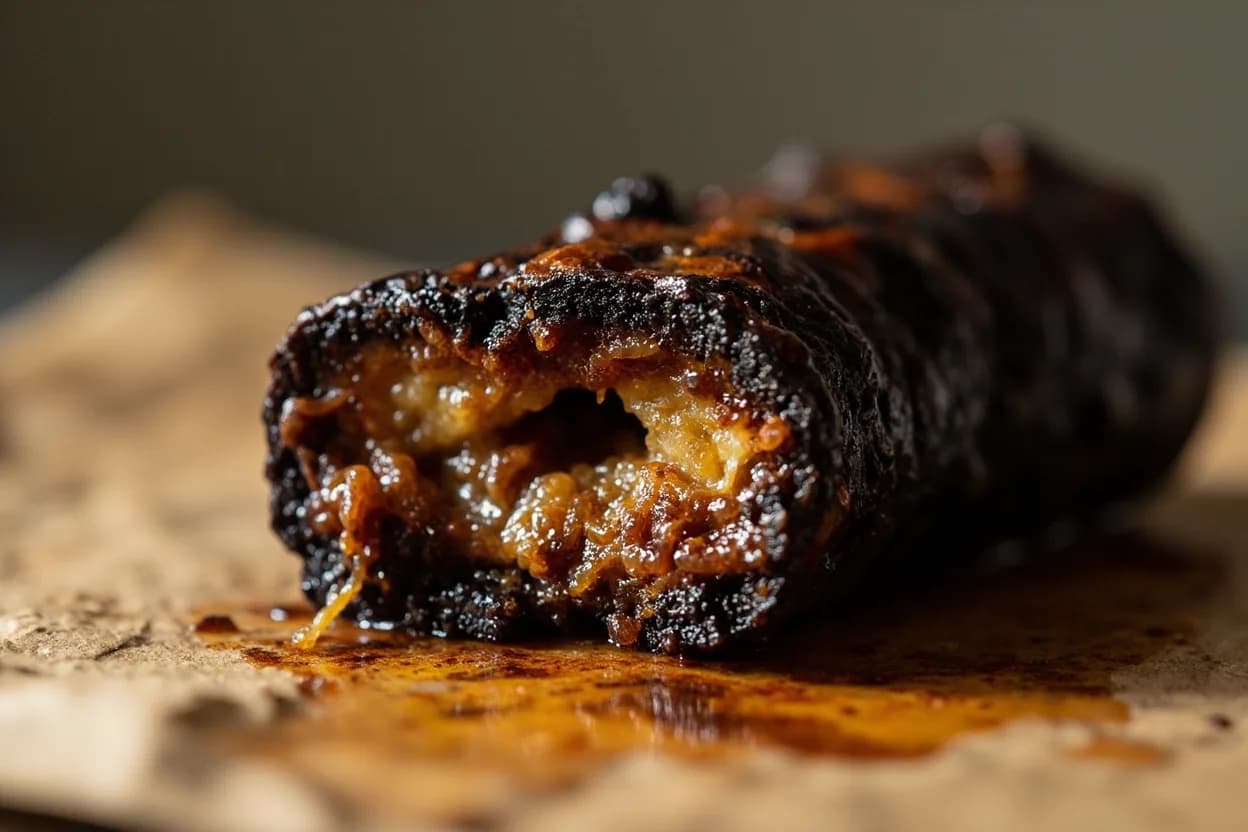
In photos

What happens
Beyond 180°C, the complex mixture of caramel compounds continues to polymerize and degrade. Acrolein — a pungent, toxic aldehyde — is generated in increasing quantity and is the primary source of the characteristic sharp, eye-watering smoke. Formic and acetic acids accumulate, contributing harsh sourness. The molecular weight of the polymeric fraction increases dramatically, producing a near-black, tar-like substance with very low water solubility. The remaining flavor compounds are predominantly bitter and astringent, with the pleasant caramel aromatics completely dominated by acrid and burnt notes. The sugar is essentially carbonizing.
What to look for
- Color: deep black-brown to near-black; no red or amber tones remain
- Smoke: thick, acrid, eye-watering smoke — the defining sign that the threshold has been crossed
- Aroma: sharply bitter, burnt, reminiscent of tar or charred wood; entirely unpleasant
- Flavor (if tasted cautiously): overwhelmingly bitter and astringent, no sweetness, harsh aftertaste
- Texture: may become syrupy-thick or begin to solidify rapidly into a brittle black mass
How to check
- Temperature: anything above 180°C on a calibrated candy thermometer is in this zone
- Smell is the fastest indicator — acrid smoke means you are past the threshold; act immediately
- Color: the moment the caramel goes from mahogany to near-black, it is lost
- Never taste caramel above 175°C without first cooling a small drop on a plate — it causes severe burns and the burnt threshold can be detected by smell alone
Food safety
Carryover & resting
If you realize caramel has crossed this threshold, immediate action is needed: remove from heat, set the pan base briefly in cold water (extreme caution — steam), or add cold water from a distance to halt further cooking. In almost all cases, the batch is unusable and discarding is the correct call.
The science behind it
- Dark Amber Caramel
The stage just before: 175–180°C, bittersweet but still palatable and intended
- Carbon / Char
What sugar becomes if heating continues well beyond 180°C — pure carbonization
- Acrolein
The primary acrid volatile produced from sugar and fat degradation above safe cooking temps
- Intentional Bitter Caramel
A narrow modernist/Nordic technique using the low burnt zone (180–182°C) in tiny quantities for extreme contrast
Appears in
References
- 1.On Food and Cooking — Harold McGee
- 2.Modernist Cuisine: The Art and Science of Cooking — Myhrvold et al.
- 3.The Flavor Bible — Karen Page & Andrew Dornenburg
- 4.Noma: Time and Place in Nordic Cuisine — René Redzepi
Confidence: high
Notes
The Intentional Exception
A small number of avant-garde chefs deliberately court the low end of the burnt threshold (180–183°C) to create bitter-contrast elements: a tiny amount of near-black caramel stirred into a blonde caramel sauce to add complexity, or a scorched-caramel powder (blitzed, then frozen). These techniques require precise temperature control, immediate arrest of cooking, and careful tasting — and they rely on the burnt element being one note among many, never dominant.
Cleaning the Pan
A pan of burnt caramel looks irretrievable but usually is not. Fill with water, bring to a gentle simmer, and the carbonized sugar will dissolve slowly over 10–20 minutes. Avoid cold water on a scorching hot pan — thermal shock can crack even professional-grade cookware.