Sugar & Candy Stages
Caramel: Dark Amber Stage
Also: deep caramel, mahogany caramel, bittersweet caramel, dark caramel
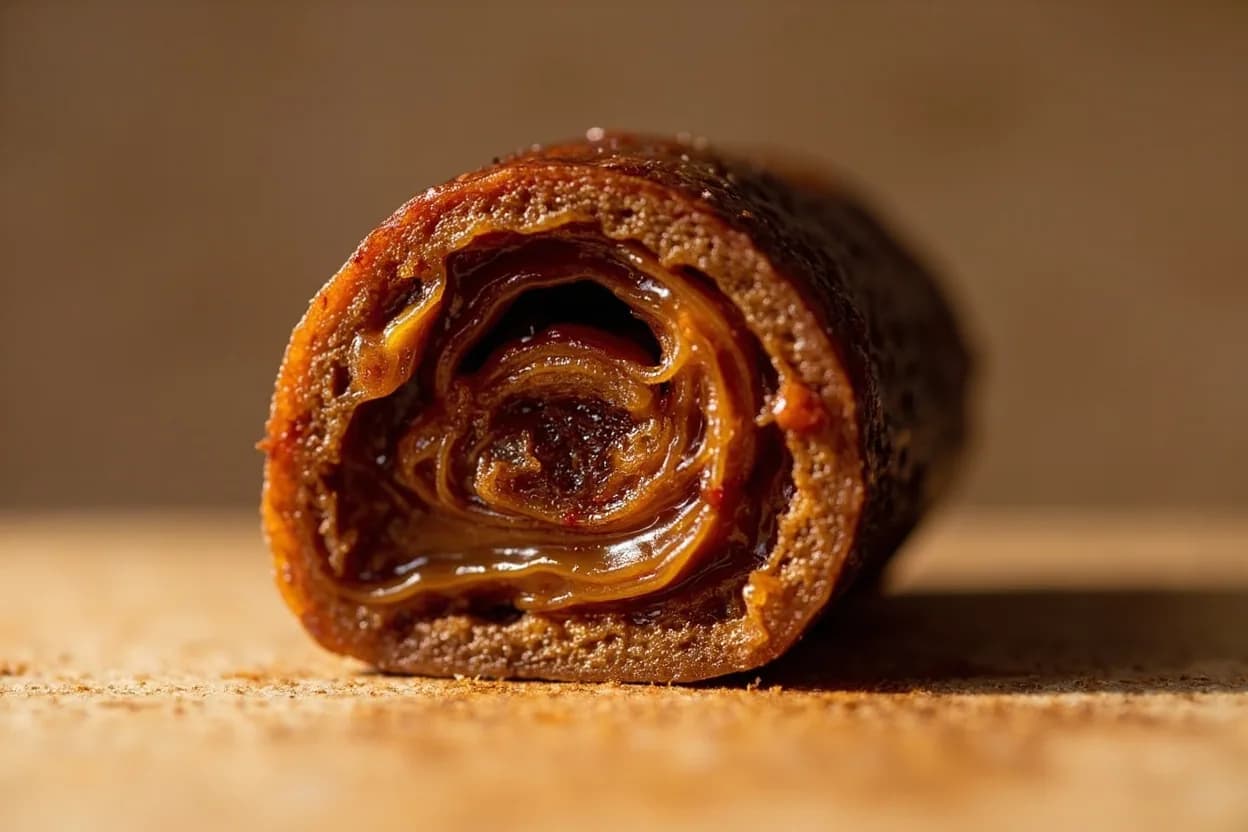
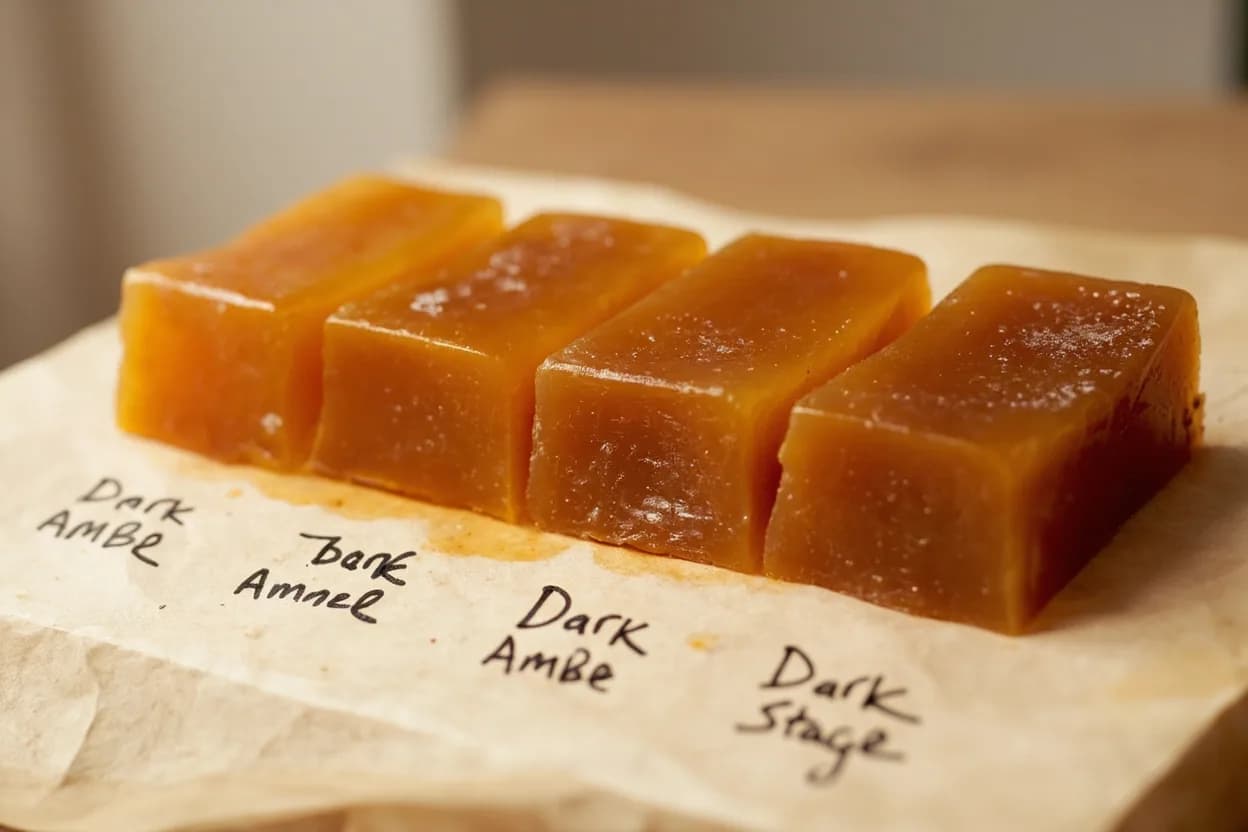
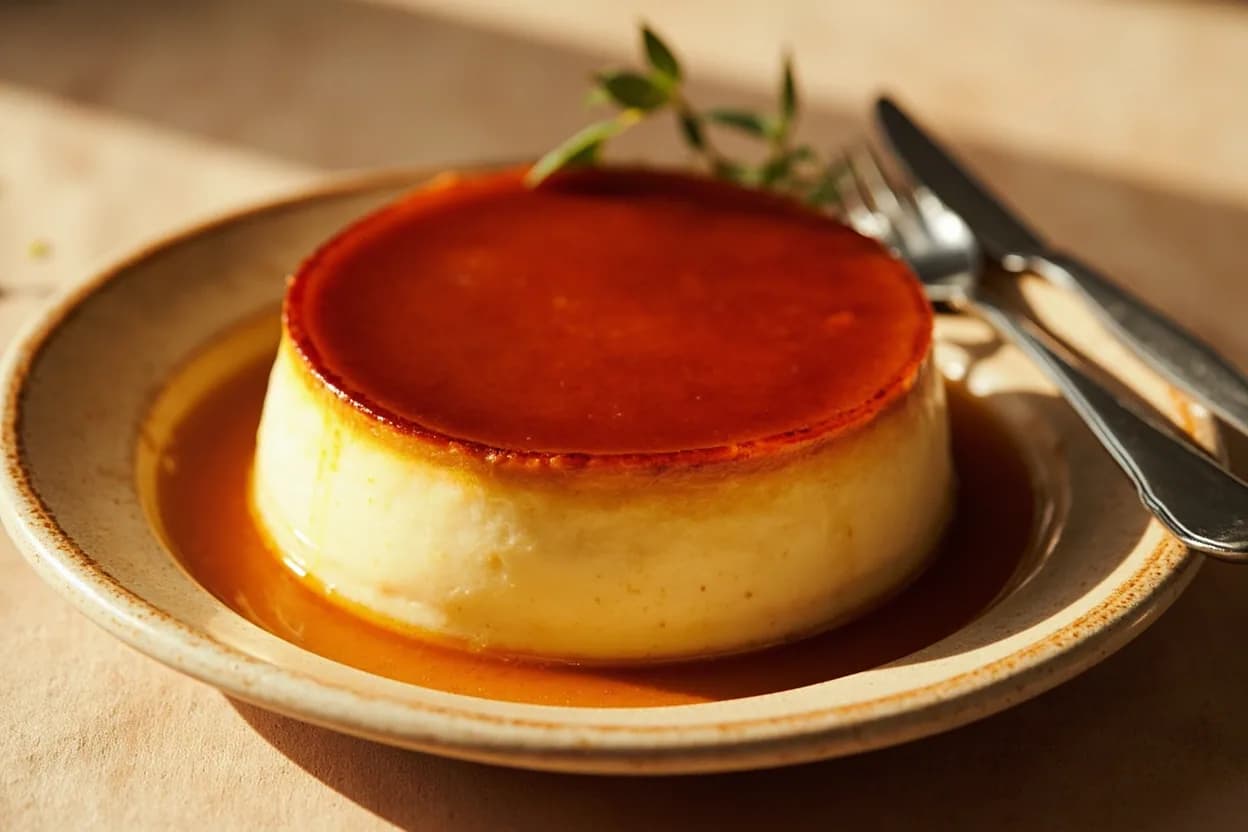
Deep mahogany caramel at 177°C (350°F): complex, bittersweet, and faintly smoky — the gold standard for crème caramel, tarte Tatin, and savory-leaning desserts.
Dark amber caramel is achieved when sucrose pyrolysis has advanced to produce a dense population of high-molecular-weight polymeric colorants (caramelens and caramelins), yielding a deep reddish-mahogany color. The flavor profile becomes markedly bittersweet, with roasted, rum-like, and slightly smoky notes alongside residual sweetness. This is the canonical stage for classic French crème caramel, tarte Tatin, and butterscotch sauces; it also appears in savory cooking — caramelized onion jus, dark miso glazes, and some braises use the same flavor register. The bitterness balances richly sweet preparations and adds depth to dairy-based desserts.
In photos
What happens
At 177°C, sucrose molecules have fragmented into a complex mixture of dehydration products, furans, pyranones, and high-molecular-weight melanoidin-like polymers. These polymers absorb light strongly in the blue-green spectrum, producing the characteristic mahogany-red appearance. Volatile compounds at this stage include acrolein, acetaldehyde, and formic acid in small quantities alongside diacetyl and furfural — contributing bitter, smoky, and slightly acrid notes. Solubility of the resulting caramel in water decreases, which is why dark caramel sauces can seize when cream is added improperly. The fluid viscosity is higher and the caramel will harden quickly on cool surfaces.
What to look for
- Color: deep reddish-mahogany to dark amber, like dark rum or strong black tea
- Aroma: complex bittersweet with roasted, rum-like, faintly smoky top notes
- Flavor: pronounced bitterness balanced by residual sweetness; long finish with toffee and roasted notes
- Smoke: a thin wisp may begin to appear — not yet acrid but watch carefully
- Texture: noticeably thicker; pours slowly and sets more firmly than light amber
How to check
- Digital candy thermometer: target 175–180°C; verify probe is submerged in syrup not touching the pan bottom
- Color test on white ceramic: should look like dark rum or molasses, not black
- Smell: the moment an acrid or burning note enters the aroma, pull immediately — you are at the edge of the burnt threshold
- Timing: from light amber, dark amber arrives in seconds at high heat — have cream or butter ready and off-heat before the caramel hits temperature
Carryover & resting
Dark amber has significant carryover — the pan holds enough heat to push caramel past the burnt threshold in seconds. Remove from heat slightly early (around 173°C) and immediately add warm cream or butter, or set the pan base in an ice-water bath for 5 seconds. Adding cold dairy causes violent sputtering; always warm cream before adding.
The science behind it
- Light Amber Caramel
The prior stage at ~160°C; paler, sweeter, less complex
- Burnt & Bitter Threshold
Above 180°C; beyond dark amber, caramel becomes unpleasantly acrid and is generally ruined
- Caramel Sauce
Dark amber caramel thinned with cream and butter; the canonical crème caramel coating
- Butterscotch
Uses butter and brown sugar to approximate deep caramel flavor without high-temperature work
Appears in
References
- 1.On Food and Cooking — Harold McGee
- 2.The Professional Pastry Chef — Bo Friberg
- 3.Modernist Cuisine: The Art and Science of Cooking — Myhrvold et al.
- 4.Sucre d'Art — Stéphane Tréand
Confidence: high
Notes
Why Warm the Cream
Adding cold liquid to dark amber caramel causes an explosive steam release and can cause the sugar to seize into a hard mass. Warming cream to at least 60–70°C before adding reduces the thermal shock, allowing the caramel to dissolve smoothly into the cream rather than hardening around it.
Savory Applications
Dark amber caramel appears in savory French cooking as the foundation of certain jus and sauces — a small quantity of dark caramel dissolved in stock adds color, depth, and a bitter counterpoint that balances rich braises. This is distinct from caramel coloring (E150) used commercially.