Technique-Specific Doneness
Caramelization of Onions: Time-Temperature Relationship
Also: caramelized onions, slow-cooked onions, jammy onions, French caramelized onions
Onions pass through distinct stages—translucent, golden, jammy, and deeply caramelized—over 45–60 minutes at 130–150°C, with each stage determined by temperature and time in combination.
Onion caramelization is not a single event but a progressive transformation driven by both Maillard reactions (between amino acids and reducing sugars) and true caramelization (thermal degradation of sucrose). At low to moderate heat, moisture escapes first, then cell walls collapse, then sugars concentrate and brown. The result progresses from raw and sharp through translucent and sweet, to golden and mellow, and finally to a deep mahogany jam with complex savory-sweet depth. Fast-high cooking with periodic water additions mimics the result but risks burning and produces a different flavour profile.
In photos
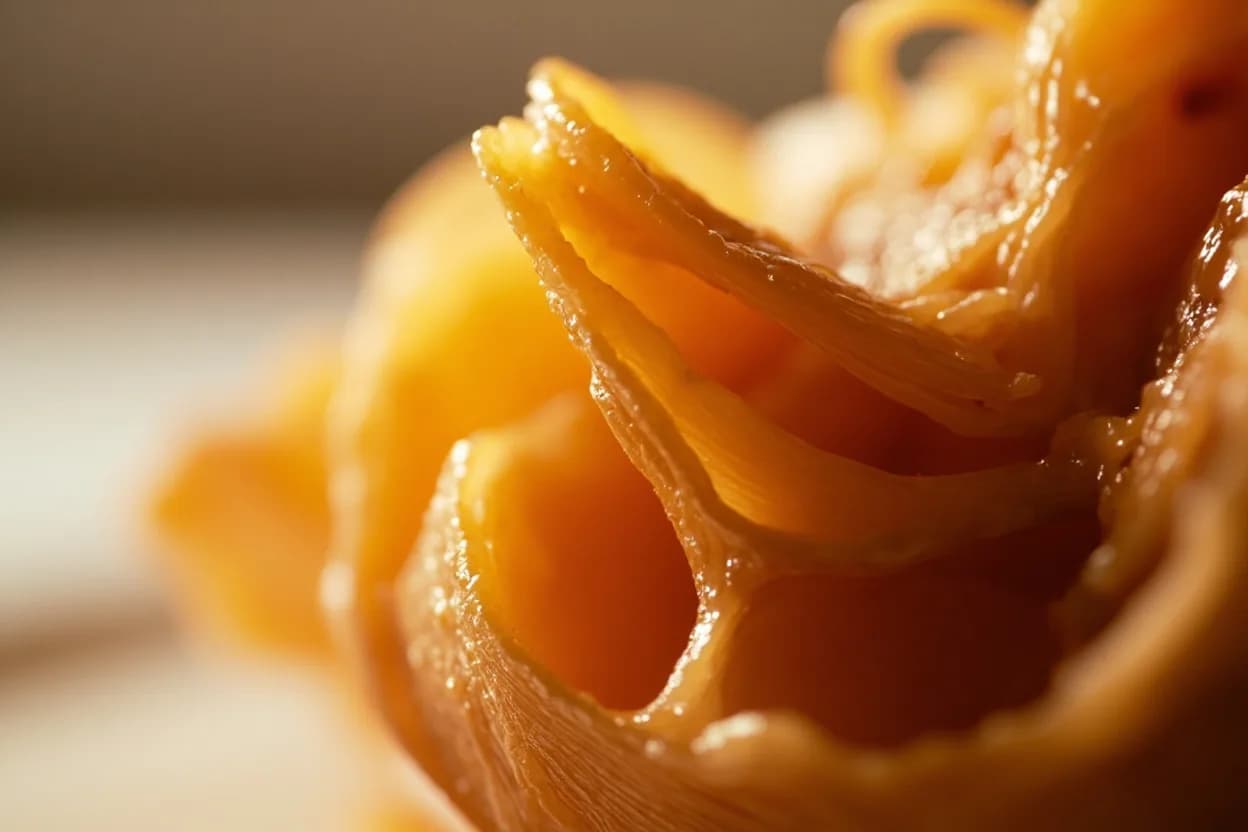
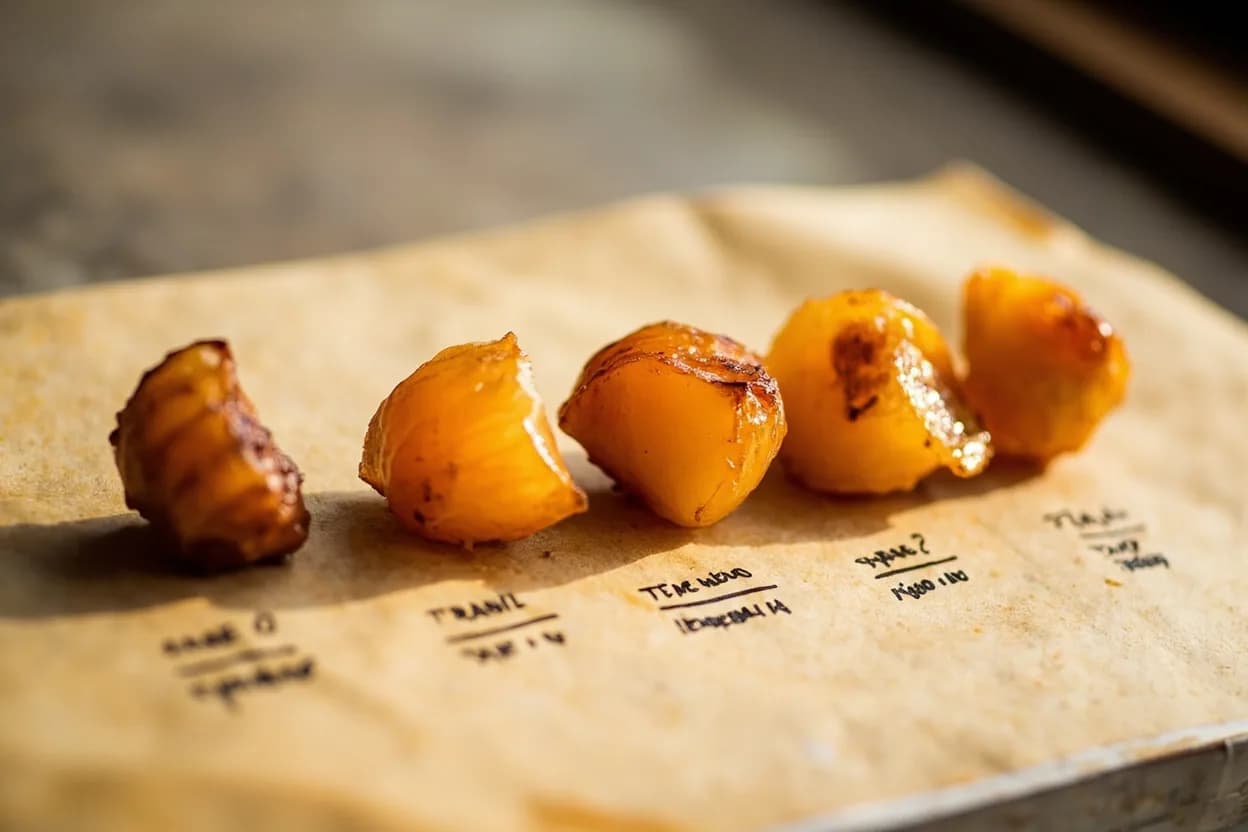
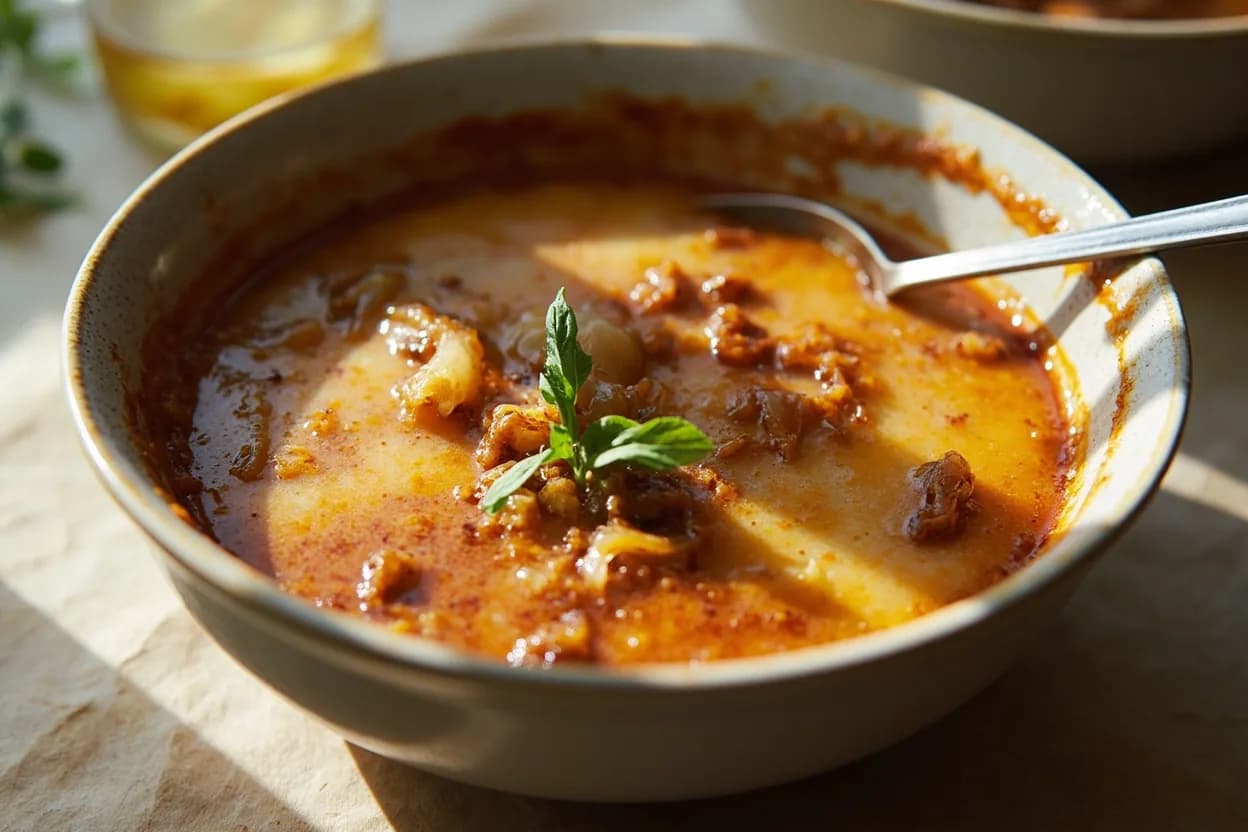
What happens
Cell walls soften as pectin degrades above 80°C and moisture steams off. Above 110°C, fructose and glucose begin Maillard-browning with the onion's free amino acids, generating hundreds of volatile flavour compounds including furans, pyrazines, and thiophenes. Above 130°C, sucrose hydrolyzes to fructose and glucose (invert sugar), accelerating browning. The distinctive sweetness intensifies as water content drops from ~89% to under 30%. Sulphur compounds—responsible for raw pungency—transform into sweeter, less volatile disulfides. Time is as important as temperature: rushed high heat browns the surface before the interior softens and moisture escapes, producing bitter notes and uneven texture.
What to look for
- Translucent stage (15–20 min): slices have collapsed, turned glassy, and smell lightly sulphurous and sweet
- Golden stage (25–35 min): pale straw colour, markedly sweet aroma, no more biting rawness
- Jammy stage (40–50 min): deep amber, soft enough to smear, rich caramel-sweet and slightly savoury smell
- Deeply caramelized (50–60+ min): mahogany to dark brown, intensely sweet-bitter, spreadable, syrupy fond forms on pan
- Burning warning: acrid, sharp smoke and black edges mean heat is too high or pan too dry
How to check
- Visual colour: pale gold = lightly caramelized; amber = medium; mahogany = fully caramelized
- Texture test: press a piece between fingers — it should smear easily at the jammy stage
- Volume reduction: fully caramelized onions are roughly one-eighth the raw volume
- Pan fond: a rich brown glaze on the pan bottom (not scorched black) signals good caramelization
- Taste: sweetness should be pronounced with no raw sharpness; mild pleasant bitterness is acceptable at the dark stage
The science behind it
Primary browning mechanism above 140°C on dry surfaces; distinct from but concurrent with caramelization
- Caramelization (sugar)
Thermal degradation of sucrose begins around 160°C in isolation, but lowers in the presence of onion acids and water
- Fond (sucs de cuisson)
Brown deposits on the pan are concentrated Maillard products and caramelized sugars, deglazed for sauces
- Translucent onion stage
First doneness checkpoint: loss of opacity indicates cell-wall breakdown and initial moisture loss
- Water activity
Periodic addition of water during fast-high cooking prevents scorching by temporarily dropping surface temperature
Appears in
References
- 1.On Food and Cooking — Harold McGee (Scribner, 2004)
- 2.The Food Lab — J. Kenji López-Alt (W. W. Norton, 2015)
- 3.Modernist Cuisine, Vol. 4 — Myhrvold, Young, Bilet (The Cooking Lab, 2011)
- 4.CookWise — Shirley O. Corriher (William Morrow, 1997)
Confidence: high
Notes
The 'fast-high with water' shortcut
Adding a splash of water or stock to a hot pan when onions start to stick drops the surface temperature instantly and redistributes moisture, allowing internal steaming to continue before browning resumes. It can halve cooking time but produces a slightly different flavour — brighter, less deeply bitter — because fewer high-temperature Maillard products accumulate. For classic French onion soup, slow-low is worth the time.
Sugar type matters
Yellow (brown) onions have the highest sucrose content and caramelize most deeply. White onions are sharper and less sweet, giving a paler result. Sweet onions (Vidalia, Walla Walla) are high in fructose and glucose but low in pungent sulphur compounds — they caramelize quickly but can become cloyingly sweet without the savoury depth of yellow onions.