Vegetable Doneness
Caramelized Onions Stages (Tarka, Soffritto, Jammy)
Also: sweated onions, fried onions, browned onions, onion confit, golden onions
Onions pass through five transformative stages — raw, softened, translucent, jammy-golden, and deep-brown — each with distinct flavor, texture, and culinary application.
Onion caramelization is not a single event but a continuum of Maillard browning and sugar-driven caramelization. As onions cook, water evaporates, sulfur compounds convert to sweet disulfides, and reducing sugars undergo browning reactions. Each culinary tradition names and uses distinct stages: the Italian soffritto targets golden-translucent; South Asian tarka can range from lightly sweated to deep-fried crisp; French onion soup demands fully collapsed, mahogany-brown onions; jammy onions sit between golden and brown.
In photos

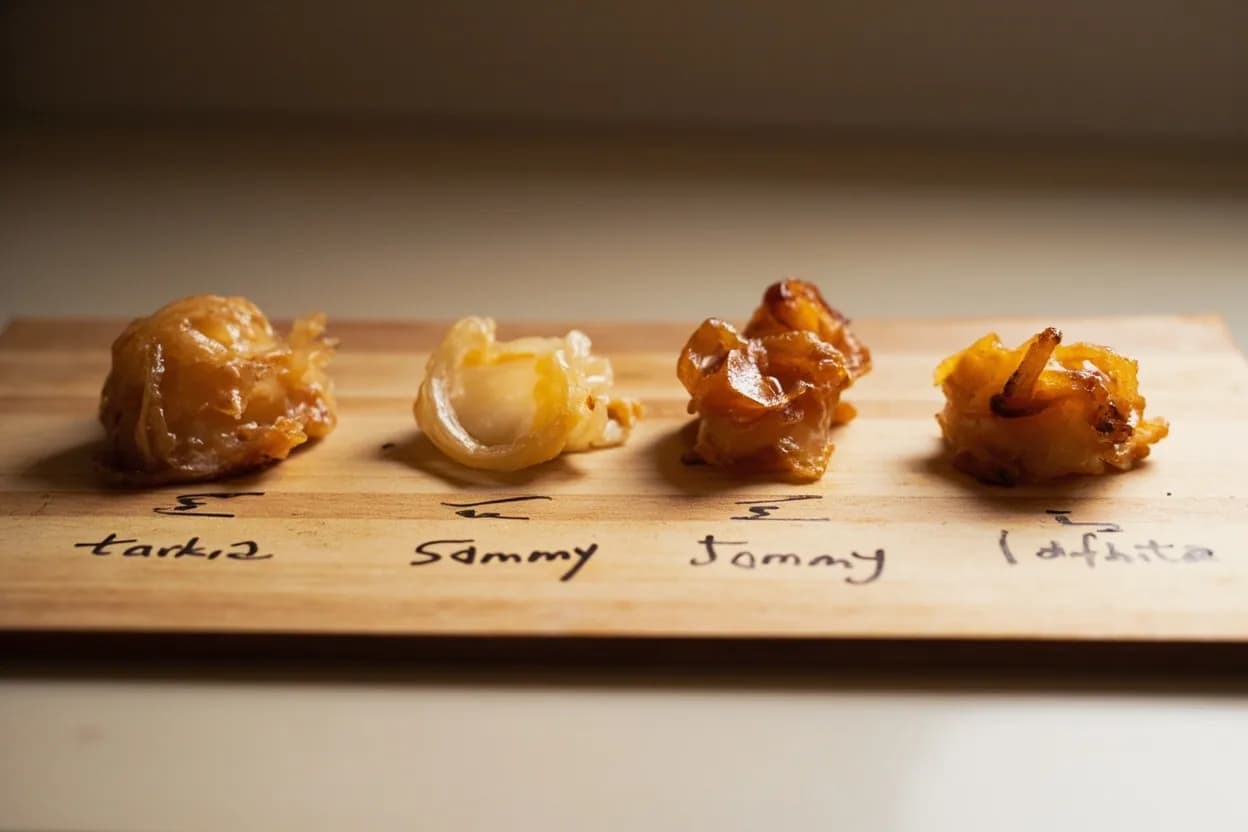
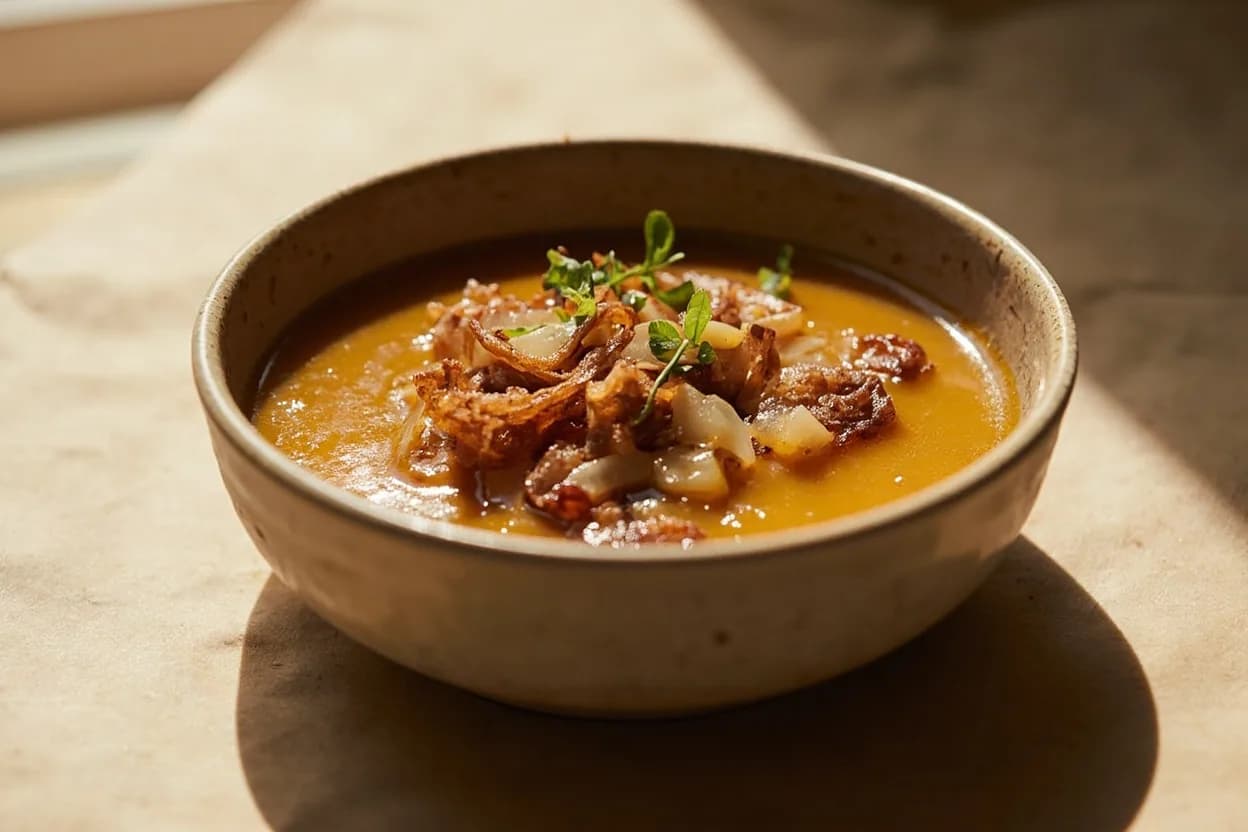
What happens
Stage 1 (raw): intact cell walls, sharp allicin aroma, high water content (~89%). Stage 2 (softened/sweated, 5–10 min): cell walls relax, water releases, enzymes deactivate, pungency drops — no browning. Stage 3 (translucent, 10–15 min): cellular structure fully collapsed, sugars concentrate, aroma sweetens — soffritto ready here. Stage 4 (golden-jammy, 20–40 min): Maillard reactions begin at ~140°C on pan surface; fructose caramelizes; flavor deepens to sweet-savory; color golden to light amber. Stage 5 (deep brown/mahogany, 45–90 min slow OR deep-fry): extensive Maillard and caramelization; umami-rich bitter-sweet complexity; birista (fried) at 170°C achieves this in 10–15 min.
What to look for
- Softened: onions slump and release liquid, sharp raw smell gone, no color
- Translucent: glassy appearance, limp but not mushy, mildly sweet aroma
- Golden-jammy: edges tinge amber, pan fond forms, sweet toasty aroma, slight sticking
- Deep brown: mahogany color throughout, intense sweet-savory aroma, significantly reduced in volume (up to 75% loss)
- Crispy-fried (birista): crunch on bite, deep amber-brown, caramel aroma with slight bitterness
How to check
- Visual color: track progression from white → translucent → golden → amber → mahogany
- Volume reduction: fully caramelized onions shrink to ~25% of raw volume
- Fond test: scrape pan — deep-brown stage produces thick, sticky fond that lifts easily with a splash of liquid
- Texture press: jammy stage yields with almost no resistance; crispy stage snaps
- Aroma shift: biting pungency (raw) → milky sweet (translucent) → nutty caramel (golden) → rich umami (mahogany)
The science behind it
Primary browning mechanism above ~140°C surface temperature
Separate sugar-browning pathway contributing sweetness and color at the golden-jammy stage
- Soffritto
Italian flavor base targeting translucent-to-golden stage; also mirepoix equivalent
- Tarka / tadka
South Asian tempering technique; onions often taken to golden or crispy stage in oil
- Birista
Deep-fried crispy onions essential in biryani, haleem, and nihari
- Fond
Browned residue on pan from caramelized onions; basis of sauces and gravies
Appears in
References
- 1.The Food Lab — J. Kenji López-Alt (W. W. Norton, 2015)
- 2.On Food and Cooking — Harold McGee (Scribner, 2004)
- 3.Salt, Fat, Acid, Heat — Samin Nosrat (Simon & Schuster, 2017)
- 4.The Complete Indian Cookbook — Meera Sodha (Flatiron Books, 2020)
Confidence: high
Notes
Why caramelized onions take longer than recipes say
Most recipes claim 10–15 minutes for 'caramelized' onions; true mahogany caramelization requires 45–90 minutes over medium-low heat. Higher heat speeds browning but risks burning before water fully evaporates. A pinch of baking soda (raising pH) dramatically accelerates Maillard reactions and can halve cooking time — a technique popularized by Kenji López-Alt.
Soffritto vs. tarka: different goals
Italian soffritto aims for sweetness and body without browning — onions, celery, and carrot sweated to translucent-golden are a flavor foundation, not a garnish. South Asian tarka deliberately pushes onions further into browning (golden to crispy) in enough fat to bloom whole spices simultaneously; the fat carries fat-soluble aromatics through the finished dish.