Sugar & Candy Stages
Caramel: Light Amber Stage
Also: pale caramel, blond caramel, light caramel, straw caramel
The first true caramel color: pale gold at 160°C (320°F), with a delicate, clean sweetness and just a whisper of bitterness.
Light amber caramel is reached when sucrose has melted completely and pyrolysis (thermal decomposition) has begun, producing the first wave of caramel-flavor compounds — furans, diacetyl, and hydroxymethylfurfural — while retaining a gentle, approachable sweetness. The color ranges from pale straw to warm gold. It is the preferred stage for pralines, spun sugar, nougatine, delicate caramel sauces meant to accompany fruit, and any preparation where a clean, sweet-caramel note is desired without deep bitterness.
In photos
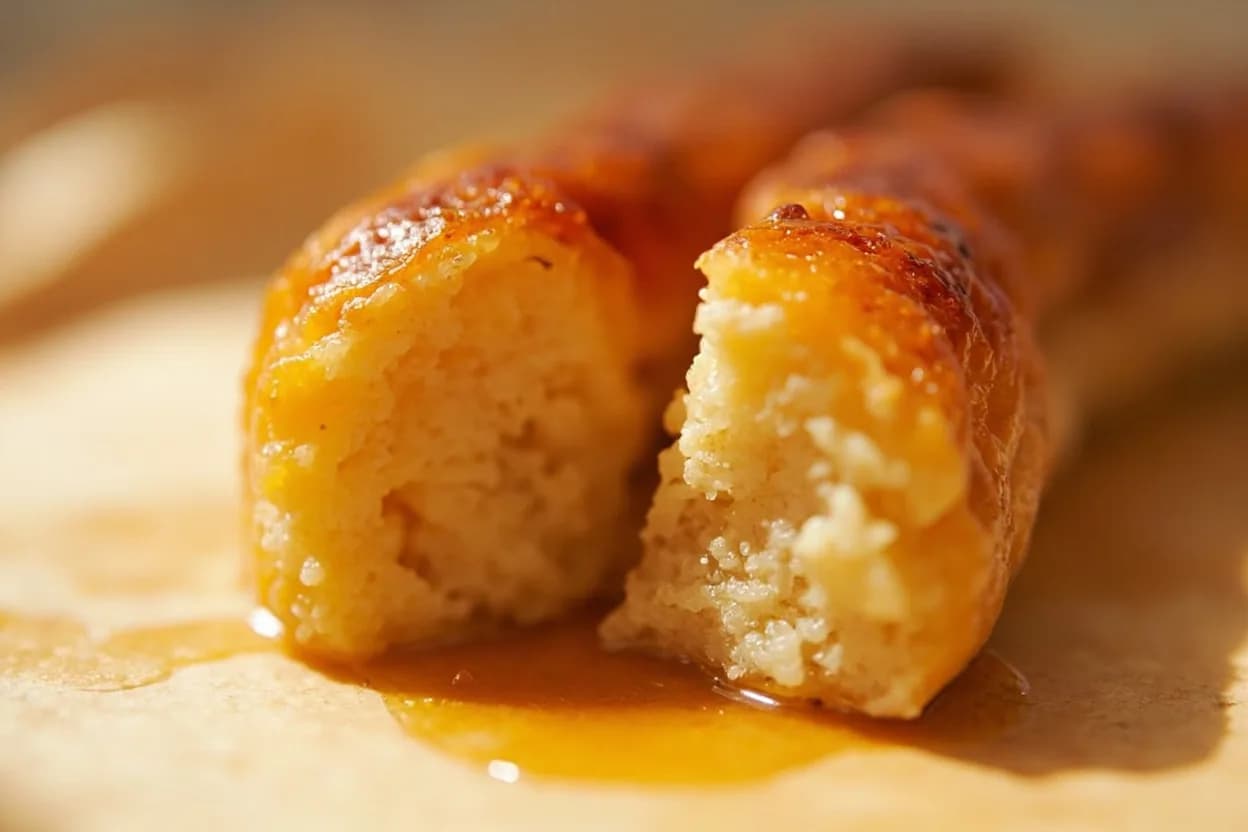
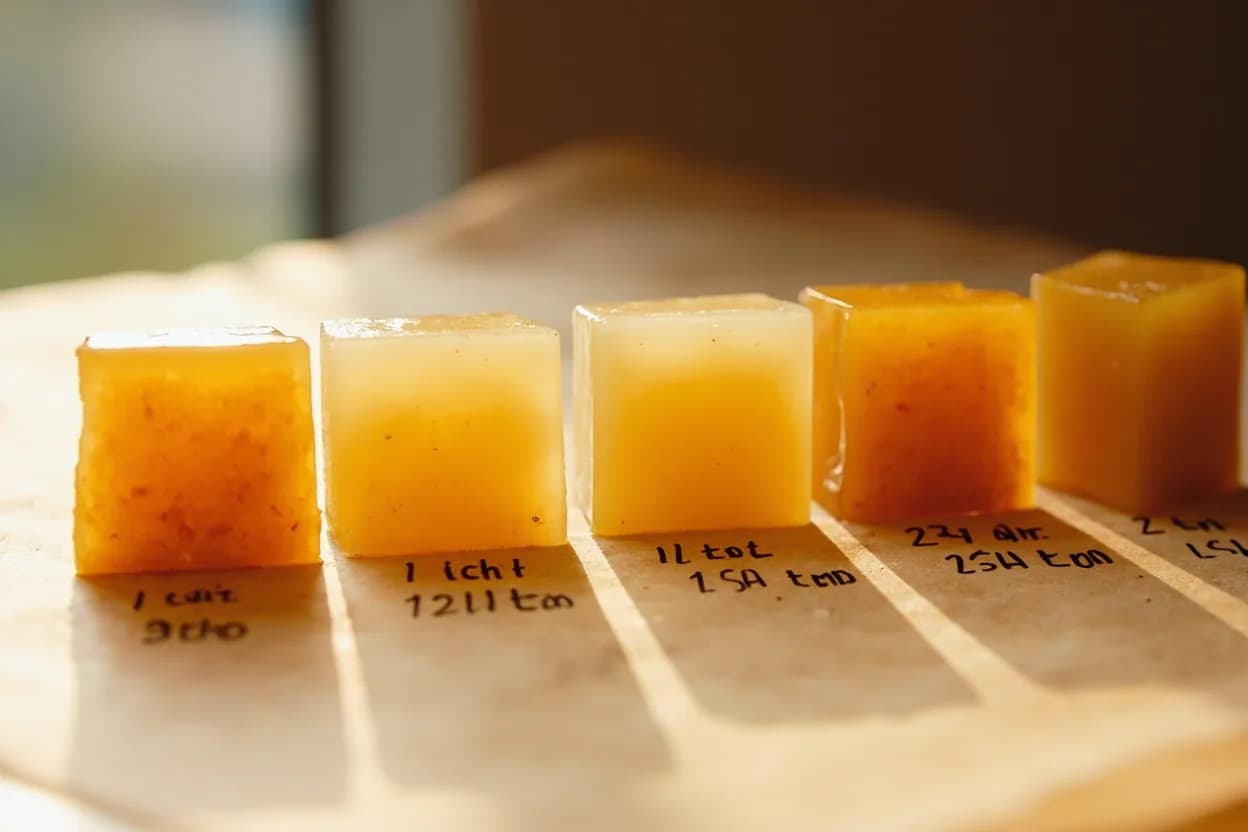

What happens
Above 160°C, sucrose molecules fragment and recombine through a cascade of reactions: dehydration produces anhydrosugars; these polymerize into polymeric colorants (caramelans, caramelens) that give the golden hue. Volatile flavor compounds — diacetyl, acetoin, furans, and acids — are generated in small quantities, providing buttery and lightly nutty notes. The Maillard reaction is absent at this stage because no proteins are present in pure sugar; the color and flavor come entirely from sugar pyrolysis. Viscosity is high but still fluid enough to pour and coat nuts easily.
What to look for
- Color: pale straw to warm honey gold
- Aroma: clean, sweet, faintly buttery with no bitterness
- Flavor: gentle caramel sweetness, mild nuttiness, almost no bitter finish
- Texture: fluid but starting to thicken; coats a spoon in a thin even film
- Smoke: none at this stage
How to check
- Use a calibrated digital or candy thermometer — clip to the pan, keep the probe submerged in syrup not resting on the bottom
- Watch color carefully against a white background; pale gold, like clear apple juice
- Drop a small amount onto a white ceramic plate and assess color in neutral light
- Act immediately — the window between light amber and dark amber is only a few degrees and seconds
Carryover & resting
Caramel continues to cook after the pan is removed from heat due to the pan's retained heat. For light amber, remove the pan slightly before the target temperature and add cream or butter immediately to halt cooking. Alternatively, set the base of the pan briefly in an ice-water bath.
The science behind it
- Hard Crack Stage
The candy stage (149–154°C) just before caramelization begins; sugar is still clear at this point
- Dark Amber Caramel
The next stage at ~177°C; deeper color, more bitterness, and more complex flavor
Distinct from caramelization — requires proteins; does not occur in pure sugar cookery
- Invert Sugar
Adding cream of tartar or glucose prevents crystallization and promotes even caramelization
Appears in
References
- 1.On Food and Cooking — Harold McGee
- 2.The Professional Pastry Chef — Bo Friberg
- 3.Modernist Cuisine: The Art and Science of Cooking — Myhrvold et al.
- 4.The Art of the Chocolatier — Ewald Notter
Confidence: high
Notes
Dry vs. Wet Method
Dry caramel (sugar alone in the pan) reaches light amber more quickly and unevenly; stir gently or swirl the pan to equalize heat. Wet caramel (sugar dissolved in water first) gives more control and a wider window to correct crystallization, but takes longer to reach temperature as water must fully evaporate before caramelization begins.
Copper Pan Advantage
Professional pastry kitchens use unlined copper sugar pans because copper distributes heat exceptionally evenly, reducing hot spots that can push one section of caramel through the light amber stage while another still lags behind.