Fish & Seafood Doneness
Ceviche Acid-Denature Stage
Also: ceviche cure stage, leche de tigre cure, citrus denature, acid-cured fish doneness
Citric acid from lime juice denatures fish proteins without heat, turning translucent flesh opaque — but timing determines whether you get silky ceviche or chalky, over-cured fish.
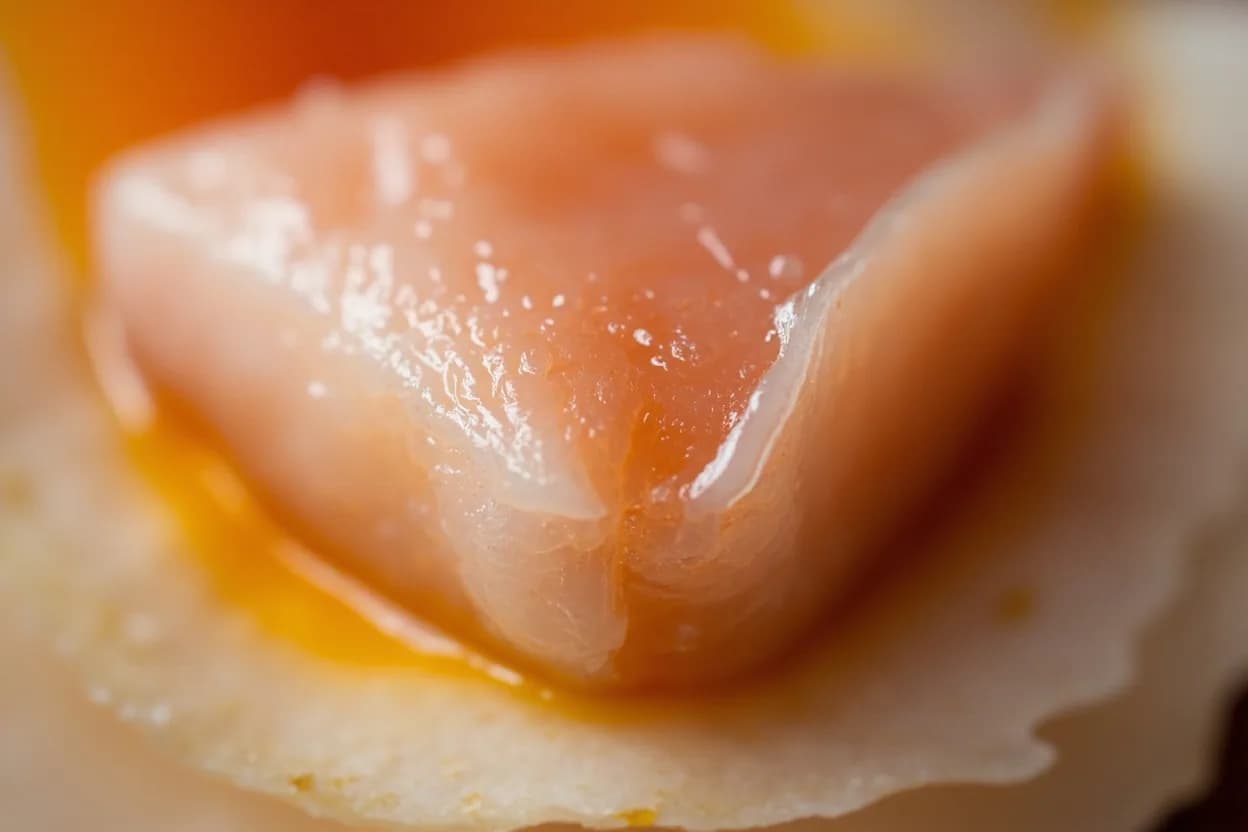
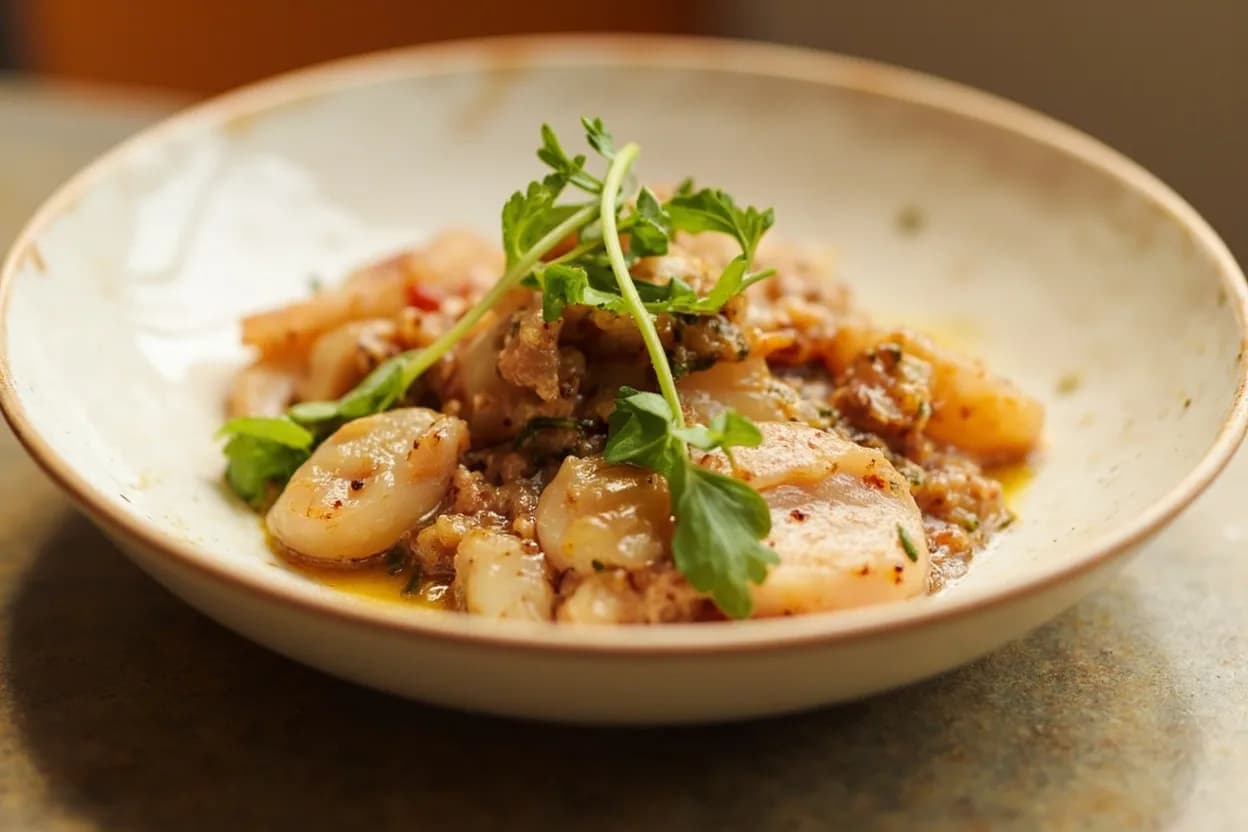
In ceviche, the proteins in raw fish are denatured not by heat but by the low pH of citrus juice — primarily lime, though lemon, bitter orange, and camu-camu are also used across Latin America. The acid unfolds protein chains in a process chemically analogous to thermal denaturation, causing the flesh to turn from translucent to opaque and to firm in texture. Peruvian-style ceviche (the benchmark) distinguishes sharply between a short marinade of 5–15 minutes (leche de tigre method, fish still soft and yielding), a medium cure of 15–45 minutes (firmer, more fully opaque), and overnight or multi-hour curing (very firm, 'cooked' texture, as in Mexican and Central American styles). The cure stage reached determines the final texture and flavor intensity.
In photos
What happens
Lime juice pH is approximately 2.0–2.5 — well below the pH at which fish proteins denature (roughly pH 4–5). When flesh is submerged in citrus juice, hydrogen ions disrupt ionic bonds and unfold myosin and actin filaments. This causes the flesh to turn opaque as the refractive index of the protein matrix changes, and to firm as the unfolded proteins form new cross-links. Unlike thermal denaturation, acid denaturation does not kill all pathogens (particularly Anisakis nematodes and Vibrio bacteria) — this is a critical food-safety distinction. The rate of cure depends on pH, temperature, surface area, and fish species: oilier fish like tuna denature more slowly than lean white fish like corvina.
What to look for
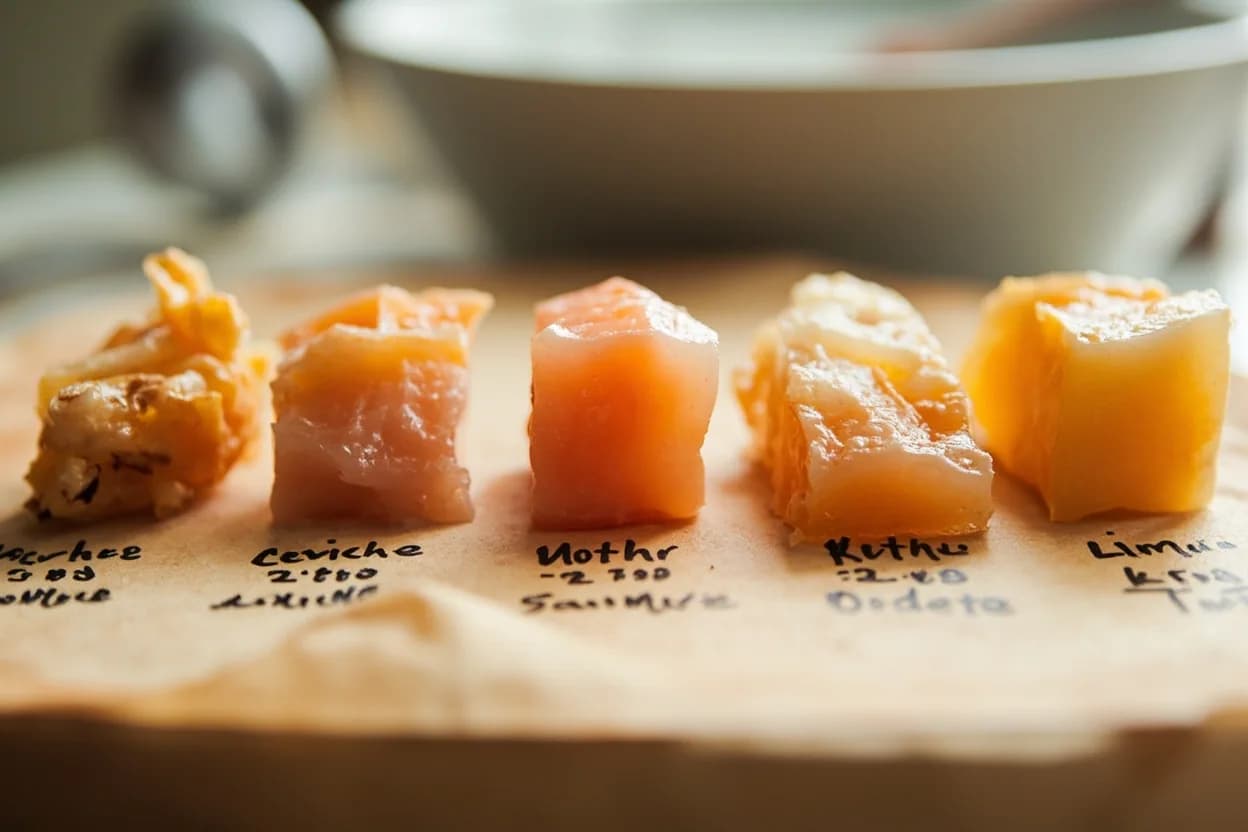
- 5–10 min: fish exterior turns from glistening translucent to faintly milky at the edges, center still raw-pink or raw-translucent
- 15 min: flesh is opaque 2–3 mm deep from all surfaces, center may remain slightly translucent — this is the Peruvian leche de tigre sweet spot for white fish
- 30–45 min: uniformly opaque throughout, texture noticeably firmer and more springy under finger pressure
- 2+ hours: dense, chewy, very white — all moisture driven out by acid, classic Mexican estilo ceviche texture
- Aroma shifts from raw oceanic to bright citrus-forward as cure progresses
How to check
- Visual opacity: split a piece — translucent core means still marinating, fully opaque means cure has penetrated
- Finger-press: lightly press a piece against the bowl; a 15-min cure yields gentle give, a 45-min cure yields firm resistance
- Taste and texture at intervals — the most reliable guide for your preferred stage
- Slice thickness check: 1 cm cubes cure significantly faster than 2 cm cubes; adjust timing accordingly
Food safety
The science behind it
Acid denature mimics thermal denaturation in changing protein conformation and appearance without reaching cooking temperatures
The lime-based marinade liquid itself, drunk as a restorative in Peru — its flavor intensity reflects the cure stage reached
- Osmotic Pressure in Curing
Salt added alongside lime juice draws moisture out of the fish, accelerating the cure and concentrating flavor
- Tiradito
Japanese-Peruvian cousin of ceviche — fish sliced thin and dressed with leche de tigre just before serving, minimal denature by design
- Sushi-Grade Freezing
The pathogen-control step that makes raw and lightly cured fish safe, especially for anisakis-susceptible species
- pH and Cooking
Citrus pH 2.0–2.5 is acidic enough to denature proteins; the threshold is species-dependent but generally pH 4–5
Appears in
References
- 1.McGee, Harold. On Food and Cooking: The Science and Lore of the Kitchen. Scribner, 2004.
- 2.Acurio, Gastón. Peru: The Cookbook. Phaidon, 2015.
- 3.FDA. Fish and Fishery Products Hazards and Controls Guidance, 4th ed. U.S. Food and Drug Administration, 2011.
- 4.Carullo, G. et al. 'Acid Denaturation of Fish Proteins.' Food Chemistry, 2019.
- 5.Morón, C. & Schejtman, A. Alimentación, Nutrición y Agricultura. FAO, 1997.
Confidence: high
Notes
Peruvian vs. Mexican Style
The most important schism in ceviche is timing: Peruvian tradition calls for a very short cure — 5 to 15 minutes at most — preserving a silky, almost sashimi-like interior. The fish is served immediately. Mexican and Central American styles often cure for several hours or overnight, producing a firm, fully 'cooked' texture. Neither is wrong; they are different dishes with different intended textures.
Choosing the Fish
Lean, firm white fish (corvina, sea bass, flounder, halibut) denature most cleanly and hold their shape. Salmon and tuna cure more slowly due to fat content. Shrimp and scallops are common but require attention — shrimp can become tough quickly, while scallops are best at the 10–15 minute mark. Squid does not denature predictably in citrus and is usually cooked before ceviche use.