Cheese & Dairy Doneness
Cheese Melting & Stretch Temperature
Also: cheese melt point, pizza cheese stretch, mozzarella melt
The temperature range at which cheese transitions from solid to molten and — for high-moisture styles — develops that coveted glossy pull.
Cheese melting is a two-stage process: first the fat liquefies (around 32°C/90°F), then the protein matrix softens and releases. True 'melt' — where the cheese flows and browns — occurs higher: fresh mozzarella and young Gouda begin stretching at 55–60°C (131–140°F); aged Cheddar and Gruyère require 60–66°C (140–151°F) before they flow freely. High-acid cheeses like halloumi, paneer, and queso blanco have a tightly cross-linked casein structure that largely resists melting up to 200°C+.
In photos
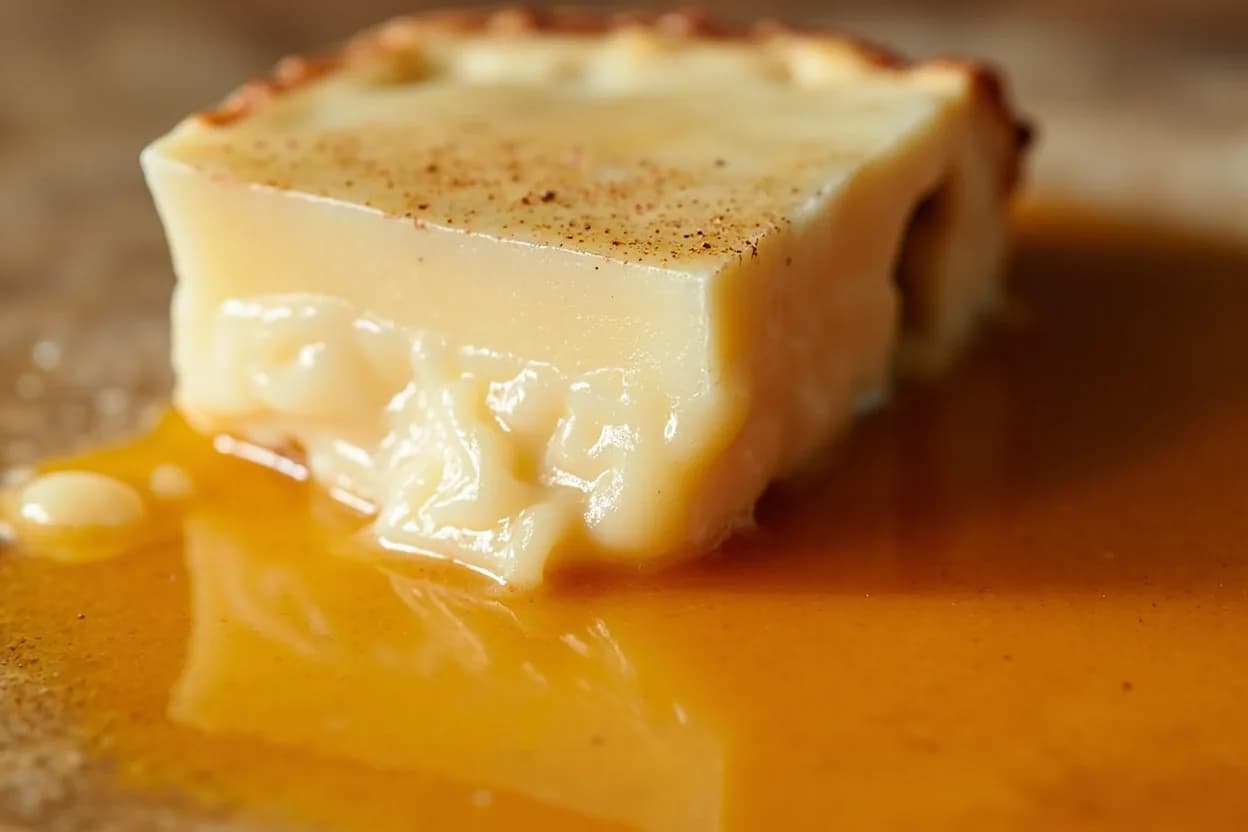


What happens
Below 32°C fat is crystalline; as temperature rises fat globules liquefy and lubricate the casein network. Above 55°C hydrogen bonds between casein strands weaken; the matrix unfolds and the cheese flows. In stretchy cheeses (pasta filata family — mozzarella, provolone, string cheese), the casein proteins align under heat and mechanical stress into oriented fibrils, producing the characteristic pull. Acid coagulation (paneer, halloumi, queso fresco) creates a tighter, less fusible casein gel that simply softens rather than flows; these cheeses will grill and fry without melting into a puddle.
What to look for
- Glossy, wet sheen appears on the surface of mozzarella as fat begins to pool
- Bubbles form at the cheese surface around 60–65°C as moisture vaporizes
- Cheddar or Gruyère pulls away from the pan edges and flows when gently tilted
- Mozzarella stretches into 15–30 cm ribbons without breaking when lifted with a fork at the right temperature
- Over-heated mozzarella turns greasy and separates — fat puddles around a rubbery protein mass
- Aged hard cheeses (Parmigiano) brown and crisp rather than stretching; bubbles are smaller and drier
How to check
- Instant-read thermometer inserted into a thick cheese layer; target 60–65°C for mozzarella stretch on pizza
- Fork-lift test: lift a portion — a 10–20 cm unbroken strand signals ideal stretch temperature
- Visual: cheese should be uniformly molten and slightly golden at the edges, not pale and raw or brown and separated
- For fondue context: dip a fork and observe coating — should coat smoothly without clumping or dripping like water
Carryover & resting
In baked dishes (lasagne, pizza) the cheese continues to cook briefly after the heat source is removed. Pull from oven when just reaching ideal melt — residual heat in the dish will carry it the last few degrees. Letting a pizza rest 2–3 minutes also redistributes steam, preventing soggy topping.
The science behind it
Browning of cheese surface above 140°C adds colour and umami-roasted flavour independent of melt doneness
- Pasta Filata Process
The hot-water stretching of mozzarella curds that aligns proteins and creates stretchability
- Fat Separation
Overheating or using ultra-low-fat cheese causes fat to pool separately from a rubbery protein mass
- Acid Coagulation
Paneer and halloumi use acid not rennet; the resulting protein bonds resist melting at normal cooking temperatures
- Fondue Stability
Starch (added to raclette blends) and wine's tartaric acid both stabilise the emulsion and lower effective melt temperature
Appears in
References
- 1.On Food and Cooking — Harold McGee (Scribner, 2004), Chapter 2: Milk and Dairy Products
- 2.The Food Lab — J. Kenji López-Alt (W. W. Norton, 2015), Pizza chapter
- 3.Modernist Cuisine at Home — Myhrvold & Bilet (The Cooking Lab, 2012), Chapter on Emulsification and Dairy
Confidence: high
Notes
Why some cheeses don't melt
Acid-set cheeses (paneer, halloumi, ricotta, queso blanco) use an acid rather than rennet to coagulate the curd. The resulting casein matrix forms very tight bonds that are not easily disrupted by heat alone. This makes them ideal for grilling and frying — they develop a golden crust and soften slightly inside without collapsing. By contrast, rennet-coagulated cheeses have a protein network that unfolds under heat, allowing flow.
The role of moisture and age
Higher moisture content lowers the melt temperature (fresh mozzarella at ~52–55% moisture melts readily; low-moisture part-skim mozzarella at ~45–48% moisture requires slightly more heat but holds its shape better on pizza). Aging drives off moisture and increases protein cross-linking; a 36-month Parmigiano-Reggiano will crisp and brown before it ever truly flows.