Bread & Dough Doneness
Oven Spring Completion
Also: spring complete, crust set, oven rise done, bloom finished
Oven spring is complete when the bread's rapid initial burst of heat-driven expansion stops and the crust dries and sets — typically within the first 10–15 minutes of baking.
Oven spring is the dramatic surge of volume that occurs immediately after shaped dough enters a hot oven. It is driven by the rapid expansion of CO₂ gas already trapped in the dough, evaporation of water into steam, and the final burst of yeast activity before the cells are killed at around 60°C (140°F). Oven spring completion is the transition point — usually 10–15 minutes into baking — when the internal temperature has risen enough to kill the yeast, gelatinize the starch, coagulate proteins, and allow the crust to dry and set. After this point, the bread's shape is fixed and its final crumb structure is being determined by continued heat penetration.
In photos
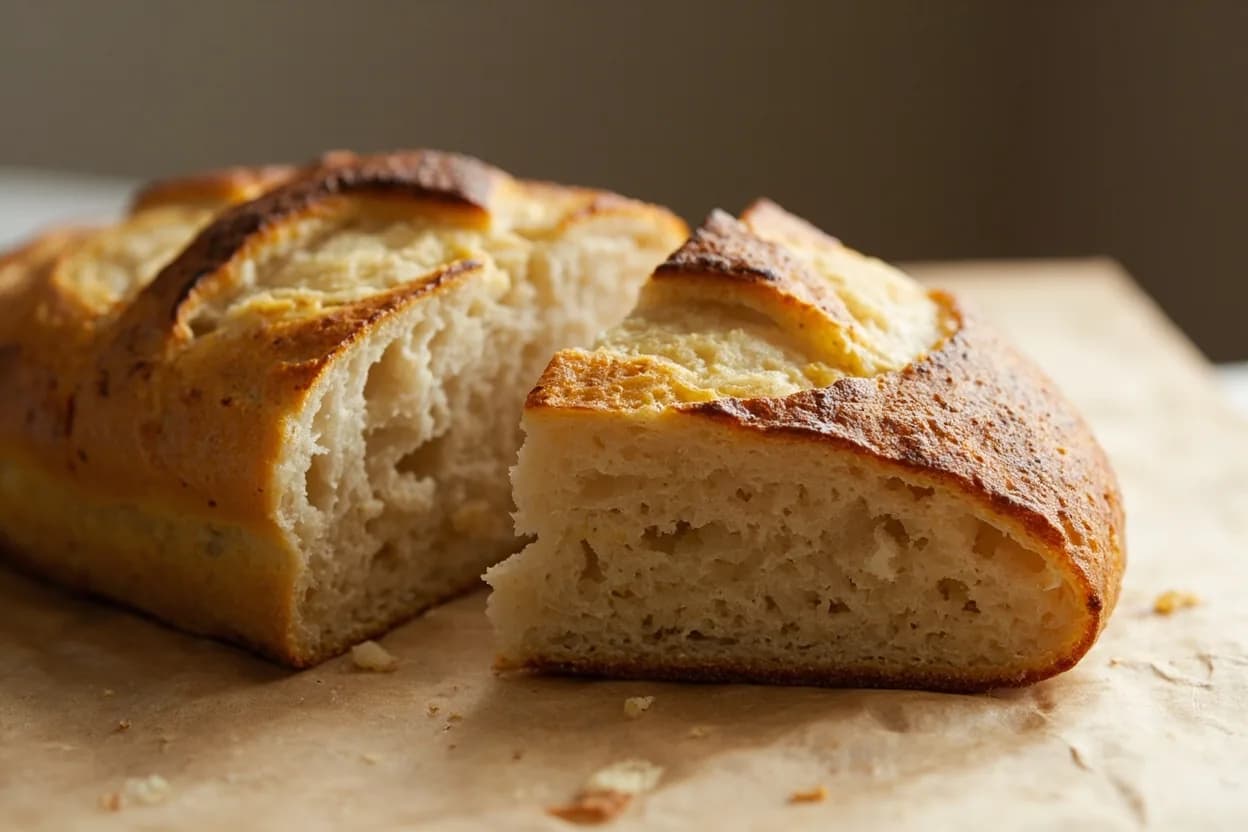
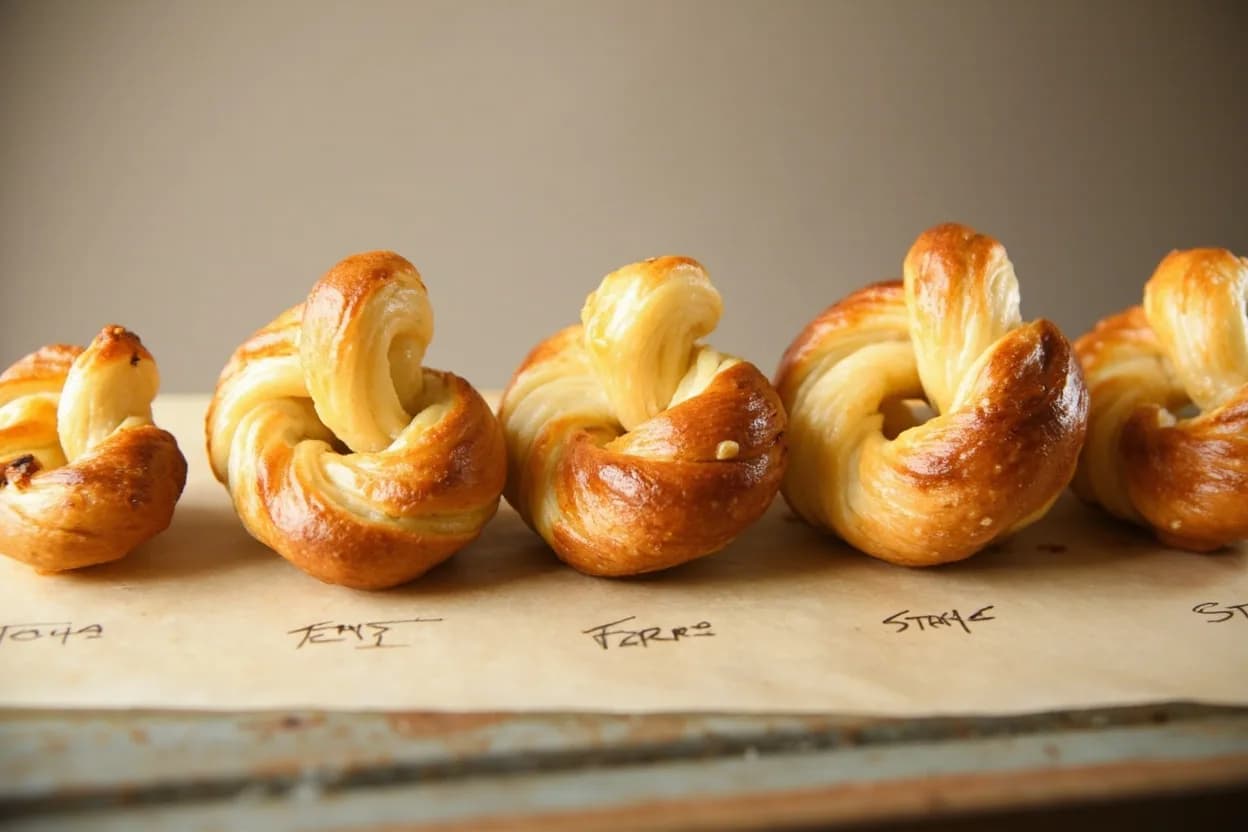
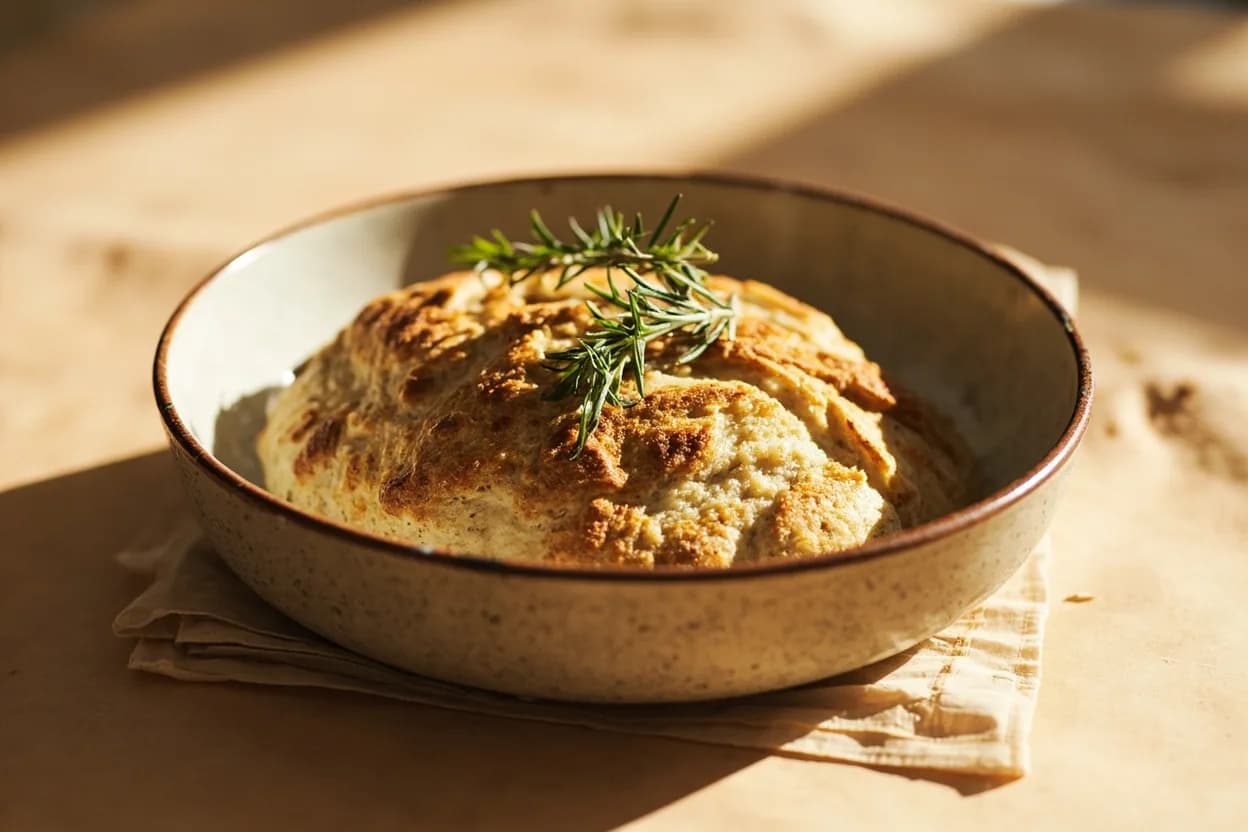
What happens
Oven spring is the dramatic surge of volume that occurs immediately after shaped dough enters a hot oven. It is driven by the rapid expansion of CO₂ gas already trapped in the dough, evaporation of water into steam, and the final burst of yeast activity before the cells are killed at around 60°C (140°F). Oven spring completion is the transition point — usually 10–15 minutes into baking — when the internal temperature has risen enough to kill the yeast, gelatinize the starch, coagulate proteins, and allow the crust to dry and set. After this point, the bread's shape is fixed and its final crumb structure is being determined by continued heat penetration.
What to look for
- The loaf has visibly risen and expanded along any scored slashes or around the sides of a pan
- The surface has transitioned from shiny-damp to matte-dry; steam is no longer visibly rising from the surface
- Scored slashes have fully opened ('bloomed') and the 'ear' (the flap of crust at the score) has lifted and set
- The pale crust begins to show the earliest hint of color at the edges of scores and top crown
- Volume increase has visibly stabilized — no further rise is occurring
- If baking in a covered Dutch oven or with injected steam, this is the signal to remove the lid or stop steaming
How to check
- Visual observation through the oven window: watch for the scores to open fully and the surface to go matte — typically around 10–15 minutes at 230–250°C (445–480°F)
- For Dutch oven baking, remove the lid at this stage (usually 15–20 minutes in) to allow browning and crust development without trapping more steam
- A light tap on the top of the loaf will feel more solid than the raw dough, though it will still be very soft — use this with caution and an oven mitt
- Monitor score behavior: underscored or underproofed loaves may blow out at the sides rather than opening cleanly at the scores — this is also visible during oven spring
The science behind it
- Steam injection
Steam keeps the crust supple during oven spring, allowing maximum expansion; removing steam (or the Dutch oven lid) after spring completion allows the crust to dry and brown
Deliberate cuts on the dough surface guide oven spring, preventing random blowouts and creating decorative 'ears'
Starch granules absorb water and swell irreversibly starting around 60°C (140°F), contributing to crumb structure setting during and after oven spring
- Yeast kill point
Wild and commercial yeasts die at approximately 60°C (140°F); their final CO₂ burst fuels the last of the oven spring before death
Begins in earnest on the crust after oven spring completion, when the surface is dry enough to exceed 130°C (265°F)
- Dutch oven baking
Enclosed pot traps steam from the dough itself for the first bake phase, supporting oven spring; lid removal marks spring completion and begins the browning phase
Appears in
References
- 1.Bread Science — Emily Buehler (Two Blue Books, 2006)
- 2.Tartine Bread — Chad Robertson (Chronicle Books, 2010)
- 3.Modernist Bread — Myhrvold & Migoya (The Cooking Lab, 2017)
- 4.The Bread Baker's Apprentice — Peter Reinhart (Ten Speed Press, 2001)
Confidence: high
Notes
The steam window
Steam during the first phase of baking serves two critical functions: it keeps the crust extensible so the bread can expand fully, and it promotes a glossy, thin crust. Once oven spring is complete, steam becomes counterproductive — it prevents the crust from drying, browning, and developing the crisp texture expected of artisan bread. Professional deck ovens inject steam for exactly this reason; home bakers replicate this by baking in a covered Dutch oven for the first phase.
Oven spring as a proof readiness indicator
Oven spring magnitude is a retroactive signal about proof quality. A well-proofed loaf springs dramatically and opens cleanly at every score. An underproofed loaf springs explosively and may blow out at the sides (the gluten was too tight, so expansion finds the path of least resistance). An overproofed loaf springs barely at all — the gluten network was already exhausted when it entered the oven.