Fish & Seafood Doneness
Oyster Doneness (Edges Curling in Heat)
Also: oyster curl, ruffled oyster, cooked oyster doneness
The mantle edges of a cooked oyster ruffle and curl inward as proteins contract and set — the classic visual signal that the oyster is done without being overcooked.
When oysters are subjected to heat — whether grilled in the shell, baked, broiled, fried, or incorporated into a stew — doneness is read by observing the mantle, the thin membrane that borders the oyster's body. As internal temperature approaches 65–75°C (149–167°F), the mantle's collagen and actin proteins contract and denature, causing the characteristically frilly edge to curl and ruffle inward toward the body of the oyster. Simultaneously, the liquor (the oyster's retained fluid) turns from clear and watery to opaque, milky, and lightly thickened. The oyster's body plumps slightly before beginning to shrink if overcooked. This curl is the canonical 'just done' marker for every hot preparation from Oysters Rockefeller to oyster stew.
In photos

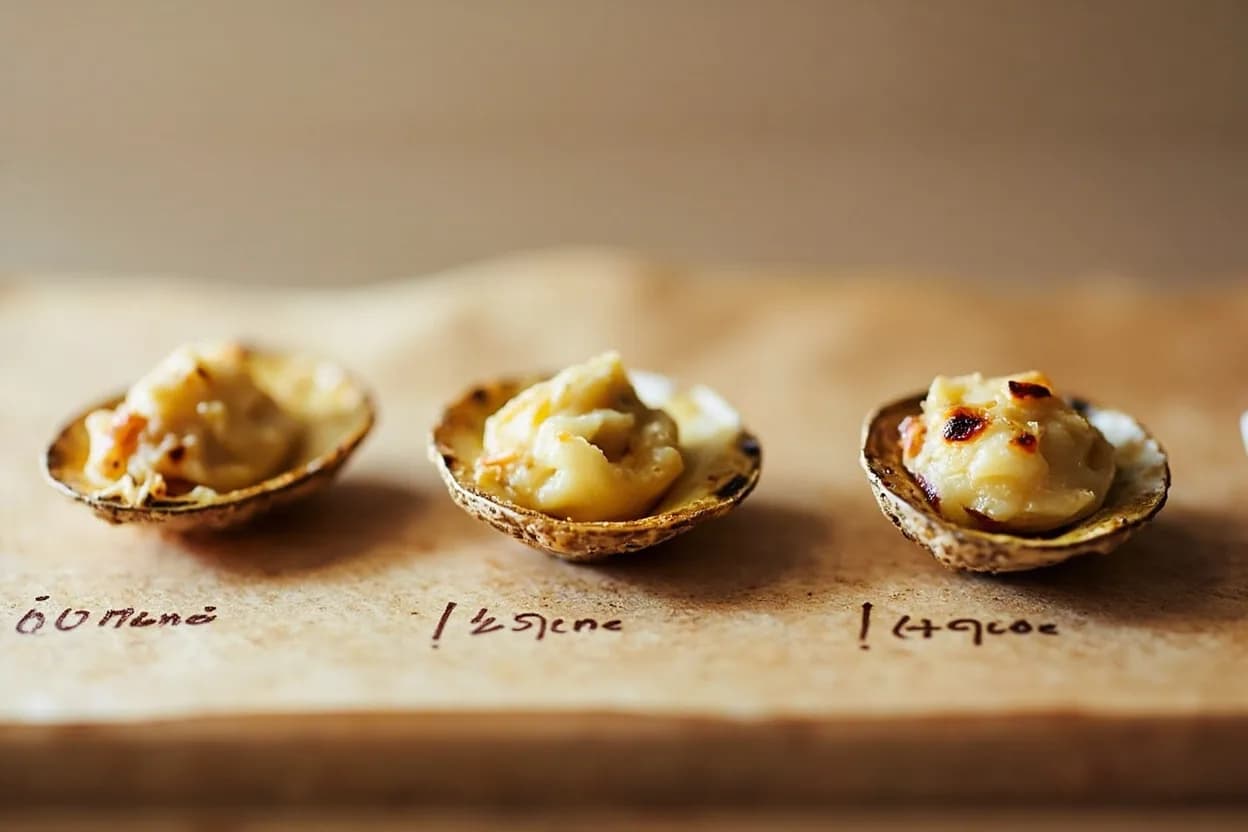
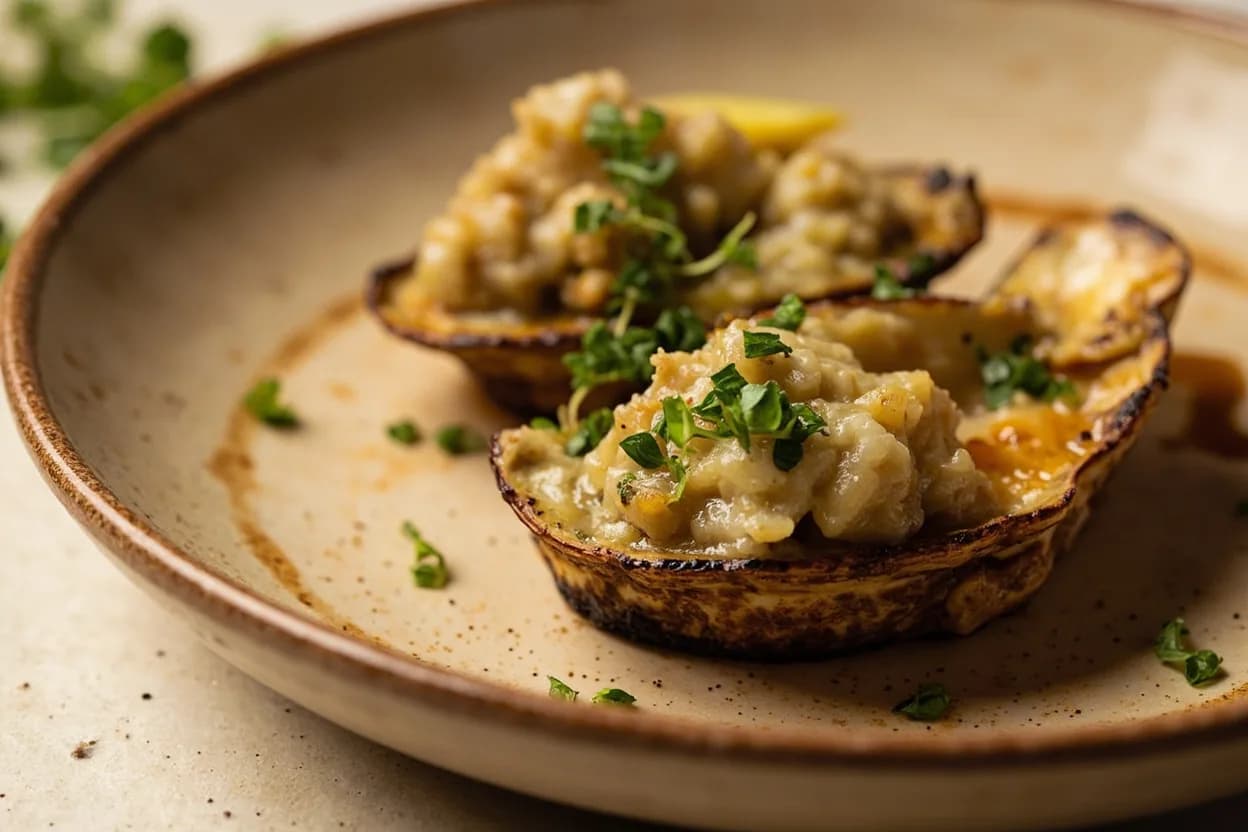
What happens
Oyster muscle proteins (primarily myosin) begin denaturing above 60°C. By 65°C the mantle collagen contracts, producing the visible curl. The liquor transitions to opacity as dissolved proteins coagulate — the same mechanism that turns egg white from clear to white. At 70–75°C the adductor muscle sets fully and the texture shifts from slippery and yielding to firm and bouncy. Above 75°C, moisture loss accelerates rapidly: the liquor evaporates or is squeezed from the muscle, and the oyster shrinks and toughens. The sweet, mineral brine flavor peaks just at the curl point and diminishes as volatile aromatic compounds cook off with escaping steam.
What to look for
- Mantle edge ruffles and curls inward, no longer lying flat against the shell
- Liquor shifts from water-clear to translucent-milky or lightly opaque
- Body plumps visibly — the oyster looks fuller than when raw
- Aroma changes from raw ocean brine to a cooked, buttery, slightly caramelized seafood scent
- Surface of the oyster body loses its wet sheen and develops a matte, set appearance
How to check
- Watch the mantle edge: the moment it ruffles and curls, the oyster is at its peak — remove from heat immediately
- Insert a calibrated probe thermometer into the thickest part of the body (not the mantle); target 65–70°C
- For oyster stew or pan sauces, monitor the liquor — when it becomes milky and the edges of floating oysters begin to ruffle, the stew is done
- Tilt the shell of a grilled oyster: liquor should be bubbly and opaque, not clear and still
Food safety
Carryover & resting
Oysters are small and thin-shelled, so carryover is minimal — roughly 1–2°C. However, hot shells and hot pan sauces continue to radiate heat onto the meat after removal from the burner or broiler; for Oysters Rockefeller or en brochette preparations, plate immediately after pulling from heat to arrest cooking.
The science behind it
- Mantle anatomy in bivalves
The frilly mantle edge is the primary visual doneness indicator for all cooked bivalves, not just oysters
- Liquor opacity as doneness proxy
Protein coagulation in the liquor gives a reliable visual signal in stews and pan sauces
- Raw oyster safety standards
Contrasts with cooked doneness: raw oyster service is a deliberate regulatory compromise, not a food-safe temperature
- Maillard reaction on grilled oysters
The flat shell side of grilled oysters undergoes Maillard browning in the liquor, adding depth of flavor at the curl point
- Oyster migration and terroir
Flavor and liquor mineral content vary by growing region and season, affecting the character of the cooked liquor
Appears in
References
- 1.McGee, Harold. On Food and Cooking: The Science and Lore of the Kitchen. Scribner, 2004.
- 2.FDA Food Code 2022, §3-401.11 (Raw Animal Foods — Minimum Temperatures and Times).
- 3.Barker, Dean. The Oyster Companion. Running Press, 2020.
- 4.Rosenblum, Mort. A Goose in Toulouse and Other Culinary Adventures in France. Hyperion, 2000.
Confidence: high
Notes
The curl is a narrow window
The difference between a perfectly curled oyster and an overcooked one is measured in seconds at high heat. A broiler running at full power can overcook an oyster in under 60 seconds past the curl point. Professional cooks pre-heat the serving shells, get everything ready on the pass, and pull the moment the first curls appear — not when all of them have curled.
Raw vs. cooked safety contrast
Oysters occupy a unique regulatory space: raw bar service is legally sanctioned despite Vibrio risk, on the basis of consumer choice and regulatory disclosure requirements. Cooked oyster preparations must reach minimum safe temperatures. This means the same restaurant kitchen operates under two entirely different temperature standards for the same ingredient depending on service style.