Bread & Dough Doneness
Proof Readiness (Poke Test)
Also: finger dent test, indent test, poke test for proofing, finger poke test
A gentle finger poke that springs back slowly and only partially signals a dough is perfectly proofed and ready for the oven.
The poke test is the primary tactile diagnostic for determining whether a shaped dough has proofed sufficiently before baking. The baker presses one floured finger about 1 cm into the dough and observes the spring-back behavior. A slow, partial return to its original shape — leaving a slight dimple — indicates the gluten network and yeast activity are in ideal equilibrium: enough CO₂ has developed to give oven spring, while the structure remains strong enough to hold its form during baking.
In photos

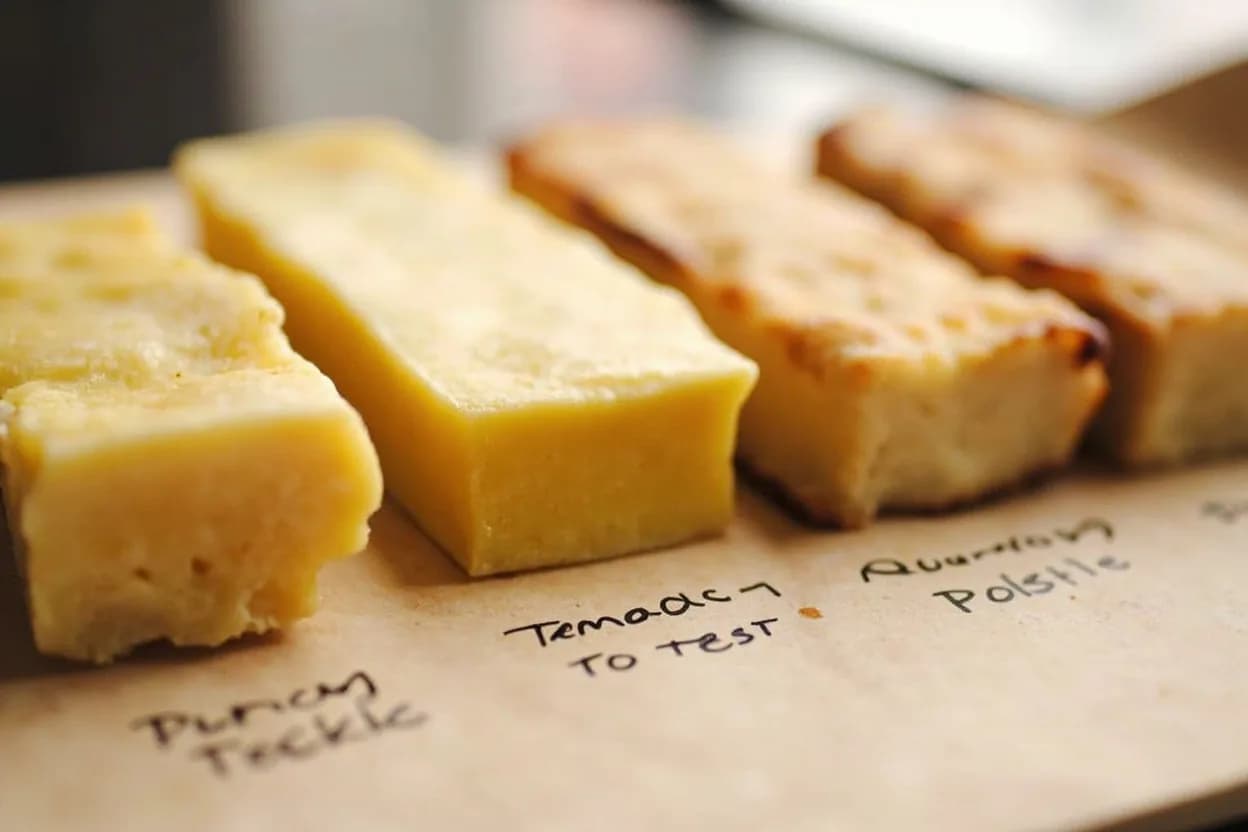
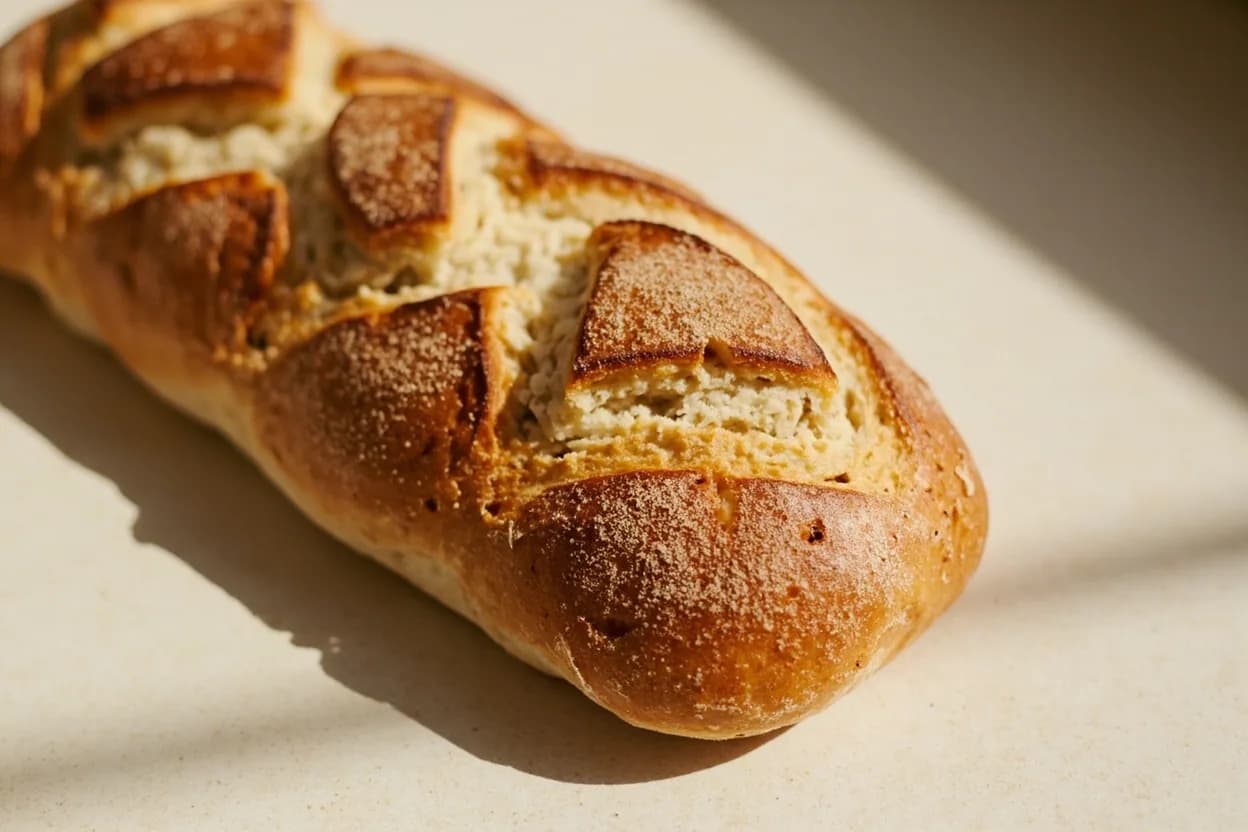
What happens
The poke test is the primary tactile diagnostic for determining whether a shaped dough has proofed sufficiently before baking. The baker presses one floured finger about 1 cm into the dough and observes the spring-back behavior. A slow, partial return to its original shape — leaving a slight dimple — indicates the gluten network and yeast activity are in ideal equilibrium: enough CO₂ has developed to give oven spring, while the structure remains strong enough to hold its form during baking.
What to look for
- Dough springs back slowly and only about two-thirds of the way — the dimple remains faintly visible
- Surface feels pillowy and light, yielding easily under gentle pressure
- Dough has visibly increased in volume (roughly doubled for most yeasted breads)
- A slight jiggle when the pan is shaken, like very soft gelatin
- Fast, immediate spring-back indicates underproofing — gluten is still tight and tense
- No spring-back at all, or a collapsing dough, indicates overproofing — gluten network has exhausted itself
How to check
- Flour one finger lightly to prevent sticking, then press about 1 cm (½ inch) into the dough near the center or at the thickest point
- Remove your finger and watch the indentation: slow, partial return (50–75%) = ready; rapid full return = underproofed; no return or collapse = overproofed
- For enriched doughs (brioche, challah), the poke test is even more reliable than timing, as fat and sugar content shift fermentation rates significantly
- For sourdough, pair the poke test with a float test or jiggle test — sourdough's irregular fermentation benefits from multiple cues
- Test at the same ambient temperature each time; cold kitchens slow spring-back and can give false 'ready' readings
The science behind it
- Gluten network
Gluten extensibility and strength determine how the dough holds and releases CO₂ during proofing and baking
- Yeast fermentation
CO₂ production by yeast inflates the gluten network; the poke test indirectly gauges gas volume and gluten condition
- Overproofing
Excessive fermentation degrades gluten structure, causing collapse; no spring-back is the tactile warning sign
- Underproofing
Insufficient fermentation leaves gluten tight; fast spring-back and dense crumb are the result
First rise before shaping; poke test is most commonly applied during the final proof (after shaping)
Gluten development check done before proofing; the poke test is its counterpart at the end of proofing
Appears in
References
- 1.Tartine Bread — Chad Robertson (Chronicle Books, 2010)
- 2.The Bread Baker's Apprentice — Peter Reinhart (Ten Speed Press, 2001)
- 3.Modernist Bread — Myhrvold & Migoya (The Cooking Lab, 2017)
- 4.How Baking Works — Paula Figoni (Wiley, 2011)
Confidence: high
Notes
Why the test works
During proofing, yeast fills the gluten matrix with CO₂ bubbles and relaxes the network through enzymatic activity. An underproofed dough has tight, elastic gluten that snaps back immediately — the network is still resisting. A perfectly proofed dough has enough CO₂ to hold form but relaxed enough gluten that it yields slowly. An overproofed dough has structurally compromised gluten that cannot recover at all, often accompanied by a sour smell from acetic acid buildup.
Enriched vs. lean doughs
Enriched doughs (those containing eggs, butter, or sugar) are particularly dependent on the poke test because fat coats gluten strands and slows development, making timing charts unreliable. The tactile feel of the dough is the more trustworthy signal.