Pasta & Grain Doneness
Rice: Absorption & Steam-Off Endpoint
Also: rice done by absorption, rice steam-off, rice rest point, absorption method endpoint
Rice cooked by absorption is done when all standing water has vanished, steam holes have formed across the surface, and the pot is removed from heat to rest.
The absorption method endpoint is the culinary threshold at which rice cooked in a measured quantity of water has absorbed all free liquid, the starch has fully gelatinized, and no standing water remains visible in the pot. Visual indicators include a cratered or pocked surface (steam holes), a tight-fitting lid that begins to clear of heavy condensation, and a faint sizzling or hissing from the bottom of the pot indicating the lowest water layer has just evaporated. At this moment, heat is reduced or removed and the pot is rested, covered, for 5–15 minutes to allow steam to complete the cook and equalize moisture throughout the grains.
In photos

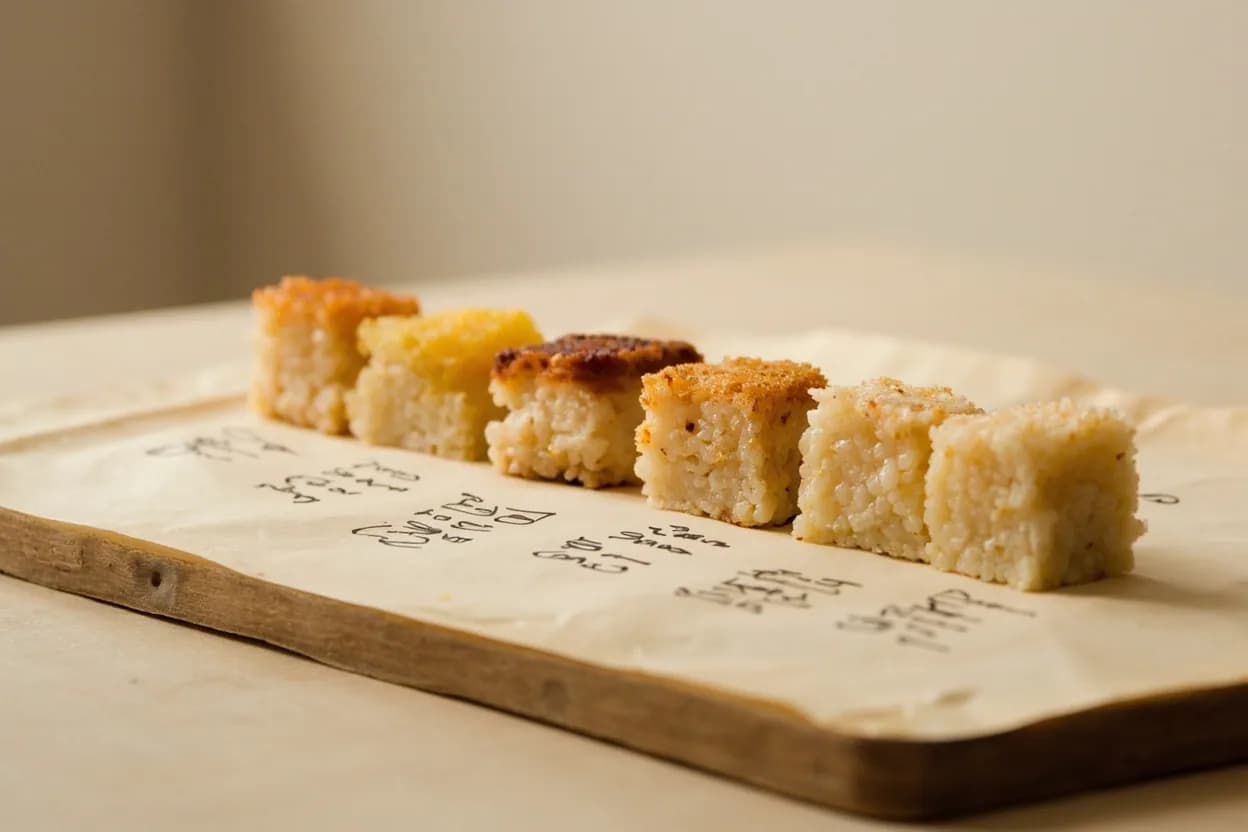
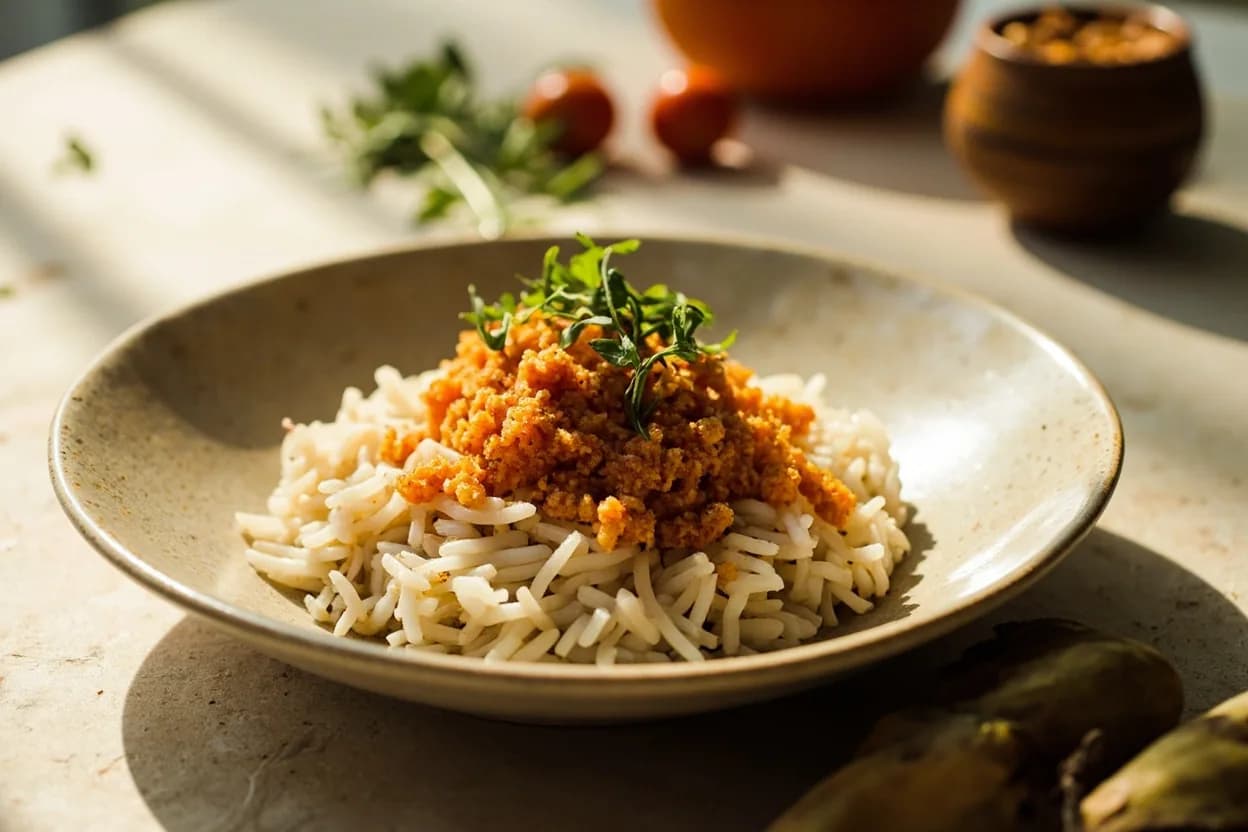
What happens
During absorption cooking, water enters rice grains by diffusion and osmosis, and heat causes starch granules inside each grain to swell and gelatinize. As long as free water remains in the pot, the temperature at the grain surface is limited to 100°C. Once all free water is absorbed or evaporated, the temperature at the bottom of the pot begins to rise above 100°C — this is the moment to remove or reduce heat sharply or risk scorching. The steam that remains trapped under the lid continues to cook the upper grains gently, equalizing texture. The resting period (known as mushi in Japanese cooking and dam in Persian cooking) is not optional — it allows the final 5–10% of steam to fully hydrate and separate the upper grains that were above the waterline.
What to look for
- No visible standing water or pools on the surface of the rice
- Small craters or steam holes pock the surface, indicating steam is escaping upward through the grain bed
- Lid condensation shifts from heavy dripping to light steam
- A faint, dry sizzling sound (not bubbling) from the bottom of the pot signals the last free water is gone
- Lifting the lid briefly reveals fluffy, separated grain tops even if the bottom is still steaming
- A faint nutty or toasted aroma (not burning) may develop at the base in Persian-style tahdig rice
How to check
- Use a wooden chopstick or skewer to probe down to the bottom of the pot — no liquid should pool in the hole
- Tilt the pot slightly and look along the side for standing water
- Listen for the transition from gentle bubbling to a dry hissing or silence
- After resting, use a rice paddle to cut and fold the rice from the bottom up — grains should separate cleanly and steam vigorously
Carryover & resting
Resting off heat (5–15 minutes, covered) is essential: steam redistributes moisture, top grains finish cooking, and excess surface moisture evaporates into the grain bed or lid. Skipping the rest results in wet tops, dry bottoms, and uneven texture. For Persian tahdig or Korean nurungji, the scorched-bottom crust intentionally forms during the final minutes before the rest.
The science behind it
The core transformation in rice cooking; complete gelatinization throughout each grain is the goal
- Mushi (蒸し)
Japanese term for the covered resting/steaming phase that completes absorption-method rice
- Dam (دم)
Persian technique of wrapping the pot lid in a cloth to trap steam and finish rice after water absorption
Persian crispy rice crust that forms at the bottom of the pot as the last free water evaporates
- Water-to-rice ratio
The ratio determines when the absorption endpoint arrives; varies by rice variety, age, and altitude
- Nurungji
Korean scorched-rice crust that forms at the steam-off moment if heat is sustained briefly
Appears in
References
- 1.On Food and Cooking — Harold McGee
- 2.The Food Lab — J. Kenji López-Alt
- 3.Jerusalem — Yotam Ottolenghi and Sami Tamimi
- 4.Japan: The Cookbook — Nancy Singleton Hachisu
- 5.Rice: A Global History — Renee Marton
Confidence: high
Notes
Ratio is everything
The water-to-rice ratio governs when the absorption endpoint arrives and whether the rest can complete the cook. Long-grain rice typically uses a 1:1.5–1:2 ratio (rice:water by volume); short-grain Japanese rice uses about 1:1.1–1:1.2. Aged rice absorbs more water than fresh-harvest rice. Getting the ratio right for your specific rice and cooking vessel is the fundamental skill of absorption-method cooking.
Heavy-bottomed vs. thin pots
A heavy pot with a tight-fitting lid retains heat and steam far better during the rest phase, producing more evenly cooked rice. Thin pots lose heat quickly, requiring a longer rest or a towel under the lid. Rice cookers are engineered around this endpoint: their thermostat switches from 'cook' to 'warm' precisely when the water absorption is complete and the temperature begins to rise above 100°C.