Technique-Specific Doneness
Rice Tahdig Set Point
Also: tahdig crust, Persian rice crust, crispy rice bottom
The moment parboiled rice over oil forms a fully set, golden-amber crust at the pot's bottom without scorching.
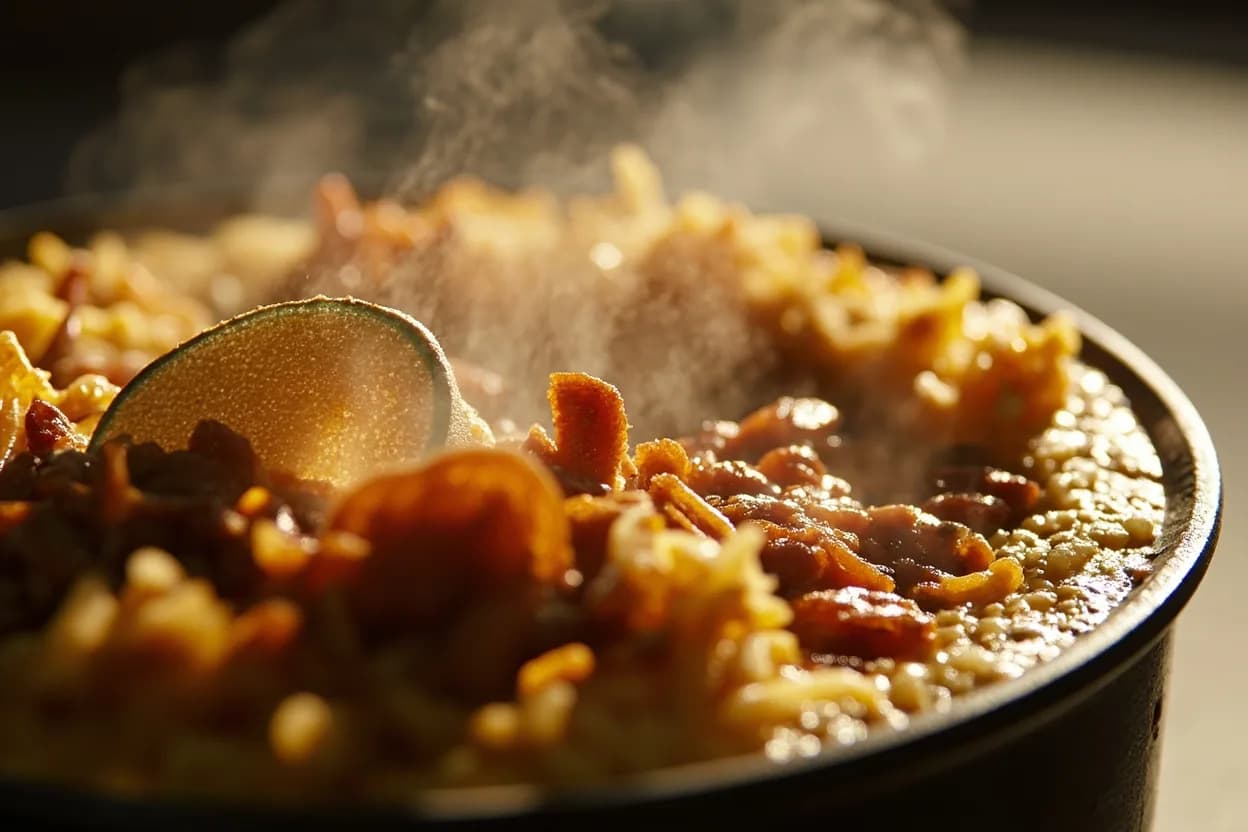
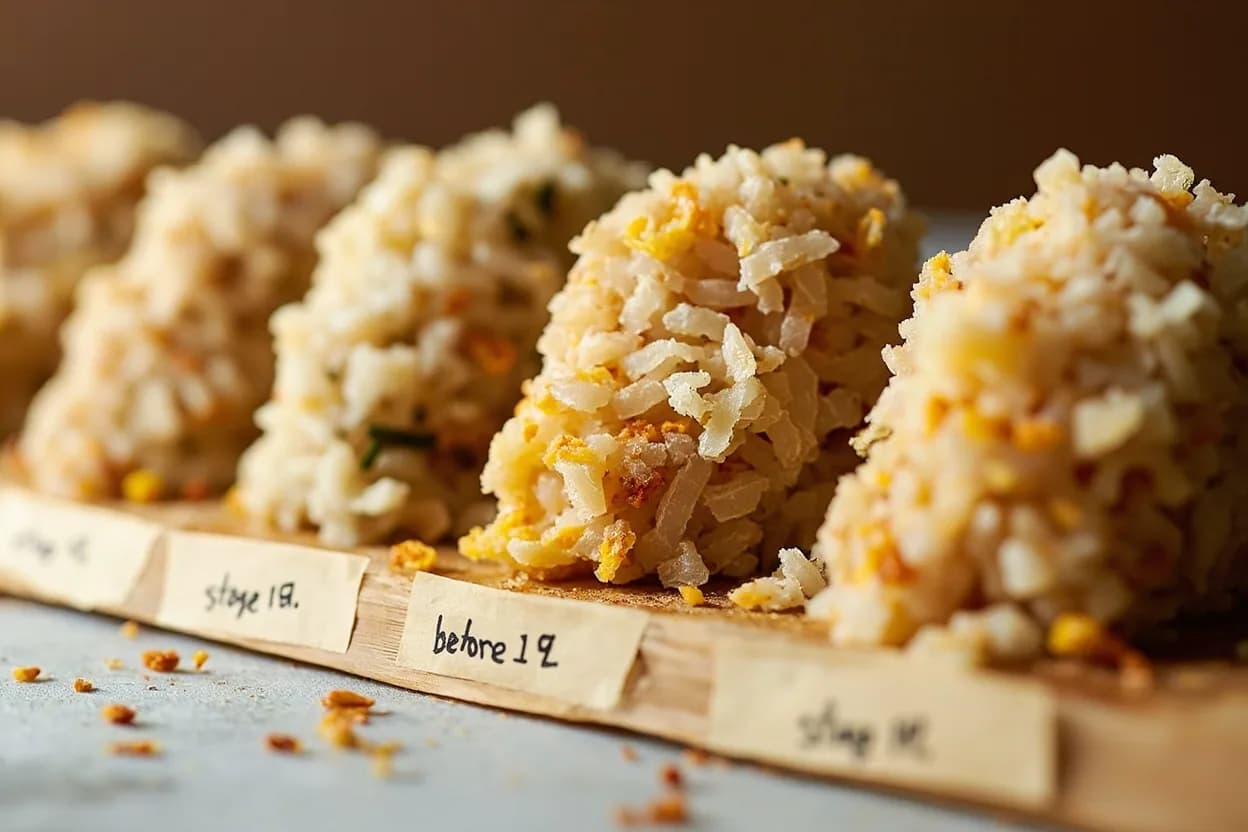
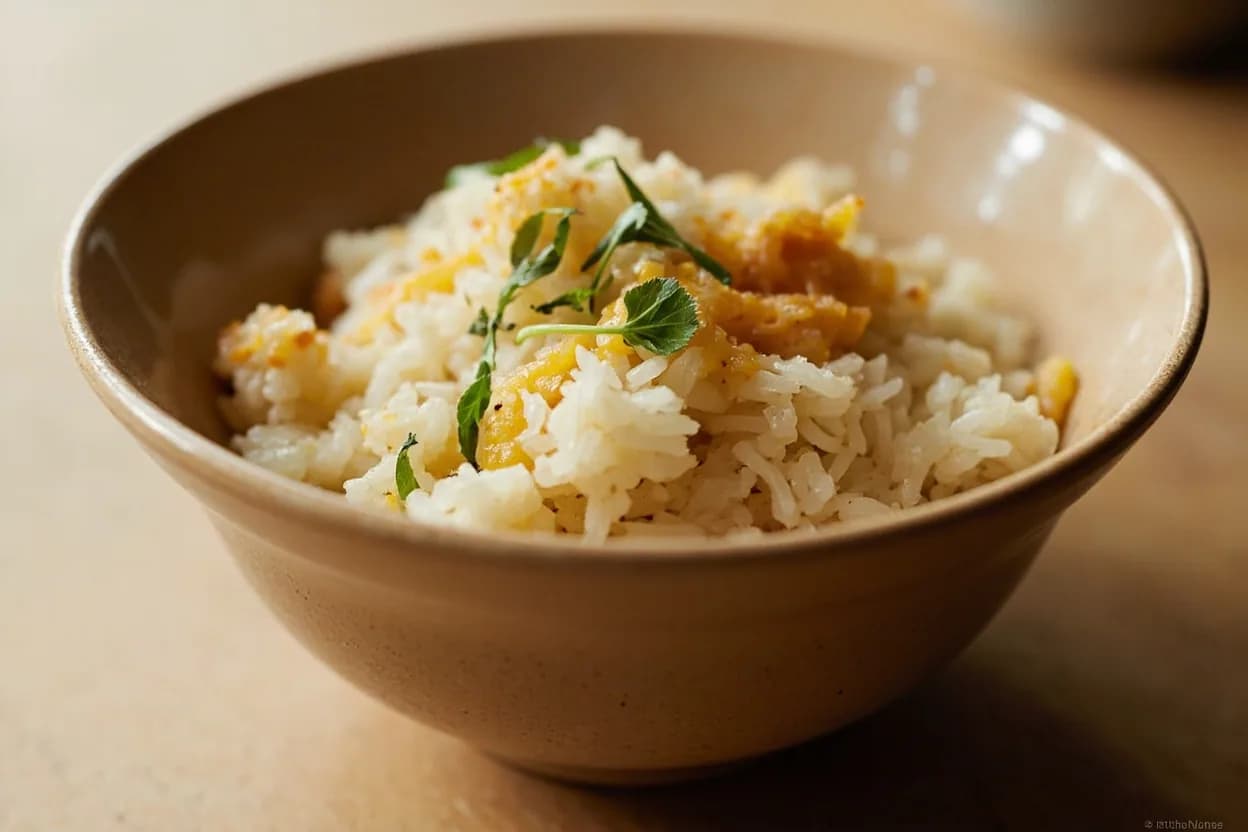
Tahdig (Persian for 'bottom of the pot') is the coveted crispy crust that forms when parboiled basmati rice steams over a generous layer of oil or butter in a heavy-bottomed pot. The set point is reached after 30–40 minutes of low steam heat when the crust has fully separated from the pot wall, turned uniformly golden, and can be inverted cleanly without crumbling. The pan-contact surface reaches approximately 150–160°C (300–320°F) at the crust while the steam column above stays near 100°C (212°F).
In photos
What happens
Starch gelatinization in the parboiled grains is complete during the initial boil. During the steaming phase, residual surface moisture evaporates and the oil-rich bottom layer dehydrates the rice surface into a rigid starch-lipid matrix. Maillard reactions begin at the oil-rice interface above ~150°C, producing golden-brown pigments and roasted, nutty aroma compounds. The crust mechanically separates from the pot as internal steam pressure lifts the rice cake slightly, allowing clean inversion. If heat is too high or oil too little, the Maillard reaction progresses to charring (acrylamide formation) before separation.
What to look for
- A steady, gentle sizzle at the base of the pot — not aggressive crackling
- Toasted rice and nutty, slightly caramelized aroma drifting from under the lid
- Steam escaping only around the lid edges, not billowing forcefully
- When the pot is tilted, the crust slides slightly, indicating it has released from the bottom
- Crust edges visible around the pot wall turn pale gold before the center sets
- A hollow, dry sound when the pot base is tapped with a knuckle
How to check
- Lift one edge of the rice with a thin spatula — it should lift cleanly as a unit, golden underneath
- Place the pot briefly on a cold, wet towel for 30 seconds to shock the crust loose, then invert onto a serving platter
- Listen: hissing should be mild and steady; loud popping or smoke signals burning
- Check the side of the pot at the oil line — a golden ring indicates the crust is set at that level
- Time reference: 5 minutes high heat to form steam, then 30–40 minutes very low heat (flame tamer recommended)
Carryover & resting
Remove the pot from heat and immediately place on a cold, damp cloth for 2–3 minutes before inverting. The thermal shock helps the crust release intact and stops carry-over cooking that would push the bottom from golden to burnt.
The science behind it
The browning chemistry that produces tahdig's color and flavor
- Parboiling
Rice must be parboiled until just al dente before the tahdig steaming phase
- Flame tamer / heat diffuser
Essential tool for maintaining the low, even heat required for tahdig without hotspots
- Socarrat
The analogous scorched-rice crust of Spanish paella, sought for the same reasons
Already completed in the parboil; the tahdig phase is purely about dehydration and Maillard browning
Appears in
References
- 1.Najmieh Batmanglij, 'Food of Life: Ancient Persian and Modern Iranian Cooking and Ceremonies'
- 2.Samin Nosrat, 'Salt, Fat, Acid, Heat' — chapter on fat and rice cookery
- 3.Hossein Amirsadeghi, 'Cooking in Iran: Regional Recipes and Kitchen Secrets'
Confidence: high
Notes
Oil quantity matters
Authentic tahdig is generously oiled — 3 to 4 tablespoons for a 4-serving pot. Too little fat means the crust bonds to the metal rather than frying free. Ghee and neutral oils both work; saffron-infused butter produces the most aromatic crust.
Vessel choice
A heavy, straight-sided pot (non-stick or well-seasoned) is essential. Thin-bottomed pots create hotspots that burn portions of the crust before the rest sets. A flame tamer under a gas burner is standard practice in Iranian households.