Preserves & Confits
Rillettes Render & Hold Temperature
Also: rillettes cooking temperature, confit render temperature, low-and-slow fat render
Maintain 80–90°C fat bath for 3–6 hours to render pork or duck into shredded, self-preserved rillettes.
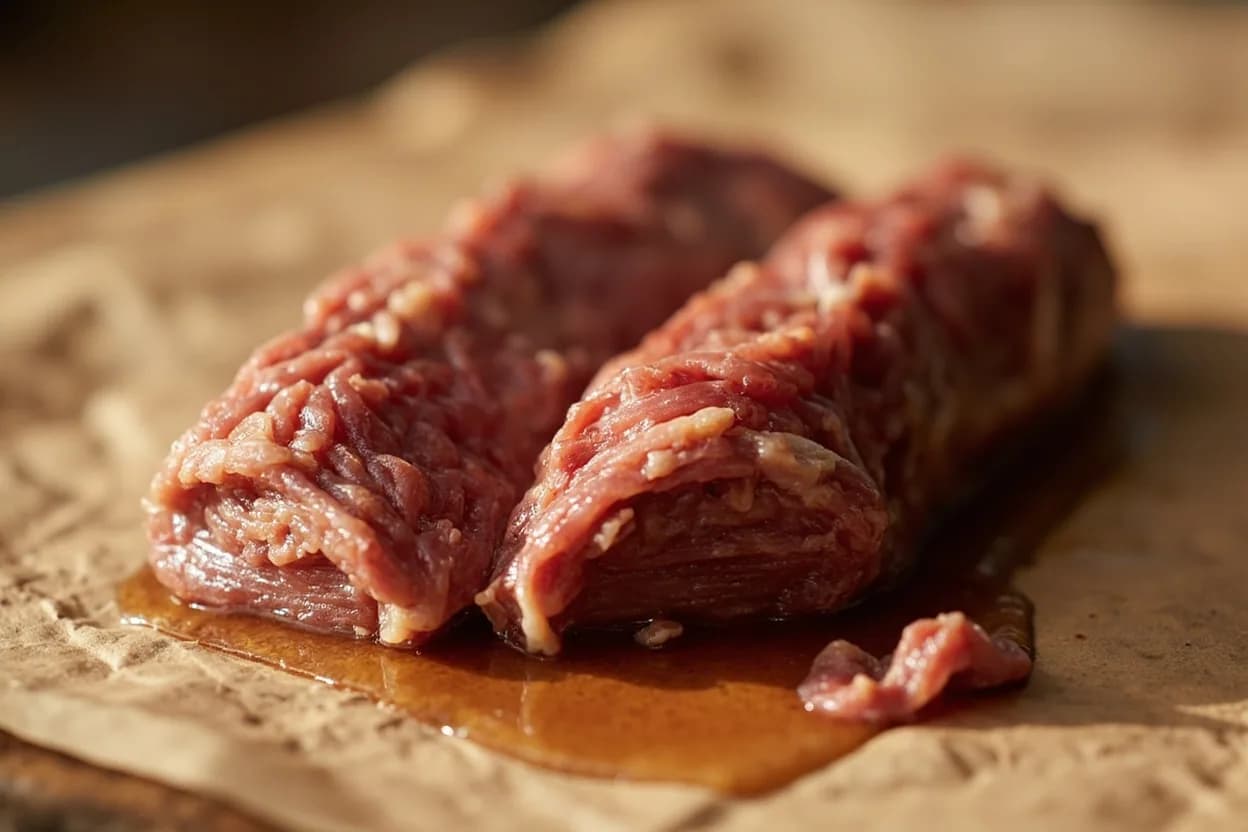
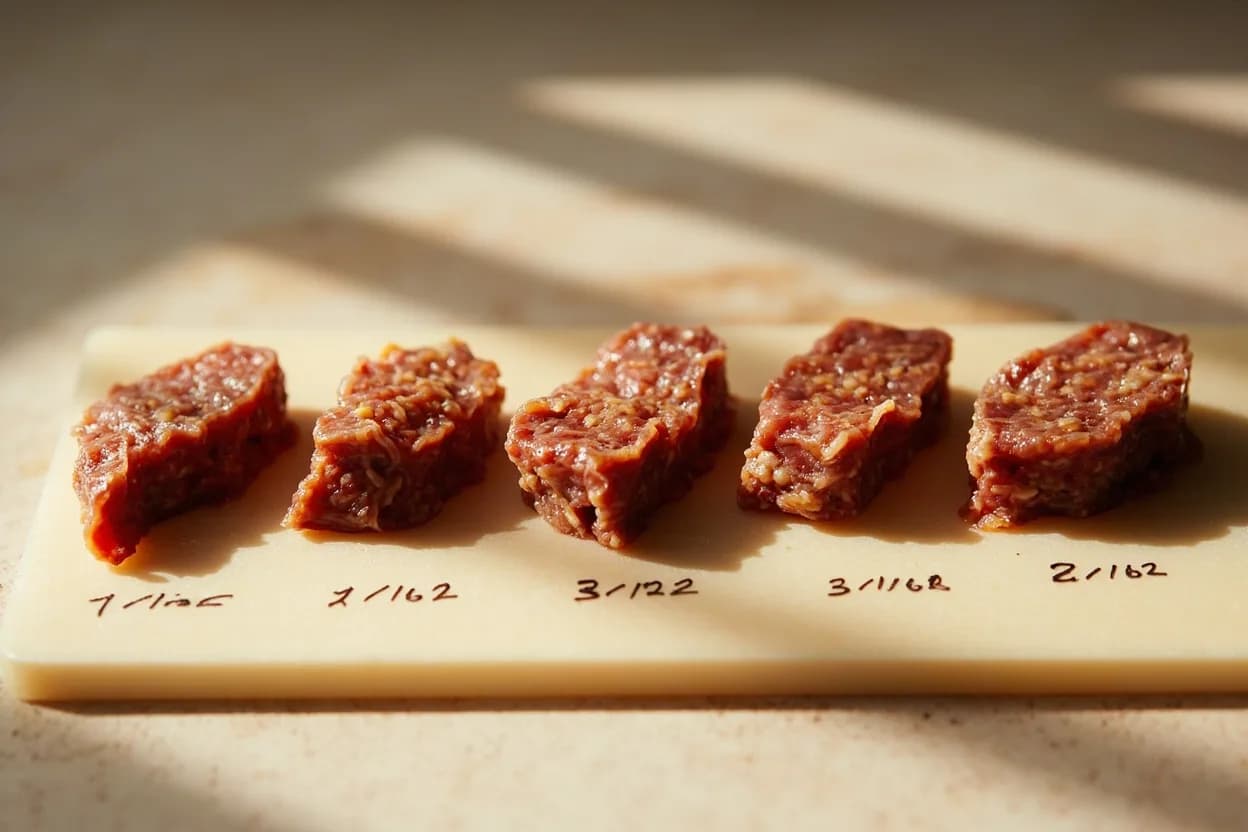
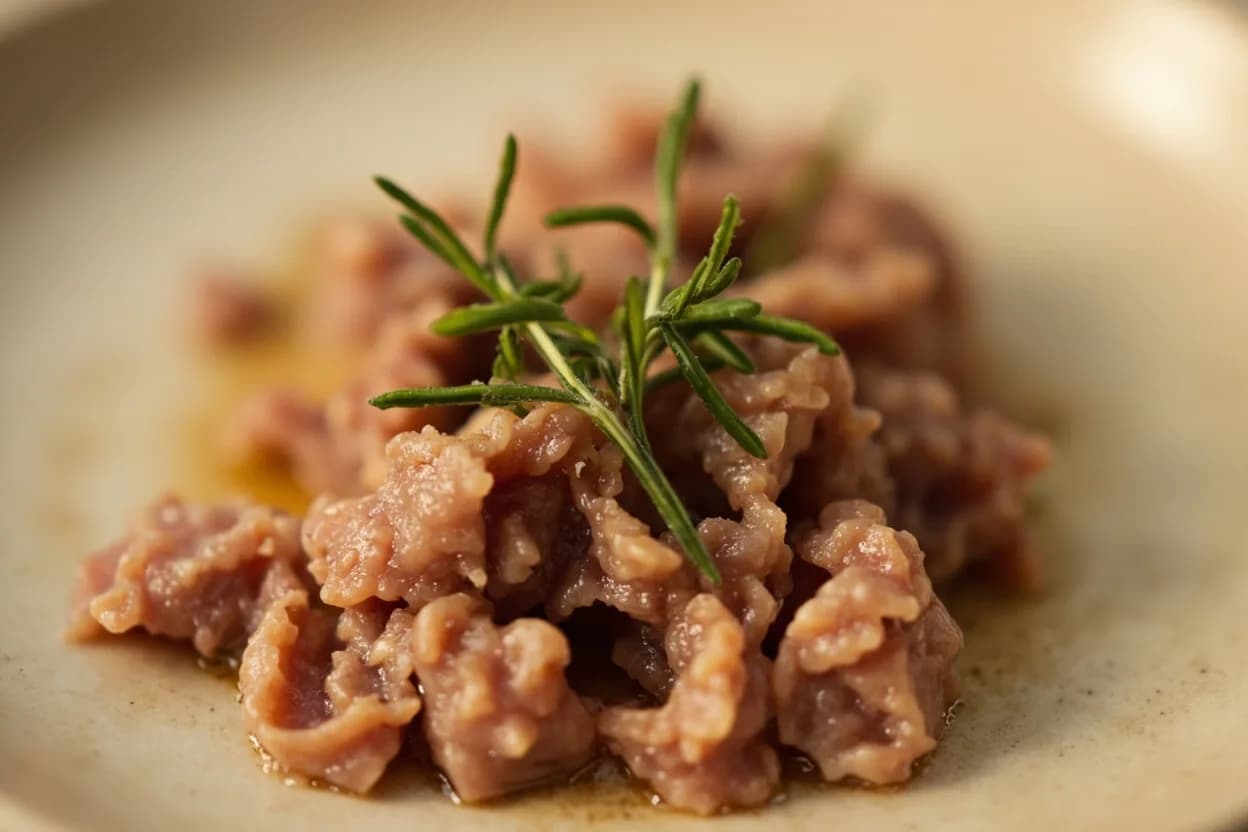
Rillettes are made by fully submerging fatty cuts of pork (shoulder, belly, jowl) or duck legs in their own rendered fat and holding them at a sustained low temperature of 80–90°C (176–194°F). At this range the collagen converts to gelatin, the muscle fibers relax and separate without seizing, and the intramuscular fat renders out to form the preservation medium. The meat is then shredded directly into the fat, packed into crocks, and sealed under a layer of solidified fat.
In photos
What happens
Below 80°C collagen conversion stalls and fat renders too slowly, leaving meat tough and greasy. Above 90°C the muscle proteins seize aggressively — water is expelled rapidly, meat dries out, and the texture turns stringy rather than unctuous. In the 80–90°C sweet spot, type-I and type-III collagen hydrolyze into gelatin over 3–6 hours, connective tissue dissolves, and muscle bundles pull apart cleanly into long, silky strands. The rendered fat stabilizes the emulsion and, once cooled and solidified, excludes oxygen to preserve the product for weeks.
What to look for
- Fat is barely trembling — occasional slow bubble, never a rolling simmer
- Meat pulls apart easily when probed with tongs after 3 hours
- Juices running from the meat are completely clear, not pink or red
- The crock fat is golden and translucent, not brown or scorched
- Aroma is deeply savory and porky with no acrid or burnt notes
How to check
- Use an instant-read or probe thermometer clipped to the side of the pot, tip submerged in fat but not touching the vessel bottom
- Target 82–88°C for best results — adjust burner or oven to hold this band
- Check every 30–45 minutes for temperature drift, especially in oven braises
- Test meat doneness by lifting a piece and pressing between fingers — it should shred with almost no resistance after 3 hours minimum
Food safety
Carryover & resting
Temperature carryover is not a concern here — rillettes are fully cooked by time and temperature, not resting. Allow the finished batch to cool to 60°C before potting so the fat flows smoothly around the shredded meat, then refrigerate promptly.
The science behind it
Rillettes share the confit technique of cooking submerged in fat; confits are typically left intact, rillettes are shredded
- Collagen Conversion to Gelatin
The 80–90°C range is ideal for sustained collagen hydrolysis that defines rillettes texture
- Water Activity Reduction
The fat seal lowers water activity at the surface, extending shelf life
Deliberately avoided here — the low temperature prevents browning and keeps the preserve pale and mild
Appears in
References
- 1.Charcuterie: The Craft of Salting, Smoking, and Curing — Michael Ruhlman & Brian Polcyn
- 2.The Art of Making Fermented Sausages — Stanley Marianski
- 3.On Food and Cooking: The Science and Lore of the Kitchen — Harold McGee
- 4.Larousse Gastronomique — Prosper Montagné
Confidence: high
Notes
Vessel and heat source
A heavy Dutch oven in a 90°C oven maintains the steadiest temperature. Stovetop requires a diffuser and constant monitoring. The French tradition uses a covered earthenware pot (terrine) set over the lowest flame possible — a method that naturally throttles temperature to the ideal range.
Fat ratio
Pork shoulder and belly supply most of their own fat. Supplement with lard if lean cuts are used — the meat must be fully submerged. Duck legs are fattier and typically self-sufficient. The ratio is roughly 1 part added fat to 3 parts meat by weight for lean shoulder.