Bread & Dough Doneness
Rye Bread Internal Temperature
Also: rye loaf doneness, pumpernickel temperature, dark rye baked through, rye crumb set temperature
Rye breads require a higher internal temperature of 96–99°C (205–210°F) because rye starches gelatinize at elevated temperatures and pentosans demand extra heat to fully set the crumb.
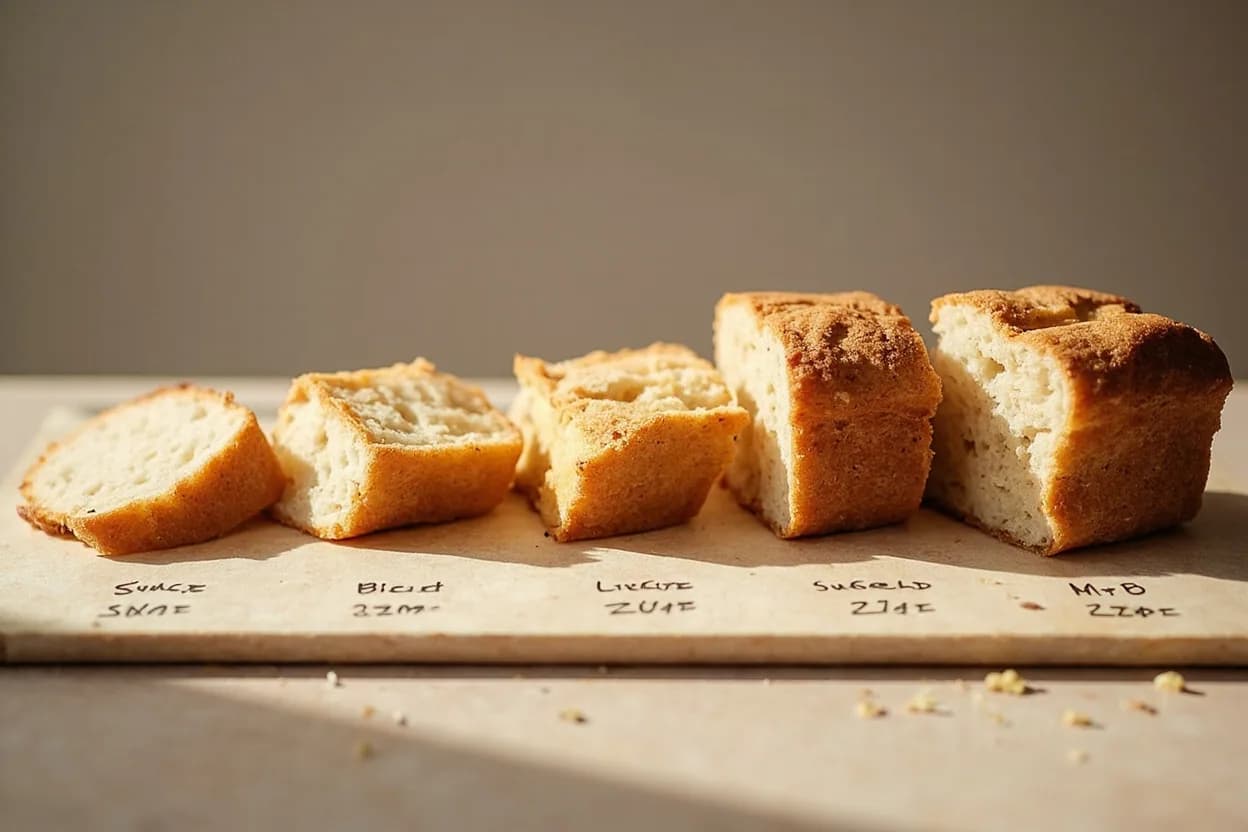
Rye flour behaves fundamentally differently from wheat flour in a baked loaf. Rye starches have a higher gelatinization temperature range than wheat starches, and rye's high pentosan (arabinoxylan) content creates a viscous, gel-like matrix that must be fully hydrated and heat-set before the crumb stabilizes. A rye loaf pulled at 93°C — perfectly adequate for a wheat sourdough — will have a sticky, gummy, compressed crumb that seems underdone even after resting. The target of 96–99°C (205–210°F) ensures complete starch gelatinization and pentosan setting, producing the characteristically firm, slightly moist but non-sticky crumb of a good German rye or Scandinavian rugbrød.
In photos

What happens
Rye starch granules begin gelatinizing around 57–70°C (slightly lower than wheat), but the presence of pentosans — water-binding polysaccharides that make up 6–8% of rye flour by weight — means the total heat energy required to fully set the crumb is greater. Pentosans absorb up to 10 times their weight in water and form a continuous gel matrix around starch granules. This gel requires sustained heat above 95°C to fully denature and set into a stable, sliceable structure. Additionally, rye's low gluten content provides minimal structural support, so the loaf is almost entirely dependent on starch-pentosan gelation for its crumb integrity. Dense whole-rye loaves and pumpernickel (baked at low temperatures for 16–24 hours) are extreme examples where even reaching 96°C internally is only the beginning — they also require extended resting periods of 12–24 hours post-bake for the crumb to fully stabilize.
What to look for
- Center of the loaf is firm to a firm press — any springiness suggests underdone
- Bottom sounds hollow but with a denser tone than wheat bread when thumped
- Loaf pulls cleanly from the pan with no sticking on the sides
- For dark rye and pumpernickel, a slight tackiness on the cut surface is normal and expected, but wet dough strings are not
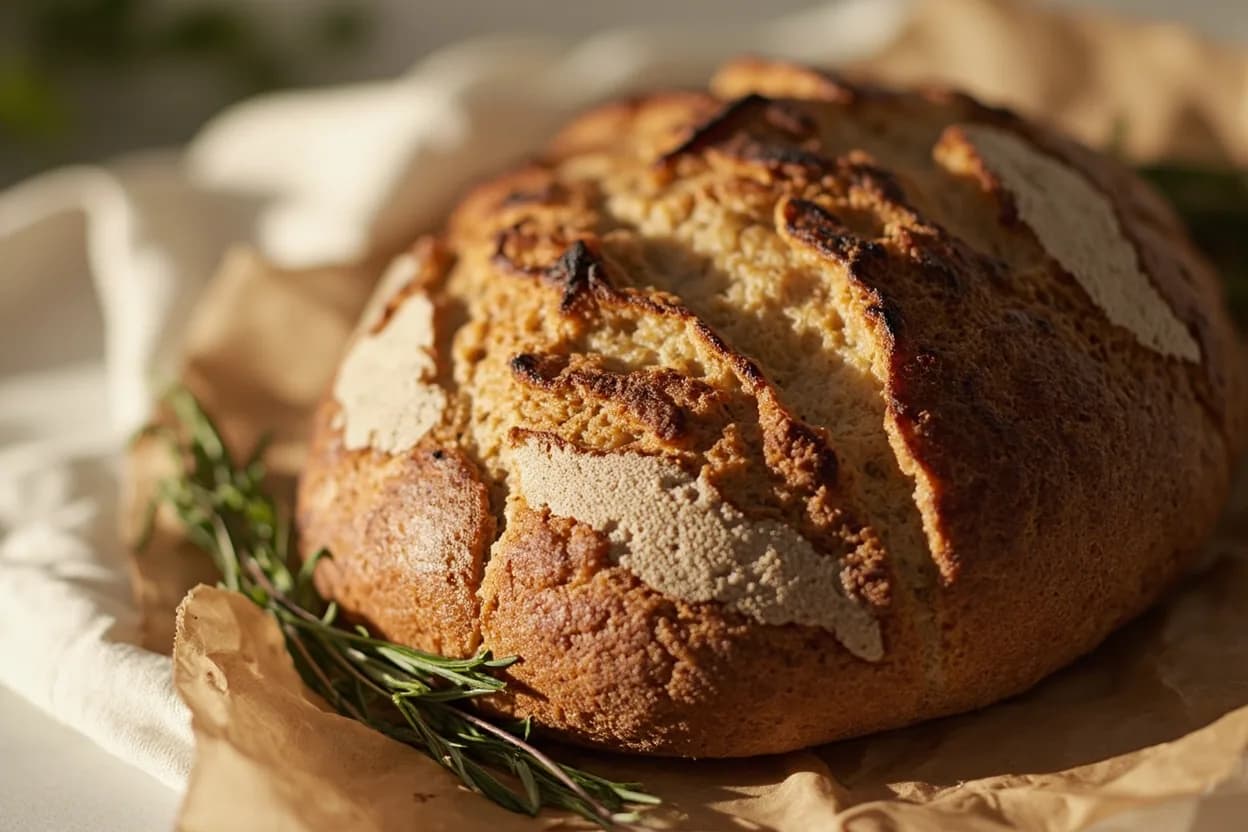
- Crust of high-rye loaves is matte rather than shiny, and crackles finely when squeezed
How to check
- Insert an instant-read thermometer through the bottom center of the loaf to reach the geometric center
- For tin-baked rye loaves, probe through the side at mid-height into the center
- Dense 100% rye loaves: probe in two places — center and slightly off-center — as heat penetration can be uneven
- Pull from oven and check immediately; rye loaves retain heat longer due to their density
- For pumpernickel baked overnight at 120°C, verify temperature and then proceed to mandatory 24-hour rest before slicing
Carryover & resting
Rye loaves must rest substantially longer than wheat loaves — a minimum of 2 hours, and dense whole-rye breads (particularly pumpernickel and rugbrød) benefit from an overnight rest of 12–24 hours wrapped in a cloth. During this period, the pentosan matrix continues to firm, residual moisture redistributes, and the crumb transitions from sticky to sliceable. Cutting a rye loaf too early is the most common cause of gummy crumb, often misattributed to under-baking.
The science behind it
- Pentosan (arabinoxylan) gelation
The water-binding polysaccharide network unique to rye that must fully set before the crumb is stable; the primary reason rye requires higher temps than wheat
- Rye starch gelatinization
Rye starch gelatinizes at a slightly lower onset than wheat but the total energy required is higher due to pentosan interaction
- Sourdough fermentation in rye
Rye breads are almost universally made with sourdough; the acidity both aids fermentation and inhibits amylase enzyme activity that would otherwise degrade the pentosan structure
Rye flour has high amylase activity that can degrade starch during slow baking; sourdough pH control and reaching target temperature quickly are both important
- Pumpernickel slow-bake method
A 120°C overnight bake used for dense 100% rye German pumpernickel; reaches doneness temperature but requires extended rest
Appears in
References
- 1.Modernist Bread — Myhrvold & Migoya
- 2.The Rye Baker — Stanley Ginsberg
- 3.How Baking Works — Paula Figoni
- 4.Bread Science — Emily Buehler
- 5.Inside the Jewish Bakery — Stanley Ginsberg & Norman Berg
Confidence: high
Notes
The resting imperative
No other common bread category demands longer post-bake resting than dense whole-rye loaves. A freshly baked rugbrød or pumpernickel removed from the oven at 99°C and cut within an hour will appear gummy and wet — not because it was underbaked, but because the pentosan gel and starch matrix are still in flux. The 12–24 hour rest is not optional; it is the final step in the baking process.
Sourdough acidity as a tool
Rye flour contains more amylase enzymes than wheat flour. In a neutral-pH dough, these enzymes actively degrade starch even during baking (starch attack), leading to a gummy crumb regardless of internal temperature. Traditional sourdough fermentation acidifies the dough to pH 4.0–4.5, which inhibits amylase activity and protects the starch structure. This is why nearly all traditional rye breads are sourdough-leavened, not commercial yeast.