Aromatic & Fat Doneness
Saffron Blooming Temperature
Also: saffron infusion temperature, saffron steeping, saffron extraction point
Hot liquid at 80–90°C extracts saffron's maximum color (crocin) and aroma (safranal) in 15–20 minutes; cooler steeping gives color but loses volatile flavor.
Saffron blooming temperature is the range of 80–90°C (176–194°F) at which saffron threads, when steeped in liquid, yield their full spectrum of pigment and aromatic compounds. At this temperature, the water-soluble carotenoid crocin dissolves rapidly to produce deep golden-orange color, while the heat drives release of safranal and other volatile aromatics that would be locked in or partially formed at lower temperatures. Cold or room-temperature steeping extracts color but leaves most aromatic potential unrealized.
In photos
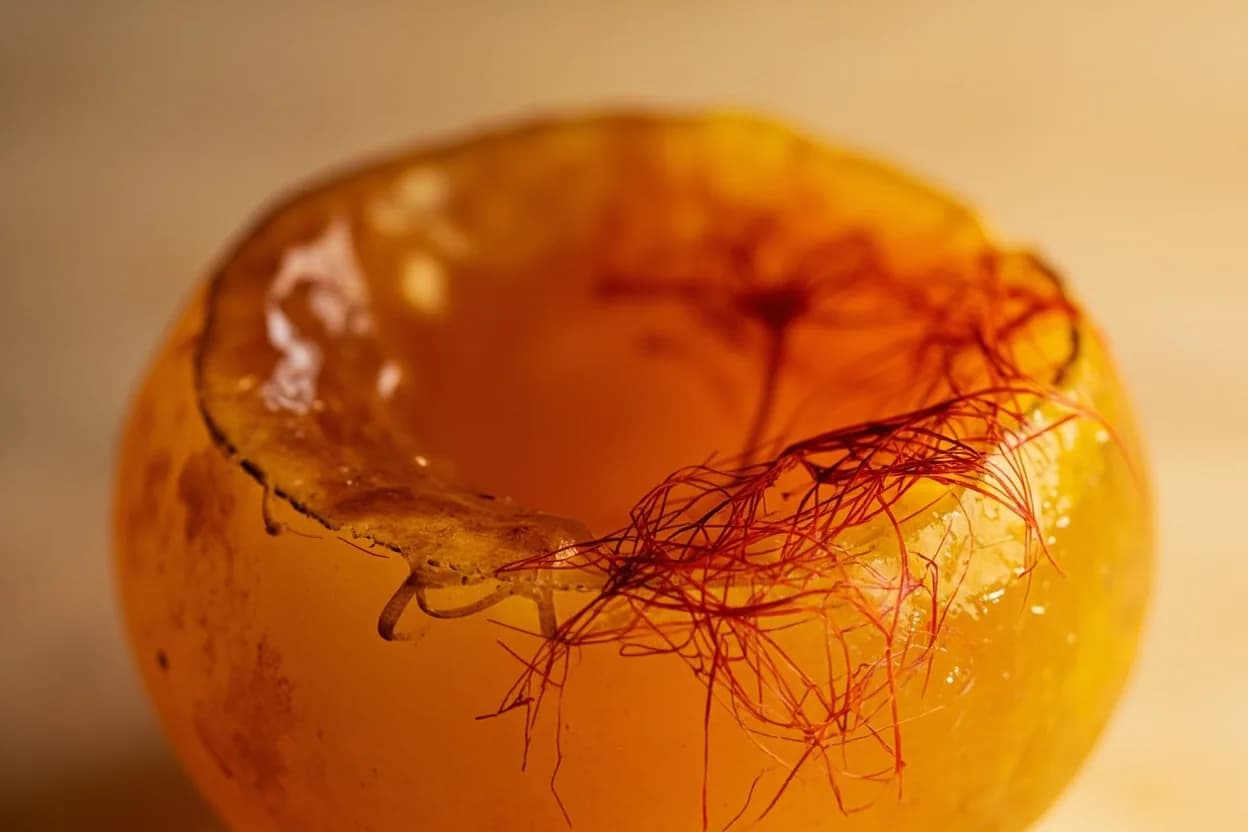
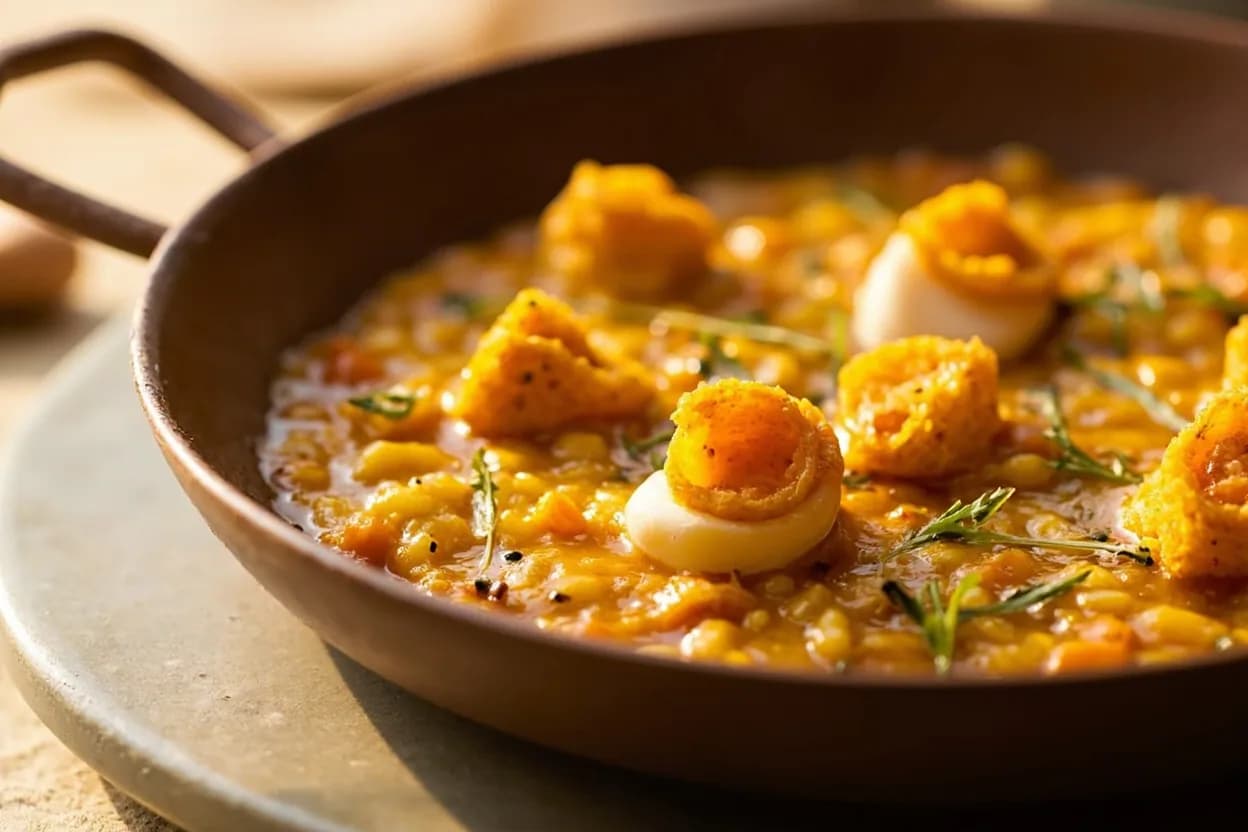
What happens
Saffron's key flavor precursor, picrocrocin, hydrolyzes upon contact with hot water to release safranal — the primary volatile responsible for saffron's distinctive floral-hay character. This hydrolysis reaction is temperature-dependent and proceeds meaningfully only above ~70°C. The pigment crocin is water-soluble and releases at any temperature, but the ratio of color to aroma shifts dramatically with heat: cold-steeped saffron gives vivid color but flat, muted flavor; 80–90°C steep gives both in optimal balance. Above 90°C volatile safranal begins to evaporate off, and prolonged boiling degrades quality. The ideal window is 80–90°C for 15–20 minutes in a covered vessel.
What to look for
- Liquid turns deep amber-gold within 5 minutes at 80–90°C
- A distinctly floral, slightly medicinal, hay-like aroma rises from the steeping vessel
- Threads fade from vivid red-orange to pale ochre as pigment transfers to the liquid
- No harsh metallic note if temperature is controlled; metallic off-notes indicate overheating or poor-quality saffron
- After 15–20 minutes the liquid is uniformly colored with no clear pockets
How to check
- Use an instant-read thermometer in the blooming liquid; target 80–90°C and maintain with a lid or brief reheating if needed
- Visual: liquid should reach a rich amber-gold within 10 minutes at correct temperature
- Smell test at 10 minutes: pronounced floral-safranal aroma confirms adequate extraction
- Rub a spent thread between fingers — if it still shows vivid color, extraction is incomplete
The science behind it
- Picrocrocin hydrolysis
The enzymatic and thermal breakdown of saffron's bitter glycoside into safranal — the primary aromatic compound — is temperature-gated and the chemical reason the hot-bloom is essential.
- Crocin (saffron pigment)
Water-soluble carotenoid responsible for saffron's golden color; extracts across a wide temperature range but most rapidly above 70°C.
- Volatile loss at boil
Adding saffron bloom to a dish at boiling stage risks evaporating safranal; best practice is to add it off heat or in the last minutes of cooking.
- Spice blooming in fat
Unlike most spices, saffron's key compounds are water-soluble, not fat-soluble — fat-blooming is ineffective for saffron.
Appears in
References
- 1.On Food and Cooking — Harold McGee
- 2.Saffron: The Age of the Spice — Alain Bossard
- 3.Modernist Cuisine — Myhrvold, Young & Bilet
- 4.ISO 3632: Saffron (Crocus sativus L.) — Specification and Test Methods
Confidence: high
Notes
Cold bloom debate
Some cooks steep saffron overnight in cold water, citing gentler extraction and no volatile loss. This method yields saturated color but demonstrably less safranal than a 15-minute hot bloom at 80–90°C. The two approaches are not interchangeable when flavor intensity matters.
Bloom liquid counts
Use 2–3 tablespoons of warm stock, water, or white wine per generous pinch (0.2–0.4g) of saffron. The bloom liquid becomes a concentrated extract — swirl it into the dish with threads and all. Using too much liquid dilutes color; too little leaves pigment on the threads.
Milk blooms
Milk or cream at 80–90°C also works and is traditional in some pastry and custard applications. Fat in dairy slightly reduces color intensity but transfers aromatic compounds effectively.